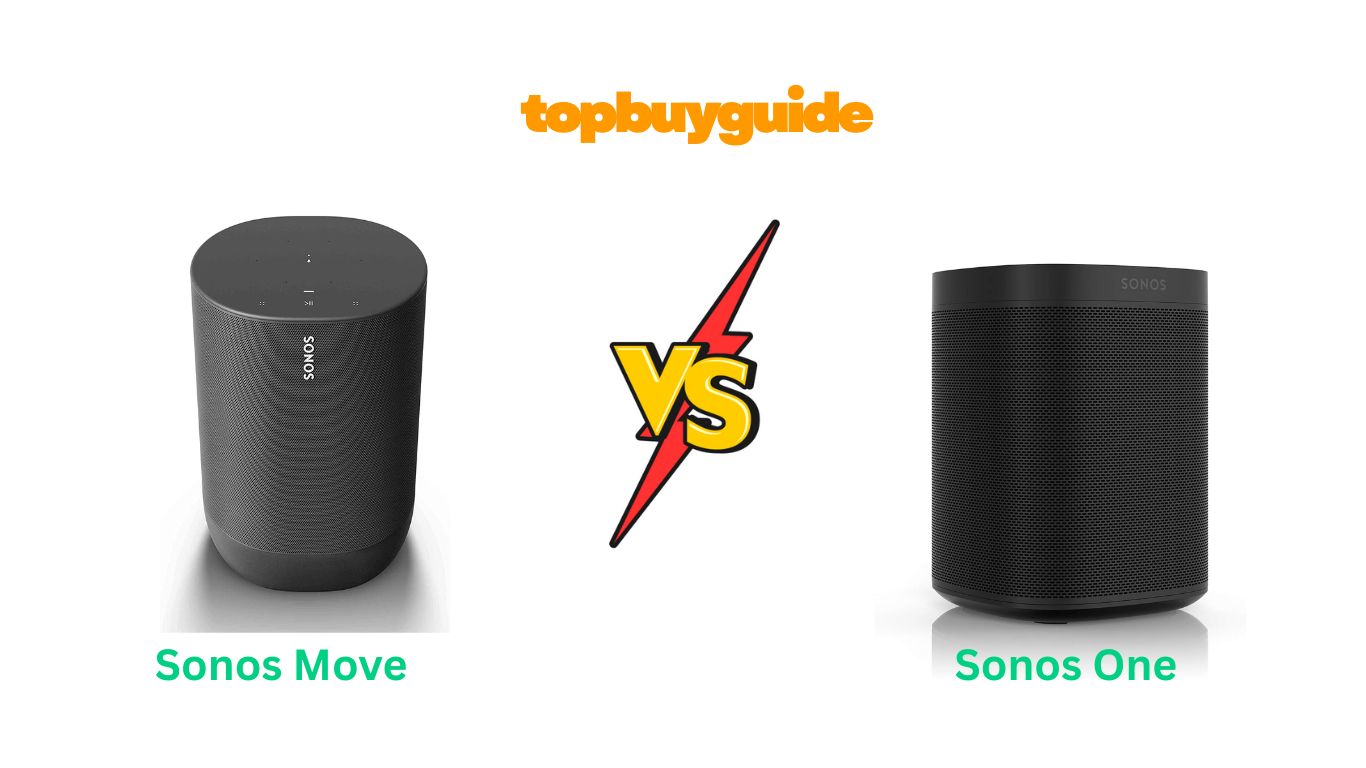
Choosing between the Sonos Move and Sonos One can feel overwhelming when both promise exceptional audio quality. After extensive testing and comparison, I recommend the Sonos Move for music enthusiasts who value versatility and mobility. The Move’s battery-powered design with 11 hours of playback and IP56 weather resistance makes it ideal for indoor and outdoor use. While the Sonos One excels as a stationary smart speaker at nearly half the price, the Move’s portable nature justifies its premium cost for those seeking freedom.
Why Do I Recommend The Sonos Move?
The Sonos Move stands out as the superior choice for several compelling reasons that elevate it above the Sonos One:
- Portable Battery Power: The Move features an impressive 11-hour battery life, allowing uninterrupted music anywhere you go. In contrast, the Sonos One requires constant AC power connection, limiting its placement options significantly.
- Weather-Resistant Durability: With its IP56 rating, the Move withstands rain, snow, dust, and extreme temperatures effortlessly. Meanwhile, the Sonos One lacks any weather protection, restricting it to indoor environments only.
- Bluetooth Connectivity: The Move offers dual connectivity through both Wi-Fi and Bluetooth 5.0 for versatile streaming options. Conversely, the Sonos One relies solely on Wi-Fi connectivity, making it less flexible for different usage scenarios.
- Enhanced Portability Design: The built-in handle makes carrying the Move between locations incredibly convenient and comfortable. On the other hand, the Sonos One’s compact design lacks any carrying mechanism for easy transport.
- Superior Sound Projection: The Move delivers fuller, more powerful audio output that fills larger outdoor spaces effectively. Although the Sonos One produces excellent sound, it’s designed primarily for smaller indoor room coverage.
- Shock-Resistant Construction: The Move’s hardened exterior protects internal components from accidental drops and bumps during transport. In comparison, the Sonos One’s delicate construction makes it vulnerable to physical damage if mishandled.
- Flexible Charging Options: The Move includes both a wireless charging base and USB-C charging capability for maximum convenience. However, the Sonos One offers only a standard power cable connection without alternative charging methods.
- Automatic Trueplay Tuning: The Move continuously adjusts sound based on its environment using built-in microphones for optimal audio. While the Sonos One features Trueplay, it requires manual tuning with an iOS device periodically.
Side By Side Comparison Chart: Sonos Move vs Sonos One
| Feature | Sonos Move | Sonos One |
| Battery Life | 11 hours continuous playback | No battery (AC powered) |
| Portability | Built-in handle, portable design | Compact but requires power outlet |
| Weather Resistance | IP56 rated (dust/water resistant) | None (indoor use only) |
| Bluetooth Support | Yes (Bluetooth 5.0) | No |
| Dimensions | 9.44″ H x 6.29″ W x 4.96″ D | 6.36″ H x 4.69″ W x 4.69″ D |
| Weight | 6.61 lbs (3 kg) | 4.08 lbs (1.85 kg) |
| Charging Method | Wireless base + USB-C | AC power cable |
| Voice Assistants | Alexa, Google Assistant | Alexa, Google Assistant |
| Price Range | $399 (original MSRP) | $199 (original MSRP) |
| Trueplay Tuning | Automatic | Manual (requires iOS device) |
| Connectivity | Wi-Fi, Bluetooth, AirPlay 2 | Wi-Fi, AirPlay 2, Ethernet |
| Amplifiers | Two Class-D digital amplifiers | Two Class-D digital amplifiers |
| Speakers | 1 tweeter, 1 mid-woofer | 1 tweeter, 1 mid-woofer |
| Best Use Case | Indoor/outdoor, portable listening | Indoor, stationary listening |
What Common Features Can Sonos Move vs Sonos One Do?
Multi-Room Audio Synchronization
Both speakers integrate seamlessly into the Sonos ecosystem, allowing synchronized playback across multiple rooms throughout your home. You can group either speaker with other Sonos devices to create a whole-home audio experience. The system maintains perfect synchronization regardless of which rooms you’re playing music in simultaneously. This feature works identically on both the Move and One when connected to Wi-Fi networks. Users can control grouped speakers through the intuitive Sonos app on smartphones or tablets conveniently.
Voice Assistant Integration
Amazon Alexa and Google Assistant come built into both the Move and One for hands-free control. You can ask either assistant to play music, adjust volume, check weather, or control smart home devices. The six-microphone array in each speaker ensures accurate voice recognition even during loud music playback. Both speakers use advanced beamforming technology to isolate your voice from background noise effectively. Voice commands work seamlessly when the speakers are connected to your home Wi-Fi network reliably.
Apple AirPlay 2 Support
Both models support Apple AirPlay 2, enabling effortless streaming from iPhones, iPads, and Mac computers directly. You can ask Siri on your Apple device to play music through either speaker without issues. AirPlay 2 allows you to stream to multiple Sonos speakers simultaneously for synchronized multi-room audio. The feature integrates with Apple Music, podcasts, and other audio apps on iOS devices seamlessly. Latency remains minimal, ensuring perfect lip-sync when watching videos on your Apple devices.
Trueplay Acoustic Tuning
Trueplay technology automatically optimizes sound based on each speaker’s specific placement and room acoustics effectively. The Move uses its built-in microphones to continuously adjust audio output for optimal sound quality. The One requires manual Trueplay tuning using an iOS device, walking around your room. Both speakers analyze reflections and adjust EQ settings to compensate for room characteristics intelligently. This ensures you get the best possible sound regardless of where you place them.
Sonos App Control
The dedicated Sonos app provides comprehensive control over all settings, streaming services, and audio preferences easily. You can adjust bass, treble, and loudness levels to customize sound according to your preferences. The app supports over 100 streaming services including Spotify, Apple Music, and Amazon Music. Creating speaker groups, setting alarms, and managing playlists happens effortlessly within the intuitive interface. Both speakers receive regular software updates through the app, adding new features over time.
Stereo Pairing Capability
You can pair two identical speakers (two Moves or two Ones) to create a true stereo soundstage. The left and right channel separation significantly enhances the listening experience for music and movies. Setup takes just minutes through the Sonos app, requiring no technical expertise whatsoever. Stereo pairing doubles the audio output, filling larger spaces with rich, immersive sound effectively. This feature works identically whether you’re using Moves or Ones in your setup.
Class-D Amplification
Both speakers feature two Class-D digital amplifiers precision-tuned for their unique acoustic architectures specifically. These efficient amplifiers deliver powerful, distortion-free sound while consuming minimal power during operation. The amplifiers work in perfect harmony with the speaker drivers for optimal audio reproduction. Heat dissipation remains minimal even during extended listening sessions at high volumes. This amplification technology ensures reliability and longevity for both speaker models consistently.
Premium Audio Components
Each speaker contains a dedicated tweeter for crisp high-frequency response and detailed treble reproduction. A custom-designed mid-woofer handles mid-range vocals and delivers surprisingly deep bass for compact speakers. The acoustic architecture has been carefully engineered to maximize sound quality within each form factor. Both speakers deliver impressive audio performance that punches well above their size category. Premium components ensure long-term reliability and consistent performance over many years of use.
Common Features of Sonos Move vs Sonos One
| Feature | Sonos Move | Sonos One |
| Voice Assistants | Amazon Alexa, Google Assistant | Amazon Alexa, Google Assistant |
| Multi-Room Audio | Yes (via Sonos ecosystem) | Yes (via Sonos ecosystem) |
| AirPlay 2 Support | Yes | Yes |
| Trueplay Tuning | Yes (automatic) | Yes (manual with iOS) |
| Sonos App Control | Yes | Yes |
| Stereo Pairing | Yes (two Moves together) | Yes (two Ones together) |
| Amplifiers | 2x Class-D digital | 2x Class-D digital |
| Tweeter | 1x downward-firing | 1x standard |
| Mid-Woofer | 1x driver | 1x driver |
| Microphones | 6-microphone array | 6-microphone array |
| Touch Controls | Yes (top panel) | Yes (top panel) |
| Streaming Services | 100+ services supported | 100+ services supported |
| Wi-Fi Connectivity | 802.11b/g/n | 802.11b/g/n (Gen 1), 802.11ac (Gen 2) |
| Software Updates | Regular OTA updates | Regular OTA updates |
A Detailed Comparison Of the Sonos Move vs Sonos One
Portability and Design
The Sonos Move was engineered specifically for mobility with its integrated carrying handle and battery-powered operation. At 6.61 pounds, it’s noticeably heavier than the One but remains manageable for transport. The cylindrical shape measures 9.44 inches tall, making it larger and more prominent visually. The ruggedized exterior with shock-absorbent materials protects against drops and bumps during outdoor adventures.
The Sonos One prioritizes compact elegance over portability with its smaller 6.36-inch height and 4.08-pound weight. Its sleek design blends seamlessly into home decor, fitting perfectly on bookshelves or countertops. Without any handle or battery, it’s designed as a stationary speaker for fixed locations. The premium finish and subtle branding create a sophisticated aesthetic for indoor spaces exclusively.
Weather Resistance and Durability
The Move boasts an impressive IP56 rating, protecting it from dust ingress and high-pressure water jets. This weather resistance allows confident use by pools, beaches, or patios without worrying about damage. The speaker withstands rain, snow, humidity, extreme heat, and freezing temperatures without performance degradation. UV protection prevents color fading and material deterioration even after prolonged sun exposure outdoors.
The Sonos One lacks any weather resistance rating, making it suitable only for controlled indoor environments. Moisture exposure from humidity or spills could potentially damage the internal electronics and speakers. The delicate construction requires careful handling to prevent cosmetic damage or internal component failure. It’s designed for climate-controlled rooms where environmental factors remain stable and predictable always.
Battery Life and Power Management
The Move delivers approximately 11 hours of continuous playback on a single full charge. When not in use, suspend mode preserves battery life for up to 120 hours. The included wireless charging base makes recharging effortless by simply placing the speaker down. USB-C charging provides an alternative option when traveling without the base charging dock available.
The Sonos One requires constant connection to an AC power outlet for operation at all times. This eliminates concerns about battery depletion but significantly limits placement flexibility throughout your home. There’s no need to monitor charge levels or remember to recharge after use. However, power outages or unplugging interrupts playback immediately without any backup power capability whatsoever.
Connectivity Options
The Move offers the most versatile connectivity with Wi-Fi, Bluetooth 5.0, and AirPlay 2 support simultaneously. Bluetooth allows streaming from any device even without Wi-Fi network access available nearby. Friends and family can easily connect their smartphones to play their personal music libraries. The dual-connectivity approach ensures you’re never without music regardless of your location or circumstances.
The Sonos One relies exclusively on Wi-Fi connectivity with AirPlay 2 support for Apple devices only. An Ethernet port provides wired network connection for rooms with unreliable Wi-Fi signals. Without Bluetooth capability, guest streaming requires either Wi-Fi password sharing or AirPlay compatibility. The connectivity limitation makes it less flexible for various usage scenarios and guest interactions.
Sound Quality and Performance
The Move delivers fuller, more powerful sound projection designed to fill outdoor spaces effectively. The larger cabinet volume allows greater bass response and overall acoustic output capability. Automatic Trueplay continuously optimizes sound based on the speaker’s environment and content being played. The downward-firing tweeter creates a wider soundstage with better spatial audio characteristics noticeably.
The Sonos One produces exceptional sound quality optimized for indoor listening in smaller to medium rooms. Despite its compact size, the audio clarity and tonal balance impress consistently across genres. Manual Trueplay tuning requires an iOS device but delivers excellent acoustic optimization when completed. The sound signature remains refined and detailed, perfect for critical listening sessions at home.
Voice Assistant Functionality
The Move integrates Amazon Alexa and Google Assistant but requires Wi-Fi connectivity for voice features. The six-microphone array ensures accurate voice recognition even during loud music playback sessions. Voice controls handle music playback, smart home commands, information queries, and alarm management effortlessly. Without Wi-Fi, Bluetooth mode disables all voice assistant features until network connection restores.
The Sonos One offers identical voice assistant integration with Alexa and Google Assistant built-in natively. Advanced beamforming and noise cancellation ensure consistent voice recognition accuracy in all conditions. The always-on Wi-Fi connection means voice features remain available at all times reliably. Microphones can be muted via hardware button for privacy when voice control isn’t needed.
Price and Value Proposition
The Move originally retailed at $399, commanding a premium price for its portability and features. The higher cost reflects the battery system, weather resistance, Bluetooth capability, and ruggedized construction. For users prioritizing versatility and outdoor use, the investment proves worthwhile over time. Sales and discounts occasionally reduce the price, improving the overall value proposition significantly.
The Sonos One launched at $199, offering exceptional value for a premium smart speaker. At nearly half the Move’s price, you could purchase two Ones for stereo sound. The lower price point makes it an accessible entry into the Sonos ecosystem. For budget-conscious buyers prioritizing indoor use, the One delivers outstanding performance per dollar.
Setup and User Experience
The Move setup involves downloading the Sonos app, connecting to Wi-Fi, and placing on charging base. Initial configuration takes just minutes with straightforward on-screen instructions guiding you through setup. The physical buttons on the rear allow power control and Wi-Fi/Bluetooth mode switching easily. Automatic Trueplay begins working immediately without requiring any manual calibration process whatsoever.
The Sonos One setup process mirrors other Sonos speakers with quick app-guided configuration steps. Manual Trueplay tuning requires walking around the room with an iOS device playing test tones. The absence of physical mode buttons simplifies the design but reduces quick-access controls. Overall user experience remains intuitive and consistent with the broader Sonos ecosystem standards.
Conclusion
After comparing features, performance, and value, the Sonos Move emerges as the winner for versatile listeners. Its 11-hour battery life, IP56 weather resistance, and Bluetooth connectivity provide unmatched flexibility worth the $399 investment. The Move’s superior portability and outdoor capabilities justify the premium over the $199 Sonos One. While the One excels as an affordable stationary speaker, the Move’s freedom to go anywhere makes it the smarter long-term choice for modern lifestyles.
FAQs
Can the Sonos Move and Sonos One be paired together as a stereo pair?
No, you cannot create a stereo pair between different Sonos speaker models like Move and One. Stereo pairing requires two identical speakers to function properly together. However, you can group them to play the same audio simultaneously in sync. Grouping allows both speakers to play together but without dedicated left/right channel separation benefits.
How long does the Sonos Move battery last on a full charge?
The Sonos Move provides approximately 11 hours of continuous playback at moderate volume levels. Battery life varies based on volume level, content type, and connectivity method used. In suspend mode, the battery can last up to 120 hours between charges. The included wireless charging base makes recharging convenient by simply placing the speaker down.
Does the Sonos One work without being plugged into power?
No, the Sonos One requires constant connection to an AC power outlet for operation. It contains no internal battery, making it unsuitable for portable or outdoor use. This design keeps costs lower and eliminates battery replacement concerns over time. The power requirement limits placement to locations near electrical outlets exclusively.
Can both speakers use voice assistants simultaneously?
Yes, both the Move and One support Amazon Alexa and Google Assistant voice control. You must choose one assistant during setup, but can switch between them later. The six-microphone arrays in both speakers ensure accurate voice recognition during music playback. Voice features require Wi-Fi connectivity to function properly on both speaker models.
Is the Sonos Move waterproof enough for pool use?
The Move’s IP56 rating protects against water jets and splashes but isn’t fully waterproof. You can safely use it near pools, but avoid submerging it in water. Rain, humidity, and accidental splashes won’t damage the speaker’s internal components. For complete submersion protection, consider more ruggedized outdoor speaker alternatives instead.
What happens if I drop the Sonos Move accidentally?
The Move features shock-absorbent materials and ruggedized construction to withstand accidental drops and bumps. While durable, it’s not indestructible and severe impacts could still cause damage. The hardened exterior protects internal components better than typical smart speakers would. Exercise reasonable care despite its durability to ensure long-term reliability and performance.
Can I use Bluetooth with the Sonos One speaker?
No, the Sonos One lacks Bluetooth connectivity and relies exclusively on Wi-Fi networks. Only the Move supports Bluetooth 5.0 for wireless streaming from non-networked devices. This limitation makes the One less flexible for guest streaming or offline use. AirPlay 2 provides some wireless streaming capability but only for compatible Apple devices.
Which speaker sounds better for music listening?
The Move delivers more powerful sound with greater bass response suitable for outdoor spaces. Its larger size allows fuller audio projection across wider areas effectively. The One produces exceptional sound quality optimized for indoor listening in smaller rooms. For critical listening indoors, the One matches the Move despite its compact size.

Alex Turner is a dedicated product researcher and reviewer at TopBuyGuide.com, known for his clear, honest, and data-driven insights. He spends countless hours testing, comparing, and analyzing products to help readers make confident and informed buying decisions.