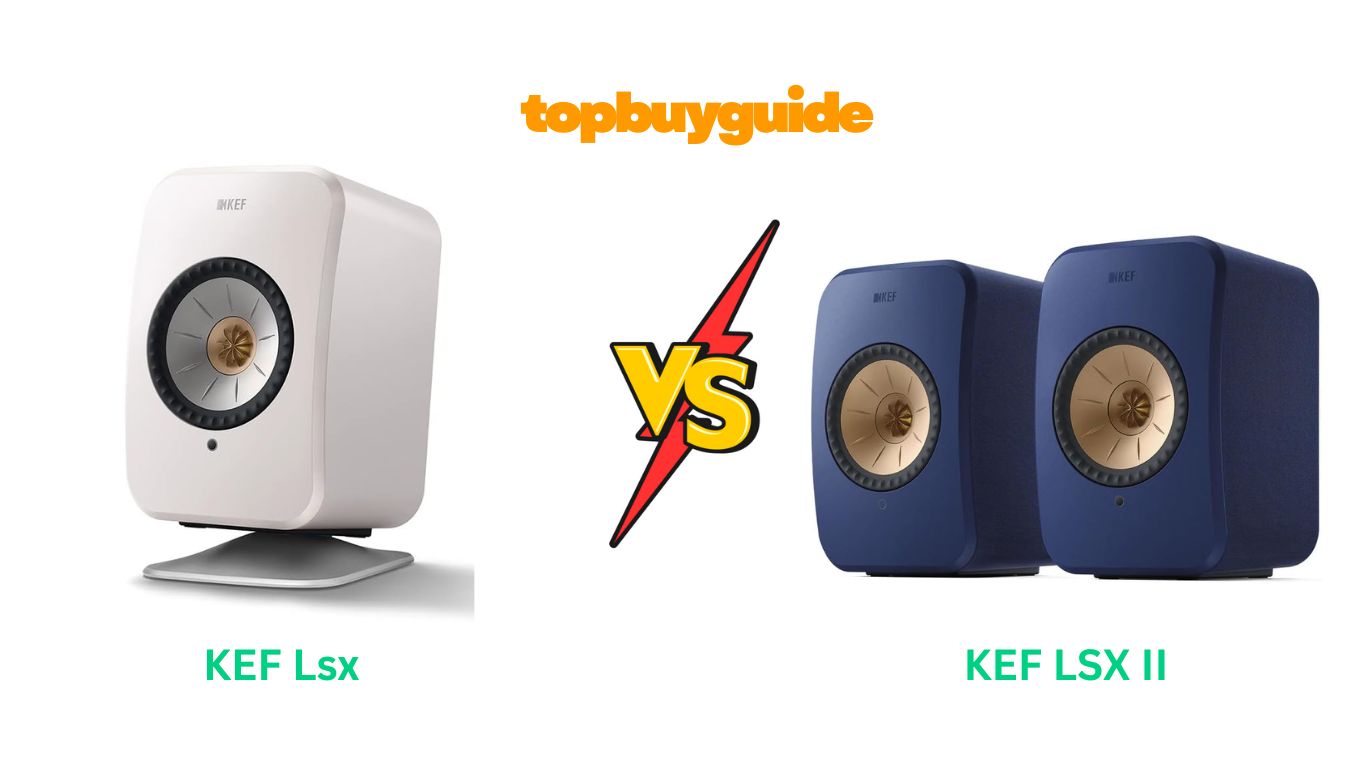
Choosing between the KEF LSX and the newer LSX II can be tough. Both offer incredible sound in a compact package. However, if you’re looking for the most versatile and future-proof option, I recommend the KEF LSX II. It builds on the original’s success with significantly improved connectivity options, including HDMI ARC and USB-C, making it a superior all-in-one system for both music and television. This key upgrade justifies the investment for most users.
Why Do I Recommend The KEF LSX II?
While both speaker systems deliver exceptional audio, the KEF LSX II includes several key upgrades that make it the superior choice for a modern listening experience. Here are the main reasons I recommend it over the original LSX.
- Expanded Connectivity: The KEF LSX II features both HDMI ARC and USB-C ports. This allows you to effortlessly connect it to your TV and laptop, transforming it into a high-fidelity sound system for all your home entertainment. In contrast, the original KEF LSX lacks these modern inputs, limiting its versatility primarily to music streaming.
- Upgraded Wireless Platform: The LSX II is built on the advanced W2 wireless platform. This provides a more stable connection and broader support for streaming services. It also includes Google Chromecast compatibility, which is absent in the original LSX. This makes multi-room audio and casting from various apps much more seamless.
- Enhanced Sound Processing: KEF’s updated Music Integrity Engine (MIE) in the LSX II offers more refined digital signal processing. This results in a more balanced, detailed, and accurate sound profile right out of the box compared to its predecessor.
- Higher Resolution Audio: While the original LSX is no slouch, the LSX II supports streaming up to 24bit/384kHz. This ensures you can enjoy the highest quality sound available from high-resolution streaming services and local files, making it a more future-proof investment for serious audiophiles.
- Improved User Experience: The KEF Connect app, used with the LSX II, provides a more intuitive and stable user experience for setup and sound customization. The older KEF Control and KEF Stream apps for the original LSX have been a point of frustration for some users.
- Multi-Room Integration: Thanks to AirPlay 2 and Chromecast, the LSX II integrates effortlessly into a multi-room audio setup with other compatible speakers. The original LSX, while supporting AirPlay 2, lacks the Chromecast option, making the LSX II the more flexible choice for whole-home audio.
Side By Side Comparison Chart (KEF LSX vs LSX II)
| Feature | KEF LSX | KEF LSX II |
| HDMI ARC | No | Yes |
| USB-C Input | No | Yes (for audio) |
| Wireless Platform | KEF Wireless | W2 Platform |
| Chromecast | No | Yes |
| Max Source Resolution | 192kHz/24bit | 384kHz/24bit |
| Speaker Max Output Power | 100 Watts | 200 Watts |
| Dedicated App | KEF Control/Stream | KEF Connect |
| Frequency Response | 59 Hz – 28 kHz | 54 Hz – 28 kHz |
What Common Features Can KEF LSX vs LSX II Do?
Despite their differences, both the KEF LSX and LSX II share a core DNA that makes them fantastic compact speaker systems. They are both designed to deliver high-fidelity stereo sound from a small footprint, making them ideal for desktops, bookshelves, or small living rooms.
Both models feature KEF’s groundbreaking Uni-Q driver array. This signature technology places the tweeter in the acoustic center of the midrange cone, allowing both frequencies to radiate from a single point. This creates a more detailed, accurate, and integrated three-dimensional sound image, dispersing sound more evenly throughout the room. As a result, you don’t need to be sitting in a perfect “sweet spot” to enjoy an immersive listening experience.
Wireless streaming is a cornerstone of both systems. You can stream music directly from services like Spotify (via Spotify Connect) and Tidal. Both also support Apple AirPlay 2, which allows for easy streaming from Apple devices and integration into a multi-room system with other AirPlay 2-enabled speakers. Bluetooth connectivity is also standard on both, providing a quick and universal way to play audio from any smartphone or tablet.
Common Features of KEF LSX vs LSX II
| Feature | KEF LSX | KEF LSX II |
| Uni-Q Driver Array | Yes | Yes |
| Apple AirPlay 2 | Yes | Yes |
| Spotify Connect | Yes | Yes |
| Tidal Connect | Yes | Yes |
| Bluetooth | Yes (4.2) | Yes (4.2) |
| Optical Input | Yes | Yes |
| AUX Input (3.5mm) | Yes | Yes |
| Subwoofer Output | Yes | Yes |
| Mounting Type | Tabletop Mount | Tabletop Mount |
A Detailed Comparison Of the KEF LSX vs LSX II
Sound Quality
The KEF LSX established itself with a remarkable sound that defied its compact size, offering clear highs and a punchy midrange. Its sound signature is lively and engaging, making music listening a joy. The Uni-Q driver ensures a wide soundstage and precise imaging, creating a listening experience far superior to typical Bluetooth speakers.
The KEF LSX II takes that excellent foundation and refines it. With its updated Music Integrity Engine, the sound is even more balanced and accurate. The bass extends slightly deeper, providing a fuller sound without needing a subwoofer, though one can still be added. Listeners will notice improved clarity and detail, allowing individual instruments and vocal nuances to shine through more distinctly.
Connectivity
The original KEF LSX provides solid connectivity for its time, including Wi-Fi, Bluetooth, an optical input for TVs, and a 3.5mm auxiliary input. This covers the basics for music streaming and connecting a couple of external devices. However, its reliance on older apps and the lack of direct, modern inputs like HDMI or USB-C are its main limitations in today’s market.
This is where the KEF LSX II truly shines and justifies its “II” designation. The inclusion of an HDMI ARC port means you can connect it directly to your TV with a single cable, allowing the speakers to turn on automatically and be controlled by your TV remote. The addition of a USB-C port makes it an ideal high-quality speaker system for a desktop or laptop computer. These two ports dramatically expand its usability beyond just a music system.
Design and Build
Both the KEF LSX and LSX II are beautifully designed speakers. They share nearly identical dimensions (9.5″ H x 6.1″ W x 7.1″ D) and feature a sleek, minimalist aesthetic. The LSX II continues the partnership with designer Michael Young, offering finishes like Carbon Black, Cobalt Blue, and a special Soundwave edition by Terence Conran. The build quality is exceptional on both, with sturdy enclosures that feel premium.
The primary difference in appearance is the range of available colors. The original LSX came in striking colors like Olive Green and Red, while the LSX II introduced new shades like Cobalt Blue and a textured Soundwave by Terence Conran edition. Ultimately, the choice here comes down to personal preference, as both models are stunning pieces of industrial design that will complement any modern decor.
Price and Value
The KEF LSX, being the older model, can often be found at a significant discount, especially on the secondhand market. This makes it a compelling value proposition for anyone seeking a high-quality wireless speaker system purely for music. If your needs don’t extend to TV or extensive multi-room audio, the original LSX offers fantastic sound for the money.
The KEF LSX II comes at a higher price point, reflecting its upgraded technology and expanded feature set. While more expensive, the value is clear for users who need a versatile, all-in-one audio solution. The ability to seamlessly serve as both a high-fidelity music system and a powerful TV soundbar, combined with its superior streaming platform, makes the LSX II a worthwhile long-term investment.
Conclusion
So, KEF LSX vs LSX II: which should you buy? If your priority is a dedicated wireless music system and you’re on a tighter budget, the original KEF LSX is an excellent choice that still delivers superb audio quality. However, for most people, the KEF LSX II is the clear winner. Its enhanced connectivity with HDMI ARC and USB-C, more stable W2 wireless platform, and refined sound processing make it a far more versatile and powerful audio hub for your entire home.
FAQs
- Is the KEF LSX II worth the extra money over the LSX?
Yes, for most users. The addition of HDMI ARC and USB-C ports, along with the improved W2 wireless platform and Chromecast support, makes the LSX II a much more versatile and user-friendly system for both music and TV audio. - Can I use the KEF LSX with my TV?
Yes, you can connect the original KEF LSX to a TV using the optical input. However, the KEF LSX II offers a more convenient HDMI ARC connection, which allows you to control the speaker volume with your TV remote. - Do I need a subwoofer with the KEF LSX or LSX II?
Both models provide impressive bass for their size, especially in a small to medium-sized room. However, both also feature a subwoofer output, so you can easily add a dedicated subwoofer if you want deeper, more powerful low-end performance. - What is the difference between the KEF Connect app and the older KEF apps?
The KEF Connect app, used for the LSX II, combines the functions of the older KEF Control and KEF Stream apps into a single, more stable, and intuitive interface. This makes setup, source selection, and EQ adjustments much easier. - Can I use the LSX and LSX II together in a multi-room setup?
Yes. Since both speakers support Apple AirPlay 2, you can group them together to play the same music across different rooms using an Apple device. However, you cannot mix them in a Chromecast group, as the original LSX does not support it. - What does the Uni-Q driver do?
The Uni-Q driver array is a signature KEF technology that places the tweeter at the center of the mid/bass cone. This design makes them act as a single point source, dispersing sound more widely and evenly for a clearer, more natural soundstage. - Is there a big difference in sound quality between wired and wireless speaker pairing on the LSX II?
Some audiophiles note a slight improvement in audio fidelity when connecting the two LSX II speakers with the included inter-speaker cable, as it allows for higher resolution playback (192kHz/24bit vs. 96kHz/24bit wirelessly). However, the wireless connection is still high-resolution and excellent for most listening.

Alex Turner is a dedicated product researcher and reviewer at TopBuyGuide.com, known for his clear, honest, and data-driven insights. He spends countless hours testing, comparing, and analyzing products to help readers make confident and informed buying decisions.