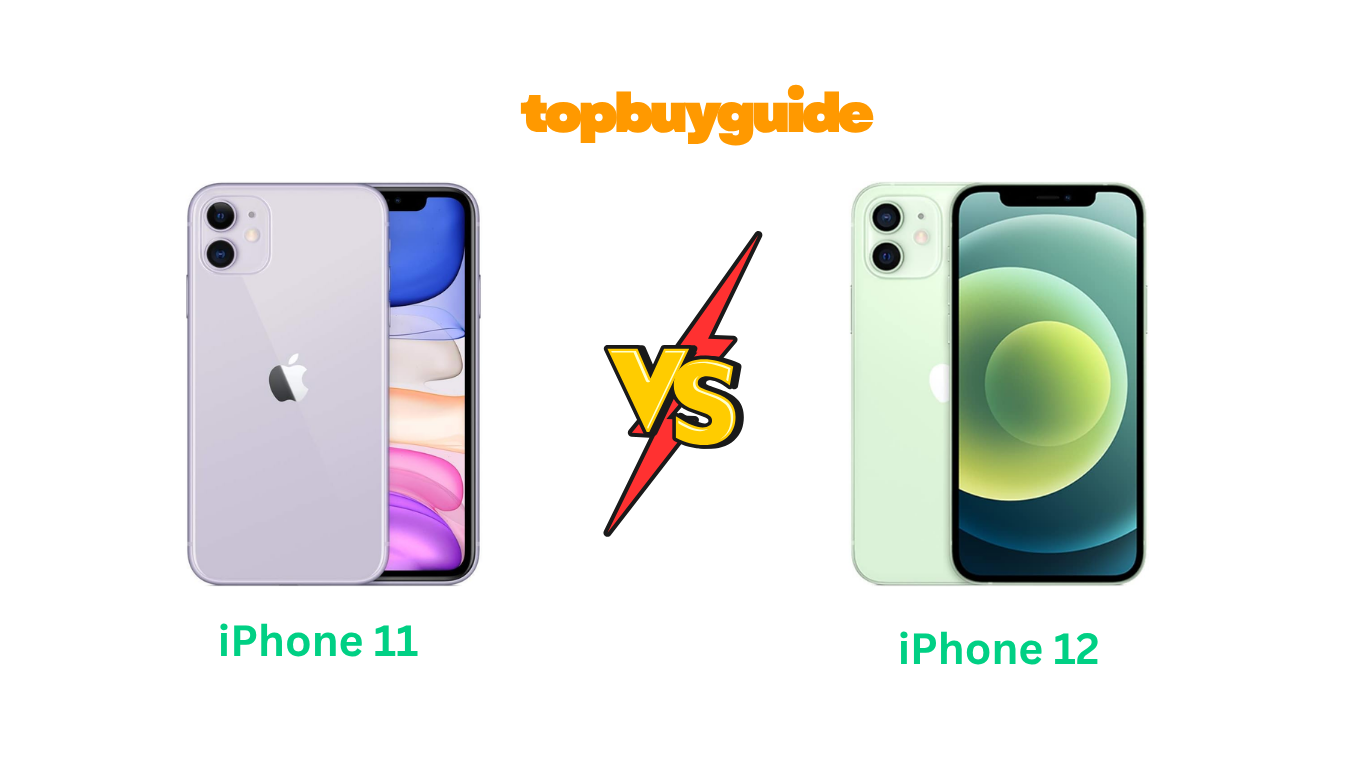
Choosing between iPhone 11 and iPhone 12 can feel overwhelming. Both phones offer excellent performance at competitive prices. However, the iPhone 12 stands out as the better choice. It delivers superior OLED display technology and 5G connectivity. The A14 Bionic chip provides faster performance. Plus, its modern flat-edge design feels premium. While the iPhone 11 costs less, the iPhone 12 offers more future-proof features worth the investment.
Why Do I Recommend The iPhone 12?
The iPhone 12 outperforms the iPhone 11 across multiple critical areas:
• Superior OLED Display Technology: The iPhone 12 features a stunning Super Retina XDR OLED display. In contrast, the iPhone 11 uses older LCD technology. The OLED screen delivers deeper blacks and higher contrast ratios.
• Next-Generation 5G Connectivity: The iPhone 12 supports blazing-fast 5G networks for future-ready connectivity. Meanwhile, the iPhone 11 only offers 4G LTE speeds. This makes the iPhone 12 better for streaming and downloads.
• More Powerful A14 Bionic Chip: The iPhone 12 runs on the advanced A14 Bionic processor. The iPhone 11 uses the older A13 chip. Benchmark tests show the iPhone 12 performs 20% faster overall.
• Enhanced Camera Performance: Both phones have dual 12MP cameras, but the iPhone 12 shines brighter. Its f/1.6 aperture captures more light than the iPhone 11’s f/1.8. Night mode works on all cameras, including the front-facing lens.
• MagSafe Magnetic Charging: The iPhone 12 introduces MagSafe technology for convenient magnetic charging. The iPhone 11 lacks this innovative feature. MagSafe also supports various magnetic accessories.
• Modern Flat-Edge Design: The iPhone 12 features a sleek, squared-off design inspired by the classic iPhone 4. Conversely, the iPhone 11 has traditional rounded edges. The iPhone 12 feels more premium and contemporary.
• Ceramic Shield Protection: The iPhone 12 boasts Ceramic Shield glass for superior drop protection. This provides 4x better drop performance than the iPhone 11. Your screen stays safer from accidental damage.
• Better HDR Video Recording: The iPhone 12 records stunning Dolby Vision HDR video up to 4K at 30fps. The iPhone 11 cannot match this professional-grade video capability. Content creators will appreciate this upgrade.
Side By Side Comparison Chart iPhone 11 vs 12
| Feature | iPhone 11 | iPhone 12 |
| Display Type | Liquid Retina HD (LCD) | Super Retina XDR (OLED) |
| Display Resolution | 1792 x 828 (326 ppi) | 2532 x 1170 (460 ppi) |
| Contrast Ratio | 1400:1 | 2,000,000:1 |
| Processor | A13 Bionic chip | A14 Bionic chip |
| 5G Connectivity | No (4G LTE only) | Yes (5G capable) |
| Design Style | Rounded edges | Flat, squared edges |
| Front Glass | Standard glass | Ceramic Shield |
| Weight | 6.84 oz (194g) | 5.78 oz (164g) |
| Thickness | 0.33 inches | 0.29 inches |
| Wide Camera Aperture | f/1.8 | f/1.6 |
| Night Mode | Rear cameras only | All cameras |
| HDR Video | No Dolby Vision | Dolby Vision up to 4K 30fps |
| MagSafe Support | No | Yes |
| Smart HDR | Smart HDR 2 | Smart HDR 3 |
What Common iPhone 11 vs 12 Can Do?
Stunning 6.1-Inch Display Experience
Both the iPhone 11 and iPhone 12 feature identical 6.1-inch display sizes. This provides excellent screen real estate for videos and gaming. The displays include True Tone technology that adjusts white balance automatically. Wide color support (P3) ensures vibrant, true-to-life colors. Both screens reach 625 nits maximum brightness for outdoor visibility. Haptic Touch functionality delivers responsive tactile feedback.
Exceptional Dual Camera System
The iPhone 11 and iPhone 12 share similar camera hardware foundations. Both phones include dual 12MP camera systems with wide and ultra-wide lenses. The ultra-wide camera features an f/2.4 aperture on both models. Both devices support optical image stabilization (OIS) for steady shots. Portrait mode creates beautiful depth-of-field effects. Deep Fusion technology enhances texture and detail. Night mode captures impressive low-light photos automatically.
Professional Video Recording Capabilities
Video enthusiasts will appreciate both phones’ recording capabilities. The iPhone 11 and iPhone 12 record stunning 4K video at 60fps. Extended dynamic range works up to 30fps on both models. Video stabilization keeps footage smooth and professional. Time-lapse mode creates dramatic compressed video sequences. Both phones support slow-motion video at 1080p and 240fps.
Advanced Face ID Security
Facial recognition works seamlessly on both iPhone models. Face ID provides secure authentication using TrueDepth camera technology. Both phones unlock instantly when you look at them. Face ID enables secure Apple Pay transactions. The technology works reliably in various lighting conditions. Your facial data stays encrypted and never leaves your device.
Water and Dust Resistance
The iPhone 11 and iPhone 12 both carry IP68 water resistance ratings. This means they survive submersion in water up to certain depths. Both phones resist dust and dirt effectively. The iPhone 11 handles up to 2 meters for 30 minutes. The iPhone 12 improves this to 6 meters for 30 minutes. This protection provides peace of mind against accidental spills.
Fast Charging and Wireless Capabilities
Both iPhones support fast charging technology with compatible adapters. You can charge up to 50% in approximately 30 minutes. Qi wireless charging works on both models for cable-free convenience. Both phones support USB Power Delivery for efficient charging. Battery management features extend overall battery lifespan. Smart battery charging learns your daily patterns.
iOS Ecosystem Integration
The iPhone 11 and iPhone 12 run the latest iOS software. Both phones integrate seamlessly with other Apple devices. iCloud keeps your photos, files, and data synced automatically. AirDrop enables quick file sharing with nearby Apple devices. Both phones work with Apple Watch, AirPods, and HomePod. App Store access provides millions of optimized applications.
Powerful Performance for Daily Tasks
Daily performance remains excellent on both iPhone models. Apps launch quickly without lag or stutter. Multitasking works smoothly with multiple apps running simultaneously. Gaming performance handles most titles at high frame rates. Web browsing feels snappy and responsive. Both phones handle productivity apps like email and documents effortlessly.
Common Features of iPhone 11 vs 12
| Feature | iPhone 11 | iPhone 12 |
| Display Size | 6.1 inches | 6.1 inches |
| Dual 12MP Cameras | Yes (Wide + Ultra Wide) | Yes (Wide + Ultra Wide) |
| Ultra Wide Aperture | f/2.4 | f/2.4 |
| Front Camera | 12MP TrueDepth | 12MP TrueDepth |
| 4K Video Recording | Up to 60fps | Up to 60fps |
| Optical Image Stabilization | Yes | Yes |
| Portrait Mode | Yes | Yes |
| Night Mode | Yes (rear only) | Yes (all cameras) |
| Deep Fusion | Yes | Yes |
| Face ID | Yes | Yes |
| Water Resistance | IP68 (2m, 30min) | IP68 (6m, 30min) |
| Fast Charging | Yes | Yes |
| Wireless Charging (Qi) | Yes | Yes |
| Storage Options | 64GB, 128GB, 256GB | 64GB, 128GB, 256GB |
| True Tone Display | Yes | Yes |
| Wide Color (P3) | Yes | Yes |
| Haptic Touch | Yes | Yes |
A Detailed Comparison Of the iPhone 11 vs 12
Display Technology and Quality
The iPhone 11 features a Liquid Retina HD display using LCD technology. This screen delivers good color accuracy and brightness for most users. The resolution sits at 1792 x 828 pixels with 326 ppi density. The contrast ratio reaches 1400:1, which provides decent black levels.
The iPhone 12 upgrades to Super Retina XDR OLED display technology. This represents a significant improvement in visual quality overall. The resolution jumps to 2532 x 1170 pixels with 460 ppi density. The contrast ratio reaches an impressive 2,000,000:1 for true blacks. Colors appear more vibrant and HDR content looks spectacular.
Processor Performance and Speed
The iPhone 11 runs on Apple’s A13 Bionic chip from 2019. This processor handles everyday tasks smoothly without issues. Apps launch quickly and gaming performance remains solid. The chip includes a third-generation Neural Engine for machine learning.
The iPhone 12 features the newer A14 Bionic chip built on 5nm technology. This processor delivers approximately 20% faster performance in benchmarks. The chip handles demanding applications and games more efficiently. Machine learning tasks process faster with the improved Neural Engine. The A14 provides better energy efficiency for extended battery life.
Camera Capabilities and Image Quality
The iPhone 11 includes dual 12MP cameras with impressive capabilities. The wide camera features an f/1.8 aperture for decent low-light performance. Night mode works exclusively on the rear camera system. Smart HDR 2 improves dynamic range in challenging lighting conditions.
The iPhone 12 enhances camera performance with key improvements. The wide camera upgrades to f/1.6 aperture, allowing more light in. Night mode extends to all cameras, including the front-facing lens. Smart HDR 3 delivers better balanced exposures and improved detail. Low-light photography shows noticeable improvement over the iPhone 11.
Network Connectivity and 5G Support
The iPhone 11 maxes out at 4G LTE cellular connectivity. This provides adequate speeds for most current applications. Gigabit-class LTE with 4×4 MIMO delivers fast downloads. Wi-Fi 6 support ensures strong wireless performance at home.
The iPhone 12 introduces 5G connectivity to the iPhone lineup. This enables significantly faster download and upload speeds where available. 5G networks provide lower latency for responsive online gaming. The phone automatically switches between 5G and LTE for battery optimization. As 5G coverage expands, the iPhone 12 remains future-ready.
Design, Build Quality, and Aesthetics
The iPhone 11 features Apple’s classic rounded-edge design language. The aluminum frame feels solid and comfortable in hand. Glass front and back panels provide a premium appearance. The phone measures 5.94 x 2.98 x 0.33 inches overall. Weight comes in at 6.84 ounces, giving it substantial feel.
The iPhone 12 reimagines iPhone design with flat, squared-off edges. This industrial look recalls the beloved iPhone 4 aesthetic. The phone feels noticeably slimmer at just 0.29 inches thick. It weighs only 5.78 ounces, making it lighter and easier to hold. Ceramic Shield front glass provides four times better drop protection.
Charging Technology and MagSafe
The iPhone 11 supports standard Qi wireless charging at 7.5W power. Fast charging works with 20W or higher USB-C power adapters. You can charge to 50% in approximately 30 minutes. The phone relies on traditional Lightning connector for wired charging.
The iPhone 12 introduces MagSafe magnetic charging technology at 15W power. Magnets align perfectly for more efficient wireless charging every time. MagSafe accessories attach magnetically to the phone’s back. This includes wallets, battery packs, and mounting systems. Standard Qi wireless charging still works as a fallback option.
Color Options and Personalization
The iPhone 11 comes in six attractive color choices. Options include White, Black, Green, Yellow, Purple, and Product RED. The pastel-like colors give the phone a fun personality. The aluminum frame matches the back glass color.
The iPhone 12 also offers six color options to suit preferences. Available colors are White, Black, Blue, Green, Purple, and Product RED. The colors appear more vibrant and saturated than iPhone 11. The aluminum frame maintains a consistent finish across all colors.
Battery Life and Power Management
The iPhone 11 includes a 3,110mAh battery for all-day usage. Apple rates it for up to 17 hours of video playback. Music playback extends up to 65 hours on a charge. The larger battery capacity provides excellent endurance for most users.
The iPhone 12 contains a smaller 2,815mAh battery but maintains similar performance. Apple also rates it for up to 17 hours of video playback. Music playback matches the iPhone 11 at 65 hours total. The more efficient A14 chip compensates for the smaller battery. However, 5G usage can drain battery faster when actively used.
Conclusion
The iPhone 12 emerges as the superior choice for most buyers. Its OLED display delivers stunning visual quality with deeper blacks. The A14 Bionic chip provides 20% faster performance for demanding apps. 5G connectivity ensures your phone remains relevant for years ahead. Enhanced camera performance captures better photos, especially in low light. The modern flat-edge design feels premium and looks contemporary.
FAQs
Q: Is the iPhone 12 camera much better than iPhone 11?
The iPhone 12 camera shows noticeable improvements in low-light situations. The wider f/1.6 aperture captures more light than the iPhone 11’s f/1.8. Night mode works on all cameras, including the front-facing lens. Smart HDR 3 delivers better dynamic range. Overall image quality appears sharper with enhanced detail processing.
Q: Does iPhone 12 battery last longer than iPhone 11?
Both phones offer similar battery life for video and music playback. The iPhone 11 has a larger 3,110mAh battery compared to the iPhone 12’s 2,815mAh. However, the A14 chip’s efficiency compensates for this difference. Active 5G usage on iPhone 12 can drain battery faster. For typical daily use, battery performance feels comparable.
Q: Is the iPhone 12 display worth the upgrade?
The OLED display on iPhone 12 represents a significant upgrade. You’ll notice deeper blacks and much higher contrast ratios immediately. The 460 ppi resolution appears sharper than the iPhone 11’s 326 ppi. HDR content looks spectacular on the Super Retina XDR screen. If you watch videos frequently, the display upgrade proves worthwhile.
Q: Will iPhone 11 work on 5G networks?
No, the iPhone 11 does not support 5G connectivity at all. It maxes out at 4G LTE speeds with Gigabit-class capabilities. Only iPhone 12 and newer models include 5G support. If you want 5G network access, you must upgrade. However, 4G LTE still provides adequate speeds for most applications.
Q: How much lighter is the iPhone 12 compared to iPhone 11?
The iPhone 12 weighs 5.78 ounces (164 grams) total. The iPhone 11 weighs 6.84 ounces (194 grams) in comparison. This makes the iPhone 12 approximately 1 ounce (30 grams) lighter. The difference feels noticeable when holding the phones side-by-side. The slimmer 0.29-inch profile also contributes to the lighter feel.
Q: Does iPhone 12 have better water resistance than iPhone 11?
Both phones carry IP68 water resistance ratings, but with different depths. The iPhone 11 survives submersion up to 2 meters deep. The iPhone 12 improves this rating to 6 meters deep. Both can withstand 30 minutes underwater at their rated depths. For everyday water exposure, both phones provide excellent protection.
Q: Are iPhone 11 and iPhone 12 cases compatible?
No, iPhone 11 and iPhone 12 cases are not interchangeable. The iPhone 12 has different dimensions and a flatter design. The camera bump placement differs slightly between the two models. MagSafe cases for iPhone 12 include built-in magnets that won’t work on iPhone 11. You’ll need to purchase cases specifically designed for your model.
Q: How much does iPhone 12 cost compared to iPhone 11?
Prices vary depending on storage capacity and condition (new vs. renewed). On Amazon, renewed iPhone 11 models typically start around $150-200. Renewed iPhone 12 models usually range from $200-250 and up. The price difference is approximately $50-100 for similar storage options. The iPhone 12’s additional features justify the modest price increase.

Alex Turner is a dedicated product researcher and reviewer at TopBuyGuide.com, known for his clear, honest, and data-driven insights. He spends countless hours testing, comparing, and analyzing products to help readers make confident and informed buying decisions.