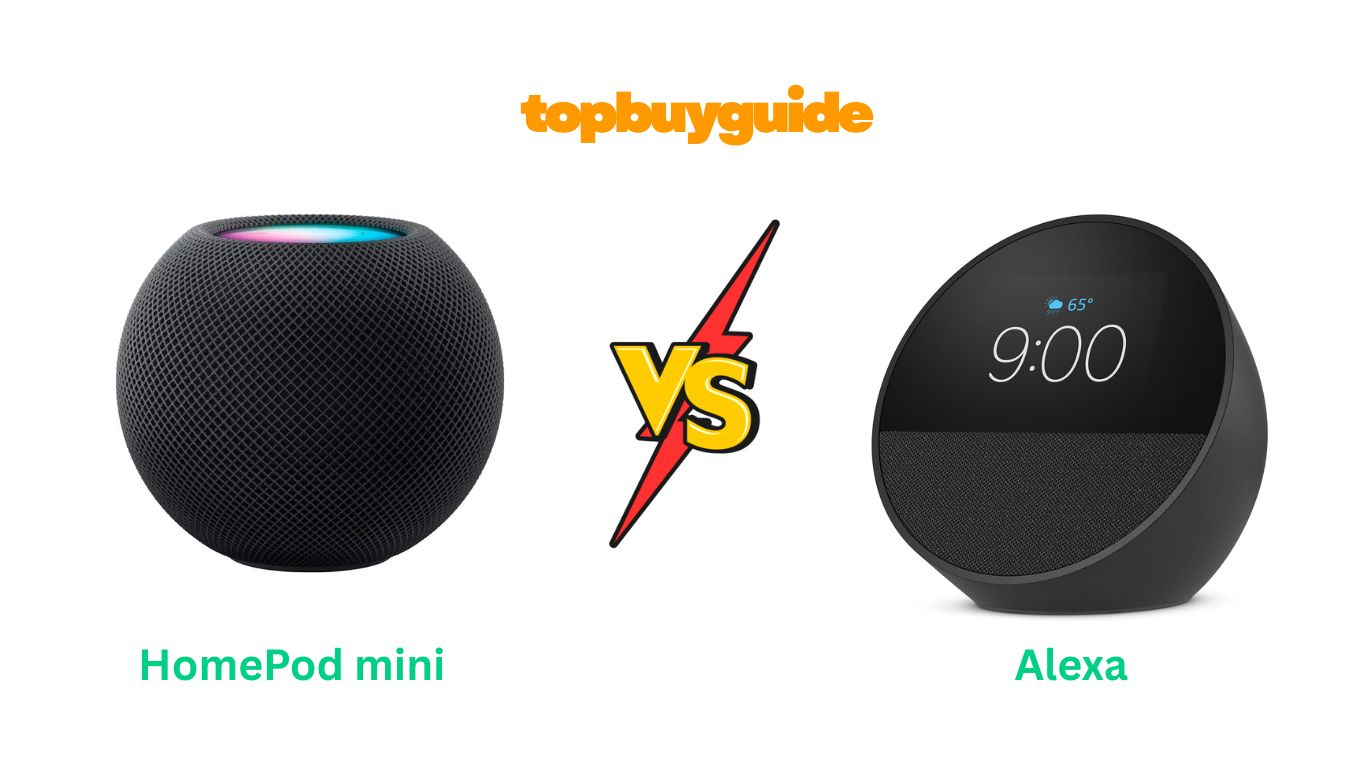
Choosing between HomePod mini and Echo Spot shapes your smart home experience significantly. I recommend the Echo Spot for most bedrooms. Its 2.83-inch display shows time, weather, and song information clearly at a glance. Alexa’s mature voice assistant understands commands reliably. At $79.99, it costs less while offering visual feedback the HomePod mini lacks entirely.
Why Do I Recommend The Echo Spot?
The Echo Spot combines practical alarm clock features with smart speaker functionality in ways the HomePod mini cannot match.
- Visual Display for Quick Information – The Echo Spot features a 2.83-inch screen displaying time, temperature, weather forecasts, and upcoming alarms at a glance. You never need to ask for basic information. In contrast, the HomePod mini provides only audio responses requiring voice queries. The visual interface proves dramatically more convenient for quick time checks.
- Customizable Clock Faces – With six different clock face options including five digital and one analog, the Echo Spot personalizes to your aesthetic preferences. You can change display colors to match your bedroom decor. Meanwhile, the HomePod mini’s backlit touch surface shows only basic status information. The customization options make the Echo Spot feel truly yours.
- Tap-to-Snooze Convenience – Simply tap anywhere on the Echo Spot’s top surface to snooze alarms when you’re groggy. No fumbling for specific buttons or speaking required. The HomePod mini requires saying “Hey Siri, snooze” when you’re barely awake. The physical interaction feels more natural and reliable during drowsy mornings.
- Mature Voice Assistant – Alexa has evolved through years of development with over 100,000 third-party skills available. The voice recognition accuracy and natural language understanding excel consistently. While Siri has improved, it still lags behind in comprehension and available capabilities. Alexa’s ecosystem maturity delivers more reliable daily experiences.
- Lower Price Point – At $79.99 retail (often discounted to $45-55 during sales), the Echo Spot costs significantly less than the $99 HomePod mini. The price difference buys additional smart home devices or accessories. For budget-conscious buyers, the value proposition favors Amazon’s offering decisively.
- Broader Music Service Support – The Echo Spot supports Amazon Music, Spotify, Apple Music, Pandora, Tidal, SiriusXM, Deezer, and countless other services. You can set any service as default. Conversely, the HomePod mini prioritizes Apple Music with limited third-party integration requiring AirPlay. Music flexibility matters for non-Apple Music subscribers.
- Better Nighttime Visibility – The Echo Spot’s display provides constant visual reference for time without requiring interaction. The screen dims automatically in dark rooms preventing sleep disruption. The HomePod mini requires voice activation or touching for time information. Waking to check time proves simpler with persistent display visibility.
- Platform Agnostic Compatibility – The Echo Spot works excellently with Android and iOS devices equally. Setup requires only the Alexa app available on both platforms. The HomePod mini requires iPhone or iPad for initial setup and full functionality. Cross-platform compatibility expands the Echo Spot’s potential user base significantly.
Side By Side Comparison Chart HomePod mini vs Alexa
| Feature | HomePod mini | Echo Spot (Alexa) |
| Display | No display (LED indicators) | 2.83″ touchscreen |
| Voice Assistant | Siri | Alexa |
| Processor | Apple S5 chip | Not specified |
| Speaker Configuration | Full-range driver + 2 passive radiators | Front-firing speaker |
| Audio Technology | 360-degree sound, Computational audio | Directional audio |
| Clock Display | No (audio only) | Yes (customizable faces) |
| Tap-to-Snooze | No | Yes |
| Temperature Sensor | Yes (activated 2023) | No |
| Humidity Sensor | Yes (activated 2023) | No |
| Smart Home Protocol | Thread, HomeKit | Matter (WiFi only) |
| Platform Requirement | iPhone/iPad required | iOS or Android |
| Music Services | Apple Music, limited third-party | All major services |
| Intercom Feature | Yes (Apple devices) | Drop-in and Announcements |
| Video Calls | No camera | No camera/display |
| Stereo Pairing | Yes | Yes (with another Spot) |
| Dimensions | 3.3″ H x 3.9″ W | 4.5″ H x 4.5″ W x 4.1″ D |
| Weight | 0.76 lbs (345g) | Approximately 0.9 lbs |
| Colors | Midnight, White, Blue, Orange, Yellow | Black, Glacier White, Ocean Blue |
| Price | $99 | $79.99 |
| Setup Requirement | iPhone/iPad mandatory | Any smartphone |
What Common HomePod mini vs Alexa Can Do?
Both smart speakers share fundamental features making them valuable bedroom companions and household assistants.
Voice-Controlled Music Playback – Both the HomePod mini and Echo Spot stream music through voice commands hands-free. The HomePod mini leverages Apple Music’s 100 million song catalog with spatial audio support for compatible tracks. The Echo Spot accesses Amazon Music, Spotify, Apple Music, and numerous other streaming platforms. Both deliver clear audio suitable for bedroom listening at moderate volumes. Voice commands like “play jazz” or “play workout music” work intuitively on both platforms. The streaming quality depends on service subscription tier and WiFi connection strength.
Smart Alarm Clock Functionality – Both devices function as reliable voice-controlled alarm clocks replacing traditional bedside clocks. You can set multiple alarms for different days using natural language commands. The HomePod mini allows waking to specific songs, playlists, or radio stations from Apple Music. The Echo Spot offers similar music alarm capabilities plus exclusive alarm sounds. Both support gradual volume increase creating gentle wake-up experiences. The alarm reliability matches dedicated alarm clocks without smartphone dependence.
Smart Home Device Control – Both speakers control compatible smart home devices through their respective ecosystems. The HomePod mini integrates seamlessly with HomeKit-enabled devices including lights, thermostats, locks, and cameras. The Echo Spot controls vast arrays of Alexa-compatible devices from countless manufacturers. Both support voice commands for turning devices on/off and adjusting settings. Room groupings allow controlling multiple devices simultaneously. The centralized control streamlines daily smart home interactions significantly.
Timer and Reminder Management – Both devices handle multiple timers and reminders essential for cooking and daily task management. You can set named timers like “pasta timer” or “laundry timer” for tracking different activities. The HomePod mini announces timer completion through Siri’s voice. The Echo Spot displays timers visually while also announcing completions. Both allow checking remaining time and canceling timers vocally. The functionality proves invaluable in kitchens and workspace applications.
Weather Forecasts and Information – Both smart speakers provide current conditions and multi-day weather forecasts on demand. The HomePod mini delivers weather information through Siri’s audio responses including temperature, precipitation, and conditions. The Echo Spot displays weather information visually on its screen while also providing voice updates. Both can integrate weather into morning routines. Location-based forecasts ensure relevant information for your specific area. The quick weather access eliminates phone checking entirely.
Hands-Free Calling – Both devices enable voice calling within their respective ecosystems for household communication. The HomePod mini supports calls to other Apple devices and phone numbers through Handoff integration. The Echo Spot facilitates calls to other Alexa devices and external numbers. Both offer household intercom features for room-to-room communication. The hands-free calling proves convenient when phones are charging elsewhere. Audio quality remains clear for conversations despite compact speaker sizes.
Routine Automation – Both platforms support routine creation automating multiple actions with single triggers. Morning routines might include weather updates, news briefings, light adjustments, and music playback sequentially. The HomePod mini creates routines through the Home app with HomeKit device integration. The Echo Spot builds routines via the Alexa app with extensive customization options. Both support time-based and voice-triggered routine execution. The automation reduces repetitive daily interactions significantly.
Podcast and Audiobook Playback – Both speakers stream podcasts and audiobooks delivering spoken-word content excellently. The HomePod mini plays content from Apple Podcasts and Audible through AirPlay. The Echo Spot accesses podcasts through multiple services and Audible audiobooks directly. Both remember playback positions for continued listening. Voice controls handle play/pause, speed adjustment, and chapter navigation. The hands-free podcast listening enhances multitasking during chores or relaxation.
Common Features of HomePod mini vs Alexa
| Feature | HomePod mini | Echo Spot |
| Voice Control | Yes (Siri) | Yes (Alexa) |
| Music Streaming | Yes | Yes |
| Alarm Clock | Yes | Yes |
| Multiple Alarms | Yes | Yes |
| Music Alarms | Yes | Yes |
| Snooze Function | Yes (voice) | Yes (tap/voice) |
| Timer Functions | Yes | Yes |
| Multiple Timers | Yes | Yes |
| Smart Home Control | Yes | Yes |
| Weather Forecasts | Yes | Yes |
| News Briefings | Yes | Yes |
| Voice Calling | Yes | Yes |
| Intercom Feature | Yes | Yes |
| Podcast Playback | Yes | Yes |
| Audiobook Support | Yes | Yes |
| Bluetooth Connectivity | Yes (Bluetooth 5) | Yes |
| WiFi Connectivity | Yes (802.11n) | Yes |
| Routine Automation | Yes | Yes |
| Volume Control | Yes (voice/touch) | Yes (voice/buttons) |
| Microphone Mute | Yes | Yes |
| Stereo Pairing | Yes | Yes |
| Multi-Room Audio | Yes | Yes |
| Compact Design | Yes | Yes |
A Detailed Comparison Of the HomePod mini vs Alexa
Display and Visual Feedback
The Echo Spot’s 2.83-inch touchscreen fundamentally changes how you interact with a bedside smart speaker. The display shows time constantly without requiring voice queries or touch interaction. Weather information, upcoming alarms, and song titles appear clearly. The six customizable clock faces suit different aesthetic preferences from minimalist digital to classic analog designs.
The HomePod mini provides only audio feedback without any visual display beyond its backlit touch surface. You must ask Siri for time, weather, or status information receiving only voice responses. The LED indicators on top show volume levels and Siri activation but convey minimal information. Visual learners find the lack of screen limiting for quick information glances.
Voice Assistant Capabilities
Alexa represents years of development and refinement with over 100,000 third-party skills extending functionality dramatically. Natural language processing handles complex, conversational queries accurately. The skill ecosystem includes everything from games to productivity tools to specialized information services. Amazon continuously updates Alexa adding new features regularly. Integration with Amazon services like shopping proves seamless.
Siri has improved significantly but still trails Alexa in comprehension accuracy and available capabilities. The voice assistant excels within Apple’s ecosystem with excellent device handoff and continuity features. Siri recognizes up to six household members personalizing responses accordingly. However, third-party integration remains limited compared to Alexa’s vast skill library. Complex queries sometimes confuse Siri requiring rephrasing.
Audio Quality and Performance
The HomePod mini delivers impressive 360-degree sound through computational audio and its full-range driver flanked by dual passive radiators. The spherical design projects audio omnidirectionally filling rooms evenly. Apple’s tuning emphasizes clarity and balanced frequency response. The compact speaker punches above its weight class sonically. Audiophiles appreciate the sophisticated sound surprising for the size.
The Echo Spot focuses on directional audio from its front-firing speaker suitable for bedside placement. The sound quality handles spoken content excellently making podcasts and audiobooks enjoyable. Music playback proves adequate at low-to-mid volumes though bass response remains limited. The speaker distorts noticeably above 70% volume. The audio design prioritizes bedroom use over living room performance.
Smart Home Integration
The HomePod mini functions as a HomeKit hub controlling Apple’s ecosystem devices seamlessly. Thread support enables low-power mesh networking for compatible smart home products. The integration feels native with Siri commands controlling devices naturally. Temperature and humidity sensors activated in 2023 enable environment-based automation. However, the HomeKit ecosystem remains smaller than competitors with fewer device options.
The Echo Spot supports Matter protocol over WiFi connecting diverse smart home brands. Alexa’s ecosystem includes thousands of compatible devices from hundreds of manufacturers. Smart home control represents Alexa’s strongest feature with reliable device communication. However, the Echo Spot lacks Thread support limiting some advanced mesh capabilities. The mature ecosystem provides unmatched device compatibility.
Setup Process and Platform Requirements
The HomePod mini requires iPhone or iPad for initial setup and full functionality access. Mac computers cannot configure HomePod mini devices. The mandatory Apple device requirement excludes Android users completely. Setup involves the Home app with straightforward step-by-step instructions. The integration with existing Apple devices happens automatically through iCloud. Updates install seamlessly requiring no user intervention.
The Echo Spot welcomes both iOS and Android users equally through the Alexa app available on both platforms. Setup takes minutes with intuitive on-screen prompts guiding configuration. No specific device ecosystem membership required for full functionality. The platform-agnostic approach expands potential users significantly. The Alexa app provides comprehensive device control and customization options accessible from any smartphone.
Temperature and Environmental Sensing
The HomePod mini includes previously hidden temperature and humidity sensors Apple activated through software update in January 2023. The sensors monitor room conditions enabling environment-based automation through HomeKit routines. You can create triggers like “turn on humidifier when humidity drops below 40%.” The environmental data integrates with other HomeKit devices creating sophisticated automation. The sensing capability adds meaningful smart home functionality.
The Echo Spot lacks temperature or humidity sensors focusing entirely on alarm clock and audio functions. Environmental sensing requires separate smart home devices. The limitation reduces automation possibilities compared to the HomePod mini. For users wanting room condition monitoring, separate sensors become necessary. The focused feature set prioritizes core alarm clock functionality over comprehensive sensing.
Music Service Flexibility
The Echo Spot supports virtually every major music streaming service including Amazon Music, Spotify, Apple Music, Pandora, Tidal, SiriusXM, and Deezer. You can set any service as default eliminating repeated service specification. The broad compatibility accommodates diverse subscription preferences. Podcast platforms similarly offer extensive choices. The flexibility ensures your existing music subscriptions work seamlessly.
The HomePod mini centers on Apple Music providing optimal integration and features. Third-party services require AirPlay streaming from iOS devices rather than native integration. The process works but feels less seamless than direct voice control. For Apple Music subscribers, the experience proves excellent with playlist access and recommendations. Non-Apple Music users find the limited native support frustrating.
Nighttime and Sleep Features
The Echo Spot’s display brightness adjusts automatically based on ambient lighting preventing bedroom light pollution. Night mode dims the screen to barely visible levels. The persistent time display eliminates nighttime phone checking. Tap-to-snooze functionality requires no precise aim when drowsy. Alexa routines can trigger bedtime sequences including light dimming and sleep sounds. The design specifically targets bedside placement.
The HomePod mini offers sleep timers for music and ambient sounds but lacks dedicated sleep features. No visual display means nighttime time checking requires voice interaction potentially disturbing partners. The Intercom feature allows quiet household communication. Siri can play sleep sounds and nature noises. However, the sleep-focused features feel secondary to general smart speaker functionality.
Intercom and Communication Features
The HomePod mini’s Intercom feature sends audio messages to other HomePods plus iPhones, iPads, Apple Watches, and CarPlay. Messages broadcast to specific rooms, zones, or throughout the home. Family members receive notifications and can reply from any Apple device. The feature requires staying within Apple’s ecosystem completely. The implementation feels polished and reliable.
The Echo Spot supports Drop-in and Announcements for household communication. Drop-in enables full-duplex audio conversations like phone calls between devices. Announcements broadcast one-way messages throughout the home to all Alexa devices. The features work with any Alexa-enabled device regardless of manufacturer. The mature implementation provides reliable family communication.
Price and Overall Value
The HomePod mini retails consistently at $99 making it Apple’s most affordable speaker. Sales occasionally reduce pricing but discounts remain rare compared to Echo devices. The price includes impressive audio quality and seamless Apple ecosystem integration. For Apple users, the value proves reasonable considering feature integration. Non-Apple users find limited value given platform requirements.
The Echo Spot lists at $79.99 but frequently discounts to $45-55 during promotional periods. The lower price point makes multiple-unit purchases affordable for whole-home coverage. The visual display, broad platform support, and mature Alexa capabilities justify the cost. Budget-conscious buyers find excellent value especially during sales. The accessibility welcomes newcomers to smart home technology.
Conclusion
The Echo Spot wins for most bedrooms. Its 2.83-inch display provides constant time visibility without voice queries. Tap-to-snooze functionality beats voice commands during groggy mornings. Alexa’s mature ecosystem supports 100,000+ skills and countless music services. At $79.99 (often $45-55 on sale), it costs less than the $99 HomePod mini. Platform-agnostic compatibility welcomes both iOS and Android users. [Check current pricing on Amazon]
FAQs
Q: Can Android users set up the HomePod mini?
A: No, the HomePod mini requires iPhone or iPad for initial setup and full functionality. Mac computers also cannot configure HomePod mini devices. This limitation excludes Android users entirely from Apple’s smart speaker. The Echo Spot welcomes both iOS and Android users equally through the cross-platform Alexa app.
Q: Which device has better sound quality?
A: The HomePod mini delivers superior audio quality with 360-degree sound, computational audio processing, and impressive bass from its passive radiators. The Echo Spot’s front-firing speaker suits spoken content excellently but cannot match the HomePod mini’s music reproduction. However, both perform adequately for bedside listening scenarios.
Q: Does the Echo Spot work with Apple Music?
A: Yes, the Echo Spot supports Apple Music alongside Amazon Music, Spotify, Pandora, Tidal, and other major services. You can set Apple Music as your default service. However, the HomePod mini provides more seamless Apple Music integration with better voice control and playlist access.
Q: Can I see the time without speaking?
A: Yes on the Echo Spot, which displays time constantly on its 2.83-inch screen. No on the HomePod mini, which lacks any display and requires saying “Hey Siri, what time is it?” The visual display proves significantly more convenient for quick time checks, especially at night.
Q: Which device controls more smart home products?
A: The Echo Spot supports thousands of Alexa-compatible devices from hundreds of manufacturers making it the clear winner for device variety. The HomePod mini’s HomeKit ecosystem remains smaller though it includes Thread support. Alexa’s ecosystem maturity provides unmatched compatibility across brands and device types.
Q: How do I snooze alarms on each device?
A: The Echo Spot allows tapping anywhere on its top surface to snooze alarms—no precise aim needed when drowsy. The HomePod mini requires saying “Hey Siri, snooze” which feels less natural during groggy mornings. The physical interaction proves more reliable and partner-friendly than voice commands.
Q: Can I use either device without a subscription?
A: Yes, both devices function fully without music subscriptions though content access becomes limited. The Echo Spot plays radio and podcasts free through various services. The HomePod mini requires Apple Music subscription for optimal functionality. Neither device requires subscriptions for smart home control, alarms, or voice assistant features.
Q: Which device is better for non-Apple users?
A: The Echo Spot clearly suits non-Apple users better. It works equally well with Android and iOS devices without ecosystem lock-in. The HomePod mini requires iPhone/iPad and integrates primarily with Apple services. Android users gain no benefit from HomePod mini while Echo Spot provides full functionality.

Alex Turner is a dedicated product researcher and reviewer at TopBuyGuide.com, known for his clear, honest, and data-driven insights. He spends countless hours testing, comparing, and analyzing products to help readers make confident and informed buying decisions.