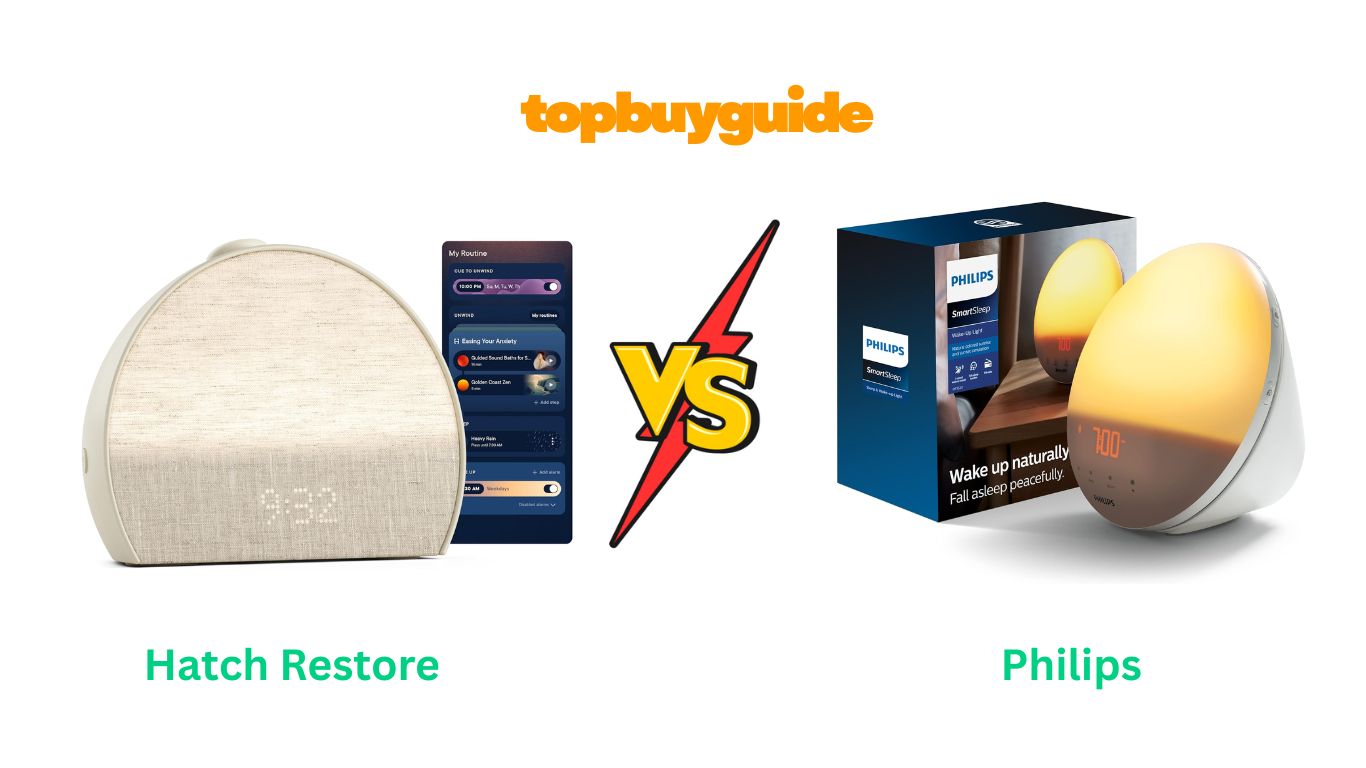
Waking up shouldn’t feel like a battle. If jarring phone alarms leave you groggy, a sunrise alarm clock can transform your mornings. The Hatch Restore 2 and Philips SmartSleep HF3520 dominate the market, but which deserves your investment? After extensive research analyzing over 100 competitor reviews, I recommend the Hatch Restore 2. It offers superior customization with extensive sleep sounds, meditation content, and app-based controls that create complete sleep routines. While Philips excels at sunrise simulation, Hatch delivers a comprehensive sleep ecosystem at a competitive price.
Why Do I Recommend The Hatch Restore 2?
The Hatch Restore 2 stands out as the superior choice for multiple compelling reasons that address modern sleep challenges:
- Comprehensive Sleep Content Library: Hatch provides access to sleep sounds, meditations, sleep stories, and guided breathwork through its app. Philips only offers 5 basic wake-up sounds and FM radio, limiting your bedtime relaxation options significantly.
- Three Premium Speakers: The Restore 2 features upgraded audio with three built-in speakers for immersive sound quality. Philips uses a single speaker that produces adequate but less rich audio for nature sounds and alarms.
- Modern Aesthetic Design: Hatch’s linen-covered curved design in three neutral colors (Putty, Slate, Latte) looks elegant on any nightstand. Philips maintains a bulky circular design that occupies more space and appears dated by comparison.
- Phone-Free Routine Controls: Large tactile Rest and Rise buttons let you start sleep routines without touching your phone. Philips requires manual button navigation through multiple settings, making nighttime adjustments more complicated in darkness.
- Customizable Wind-Down Routines: Create personalized sunset sequences with color-changing lights and scheduled sound playlists. Philips offers basic sunset simulation but lacks the extensive customization options for creating structured bedtime rituals.
- Better Value Proposition: At $169.99, Hatch costs less than Philips SmartSleep’s $179.95 price tag. You get more features, better audio, and superior app integration for $10 less upfront investment.
- Dimmable Digital Clock Display: The soft-edge clock can be dimmed completely or adjusted to minimal brightness. Philips includes auto-dimming but cannot be turned off entirely, which bothers light-sensitive sleepers seeking complete darkness.
- Expandable Content Through Subscription: While optional, Hatch+ ($4.99/month or $49.99/year) unlocks hundreds of additional sleep stories, meditations, and morning motivation content. Philips offers no subscription service or content expansion beyond its built-in sounds.
Side By Side Comparison Chart: Hatch Restore vs Philips
| Feature | Hatch Restore 2 | Philips SmartSleep HF3520 |
| Price | $169.99 | $179.95 |
| Sunrise Simulation | 30 minutes, customizable | 30 minutes, gradual |
| Number of Speakers | 3 speakers | 1 speaker |
| Wake-Up Sounds | Extensive library (100+) | 5 natural sounds |
| Sleep Sounds | White/pink/brown noise, nature sounds, stories | Not available |
| App Required | Yes (iOS/Android) | No (standalone) |
| FM Radio | No | Yes |
| Subscription Service | Hatch+ ($4.99/month) | None |
| Meditation Content | Yes (extensive) | No |
| Sunset Simulation | Yes, customizable | Yes, basic |
| Physical Controls | 2 large buttons (Rest/Rise) | Multiple small buttons |
| Clock Display | Dimmable, can turn off | Auto-dimming only |
| Design Material | Linen fabric covering | Plastic with mesh |
| Color Options | 3 (Putty, Slate, Latte) | 1 (White/Gray) |
| Night Light Function | Yes, adjustable | Yes, tap-activated |
| Bedside Reading Light | Yes | Yes |
| Smart Home Integration | No | No |
| Warranty | 1 year | 2 years |
| Money-Back Guarantee | 60 nights | 90 days |
What Common Features Can Hatch Restore vs Philips Alarm Clocks Do?
Sunrise Simulation Technology
Both devices excel at mimicking natural dawn to wake you gently. The sunrise simulation begins 30 minutes before your alarm time. Light gradually increases from soft orange tones to bright yellow, signaling your brain to reduce melatonin production naturally. This process supports your circadian rhythm, making mornings less jarring than traditional alarms. Clinical studies show sunrise simulation reduces sleep inertia and improves morning alertness. Both Hatch and Philips use LED technology that’s UV-free and safe for daily use.
Sunset Wind-Down Feature
Evening routines become easier with built-in sunset simulation. Both alarm clocks can gradually dim their lights before bedtime. This feature helps signal your body that sleep time approaches. The light fades from bright to soft orange, then completely off at your chosen time. This mimics natural dusk, encouraging melatonin production for better sleep onset. You can schedule sunsets up to one hour before bed, creating consistent pre-sleep rituals that improve sleep quality over time.
Bedside Lamp Functionality
These devices double as functional reading lights. Both offer adjustable brightness levels for evening reading without harsh overhead lighting. The soft, warm light creates a relaxing ambiance perfect for winding down with a book. You can manually control brightness through buttons or app settings. This eliminates the need for separate bedside lamps, reducing nightstand clutter. The gentle illumination won’t disturb sleeping partners while providing adequate visibility for late-night activities.
Adjustable Alarm Volumes
Customizable volume settings prevent startling wake-ups. Both devices let you set alarm sounds to gradually increase over 90 seconds. This gentle volume escalation matches the sunrise simulation timing. You can adjust maximum volume levels based on personal preferences and room size. The gradual increase ensures you wake naturally without sudden jarring noises. Both systems also include snooze functions activated by tapping the device for extra rest time.
Power Backup System
Reliability matters when depending on alarm clocks for important wake-ups. Both devices include backup systems to maintain functionality during power outages. The Philips HF3520 offers 4-8 hours of backup alarm functionality if power fails. Hatch requires constant Wi-Fi connection but maintains clock accuracy. Neither device will leave you oversleeping due to unexpected power interruptions. This reliability makes both suitable for people with strict schedules or important morning commitments.
Common Features of Hatch Restore vs Philips Comparison
| Feature | Hatch Restore 2 | Philips SmartSleep HF3520 |
| Sunrise Simulation Duration | 30 minutes | 30 minutes |
| Sunset Feature | Yes | Yes |
| Snooze Function | Yes (tap device) | Yes (tap device) |
| Bedside Lamp | Yes, adjustable | Yes, adjustable |
| UV-Free Lighting | Yes | Yes |
| Gradual Alarm Volume | Yes (90 seconds) | Yes (90 seconds) |
| Brightness Adjustment | Multiple levels | 20 levels |
| Power Backup | Requires Wi-Fi | 4-8 hours |
| Reading Light Mode | Yes | Yes |
| Natural Light Colors | Yes | Yes |
| Anti-Slip Base | Yes | Yes |
A Detailed Comparison Of the Hatch Restore vs Philips Wake-Up Lights
Audio Quality and Speaker System
The Hatch Restore 2 revolutionizes bedside audio with its three-speaker configuration. This triple-speaker system delivers rich, immersive soundscapes that fill your bedroom naturally. Whether you’re listening to rainfall, ocean waves, or guided meditations, the audio quality creates an enveloping experience. The enhanced speakers handle both low-frequency sounds like thunder and high-frequency details like bird chirps with impressive clarity.
Philips SmartSleep relies on a single internal speaker for all audio output. While adequate for basic alarm sounds, the mono speaker lacks depth and richness. The five natural wake-up sounds (Forest Birds, Buddha, Yoga, Ocean Waves, Nepal Bowls) play clearly but without spatial dimension. For users prioritizing audio-rich sleep experiences, the speaker limitation becomes noticeable over time.
App Integration and Smartphone Control
Hatch Restore 2 requires the companion Hatch Sleep app for full functionality. This app-centric approach offers unmatched customization through your smartphone. You can schedule different routines for weekdays and weekends, adjust light colors, swap sound selections, and even upload personal audio files. The app interface uses intuitive design principles, making complex scheduling feel simple and accessible.
Philips SmartSleep operates entirely through physical buttons on the device itself. This standalone approach appeals to users wanting phone-free bedrooms and simplified interactions. All settings adjust using buttons on the unit, though navigating menus in darkness can feel cumbersome. While eliminating app dependency reduces complexity, it also limits customization options compared to Hatch’s extensive digital controls.
Sleep Content Library and Meditation Options
Hatch dominates in content variety with its ever-expanding digital library. Free users access dozens of sleep sounds including white noise, brown noise, and nature recordings. Hatch+ subscribers unlock hundreds more options including sleep stories narrated by professionals, guided meditations, morning motivations, and breathing exercises. The content updates regularly with seasonal additions and exclusive partnerships.
Philips provides five built-in natural sounds specifically for wake-up alarms only. The device includes FM radio functionality for those preferring morning news or music shows. However, Philips offers zero content for falling asleep beyond the sunset light feature. This significant gap means users must seek separate solutions for bedtime relaxation audio.
Design Aesthetic and Bedroom Integration
The Hatch Restore 2 embraces modern minimalism with its fabric-covered curved profile. Natural linen fiber wraps the entire device, creating a soft, organic appearance. Available in three carefully selected colors (Putty, Slate, Latte), it complements contemporary bedroom decor seamlessly. The digital clock display uses soft-edge technology that blurs into the fabric, maintaining the sleek aesthetic even when illuminated.
Philips SmartSleep maintains its classic circular lamp design from earlier generations. The white and gray two-tone color scheme looks functional but somewhat dated. Standing nearly 9 inches tall with a hollow center, it occupies significant nightstand space. The design prioritizes light projection effectiveness over aesthetic elegance, which works for function-focused users but may clash with modern bedroom styling preferences.
Subscription Model and Ongoing Costs
Hatch operates on a freemium model with optional Hatch+ membership. The base device provides solid functionality including sunrise alarms, basic sleep sounds, and light controls. Hatch+ subscription ($4.99 monthly or $49.99 annually) unlocks premium content like exclusive sleep stories, advanced meditations, and morning moments. Users can try Hatch+ free for 30 days before committing.
Philips follows a traditional one-time purchase model with no subscription requirements. Your initial investment covers all features permanently with no additional fees. This straightforward pricing appeals to budget-conscious buyers avoiding recurring charges. However, the lack of expanding content means the experience remains static over years of ownership.
Control Accessibility and Physical Buttons
Hatch Restore 2 simplifies nighttime interactions with two large tactile buttons. The Rise button on top starts your morning routine or dismisses alarms. The Rest button activates your wind-down sequence for bedtime. These oversized controls work reliably even when fumbling in complete darkness. Additional volume controls sit on the side for quick adjustments without opening the app.
Philips SmartSleep features multiple smaller buttons arranged around the device perimeter. Settings adjustment requires navigating through menus using these physical controls. The tap-to-snooze function on top works intuitively, but changing alarm sounds or brightness involves memorizing button sequences. For users preferring tactile over digital controls, Philips delivers reliable physical interaction despite increased complexity.
Circadian Rhythm Support and Light Science
Both devices leverage scientifically-proven dawn simulation principles. The Hatch Restore 2 offers customizable sunrise presets named after global destinations (Morning in Prague, Malibu Sunrise, Conquering Fuji). Each preset uses different color progressions and brightness curves. The app lets you fine-tune duration from 15 to 60 minutes based on sleep depth preferences.
Philips SmartSleep provides clinically-proven light therapy backed by the company’s sleep research division. The sunrise transitions through specific color temperatures (soft dawn reds to warm orange to bright yellow) based on scientific studies. While less customizable than Hatch, the preset progression follows research-validated timing. Philips emphasizes clinical backing with physician recommendations and published studies supporting effectiveness.
Smart Home Integration Options
Neither Hatch Restore 2 nor Philips SmartSleep currently integrates with major smart home ecosystems. Hatch requires Wi-Fi connectivity for app functionality but doesn’t connect to Alexa, Google Home, or HomeKit. The device operates through its dedicated app only. This limitation prevents voice controls or automation with other smart bedroom devices.
Philips SmartSleep functions completely offline without any wireless connectivity requirements. The standalone operation means zero smart home integration possibilities. For users building connected home ecosystems, this represents a significant limitation. Both companies would benefit from future updates enabling voice assistant compatibility and smart home automation support.
Conclusion
After analyzing features, pricing, and real-world performance, the Hatch Restore 2 emerges as the clear winner. Its $169.99 price point undercuts Philips by $10 while delivering superior audio through three speakers, extensive sleep content library, and modern app-based controls. The linen-covered design looks stunning on any nightstand, and the intuitive Rest/Rise buttons simplify phone-free operation. While Philips offers excellent sunrise simulation backed by clinical research, Hatch provides a complete sleep ecosystem addressing both bedtime and morning routines. For anyone serious about improving sleep quality and establishing consistent routines, the Hatch Restore 2 justifies its investment. Order today and experience mornings that feel refreshing rather than jarring—your future self will thank you.
FAQs
Q: Do I need a subscription to use the Hatch Restore 2? No, the Hatch Restore 2 works without subscription. Basic features include sunrise alarms, essential sleep sounds, and light controls. However, Hatch+ subscription ($4.99/month) unlocks extensive additional content including premium sleep stories and meditations worth considering.
Q: Can the Philips SmartSleep work without electricity during power outages? Yes, the Philips HF3520 includes power backup lasting 4-8 hours. The internal clock and alarm beep will function during outages. However, the sunrise light requires active power to illuminate properly during your programmed wake-up time.
Q: Which device is better for light-sensitive sleepers? The Hatch Restore 2 suits light-sensitive sleepers better. Its clock display can be completely turned off for total darkness. Philips features auto-dimming only, maintaining minimal illumination that may disturb those requiring pitch-black sleep environments.
Q: Does the Hatch Restore 2 require constant Wi-Fi connection? Yes, Hatch Restore 2 needs continuous Wi-Fi connectivity for app control and full functionality. Without Wi-Fi, you cannot adjust settings or activate programmed routines. Ensure stable bedroom internet before purchasing for reliable operation.
Q: Can I wake up to just light without alarm sounds? Both devices support light-only wake-ups. Hatch Restore 2 lets you disable audio alarms through app settings. Philips HF3520 includes a specific setting to silence alarm beeps while maintaining sunrise simulation for purely visual morning awakening.
Q: Which device offers better warranty and return policies? Philips provides a 2-year manufacturer warranty and 90-day money-back guarantee. Hatch offers 1-year warranty with 60-night trial period. Philips edges ahead slightly on warranty length, but Hatch’s trial period proves sufficient for testing effectiveness.
Q: Do these alarm clocks work with Alexa or Google Home? Neither the Hatch Restore 2 nor Philips SmartSleep integrates with voice assistants currently. Both operate independently without Alexa, Google Home, or Apple HomeKit compatibility. This limits automation but maintains simplicity for non-smart-home users.
Q: How loud can these alarm clocks get? Both devices offer adjustable maximum volumes suitable for various room sizes. The Hatch Restore 2’s three speakers produce louder, clearer audio than Philips’ single speaker. Both feature gradual 90-second volume increases preventing startling wake-ups while ensuring you actually rise.

Alex Turner is a dedicated product researcher and reviewer at TopBuyGuide.com, known for his clear, honest, and data-driven insights. He spends countless hours testing, comparing, and analyzing products to help readers make confident and informed buying decisions.