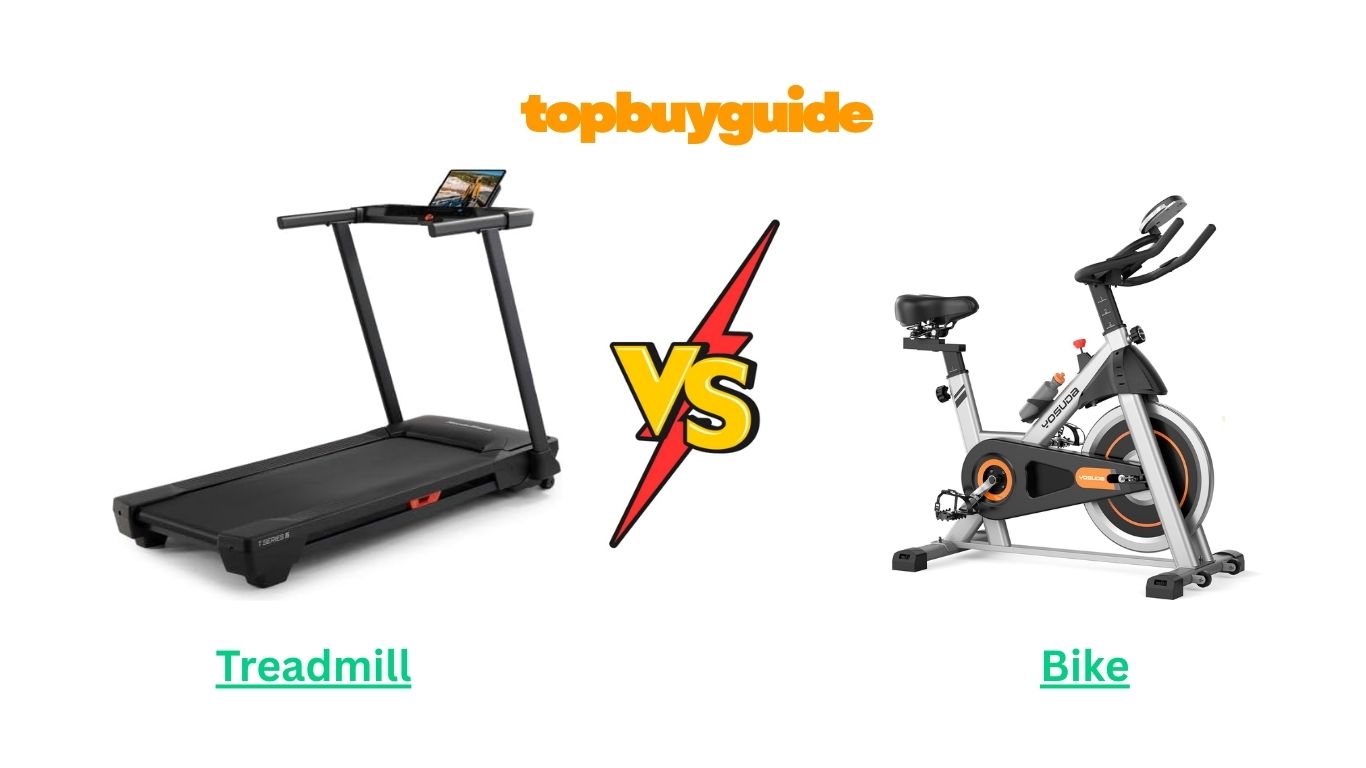
Choosing between a treadmill and a stationary bike for your home gym can be tough.
Between these two, I recommend the NordicTrack T Series 5 treadmill, because it delivers broad workout variety and superior tech integration, making it a smart all-round choice.
Why Do I Recommend The NordicTrack T Series 5 Treadmill?
Here are the key reasons I lean toward the treadmill over the bike:
- Greater workout versatility. The treadmill supports walking, jogging, running, and incline variations—something the bike cannot match. In comparison, the YOSUDA bike offers cycling only.
- Incline & speed control. The T Series 5 offers incline adjustment (up to 10% per one spec) and a 0-10 mph speed range. The YOSUDA bike lacks incline and is limited to cycling motion only.
- Tech and app features. The NordicTrack model features iFit compatibility and interactive workouts. The YOSUDA is more basic, with manual resistance and no built-in smart workout platform.
- Higher motor power and durability. The treadmill uses a 2.6 CHP motor in its spec. The bike is lighter duty and uses simpler resistance systems.
- Better for calorie burn & cardio. Running on a treadmill often burns more calories per minute than cycling at moderate effort, offering a stronger cardio benefit if you want intensity.
- Integrated cushioning and deck. Many treadmill models (like this one) include deck cushioning, reducing impact on joints during running—helpful if you have knees/hips.
- Space & user adaptability. The treadmill offers a long term investment for varied users (walkers, runners), whereas the bike is more specialized.
- Future flexibility. If your fitness goals change (say from walking to running), the treadmill supports that transition better than a bike.
In contrast, to be fair: the YOSUDA bike has some advantages for compact spaces, lower cost, and simpler setup—but in terms of long-term versatility and performance, the treadmill comes out ahead.
Side-by-Side Comparison Chart (Treadmill vs Bike)
| Feature | NordicTrack T Series 5 Treadmill | YOSUDA Indoor Cycling Bike |
| Speed & motion types | 0-10 mph run/jog/walk | Cycling motion only |
| Incline adjustment | Up to ~10% incline | None |
| Motor / resistance system | 2.6 CHP motor | 35 lb flywheel, manual resistance |
| Tech/app integration | iFit + interactive workouts | Basic LCD monitor, no smart platform |
| Calorie burn potential | High (running motion) | Moderate (cycling) |
| Space & footprint | Requires longer deck | Smaller footprint, easier to store |
| Noise level | Moderate (motorized) | Quieter (pedal motion) but less intensity |
| Cost & value | Higher cost, more features | Lower cost, fewer features |
| Suitability for running | Excellent | Not applicable |
| Suitability for cycling | Good but mixed (running focus) | Excellent |
What Common Treadmill vs Bike Can Do?
Despite their differences, both machines deliver meaningful benefits for home fitness.
Full-body cardio workout. Both the treadmill and the bike engage cardiovascular systems, improving heart health, stamina, and endurance when used regularly.
Calorie burning. Whether you walk/run on the treadmill or pedal on the bike, both allow you to burn substantial calories across sessions, helping with weight loss when combined with diet.
Low-impact adjustment. While running is higher impact, treadmills often include cushioning to reduce stress on joints. Bikes offer very low impact, making both easier on knees than jumping. The YOSUDA bike’s adjustability supports comfort.
Trackable metrics. Both machines allow you to monitor time, distance, speed/pace (treadmill) or cadence (bike), calories, and progress—helping you stay motivated and consistent.
Home convenience. Both are designed for indoor use, allowing you to exercise regardless of weather or time of day. They save travel time and can fit into a dedicated space.
Adjustable intensity. Both machines allow you to change intensity—via speed/incline in the treadmill and resistance in the bike—so you can vary workouts for HIIT or steady state.
User-friendly. Both models are fairly straightforward to operate, making them suitable for beginners and more advanced users alike.
Space and storage considerations. Each offers options designed for home gyms: the treadmill may have foldable/moveable features (depending on model) and the bike is compact and light.
Common Features Chart (Treadmill vs Bike)
| Feature | NordicTrack T Series 5 | YOSUDA Indoor Cycling Bike |
| Cardio workout capability | ✅ | ✅ |
| Calorie burn potential | ✅ | ✅ |
| Adjustable intensity | ✅ (speed/incline) | ✅ (resistance) |
| Metric tracking (time/distance) | ✅ | ✅ |
| Home-gym friendly design | ✅ | ✅ |
| Adjustable for user fit | ✅ (incline & speed) | ✅ (seat/handlebars) |
| Durable construction | ✅ | ✅ |
| Quiet operation for home use | ✅ (moderate) | ✅ (low noise) |
Detailed Comparison of Treadmill vs Bike
Resistance & Intensity
The treadmill model provides dynamic intensity through speed changes and incline adjustments—users can simulate hill runs or sprint bursts. The bike delivers intensity via pedal resistance, which is effective but less varied in motion types.
In practical terms, running engages more muscle groups and uses body weight differently, making the treadmill better for mixed workouts. The bike focuses on lower body muscles and can be gentler on joints.
Workout Variety
The treadmill offers walking, jogging, running, and incline workouts—ideal for users wanting variety. The bike primarily supports cycling motion, limiting variation in movement.
If you enjoy switching between cardio styles or plan to train for running, the treadmill wins. If you’re content with cycling and want a compact setup, the bike is sufficient.
Technology & Engagement
The treadmill’s integration with interactive platforms like iFit means you can follow virtual runs, global routes, and trainer-led sessions. The bike lacks built-in advanced interactive systems (in the model specified), so user experience depends on external apps or simple metrics.
For those motivated by guided workouts and tech features, the treadmill is more engaging. The bike works if you’re self-driven and prefer simple routines.
Space & Setup
The treadmill generally requires more floor space due to the deck length and motor housing. The bike is more compact and easier to fit into smaller rooms or apartments.
If space is limited, the bike is a strong choice. If you have room and want full movement, the treadmill is ideal.
Noise & Impact
Treadmills produce motor noise and impact sound from foot strikes, especially during running. Bikes are much quieter and have minimal vibration, making them suitable for shared spaces or apartments.
If disturbance is a major concern, the bike may be preferable. If you can accommodate the treadmill and appreciate full motion, the treadmill is fine.
Cost & Value
Typically, treadmills with incline, motor, and interactive features cost more than basic bikes. The treadmill’s higher cost is justified if you’ll use its full capabilities. The bike offers excellent value if you focus strictly on cycling.
Think about where your fitness goals lie: if running and variety matter, invest in the treadmill; if budget and space are primary concerns, the bike serves well.
Conclusion
If you want the most versatile, feature-rich, and long-term home cardio machine, the NordicTrack T Series 5 treadmill is the better option. It supports walking, running, incline control, and interactive workouts—all under one machine.
However, if you have a limited budget or space, and are committed to cycling workouts only, the YOSUDA indoor cycling bike is a strong budget-friendly alternative.
👉 For the best overall home cardio investment, choose the treadmill for future-proof versatility, tech features, and workout variety.
FAQs
- Can both machines burn a lot of calories?
Yes. Both the treadmill and the bike can deliver high calorie burns when used at sufficient intensity. Running on the treadmill typically burns more per minute. - Which one is better for joint health?
The bike is gentler on joints since you’re seated and stationary. The treadmill, while cushioned, still involves impact from foot strikes. - Is the treadmill noisy?
Some noise comes from the motor and belt, especially during running. But many home-models include cushioning to reduce impact sounds. - Will the bike fit in a small room?
Yes. The YOSUDA bike has a compact footprint and is easier to move and store compared to a full treadmill deck. - Do I need subscriptions for interactive features?
For the treadmill (NordicTrack) you’ll likely use iFit or similar subscription services for full interactive workouts. The bike model mentioned has minimal built-in smart features. - Which offers more workout variety?
The treadmill provides walking, jogging, running, and incline workouts. The bike limits you to cycling—but cycling can still be very effective. - What about maintenance?
Both machines require periodic cleaning, checking bolts, and ensuring parts are tight. Treadmills may need belt lubrication or alignment; bikes may need occasional resistance or pedal checks. - Which should I choose if I’m training for a 5K or 10K run?
If running performance is your goal, the treadmill is the clear choice. The bike won’t replicate the running motion or impact you’ll experience in a race.

Alex Turner is a dedicated product researcher and reviewer at TopBuyGuide.com, known for his clear, honest, and data-driven insights. He spends countless hours testing, comparing, and analyzing products to help readers make confident and informed buying decisions.