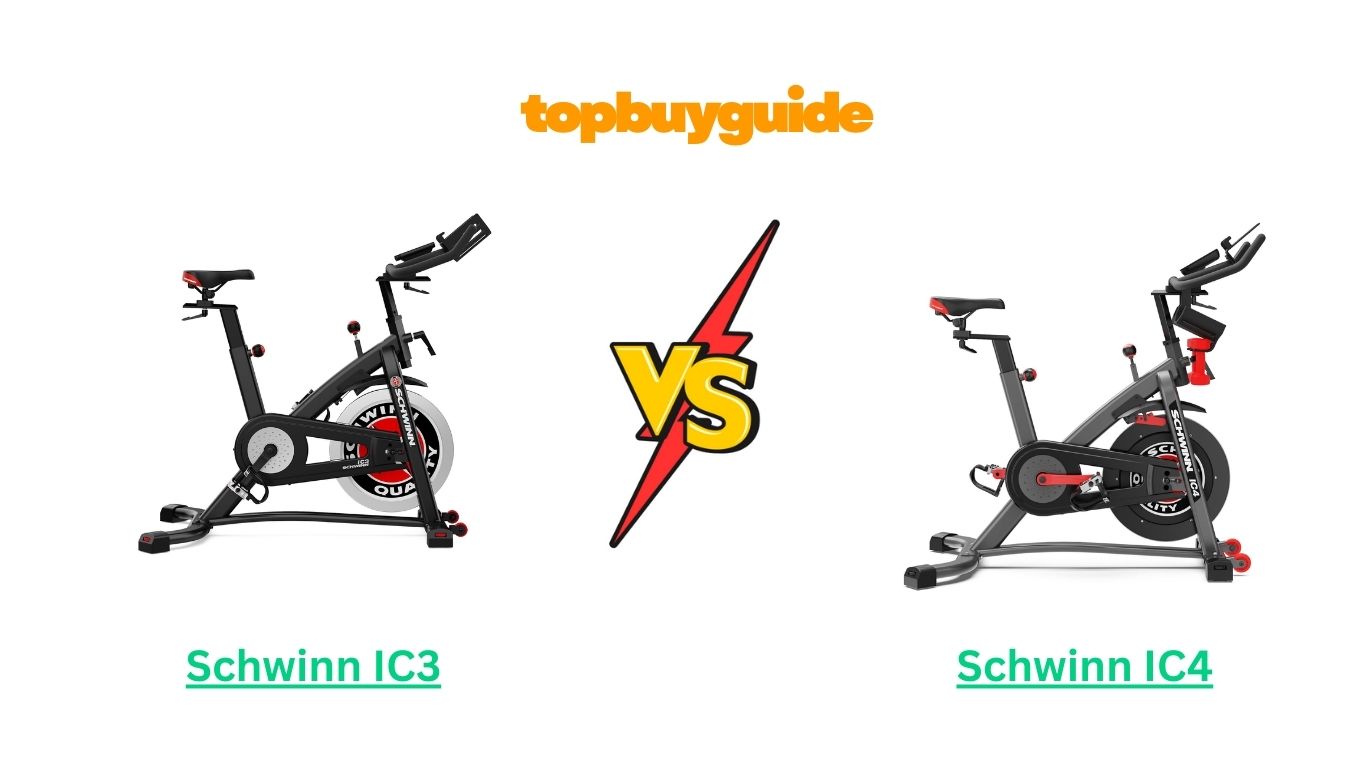
Choosing between the Schwinn IC3 and IC4 can feel overwhelming. Both deliver solid workouts, but they cater to different riders. I recommend the Schwinn IC4 for its superior magnetic resistance and seamless app connectivity. The IC4 transforms your home workouts with Peloton, Zwift, and other training platforms. Its maintenance-free design and advanced features justify the price difference. While the IC3 serves budget-conscious beginners well, the IC4 offers long-term value.
Why Do I Recommend The Schwinn IC4?
The Schwinn IC4 outperforms the IC3 across multiple dimensions. Here’s why it’s my top pick:
- Magnetic Resistance System: The IC4 features silent magnetic resistance with 100 micro-adjustable levels. In contrast, the IC3 uses friction pads that wear out and require replacement. The magnetic system provides smoother transitions and zero maintenance hassles.
- App Connectivity: The IC4 connects via Bluetooth to Peloton, Zwift, Explore the World, and more. The IC3 lacks this connectivity entirely. This feature alone transforms solo rides into immersive, guided experiences with professional trainers.
- Enhanced Console: The IC4 boasts a backlit LCD display with USB charging port. Meanwhile, the IC3 offers only a basic, non-backlit screen. The IC4’s console displays resistance levels from 1-100, making workout tracking effortless.
- Superior Build Quality: The IC4 supports 330 lbs versus the IC3’s 300 lb capacity. The heavier frame construction ensures greater stability during intense workouts. This difference matters for larger riders or aggressive cycling sessions.
- Extended Warranty: Schwinn backs the IC4 with a 10-year frame warranty and 3-year parts coverage. The IC3 receives only 5 years on the frame and 2 years on parts. This reflects Schwinn’s confidence in the IC4’s durability.
- Complete Package: The IC4 includes dual 3-lb dumbbells for cross-training exercises. The IC3 provides no additional fitness accessories. You also get two water bottle holders instead of one.
- Quieter Operation: The belt-driven magnetic system operates whisper-quiet compared to the IC3’s friction resistance. You can ride early morning or late night without disturbing family members.
- Future-Proof Investment: The IC4’s technology and connectivity ensure it won’t become obsolete quickly. The IC3’s basic features may feel limiting as your fitness journey progresses.
Side By Side Comparison Chart: Schwinn IC3 vs IC4
| Feature | Schwinn IC3 | Schwinn IC4 |
| Resistance Type | Friction Pads | Magnetic (100 levels) |
| App Connectivity | None | Bluetooth (Peloton, Zwift, etc.) |
| Console Type | Basic LCD | Backlit LCD with USB charging |
| Weight Capacity | 300 lbs | 330 lbs |
| Frame Warranty | 5 years | 10 years |
| Parts Warranty | 2 years | 3 years |
| Flywheel Weight | 40 lbs | 40 lbs |
| Water Bottle Holders | 1 | 2 |
| Included Dumbbells | None | 2x 3-lb weights |
| Resistance Display | No | Yes (1-100) |
| Heart Rate Monitor | Optional (chest strap) | Bluetooth compatible |
| Console Power | 2 AA batteries | Wall plug |
| Maintenance | Pad replacement needed | Maintenance-free |
| Price Range | $649-$699 | $799-$999 |
What Common Features Can Schwinn IC3 vs IC4 Do?
Heavy-Duty 40-Pound Flywheel
Both the Schwinn IC3 and IC4 feature identical 40-pound flywheels. This substantial weight creates consistent momentum throughout your pedal strokes. The heavy flywheel mimics outdoor road cycling more accurately than lighter alternatives. It prevents that choppy, disconnected feeling common in budget bikes. Whether you’re spinning at high RPMs or grinding through resistance, the flywheel maintains smooth, natural motion. This shared feature ensures both models deliver professional-grade cycling experiences. The weight distribution also contributes to overall bike stability during aggressive riding.
Belt Drive System
The IC3 and IC4 both utilize belt drive systems instead of chains. Belt drives operate significantly quieter than traditional chain mechanisms. You won’t hear metal-on-metal grinding or squeaking during workouts. This makes both bikes apartment-friendly and suitable for shared living spaces. The belt requires no lubrication or regular maintenance like chains do. It also provides smooth, consistent power transfer from pedals to flywheel. Both models maintain this quiet operation even during high-intensity interval training sessions.
Infinite Seat and Handlebar Adjustability
Both bikes offer 4-way adjustable seats (up, down, forward, backward). The handlebars adjust vertically on both models as well. This ensures riders from 5’0″ to 6’6″ can find comfortable positioning. Proper bike fit prevents injuries and maximizes power output during rides. The IC3 and IC4 share identical adjustment mechanisms and ranges. Quick-release levers make position changes fast between multiple users. Both bikes accommodate various body types and riding preferences equally well.
LCD Workout Tracking
The IC3 and IC4 both include LCD consoles that display workout metrics. Both track time, speed, distance, RPM, and calories burned in real-time. These basic metrics help you monitor workout intensity and progress. The displays update continuously throughout your riding session. Both consoles also support heart rate monitoring when paired with compatible chest straps. You can set workout goals and track achievements on either model.
Transport Wheels and Stabilizers
Both Schwinn models feature front-mounted transport wheels for easy relocation. You can tip and roll either bike to new positions effortlessly. Adjustable stabilizer feet ensure level positioning on uneven floors. This prevents wobbling and enhances safety during intense workouts. Both bikes maintain excellent stability despite weighing over 100 pounds. The footprint differences between models remain minimal, fitting similar workout spaces.
Emergency Brake Function
The IC3 and IC4 share identical resistance knob designs. Both knobs pull double-duty as emergency push-down brakes. You can instantly stop the flywheel by pressing down firmly. This safety feature prevents injuries when dismounting quickly. Both bikes respond immediately to brake engagement. The knobs return to adjustment mode after releasing pressure.
Dual SPD Pedals
Both models come equipped with dual-sided pedals. One side features SPD clips for cycling shoes. The other side offers toe cages for regular athletic shoes. This versatility accommodates different rider preferences and footwear. Both bikes support the same cleat types and cage adjustments. You can easily switch between clipless and caged riding styles.
Commercial-Grade Construction
The IC3 and IC4 share similar frame geometries and construction quality. Both use heavy-gauge steel tubing for maximum durability. The frames resist flexing even during aggressive standing climbs. Both bikes feel rock-solid under riders approaching maximum weight capacities. Schwinn applies quality powder-coat finishes to both models. The construction quality ensures years of reliable service from either bike.
Common Features of Schwinn IC3 vs IC4
| Feature | Schwinn IC3 | Schwinn IC4 |
| Flywheel Weight | 40 lbs | 40 lbs |
| Drive System | Belt Drive | Belt Drive |
| Seat Adjustment | 4-Way | 4-Way |
| Handlebar Adjustment | Vertical | Vertical |
| Transport Wheels | Front-mounted | Front-mounted |
| Stabilizer Feet | Adjustable | Adjustable |
| Pedal Type | Dual SPD/Cage | Dual SPD/Cage |
| LCD Console | Yes | Yes |
| Metrics Displayed | Time, Speed, Distance, RPM, Calories | Time, Speed, Distance, RPM, Calories |
| Emergency Brake | Yes (Knob press-down) | Yes (Knob press-down) |
| Heart Rate Compatible | Yes (chest strap) | Yes (Bluetooth) |
| Frame Material | Heavy-gauge steel | Heavy-gauge steel |
| Assembly Required | Yes | Yes |
| Warranty (Labor) | 1 year | 1 year |
A Detailed Comparison Of the Schwinn IC3 vs IC4
Resistance System
The IC3 employs traditional friction pad resistance against the flywheel. You rotate a knob to increase or decrease pad pressure. This system provides unlimited resistance adjustment within its range. However, friction pads wear down over time and require periodic replacement. The pads also generate slight noise during high-resistance workouts. Transitions between resistance levels feel less smooth than magnetic systems.
The IC4 utilizes eddy current magnetic resistance technology. Magnets move closer or farther from the flywheel without physical contact. This creates 100 precisely calibrated resistance levels. The magnetic system operates completely silent at all resistance settings. It requires zero maintenance since nothing physically contacts the flywheel. Resistance changes feel buttery smooth and infinitely adjustable.
Console Technology
The IC3 features a basic LCD display powered by two AA batteries. The screen shows workout metrics but lacks backlighting. Reading the display becomes difficult in dimly lit rooms. The console provides no connectivity options or advanced features. It displays single metrics for heart rate when paired with compatible chest straps. The interface remains simple and straightforward for technophobic users.
The IC4 console requires wall power and offers significantly more functionality. The backlit LCD remains visible regardless of ambient lighting conditions. A built-in USB charging port keeps devices powered during workouts. The console displays resistance levels numerically from 1-100. Bluetooth connectivity syncs data with fitness apps and wearable devices. The interface supports dual-channel Bluetooth for simultaneous app and heart rate connections.
App Integration and Connectivity
The IC3 provides no Bluetooth connectivity or app integration capabilities. You cannot sync workout data to fitness tracking platforms. Using training apps requires placing devices separately and manually tracking metrics. The bike functions purely as standalone exercise equipment. Some users appreciate this simplicity and lack of technological complexity. However, you miss out on guided classes and virtual riding experiences.
The IC4 transforms into a connected fitness powerhouse through Bluetooth. It syncs seamlessly with Peloton Digital, Zwift, Explore the World, and Kinetic. You gain access to thousands of live and on-demand cycling classes. Virtual rides through scenic global locations auto-adjust video speed to match yours. Structured training plans and progress tracking enhance workout effectiveness. The bike integrates with Apple Health, Google Fit, and other wellness platforms.
Build Quality and Weight Capacity
The IC3 supports riders up to 300 pounds safely. The frame construction uses heavy-gauge steel throughout. Dimensions measure approximately 48.5″ L x 23.2″ W x 51″ H. The bike weighs around 98 pounds when fully assembled. Stability remains excellent during normal cycling motions and moderate out-of-saddle efforts.
The IC4 accommodates users up to 330 pounds confidently. The reinforced frame adds extra stability and durability. Dimensions are 48.7″ L x 21.2″ W x 51.8″ H. The complete bike weighs approximately 106 pounds. The additional weight and refined geometry enhance stability during aggressive interval training. Standing climbs and sprints feel more secure on the IC4.
Warranty Coverage
The IC3 includes a 5-year frame warranty from Schwinn. Mechanical and electrical components receive 2-year coverage. Labor warranty extends for 1 year from purchase date. This warranty reflects standard coverage for budget-friendly fitness equipment. Component replacements after warranty expiration become owner responsibility.
The IC4 comes with an industry-leading 10-year frame warranty. Mechanical and electrical parts receive 3-year protection. Labor coverage matches the IC3 at 1 year. The extended warranties demonstrate Schwinn’s confidence in IC4 build quality. Longer coverage periods reduce long-term ownership costs and concerns. This warranty difference adds significant value over the bike’s lifespan.
Included Accessories
The IC3 includes one water bottle holder mounted on the frame. No additional fitness accessories come with the bike. You’ll need to purchase dumbbells separately for cross-training exercises. The basic package reflects the IC3’s budget-friendly positioning. Some users appreciate the lower price without extra items they might not use.
The IC4 provides dual water bottle holders for convenience. Two 3-pound dumbbells attach to the bike frame for upper body work. Media holders accommodate tablets up to 12.9 inches. The comprehensive accessory package adds immediate value. You can perform complete total-body workouts without buying additional equipment. The dumbbells enable circuit-style training during cycling recovery intervals.
Maintenance Requirements
The IC3 requires periodic friction pad replacement as they wear down. Pad lifespan varies based on usage frequency and resistance levels. Replacement costs remain modest but add to long-term ownership expenses. You may also need occasional belt tension adjustments. The bike requires regular wipe-downs to prevent corrosion from sweat.
The IC4’s magnetic resistance eliminates pad replacement entirely. The contactless system never wears out or degrades. Belt maintenance matches the IC3’s minimal requirements. Basic cleaning represents the only regular maintenance needed. This maintenance-free design saves time and money throughout ownership. The IC4 remains as smooth and quiet after years as on day one.
Noise Levels
The IC3 operates quietly but not silently during use. Friction pads create subtle friction noise at higher resistance settings. The belt drive system contributes minimal sound. Overall, the IC3 works acceptably in apartments and shared spaces. Late-night or early-morning workouts remain feasible without disturbing others.
The IC4 delivers whisper-quiet operation at all resistance levels. The magnetic system produces zero mechanical friction noise. Only the belt drive and pedaling sounds remain audible. You can ride while others sleep in adjacent rooms. Phone conversations or music at low volumes remain undisturbed. The exceptional quietness enhances the premium riding experience.
Price and Value
The IC3 typically retails between $649 and $699. Promotional pricing occasionally drops below $600. The lower cost makes it accessible to budget-conscious buyers. For basic cycling workouts without connectivity, it delivers solid value. The IC3 works well for riders who prefer simple, straightforward equipment.
The IC4 generally costs between $799 and $999. Promotional discounts sometimes reduce the price to $750. The $100-$300 premium over the IC3 buys significant upgrades. Magnetic resistance, app connectivity, and extended warranties justify the difference. The IC4 represents better long-term value for serious cyclists. It competes directly with Peloton-style bikes costing $1,000 more.
Conclusion
The Schwinn IC4 emerges as the superior choice for most riders. Its magnetic resistance requires zero maintenance and operates silently. App connectivity unlocks thousands of guided classes and virtual rides. The 10-year frame warranty and 330-pound capacity demonstrate premium construction. While the IC3 serves budget buyers adequately, the IC4’s additional features justify its modest price premium. You’re investing in a future-proof fitness solution that grows with your abilities. The IC4 delivers Peloton-quality experiences at a fraction of the cost.
FAQs
Can I use Peloton app with Schwinn IC3?
You can play Peloton Digital content separately on your phone or tablet while using the IC3. However, the IC3 cannot sync workout data with the Peloton app. You’ll miss automatic resistance adjustments and metrics integration. The IC4 offers full Peloton app connectivity through Bluetooth for seamless integration.
How often do IC3 friction pads need replacement?
Friction pad lifespan varies based on usage frequency and intensity. Most users require replacement every 6-12 months with regular use. Heavy users or those favoring high resistance may need more frequent changes. Replacement pads cost $20-$30 and installation takes about 15 minutes.
Does the IC4 require a subscription to function?
The IC4 works perfectly without any subscription services. You can use the bike independently and view basic workout metrics. Subscriptions to Peloton, Zwift, or other apps remain optional. Many free fitness apps also connect with the IC4 for enhanced experiences.
What’s the maximum height for IC3 and IC4 users?
Both bikes officially accommodate riders from 4’10” to 6’6″ tall. The 4-way seat adjustment and handlebar height range provide comfortable fits. Taller riders above 6’4″ should verify leg extension feels appropriate. Shorter riders under 5’0″ may find reaching handlebars challenging.
Can I connect the IC4 to my TV?
The IC4 connects to fitness apps on tablets and smartphones via Bluetooth. You can mirror your tablet or phone screen to your TV. Many smart TVs support screen casting from mobile devices. Alternatively, use HDMI adapters to connect your tablet directly to televisions.
Which bike is better for beginners?
Both bikes suit beginners equally well. The IC3 offers simpler operation without technological complexity. The IC4 provides guided classes that teach proper form and technique. Beginners who prefer structured guidance benefit more from the IC4. Those wanting straightforward exercise without apps may prefer the IC3.
How difficult is assembly for these bikes?
Both bikes require 1-2 hours for assembly by one person. Two people make the process easier and faster. Clear instructions accompany both models with all necessary tools included. Basic mechanical skills help but aren’t required. YouTube videos provide additional assembly guidance if needed.
Can I move these bikes between rooms easily?
Both bikes include front transport wheels for easy relocation. The 98-106 pound weight requires moderate effort to tip and roll. One person can move either bike across smooth floors. Carpeted surfaces require more effort due to friction. Neither bike folds or disassembles for compact storage.

Alex Turner is a dedicated product researcher and reviewer at TopBuyGuide.com, known for his clear, honest, and data-driven insights. He spends countless hours testing, comparing, and analyzing products to help readers make confident and informed buying decisions.