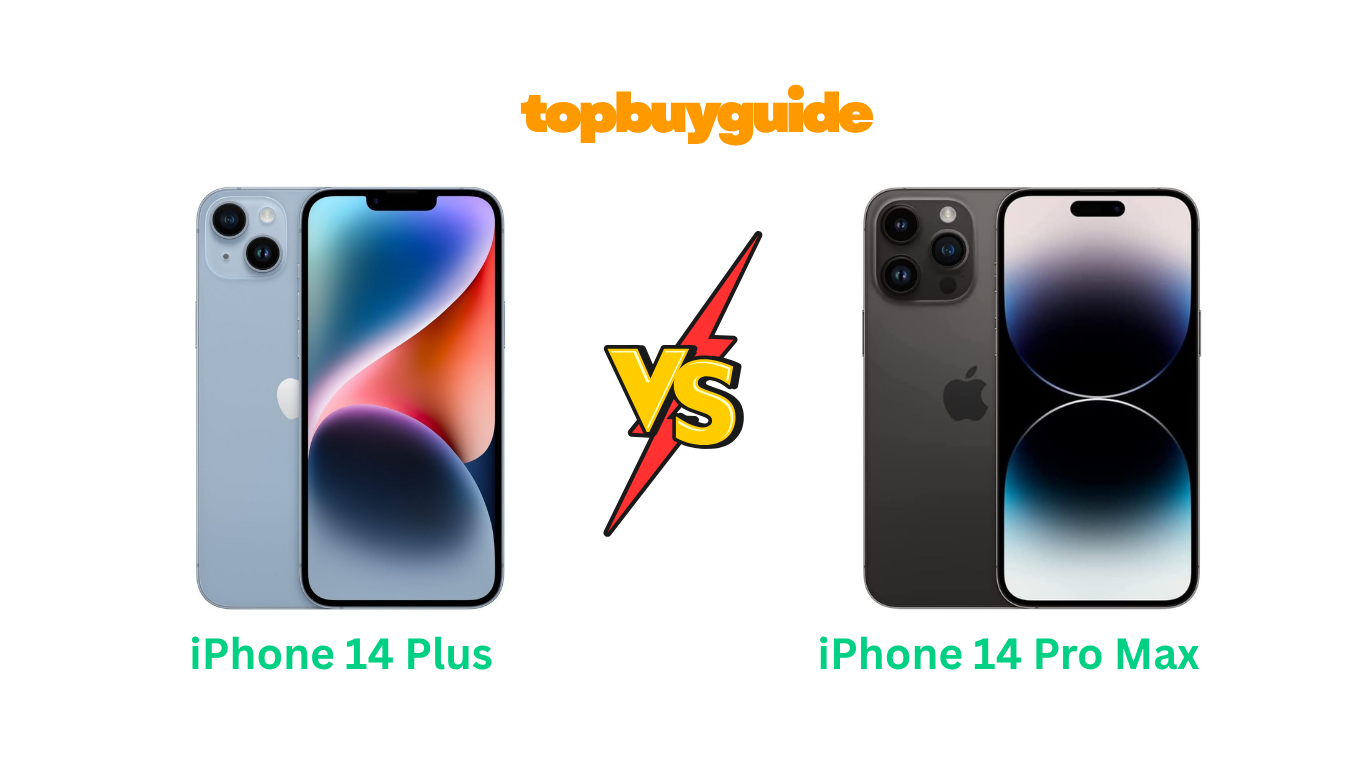
Deciding between iPhone 14 Plus and Pro Max requires careful consideration of your priorities. I recommend the iPhone 14 Pro Max for most users. The A16 Bionic chip delivers superior performance over the Plus’s A15 processor. Additionally, the Pro Max’s triple camera system with 48MP main sensor crushes the Plus’s dual 12MP setup for photography enthusiasts.
Why Do I Recommend The iPhone 14 Pro Max?
The iPhone 14 Pro Max delivers premium features that justify its higher price tag over the Plus:
- ProMotion Display Technology: The Pro Max features adaptive 120Hz refresh rate that adjusts between 1-120Hz for smoother scrolling and animations. In contrast, the Plus remains stuck at 60Hz, making everyday interactions feel less fluid and responsive for demanding users.
- Superior A16 Bionic Chip: The Pro Max runs Apple’s latest A16 Bionic processor built on 4nm technology. Meanwhile, the Plus uses last year’s A15 Bionic on 5nm architecture, creating noticeable performance gaps in intensive tasks and future-proofing.
- Advanced Camera System: The Pro Max boasts a 48MP main camera, 12MP ultra-wide, and 12MP telephoto lens with 3x optical zoom. The Plus only offers 12MP wide and ultra-wide cameras without telephoto capabilities, severely limiting photographic versatility and creative control.
- Dynamic Island Innovation: The Pro Max introduces Dynamic Island, an interactive notification area replacing the traditional notch. The Plus retains the outdated notch design from iPhone 13, missing out on this intuitive interface innovation that enhances user experience.
- Brighter Display Performance: The Pro Max achieves 2,000 nits peak outdoor brightness compared to the Plus’s 1,200 nits maximum. This substantial difference makes the Pro Max significantly more readable under direct sunlight during outdoor activities and navigation.
- Always-On Display Feature: The Pro Max includes an always-on display showing time, widgets, and notifications without fully waking the screen. The Plus lacks this convenience feature, requiring users to actively wake their device to check basic information constantly.
- ProRAW and ProRes Support: The Pro Max enables ProRAW photo capture and ProRes video recording for professional-grade content creation. The Plus omits these advanced features, limiting serious photographers and videographers who require maximum editing flexibility and quality.
- LPDDR5 Memory Technology: The Pro Max utilizes faster LPDDR5 RAM compared to the Plus’s LPDDR4X memory. This speed advantage enhances multitasking performance, app switching responsiveness, and overall system fluidity during demanding workflows and gaming sessions.
Side By Side Comparison Chart – iPhone 14 Plus vs Pro Max
| Feature | iPhone 14 Plus | iPhone 14 Pro Max |
| Display Technology | Super Retina XDR OLED | Super Retina XDR with ProMotion |
| Refresh Rate | 60Hz | 1-120Hz adaptive |
| Peak Brightness | 1,200 nits (HDR) | 2,000 nits (outdoor) |
| Processor | A15 Bionic (5nm) | A16 Bionic (4nm) |
| RAM Type | LPDDR4X | LPDDR5 |
| Main Camera | 12MP wide | 48MP wide |
| Telephoto Lens | None | 12MP (3x optical) |
| Front Design | Traditional notch | Dynamic Island |
| Always-On Display | No | Yes |
| ProRAW/ProRes | No | Yes |
| Weight | 7.16 oz (203g) | 8.47 oz (240g) |
| Material | Aluminum frame | Stainless steel frame |
| Storage Options | 128GB, 256GB, 512GB | 128GB, 256GB, 512GB, 1TB |
| Starting Price | $899 / £949 | $1,099 / £1,199 |
| Color Options | 6 colors | 4 colors |
| Video Playback | 26 hours | 29 hours |
What Common Features Can iPhone 14 Plus vs Pro Max Do?
Identical Screen Size Experience
Both the iPhone 14 Plus and Pro Max feature expansive 6.7-inch Super Retina XDR OLED displays. This generous screen real estate provides excellent viewing experiences for streaming videos, gaming, and productivity tasks. The large displays reduce eye strain during extended use and accommodate more content simultaneously.
Both phones share the same display footprint, making them Apple’s largest iPhone offerings. Users benefit from ample space for split-screen apps and comfortable text reading without constant zooming.
Emergency SOS via Satellite
Both models include groundbreaking Emergency SOS via satellite functionality for safety during emergencies. This feature enables users to contact emergency services even without cellular or Wi-Fi coverage. The technology proves invaluable for outdoor enthusiasts, hikers, and travelers venturing into remote areas.
Both devices guide users through directional prompts to connect with satellites overhead. This shared safety feature provides peace of mind regardless of which model you choose for adventures.
Advanced Crash Detection Technology
The iPhone 14 Plus and Pro Max both incorporate sophisticated crash detection capabilities using accelerometers and gyroscopes. These sensors automatically detect severe car crashes and immediately alert emergency services if users become unresponsive. The system analyzes crash data including sudden speed changes, cabin pressure alterations, and loud impact sounds. Both models provide identical protection for drivers and passengers during accidents. This life-saving feature operates automatically without requiring user configuration or intervention.
Ceramic Shield Front Protection
Both devices utilize Apple’s Ceramic Shield technology on their front glass for superior drop protection. This material offers four times better drop performance than previous iPhone generations. The Ceramic Shield protects against everyday accidents including drops onto hard surfaces like concrete and tile. Both models withstand similar impact forces, providing reliable screen protection. Users benefit from reduced repair costs and enhanced durability throughout their device’s lifespan.
IP68 Water Resistance Rating
The iPhone 14 Plus and Pro Max both achieve IP68 water resistance certification. This rating means both phones survive submersion in six meters of water for 30 minutes. The protection extends to accidental spills, rain exposure, and pool mishaps without damage. Both devices handle dust and dirt exposure equally well in outdoor environments. This shared durability feature ensures reliable performance across various challenging conditions and weather situations.
6GB RAM Configuration
Both models include 6GB of RAM for smooth multitasking and app management. This memory capacity handles demanding applications without lag or slowdowns. Users can switch between multiple apps seamlessly while maintaining background processes. Both phones support intensive gaming, video editing, and productivity workflows equally well. The identical RAM amount ensures consistent performance baselines across both devices despite processor differences.
Action Mode Video Stabilization
Both the iPhone 14 Plus and Pro Max feature Action Mode for incredibly smooth video recording. This software-based stabilization technology eliminates shakes, bumps, and vibrations during active recording sessions. Users capture professional-looking videos while running, biking, or skiing without expensive gimbal equipment. Both models apply real-time corrections to maintain stable footage even during intense movements. This feature democratizes high-quality video creation for casual users and content creators alike.
Enhanced TrueDepth Camera
Both devices include an upgraded 12MP TrueDepth front camera with autofocus capabilities. This improvement delivers sharper selfies and better low-light performance than previous generations. The autofocus ensures subjects remain crisp even when moving during video calls or selfie capture. Both models support Portrait mode with advanced bokeh effects and Lighting options. Users enjoy identical front-camera quality regardless of which large-screen iPhone they select.
MagSafe and Qi Wireless Charging
The iPhone 14 Plus and Pro Max both support MagSafe accessories and standard Qi wireless charging. MagSafe magnets align chargers perfectly for optimal charging efficiency up to 15W. Both phones work with existing Qi charging pads for convenient cable-free power. The magnetic system enables quick attachment of wallets, cases, and charging stands. This shared compatibility maintains accessory versatility across both premium iPhone models for user convenience.
Fast Charging Capability
Both models support fast charging using 20W or higher power adapters. This technology delivers 50% battery charge in approximately 30 minutes. Users minimize downtime between heavy usage sessions with rapid power restoration. Both phones handle identical charging speeds despite different battery capacities. The fast-charging feature proves essential for busy professionals requiring quick power boosts throughout demanding days.
Common Features Chart – iPhone 14 Plus vs Pro Max
| Feature | iPhone 14 Plus | iPhone 14 Pro Max |
| Display Size | 6.7 inches | 6.7 inches |
| Display Type | Super Retina XDR OLED | Super Retina XDR OLED |
| Emergency SOS Satellite | Yes | Yes |
| Crash Detection | Yes | Yes |
| Ceramic Shield | Yes | Yes |
| Water Resistance | IP68 | IP68 |
| RAM | 6GB | 6GB |
| Action Mode | Yes | Yes |
| TrueDepth Camera | 12MP with autofocus | 12MP with autofocus |
| MagSafe | Yes | Yes |
| Wireless Charging | Qi compatible | Qi compatible |
| Fast Charging | 50% in 30 min | 50% in 30 min |
| Face ID | Yes | Yes |
| Lightning Port | Yes | Yes |
| eSIM Support | Yes | Yes |
| 5G Connectivity | Yes | Yes |
| Operating System | iOS 16+ | iOS 16+ |
A Detailed Comparison Of the iPhone 14 Plus vs Pro Max
Display Refresh Rate Technology
The iPhone 14 Pro Max features ProMotion technology enabling adaptive refresh rates between 1Hz and 120Hz. This dynamic adjustment creates buttery-smooth scrolling through social media feeds, websites, and applications. The high refresh rate makes animations appear more fluid and responsive to touch inputs during gaming sessions.
The iPhone 14 Plus maintains a fixed 60Hz refresh rate throughout all operations and applications. While perfectly adequate for basic tasks, users notice less smooth scrolling compared to ProMotion displays. The static refresh rate feels dated when directly compared to the Pro Max’s adaptive technology in side-by-side testing.
Processor Performance Differences
The Pro Max utilizes Apple’s A16 Bionic chip built on 4nm architecture, while the Plus relies on the A15 Bionic using 5nm technology. The newer processor delivers improved performance-per-watt efficiency and faster processing speeds. Benchmark tests show the A16 outperforms the A15 in both single-core and multi-core operations significantly.
The iPhone 14 Plus’s A15 Bionic remains incredibly capable for everyday tasks like browsing, messaging, and streaming. However, users engaging in intensive gaming, 4K video editing, or computational photography notice performance differences. The generation-old processor represents Apple’s first significant performance tier differentiation between standard and Pro iPhone models.
Camera System Capabilities
The Pro Max features a 48MP main camera alongside 12MP ultra-wide and telephoto lenses, while the Plus includes only 12MP wide and ultra-wide cameras. The Pro Max’s quad-pixel sensor enables impressive low-light performance and detailed 48MP ProRAW captures. The 3x optical zoom telephoto lens provides versatility for portraits and distant subjects unavailable on the Plus.
The iPhone 14 Plus delivers excellent photo quality with its dual 12MP camera system for casual photography. The wide and ultra-wide lenses handle most shooting scenarios competently with Photonic Engine processing. However, the absence of telephoto zoom and 48MP resolution limits creative flexibility for serious photography enthusiasts and professionals.
Dynamic Island vs Traditional Notch
The Pro Max introduces Dynamic Island, a dynamic notification area that displays contextual information around the front camera cutouts. This interactive element shows ongoing activities like music playback, navigation directions, and incoming calls elegantly. The software transforms what could be dead space into functional interface elements users genuinely appreciate.
The iPhone 14 Plus retains the traditional notch design carried over from iPhone 13 models. While functional for Face ID and selfie cameras, the notch feels outdated compared to Dynamic Island innovation. Users miss the contextual awareness and quick-glance information that makes the Pro Max’s interface more intelligent and engaging.
Display Brightness Capabilities
The Pro Max achieves 2,000 nits peak outdoor brightness while the Plus maxes out at 1,200 nits. This substantial brightness advantage makes the Pro Max considerably more readable under direct sunlight during outdoor activities. Users navigating with Maps or reading messages in bright conditions appreciate the enhanced visibility dramatically.
The iPhone 14 Plus provides adequate brightness for indoor use and moderate outdoor conditions without issues. However, users frequently encounter visibility challenges in bright sunlight requiring shade or cupped hands for viewing. The 800-nit difference becomes especially noticeable during summer months or tropical vacation photography sessions.
Always-On Display Functionality
The Pro Max includes an always-on display feature showing time, date, widgets, and notifications without fully waking the screen. This convenience eliminates unnecessary taps just to check basic information throughout the day. The dimmed lock screen maintains glanceable information while preserving battery life through efficient OLED technology.
The iPhone 14 Plus lacks always-on display functionality, requiring deliberate interaction to view lock screen information. Users must physically pick up the device or tap the screen to see time and notifications. This omission creates minor inconveniences for users accustomed to glanceable information from previous Android devices or Apple Watches.
Weight and Portability Factors
The iPhone 14 Plus weighs 7.16 ounces (203g) compared to the Pro Max’s 8.47 ounces (240g). This 1.31-ounce difference feels substantial during extended handheld use or when carrying devices in pockets. The Plus’s lighter aluminum frame construction provides comfortable one-handed operation for longer periods without fatigue.
The iPhone 14 Pro Max’s heavier stainless steel construction contributes to its premium feel and durability. However, the additional weight becomes noticeable during extended phone calls or when carrying devices in shirt pockets. Users prioritizing portability and comfort for all-day handling prefer the Plus’s lighter construction despite sacrificing premium materials.
Video Recording Capabilities
The Pro Max supports ProRes video recording enabling professional-grade footage with extensive post-production flexibility. This codec preserves maximum detail and color information for serious videographers and content creators. The Pro Max also offers ProRAW photo capture for photographers requiring ultimate editing control over images.
The iPhone 14 Plus provides excellent video recording quality using standard formats suitable for social media sharing. However, professional creators needing advanced color grading and editing capabilities find the Plus limiting. The absence of ProRes and ProRAW support positions the Plus squarely in consumer territory rather than professional workflows.
Battery Life Performance
The Pro Max delivers up to 29 hours of video playback compared to the Plus’s 26 hours. This three-hour advantage provides extra endurance during travel days or intensive usage sessions. The Pro Max’s efficient A16 chip and optimized ProMotion technology contribute to impressive battery performance despite powering additional features.
The iPhone 14 Plus offers excellent battery life easily lasting full days for most users. Some reports suggest the Plus occasionally achieves slightly better battery performance in real-world testing. The lighter processing demands and simpler 60Hz display sometimes extend usage between charges for users avoiding intensive tasks.
Storage Configuration Options
The Pro Max offers storage tiers up to 1TB, while the Plus maxes out at 512GB. Professional photographers and videographers shooting ProRAW and ProRes formats benefit from the massive 1TB option. The expanded storage prevents users from constantly managing space or offloading content to cloud services frequently.
The iPhone 14 Plus provides adequate storage for most consumers across its 128GB, 256GB, and 512GB options. Casual users streaming content and utilizing cloud storage rarely encounter space constraints. However, users shooting extensive 4K video or maintaining large photo libraries appreciate having the 1TB option unavailable on Plus models.
Build Quality and Materials
The Pro Max features premium stainless steel bands while the Plus uses aluminum construction. Stainless steel provides superior scratch resistance and a more luxurious appearance over time. The material choice contributes to the Pro Max’s heavier weight but enhances perceived quality and durability significantly.
The iPhone 14 Plus’s aluminum frame keeps costs down while maintaining excellent structural integrity and durability. The lighter material makes the device more comfortable for extended use without compromising protection. Both materials offer IP68 water resistance, ensuring equivalent environmental protection regardless of frame construction choices.
Color and Design Options
The Plus offers six vibrant color options including Midnight, Purple, Starlight, Blue, Red, and Yellow. These glossy finishes appeal to users wanting expressive, eye-catching designs that showcase personal style. The diverse palette provides options for various aesthetic preferences and personality expressions through device appearance.
The Pro Max limits choices to four sophisticated colors: Space Black, Silver, Gold, and Deep Purple. The matte glass finishes project professional elegance suitable for business environments. While more conservative, these premium color options resist fingerprints better and maintain their appearance longer than glossy finishes over time.
Conclusion
The iPhone 14 Pro Max stands as the superior choice for users seeking maximum capabilities. The A16 Bionic processor delivers measurably better performance than the Plus’s A15 chip. The 120Hz ProMotion display provides noticeably smoother experiences compared to the Plus’s 60Hz screen. The 48MP camera system with telephoto lens vastly outperforms the Plus’s dual 12MP setup. At just $200 more, the Pro Max delivers professional features, Dynamic Island innovation, and always-on display functionality. These meaningful upgrades justify the premium investment for serious users.
FAQs
Q: Is the iPhone 14 Pro Max worth $200 more than the Plus?
Yes, the $200 premium delivers substantial value through meaningful upgrades. You gain 120Hz ProMotion display, A16 Bionic chip, 48MP camera system with telephoto lens, and Dynamic Island. The always-on display, ProRAW/ProRes support, and brighter screen justify the investment. Serious photographers and power users benefit tremendously from these professional features unavailable on the Plus.
Q: Which model has better battery life in real-world use?
The Pro Max officially offers 29 hours video playback versus the Plus’s 26 hours. However, real-world testing shows mixed results depending on usage patterns. Some users report the Plus achieving slightly longer battery life due to less demanding 60Hz display and older processor. Both devices easily last full days with moderate use, making battery life differences negligible for most users.
Q: Can the iPhone 14 Plus take professional-quality photos?
The Plus captures excellent photos suitable for social media and personal use with its 12MP cameras. However, it lacks professional features like 48MP resolution, ProRAW support, and telephoto zoom. Serious photographers requiring maximum editing flexibility and optical zoom should choose the Pro Max. Casual users find the Plus’s camera system more than adequate for everyday photography needs.
Q: Does the 120Hz display really make a noticeable difference?
Yes, the Pro Max’s ProMotion 120Hz refresh rate creates visibly smoother scrolling and animations compared to the Plus’s 60Hz. The difference becomes especially apparent when scrolling through social feeds, gaming, or switching between apps. Users accustomed to high refresh rates on other devices immediately notice the Plus’s more choppy feel. However, users unfamiliar with high refresh rates may not initially perceive significant differences.
Q: Which phone is better for gaming performance?
The Pro Max delivers superior gaming performance thanks to its A16 Bionic chip and 120Hz display. Games run smoother with higher frame rates and better graphics rendering capabilities. The LPDDR5 RAM provides faster memory access during intensive gaming sessions. The Plus handles most games well but may struggle with future demanding titles. Serious mobile gamers should invest in the Pro Max for optimal performance.
Q: Is the Dynamic Island feature actually useful or just gimmicky?
Dynamic Island provides genuine utility beyond initial novelty value. It elegantly displays ongoing activities like music playback, timers, and navigation directions without interrupting workflows. Users appreciate quick-glance information and interactive controls accessible without leaving current apps. While not essential, Dynamic Island enhances user experience meaningfully. The feature becomes increasingly valuable as developers integrate functionality into their applications over time.
Q: How much lighter is the iPhone 14 Plus compared to Pro Max?
The Plus weighs 7.16 ounces (203g) while the Pro Max weighs 8.47 ounces (240g), creating a 1.31-ounce difference. This weight reduction feels significant during extended handheld use or when carrying devices in pockets. The Plus’s aluminum frame contributes to its lighter construction compared to the Pro Max’s heavier stainless steel. Users prioritizing comfort during prolonged use prefer the Plus’s reduced weight substantially.
Q: Will the iPhone 14 Plus receive the same software updates as Pro Max?
Yes, both models receive identical iOS updates and support timelines from Apple. The company typically provides five to six years of major iOS updates regardless of iPhone tier. Both phones run current iOS versions with feature parity except for hardware-dependent capabilities. Software support longevity should not factor into purchasing decisions between these models, as both receive equal ongoing support and security updates.

Alex Turner is a dedicated product researcher and reviewer at TopBuyGuide.com, known for his clear, honest, and data-driven insights. He spends countless hours testing, comparing, and analyzing products to help readers make confident and informed buying decisions.