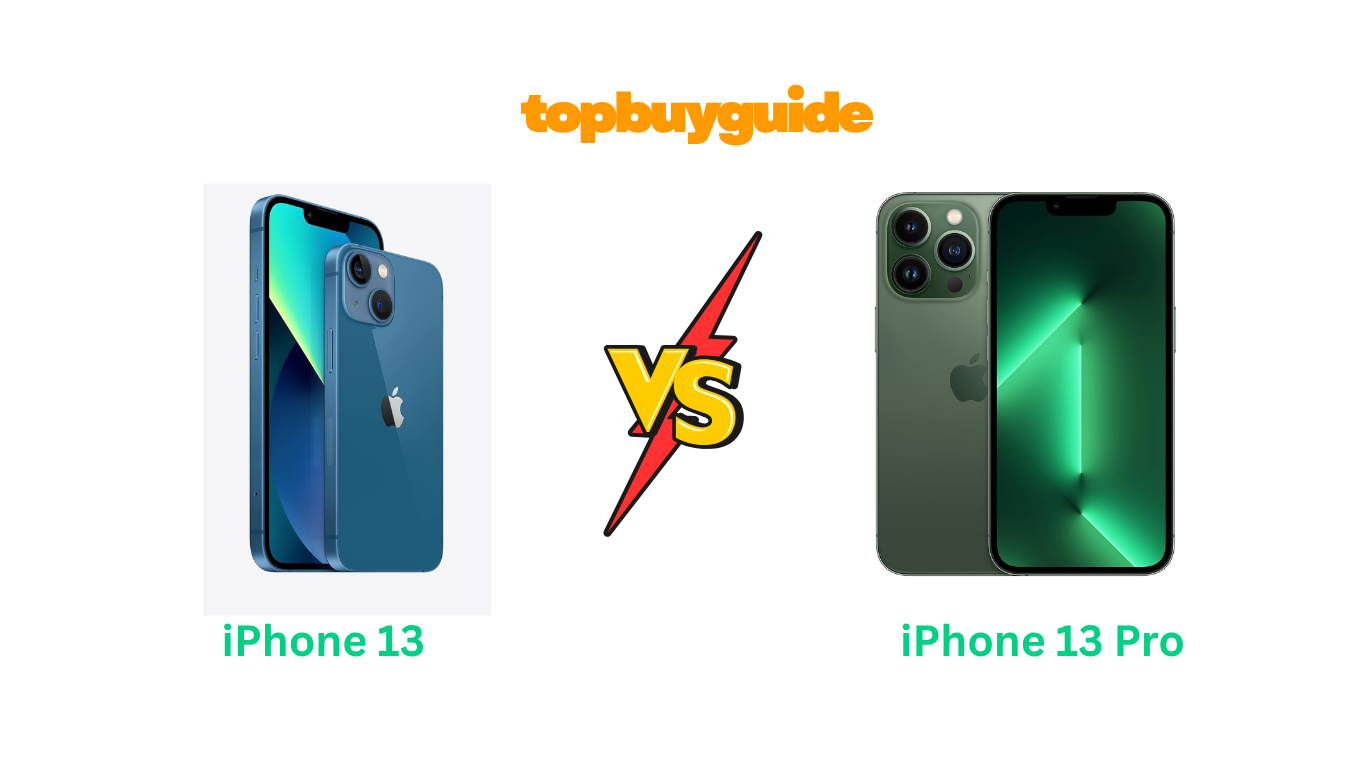
Choosing between the iPhone 13 and iPhone 13 Pro can be challenging. Both phones deliver exceptional performance with Apple’s A15 Bionic chip. However, the iPhone 13 Pro stands out with its superior camera system and ProMotion display.
If you’re a photography enthusiast or demand the smoothest scrolling experience, the Pro justifies its premium price. This comprehensive guide breaks down every difference to help you make the right choice.
Why Do I Recommend The iPhone 13 Pro?
The iPhone 13 Pro emerges as the superior choice for several compelling reasons:
• ProMotion 120Hz Display: The Pro model features adaptive refresh rates up to 120Hz. This makes scrolling incredibly smooth and responsive. Meanwhile, the standard iPhone 13 remains limited to 60Hz refresh rate.
• Triple-Lens Camera System: The Pro includes telephoto, wide, and ultra-wide lenses with 3x optical zoom. The standard model only offers two lenses without telephoto capabilities.
• LiDAR Scanner: The Pro’s LiDAR sensor enables Night Mode portraits and faster autofocus. The iPhone 13 lacks this depth-sensing technology entirely.
• Brighter Display: The Pro reaches 1,000 nits maximum brightness versus 800 nits. This provides better outdoor visibility in direct sunlight.
• Premium Build Materials: The Pro uses surgical-grade stainless steel construction. Conversely, the iPhone 13 features aerospace-grade aluminum.
• Enhanced Camera Performance: The Pro captures 92% more light with its ultra-wide lens. Low-light photography shows dramatically improved quality.
• Macro Photography: The Pro’s ultra-wide camera focuses at 2cm for detailed macro shots. This creative capability is absent from the standard model.
• ProRes Video Recording: Professional video codecs offer greater editing flexibility on the Pro. The iPhone 13 doesn’t support ProRes capture.
Side By Side Comparison Chart: iPhone 13 vs iPhone 13 Pro
| Feature | iPhone 13 | iPhone 13 Pro |
| Display Technology | 60Hz OLED | 120Hz ProMotion OLED |
| Peak Brightness | 800 nits | 1,000 nits |
| Camera System | Dual (Wide + Ultra Wide) | Triple (Wide + Ultra Wide + Telephoto) |
| Telephoto Lens | Not Available | 3x Optical Zoom (77mm) |
| LiDAR Scanner | No | Yes |
| Build Material | Aluminum | Stainless Steel |
| Weight | 174 grams (6.14 oz) | 204 grams (7.19 oz) |
| GPU Cores | 4-core | 5-core |
| Macro Photography | No | Yes (2cm focus) |
| Night Mode | Wide lens only | All lenses including telephoto |
| ProRes Video | Not supported | Supported |
| Maximum Storage | 512GB | 1TB |
| Battery Capacity | 3,227 mAh | 3,095 mAh |
| Video Playback | Up to 19 hours | Up to 22 hours |
| Back Finish | Glossy glass | Matte glass |
What Common iPhone 13 vs iPhone 13 Pro Features Can Do?
Both the iPhone 13 and iPhone 13 Pro share numerous impressive capabilities that deliver a premium smartphone experience.
A15 Bionic Processor Power: Both models feature Apple’s A15 Bionic chip with a 6-core CPU. This processor delivers incredible speed for multitasking, gaming, and productivity tasks. The chip includes two high-performance cores and four efficiency cores. Neural Engine capabilities enhance machine learning tasks across both devices. Performance benchmarks show these phones outperforming most Android competitors.
Super Retina XDR OLED Display: Each phone sports a 6.1-inch Super Retina XDR display. The resolution stands at 2532 x 1170 pixels with 460 ppi. Both support HDR content with peak brightness reaching 1,200 nits. True Tone technology automatically adjusts white balance. The displays deliver exceptional color accuracy and deep blacks.
Cinematic Mode Video: Apple’s innovative Cinematic mode works on both models. This feature creates professional-looking depth-of-field effects in videos. The phone intelligently shifts focus between subjects automatically. You can adjust focus points even after recording. This brings Hollywood-style cinematography to everyone’s pocket.
5G Connectivity: Both iPhones support extensive 5G bands worldwide. Download speeds reach new heights on compatible networks. The devices intelligently switch between 5G and LTE. This balances performance with battery conservation. International travelers benefit from broad network compatibility.
MagSafe Technology: Magnetic alignment ensures perfect wireless charging placement. Both models support 15W MagSafe wireless charging. Compatible accessories snap magnetically to the back. This includes wallets, battery packs, and car mounts. Standard Qi wireless charging at 7.5W is also available.
Sensor-Shift Optical Image Stabilization: Previously exclusive to Pro Max models, both phones now include this technology. The camera sensor moves to compensate for hand shake. This results in sharper photos and steadier videos. Low-light photography particularly benefits from this advancement. Action shots show remarkable clarity.
Ceramic Shield Protection: The front glass incorporates nano-ceramic crystals. Apple claims this provides 4x better drop performance. Both phones maintain excellent scratch resistance. This durability enhancement protects your investment. Daily wear and tear becomes less concerning.
IP68 Water Resistance: Both models survive submersion in 6 meters of water. They can withstand up to 30 minutes underwater. Protection extends to coffee, soda, and other liquids. Dust resistance ensures longevity in harsh environments. Beach trips and pool days pose no threat.
Photographic Styles: This new feature allows personalized photo rendering. Both phones let you customize tone and warmth preferences. Styles apply selectively to images, not blanket filters. Your photos maintain natural skin tones while adjusting other elements. Four preset styles plus custom adjustments give creative control.
Smart HDR 4: Computational photography reaches new heights with Smart HDR 4. Both devices recognize up to four people in frame. Each person receives optimized exposure and contrast. Background elements get separate enhancement. Group photos never looked this balanced.
Night Mode: Automatic low-light photography works on both phones’ main cameras. The software captures multiple exposures and combines them. Details emerge from shadows while controlling highlights. Indoor and outdoor night scenes show impressive quality. You’ll rarely need flash photography anymore.
Common Features of iPhone 13 vs iPhone 13 Pro
| Feature | iPhone 13 | iPhone 13 Pro |
| Screen Size | 6.1 inches | 6.1 inches |
| Resolution | 2532 x 1170 pixels | 2532 x 1170 pixels |
| Processor | A15 Bionic | A15 Bionic |
| CPU Cores | 6-core | 6-core |
| Neural Engine | 16-core | 16-core |
| 5G Support | Yes | Yes |
| MagSafe | 15W | 15W |
| Wireless Charging | Qi 7.5W | Qi 7.5W |
| Water Resistance | IP68 (6m/30min) | IP68 (6m/30min) |
| Ceramic Shield | Yes | Yes |
| Face ID | Yes | Yes |
| Cinematic Mode | Yes | Yes |
| Photographic Styles | Yes | Yes |
| Smart HDR 4 | Yes | Yes |
| Night Mode | Yes (Wide lens) | Yes (All lenses) |
| Sensor-Shift OIS | Yes | Yes |
| Storage Options | 128/256/512GB | 128/256/512GB/1TB |
| Fast Charging | 20W (50% in 30min) | 20W (50% in 30min) |
A Detailed Comparison Of the iPhone 13 vs iPhone 13 Pro
Display Technology and ProMotion
The iPhone 13 features a beautiful 60Hz OLED display that delivers vibrant colors and deep blacks. Scrolling feels smooth for most everyday tasks like browsing social media and reading. The display responds adequately to touch inputs and gestures. Most users find this refresh rate perfectly acceptable for standard smartphone use.
The iPhone 13 Pro introduces ProMotion technology with adaptive refresh rates up to 120Hz. This creates noticeably smoother scrolling through apps, websites, and system menus. The display intelligently adjusts from 10Hz to 120Hz based on content. Gaming becomes more responsive with reduced input lag. The difference is immediately apparent when switching between devices.
Camera System Architecture
The iPhone 13 includes a dual-camera system with wide and ultra-wide lenses. The wide lens features f/1.6 aperture capturing 47% more light than previous models. Both cameras deliver excellent image quality in most conditions. Digital zoom reaches up to 5x for distant subjects. This setup handles casual photography beautifully.
The iPhone 13 Pro boasts a triple-lens system adding a 3x telephoto lens. Professional photographers appreciate the 77mm equivalent focal length for portraits. The telephoto enables 6x optical zoom range between all three lenses. Each lens receives individual optimization for different shooting scenarios. The versatility empowers creative photography across all distances.
LiDAR Scanner Capabilities
The iPhone 13 relies solely on camera-based depth sensing for Portrait mode. Night Mode portraits remain unavailable without dedicated depth hardware. Autofocus in low light takes slightly longer to acquire subjects. AR experiences work adequately but lack precision depth mapping. Measure app functionality provides basic distance measurements.
The iPhone 13 Pro includes a dedicated LiDAR scanner for advanced depth sensing. Night Mode portraits become possible with accurate subject separation. Autofocus speed increases dramatically in challenging lighting conditions. AR applications achieve professional-grade accuracy for 3D scanning. Enhanced depth information improves computational photography across all scenarios.
Low-Light Photography Performance
The iPhone 13 delivers impressive low-light results with its improved wide camera. Night Mode automatically activates in dim environments with excellent results. The ultra-wide camera shows decent performance but trails the wide lens. Overall image quality surpasses most competitors in this price range. Indoor and evening photography produces usable, attractive images.
The iPhone 13 Pro excels in low-light scenarios across all three lenses. The ultra-wide camera captures 92% more light than previous generations. Night Mode now works on the telephoto lens for the first time. The wide camera’s f/1.5 aperture gathers 2.2x more light. Professional photographers praise the consistent quality across all focal lengths.
Macro Photography Innovation
The iPhone 13 cannot focus closer than typical smartphone minimum distances. Close-up photography requires maintaining several inches of distance from subjects. Capturing tiny details like insects or flowers proves challenging. Users must rely on digital cropping for extreme close-ups. Creative macro opportunities remain limited.
The iPhone 13 Pro transforms close-up photography with 2cm focusing distance. The ultra-wide camera’s autofocus enables stunning macro shots. Tiny subjects fill the frame with incredible detail and sharpness. Macro video recording including slow-motion and time-lapse works beautifully. This opens entirely new creative possibilities for content creators.
Build Quality and Materials
The iPhone 13 utilizes aerospace-grade aluminum for its frame construction. This creates a lighter device at 174 grams for comfortable one-handed use. The back features glossy glass that shows fingerprints readily. Colors include Pink, Blue, Midnight, Starlight, and Product Red. The aesthetic appeals to those preferring vibrant, playful options.
The iPhone 13 Pro employs surgical-grade stainless steel providing premium durability. This construction adds weight at 204 grams creating a more substantial feel. The back showcases matte glass that resists fingerprints effectively. Available colors include Graphite, Gold, Silver, and Sierra Blue. The sophisticated palette targets professional users and minimalist preferences.
Display Brightness Comparison
The iPhone 13 reaches 800 nits peak brightness in typical usage scenarios. This proves adequate for most indoor and outdoor conditions. Direct sunlight visibility remains acceptable though sometimes challenging. HDR content peaks at 1,200 nits delivering excellent contrast. Screen legibility rarely becomes a significant issue.
The iPhone 13 Pro achieves 1,000 nits peak brightness for superior outdoor visibility. Reading in bright sunlight becomes noticeably easier and more comfortable. The extra brightness helps with photography framing outdoors. HDR content also benefits from this enhanced capability. This advantage matters most for frequent outdoor smartphone users.
Graphics Performance Differences
The iPhone 13 features a 4-core GPU delivering excellent gaming performance. Modern games run smoothly at high settings without frame drops. Demanding titles like Genshin Impact maintain consistent frame rates. Most users never encounter performance limitations. The graphics capability exceeds casual gaming requirements significantly.
The iPhone 13 Pro includes a 5-core GPU providing extra graphics horsepower. Benchmark scores show approximately 15% higher graphics performance. Professional video editing apps benefit from this additional power. Future-proofing ensures smooth performance for years ahead. Creative professionals appreciate this extra computational capability.
Video Recording Capabilities
The iPhone 13 records stunning 4K Dolby Vision HDR video at 60fps. Cinematic mode adds professional depth-of-field effects during recording. Video quality impresses with excellent stabilization and dynamic range. The dual-camera system provides flexibility for most videography needs. Content creators produce high-quality videos without professional equipment.
The iPhone 13 Pro adds ProRes video recording for professional workflows. This codec preserves more information for extensive color grading. Editors gain flexibility matching professional cinema cameras. All three lenses support Night Mode video recording. The telephoto lens enables new framing possibilities for videographers.
Battery Life Performance
The iPhone 13 packs a 3,227 mAh battery lasting up to 19 hours video playback. Real-world testing shows the phone easily surviving full days of moderate use. Battery life represents a significant improvement over iPhone 12. Streaming video reaches 15 hours before requiring recharge. The capacity balances size and longevity effectively.
The iPhone 13 Pro contains a slightly smaller 3,095 mAh battery surprisingly. However, video playback extends to 22 hours thanks to efficiency optimizations. The LTPO display conserves significant power at lower refresh rates. Heavy users appreciate the impressive endurance despite Pro features. Battery anxiety becomes less concerning with this model.
Storage Options Available
The iPhone 13 offers storage tiers of 128GB, 256GB, and 512GB. These options accommodate most users’ photo, video, and app storage needs. Cloud storage services supplement local capacity effectively. The 512GB maximum proves sufficient for extensive media libraries. Price scaling makes higher capacities accessible.
The iPhone 13 Pro adds a groundbreaking 1TB storage option. This unprecedented capacity benefits professional photographers and videographers. ProRes video files consume substantial space quickly. The extra storage reduces reliance on external drives and cloud services. Content creators gain true professional workflow capabilities.
Price and Value Proposition
The iPhone 13 starts at a more accessible price point for flagship features. This model delivers exceptional value for typical smartphone users. The savings versus Pro models fund accessories or other tech purchases. Most consumers find this option perfectly adequate for daily needs. Budget-conscious buyers appreciate the balanced feature set.
The iPhone 13 Pro commands a $200 premium over the standard model. Professional features justify the cost for photographers and videographers. The enhanced display and camera system provide tangible benefits. Power users find the investment worthwhile for daily productivity. The longevity of Pro features extends the device’s useful lifespan.
Conclusion
The iPhone 13 Pro represents the superior choice for photography enthusiasts and power users. Its ProMotion display delivers unmatched smoothness while the triple-camera system enables professional creativity. The LiDAR scanner, macro capabilities, and superior low-light performance justify the premium. With ProRes recording and 1TB storage options, content creators gain professional tools. Choose the Pro model if photography matters to you.
FAQs
Q: Does the iPhone 13 Pro camera really make a difference? A: Yes, significantly. The Pro adds a telephoto lens with 3x optical zoom and LiDAR scanner. Macro photography, Night Mode on all lenses, and 92% better low-light performance on ultra-wide camera provide substantial improvements for photography enthusiasts.
Q: Is the 120Hz ProMotion display worth the extra cost? A: The 120Hz refresh rate creates noticeably smoother scrolling and animations. Daily interactions feel more responsive and fluid. If you’re sensitive to display quality or use your phone extensively, ProMotion enhances the experience considerably.
Q: How much heavier is the iPhone 13 Pro? A: The Pro weighs 204 grams compared to 174 grams for the standard model. That’s a 30-gram difference due to stainless steel construction and larger camera system. Most users adapt quickly though one-handed use becomes slightly more tiring.
Q: Can the iPhone 13 take macro photos? A: No, only the Pro models support macro photography. The iPhone 13 Pro’s ultra-wide camera focuses as close as 2cm from subjects. This enables stunning close-up shots that the standard iPhone 13 cannot achieve.
Q: Which phone has better battery life? A: The iPhone 13 Pro actually delivers longer battery life despite its smaller capacity. It achieves 22 hours video playback versus 19 hours on the standard model. The LTPO display technology significantly improves power efficiency.
Q: Do both phones support 5G equally? A: Yes, both models support identical 5G bands and connectivity features. Network performance, download speeds, and coverage remain the same across iPhone 13 and iPhone 13 Pro models worldwide.
Q: Is the iPhone 13 Pro more durable? A: The Pro’s stainless steel frame offers greater durability than aluminum. However, both phones feature Ceramic Shield glass and IP68 water resistance. Protection levels remain comparable for typical drops and exposure scenarios.
Q: Should I buy the iPhone 13 Pro in 2025? A: The iPhone 13 Pro remains an excellent choice in 2025. Its camera system, ProMotion display, and powerful A15 chip handle all modern tasks smoothly. Price reductions make it exceptional value for professional features today.

Alex Turner is a dedicated product researcher and reviewer at TopBuyGuide.com, known for his clear, honest, and data-driven insights. He spends countless hours testing, comparing, and analyzing products to help readers make confident and informed buying decisions.