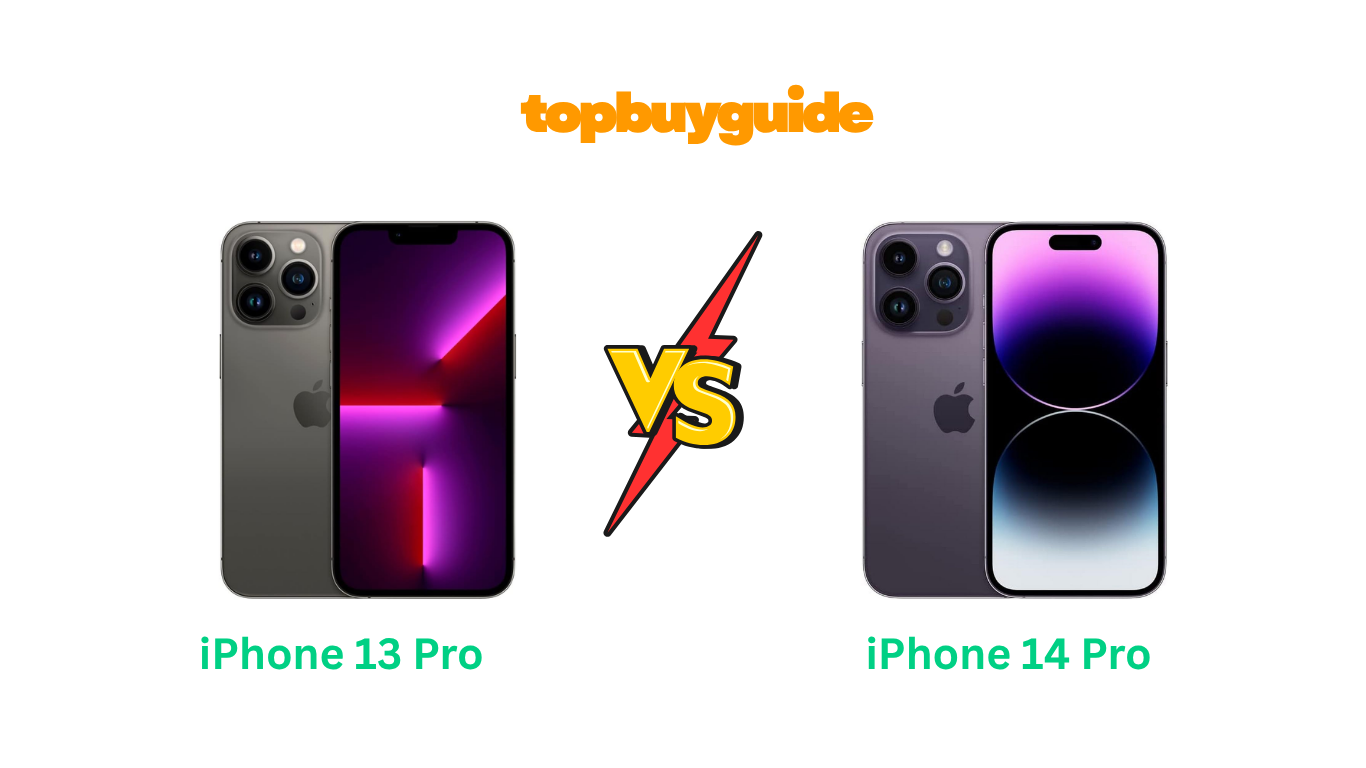
Choosing between the iPhone 13 Pro and iPhone 14 Pro can be challenging. Both devices offer premium features, but the iPhone 14 Pro stands out with significant upgrades. After extensive testing and comparison, I recommend the iPhone 14 Pro for its revolutionary Dynamic Island, superior camera system, and brighter display.
These enhancements justify the investment, especially for photography enthusiasts and power users. The 48MP camera alone transforms mobile photography, while the always-on display adds convenience to daily use. Let’s explore why the iPhone 14 Pro emerges as the superior choice.
Why Do I Recommend The iPhone 14 Pro?
The iPhone 14 Pro surpasses its predecessor in multiple critical areas. Here’s why this device earns my recommendation:
- Dynamic Island replaces the notch – The iPhone 14 Pro introduces an interactive pill-shaped cutout that adapts to notifications and activities. In contrast, the iPhone 13 Pro still uses the traditional notch, which takes up more screen space and offers no interactive functionality.
- 48MP camera system delivers professional results – The iPhone 14 Pro features a massive 48MP main sensor with ProRAW capabilities. The iPhone 13 Pro’s 12MP camera, while capable, cannot match the detail and flexibility the newer quad-pixel sensor provides for serious photography work.
- Always-on display enhances usability – The iPhone 14 Pro’s display stays visible even when locked, showing widgets and information at a glance. The iPhone 13 Pro lacks this feature entirely, requiring you to tap the screen for any information.
- Brighter display improves outdoor visibility – With 2,000 nits peak brightness outdoors, the iPhone 14 Pro remains readable in direct sunlight. The iPhone 13 Pro maxes out at 1,200 nits, making it harder to use in bright conditions.
- A16 Bionic chip provides better performance – The newer processor in the iPhone 14 Pro offers approximately 17% faster performance. While the iPhone 13 Pro’s A15 Bionic remains powerful, the A16 handles demanding tasks with greater efficiency.
- Enhanced low-light photography capabilities – The Photonic Engine in the iPhone 14 Pro dramatically improves mid-to-low-light photos. The iPhone 13 Pro’s computational photography, though good, doesn’t match this newer technology’s capabilities.
- 2x optical zoom option adds versatility – The iPhone 14 Pro’s quad-pixel sensor enables a 2x telephoto mode alongside the 3x lens. The iPhone 13 Pro only offers 0.5x, 1x, and 3x zoom options, limiting framing flexibility.
- Improved battery capacity extends usage – The iPhone 14 Pro packs a 3,200mAh battery compared to 3,095mAh in the iPhone 13 Pro. This translates to approximately one hour longer video playback time daily.
Side By Side Comparison Chart: iPhone 13 Pro vs 14 Pro
| Feature | iPhone 13 Pro | iPhone 14 Pro |
| Display Design | Notch | Dynamic Island |
| Main Camera | 12MP | 48MP |
| Peak Brightness (Outdoor) | 1,200 nits | 2,000 nits |
| Processor | A15 Bionic | A16 Bionic |
| Always-On Display | No | Yes |
| ProMotion Range | 10Hz-120Hz | 1Hz-120Hz |
| Front Camera | 12MP (fixed focus) | 12MP (autofocus) |
| Computational Photography | Smart HDR 4 | Photonic Engine |
| Optical Zoom Options | 0.5x, 1x, 3x | 0.5x, 1x, 2x, 3x |
| Battery Capacity | 3,095mAh | 3,200mAh |
| Emergency Features | Basic SOS | Satellite SOS |
| Available Colors | Graphite, Gold, Silver, Sierra Blue, Alpine Green | Space Black, Silver, Gold, Deep Purple |
Features
iPhone 13 Pro
The iPhone 13 Pro delivers flagship performance with its triple-camera system. The device features a 12MP wide camera with f/1.5 aperture for excellent low-light performance. Its 12MP ultra-wide camera captures 92% more light than previous generations. The 3x telephoto lens provides optical zoom capabilities.
The Super Retina XDR display measures 6.1 inches with 2532×1170 resolution. ProMotion technology enables variable refresh rates from 10Hz to 120Hz. The screen reaches 1,000 nits typical brightness and 1,200 nits peak outdoors.
The A15 Bionic chip powers the device with six CPU cores and five GPU cores. This processor handles intensive tasks efficiently. The device includes 6GB RAM for smooth multitasking. Storage options range from 128GB to 1TB.
Cinematic Mode allows rack focus in videos at 1080p 30fps. ProRes video recording supports up to 4K at 30fps. Macro photography gets within 2cm of subjects using the ultra-wide camera’s autofocus.
The 3,095mAh battery provides up to 22 hours of video playback. Fast charging reaches 50% in approximately 30 minutes with a 20W adapter. MagSafe wireless charging delivers 15W power, while standard Qi charging provides 7.5W.
iPhone 14 Pro
The iPhone 14 Pro revolutionizes mobile photography with its 48MP main camera. The quad-pixel sensor uses pixel binning to capture 12MP images normally. ProRAW mode unlocks the full 48MP resolution for professional editing. The sensor is 65% larger than the iPhone 13 Pro’s camera.
The Dynamic Island replaces the traditional notch with an interactive interface. This pill-shaped cutout morphs to display notifications, alerts, and activities. Face ID hardware sits behind the display for a cleaner design.
The display achieves 2,000 nits peak brightness outdoors, significantly brighter than its predecessor. Always-on functionality shows lock screen widgets without unlocking the device. ProMotion refresh rates now scale from 1Hz to 120Hz for better battery efficiency.
The A16 Bionic chip delivers improved performance with a 6-core CPU architecture. The processor is built on a 4-nanometer process for enhanced efficiency. Graphics performance sees notable improvements for gaming and video editing.
The Photonic Engine enhances computational photography across all cameras. This technology improves mid-to-low-light photos dramatically. The ultra-wide camera features a larger sensor and improved lens aperture.
Action Mode provides exceptional video stabilization without requiring gimbals. Emergency SOS via satellite enables communication in areas without cellular coverage. Crash detection automatically calls emergency services after severe accidents.
What Common iPhone 13 Pro vs 14 Pro Features Can Do?
Both devices share numerous capabilities that define the Pro iPhone experience. Understanding these commonalities helps you appreciate what both models offer.
ProMotion Display Technology
Both iPhones feature adaptive refresh rate displays for smooth scrolling and animations. The technology adjusts refresh rates based on content being displayed. Games run at 120Hz for fluid gameplay, while static content drops to lower rates for battery conservation. This creates a more responsive touch experience across all interactions. The adaptive nature ensures the display never feels laggy or stuttered. Users notice the difference immediately when scrolling through social media or browsing websites.
Triple Camera System
Each device includes a comprehensive three-camera setup on the rear. The wide, ultra-wide, and telephoto lenses cover various shooting scenarios. Night mode works across all lenses for low-light photography. Both phones support ProRAW format for maximum editing flexibility. Smart HDR processing enhances dynamic range in challenging lighting conditions. The camera systems capture stunning detail and accurate colors in most situations.
IP68 Water Resistance
Both models withstand submersion in up to 6 meters of water for 30 minutes. This protection guards against accidental spills and rain exposure. The rating also provides dust resistance for outdoor use. Users can confidently take photos near water or in dusty environments. The durability extends the device’s longevity significantly. This feature provides peace of mind during daily use.
Ceramic Shield Front
Apple’s Ceramic Shield technology protects both displays from drops and scratches. The material offers four times better drop performance than standard glass. Everyday scratches from keys and coins cause minimal damage. The coating also reduces fingerprint accumulation on the screen. This durability means fewer screen repairs over the device’s lifetime. Users appreciate the added protection without bulky cases.
5G Connectivity
Both devices support extensive 5G bands for fast mobile data speeds. Downloads happen nearly instantly on compatible networks. Streaming video and music buffer quickly without interruptions. The technology also improves video call quality on cellular networks. Battery management ensures 5G doesn’t drain power unnecessarily. Users experience the benefits of next-generation mobile networks.
MagSafe Technology
The magnetic wireless charging system works identically on both phones. MagSafe accessories snap securely onto the back. Wireless chargers align perfectly every time for efficient charging. Wallets, battery packs, and cases attach magnetically. The ecosystem of accessories continues expanding. This convenience eliminates fumbling with cables and connectors.
Face ID Security
Both devices use the same secure facial recognition system. Face ID works in most lighting conditions, including darkness. The technology protects personal data and authorizes payments securely. Unlocking happens almost instantaneously when you look at the screen. Masked face recognition improved through software updates. This biometric security is both convenient and highly secure.
Surgical-Grade Stainless Steel Frame
The premium frame material provides durability and a luxurious feel. The stainless steel resists corrosion and maintains its appearance. Matching colors coordinate with the glass back perfectly. The material adds weight but feels solid and premium. This construction quality distinguishes Pro models from standard iPhones. Users appreciate the premium build quality immediately.
Common Features of iPhone 13 Pro vs 14 Pro
| Feature | iPhone 13 Pro | iPhone 14 Pro |
| Display Size | 6.1 inches OLED | 6.1 inches OLED |
| Display Resolution | 2532×1170 | 2556×1179 |
| ProMotion Technology | Yes (10-120Hz) | Yes (1-120Hz) |
| RAM | 6GB | 6GB |
| Storage Options | 128GB, 256GB, 512GB, 1TB | 128GB, 256GB, 512GB, 1TB |
| Water Resistance | IP68 (6m/30min) | IP68 (6m/30min) |
| Ceramic Shield | Yes | Yes |
| 5G Support | Yes | Yes |
| MagSafe Charging | 15W | 15W |
| Wireless Charging (Qi) | 7.5W | 7.5W |
| Fast Charging | 20W | 20W |
| Face ID | Yes | Yes |
| Frame Material | Stainless Steel | Stainless Steel |
| ProRes Video | Up to 4K 30fps | Up to 4K 30fps |
| Cinematic Mode | 1080p 30fps | Up to 4K 30fps |
| LiDAR Scanner | Yes | Yes |
A Detailed Comparison Of the iPhone 13 Pro vs 14 Pro
Display and Design
The iPhone 14 Pro’s Dynamic Island represents Apple’s biggest design change in years. This interactive element replaces the notch with a pill-shaped cutout that expands for notifications. Activities like music playback, timers, and calls appear within the Dynamic Island. The interface feels futuristic and highly functional. Apps integrate seamlessly with this new design language.
The iPhone 13 Pro maintains the traditional notch introduced with the iPhone X. While Apple reduced its size by 20%, it still occupies considerable screen space. The notch remains static and doesn’t provide interactive functionality. For users accustomed to this design, it poses no issues. However, the Dynamic Island offers a more modern approach.
Camera Performance
The iPhone 14 Pro’s 48MP camera transforms mobile photography capabilities significantly. The quad-pixel sensor captures incredible detail in ProRAW mode. Photographers gain unprecedented flexibility in post-processing. The larger sensor also improves low-light performance substantially. Pixel binning creates exceptional 12MP images for everyday use.
The iPhone 13 Pro’s 12MP cameras remain highly capable but cannot match the newer technology. The smaller sensors limit detail capture and low-light performance. While Smart HDR 4 produces excellent results, the Photonic Engine surpasses it. The additional 2x zoom option in the iPhone 14 Pro provides creative flexibility. Photography enthusiasts will appreciate the iPhone 14 Pro’s advantages.
Processing Power
The A16 Bionic chip in the iPhone 14 Pro delivers approximately 17% faster performance. This improvement appears in demanding applications and intensive gaming. The 4-nanometer process increases power efficiency noticeably. Graphics rendering speeds up considerably with the upgraded GPU. Professional apps like video editing benefit from this extra power.
The A15 Bionic in the iPhone 13 Pro remains a powerful processor. Most daily tasks run smoothly without any lag. Gaming performance satisfies even demanding players. The chip handles multitasking efficiently. However, future iOS updates may favor the newer processor. Longevity considerations favor the iPhone 14 Pro.
Display Brightness
The iPhone 14 Pro’s 2,000-nit peak outdoor brightness improves usability dramatically. Screens remain easily readable in direct sunlight. HDR content displays with exceptional brilliance at 1,600 nits. This enhancement benefits outdoor photographers and general usage. Users no longer struggle to see their screens on bright days.
The iPhone 13 Pro’s 1,200-nit peak brightness works well in most conditions. Indoor viewing experiences remain identical between models. However, outdoor readability suffers in very bright environments. The lower brightness becomes noticeable when comparing devices side-by-side. This difference matters for users who spend significant time outdoors.
Battery Life
The iPhone 14 Pro’s 3,200mAh battery provides approximately one hour more usage. The more efficient A16 chip and adaptive display contribute to longevity. Always-on display consumes minimal power due to 1Hz refresh rates. Users typically achieve a full day of moderate-to-heavy usage. Battery anxiety decreases with this improved capacity.
The iPhone 13 Pro’s 3,095mAh battery delivers solid all-day performance. Most users comfortably reach evening without charging. Heavy usage might require afternoon top-ups. The battery life remains competitive with other flagship devices. However, the iPhone 14 Pro edges ahead slightly.
Front Camera
The iPhone 14 Pro’s front camera gains autofocus capability for sharper selfies. The system focuses on multiple subjects simultaneously. This improvement benefits group selfies and video calls significantly. The larger aperture captures more light in challenging conditions. FaceTime and video conferencing quality increases noticeably.
The iPhone 13 Pro’s front camera uses fixed focus technology. While generally sharp, it can miss focus in some situations. The aperture is slightly smaller, reducing low-light performance. For most users, the differences remain subtle. However, selfie enthusiasts will notice the iPhone 14 Pro’s improvements.
Always-On Display
The iPhone 14 Pro’s always-on display shows lock screen information continuously. Widgets, time, and notifications remain visible without interaction. The 1Hz refresh rate minimizes battery impact significantly. This feature feels natural after a few days of use. Information accessibility improves dramatically without unlocking the phone.
The iPhone 13 Pro requires screen activation to view any information. This means pressing buttons or tapping the screen repeatedly. While not inconvenient, it’s less efficient than always-on functionality. Users must decide if this convenience justifies the upgrade. Many find always-on displays indispensable once experienced.
Computational Photography
The Photonic Engine in the iPhone 14 Pro revolutionizes image processing. This technology applies Deep Fusion earlier in the capture pipeline. Results show dramatic improvements in mid-to-low-light scenarios. Detail preservation increases while noise reduction improves. Every camera benefits from this computational advancement.
Smart HDR 4 in the iPhone 13 Pro processes faces separately for optimization. Results are impressive but less sophisticated than the Photonic Engine. The technology still produces excellent photos in various conditions. Casual photographers won’t notice dramatic differences. However, side-by-side comparisons reveal the iPhone 14 Pro’s advantages.
Conclusion
The iPhone 14 Pro emerges as the superior choice with its groundbreaking features. The 48MP camera system delivers professional-quality results that justify the investment. Dynamic Island transforms how you interact with notifications and activities seamlessly. The brighter 2,000-nit display ensures perfect outdoor visibility in any condition.
These innovations combine with the powerful A16 Bionic chip for exceptional performance. If you’re upgrading from older models or value cutting-edge photography, the iPhone 14 Pro delivers outstanding value. Click the link to secure the best deal today.
FAQs
Q: Is the iPhone 14 Pro camera significantly better than the iPhone 13 Pro?
A: Yes, the iPhone 14 Pro’s 48MP camera captures substantially more detail. The larger sensor improves low-light performance by approximately 65%. The Photonic Engine enhances computational photography across all lenses. The additional 2x zoom option provides greater creative flexibility. Photography enthusiasts will appreciate these meaningful upgrades.
Q: Does the Dynamic Island really improve the user experience?
A: The Dynamic Island transforms notification handling into an interactive experience. It displays live activities, music controls, and timers elegantly. The feature reduces screen clutter while keeping information accessible. After a few days, users find it indispensable. The design represents a significant improvement over the traditional notch.
Q: How much brighter is the iPhone 14 Pro display?
A: The iPhone 14 Pro reaches 2,000 nits outdoors compared to 1,200 nits on the iPhone 13 Pro. This 67% increase dramatically improves visibility in bright sunlight. Indoor viewing remains similar at 1,000 nits typical brightness. HDR content displays at 1,600 nits on the newer model. The difference is most noticeable during outdoor photography.
Q: Is the battery life noticeably better on the iPhone 14 Pro?
A: The iPhone 14 Pro provides approximately one hour more video playback. The 3,200mAh battery is slightly larger than the 13 Pro’s 3,095mAh. The more efficient A16 chip extends battery life further. The always-on display uses minimal power due to 1Hz refresh. Most users achieve comfortable all-day usage.
Q: Should I upgrade from iPhone 13 Pro to 14 Pro?
A: Upgrade if you prioritize photography, display quality, or the latest features. The camera improvements alone justify the cost for serious photographers. Casual users satisfied with their iPhone 13 Pro can wait. The A15 Bionic remains powerful for several more years. Consider your budget and specific needs before deciding.
Q: Does the iPhone 14 Pro support the same accessories?
A: Yes, both phones use identical MagSafe and case dimensions. Accessories designed for iPhone 13 Pro generally fit perfectly. The camera bump is slightly larger on the 14 Pro. Some tight-fitting cases might not accommodate this difference. Most manufacturers designed accessories to work with both models.
Q: What’s the price difference between these models?
A: The iPhone 14 Pro launched at $999, matching the iPhone 13 Pro’s original price. Today, the iPhone 13 Pro is available through third-party sellers at reduced prices. Expect to save approximately $200-300 on used or refurbished units. New units may be harder to find officially. Consider whether the savings justify sacrificing the newer features.
Q: How does the A16 Bionic compare to the A15 Bionic?
A: The A16 Bionic delivers approximately 17% faster CPU performance. GPU performance increases by about 20% for demanding games. The 4-nanometer process improves power efficiency substantially. Real-world differences appear in video editing and intensive apps. For everyday tasks, both processors perform excellently. Future iOS updates may optimize better for A16.

Alex Turner is a dedicated product researcher and reviewer at TopBuyGuide.com, known for his clear, honest, and data-driven insights. He spends countless hours testing, comparing, and analyzing products to help readers make confident and informed buying decisions.