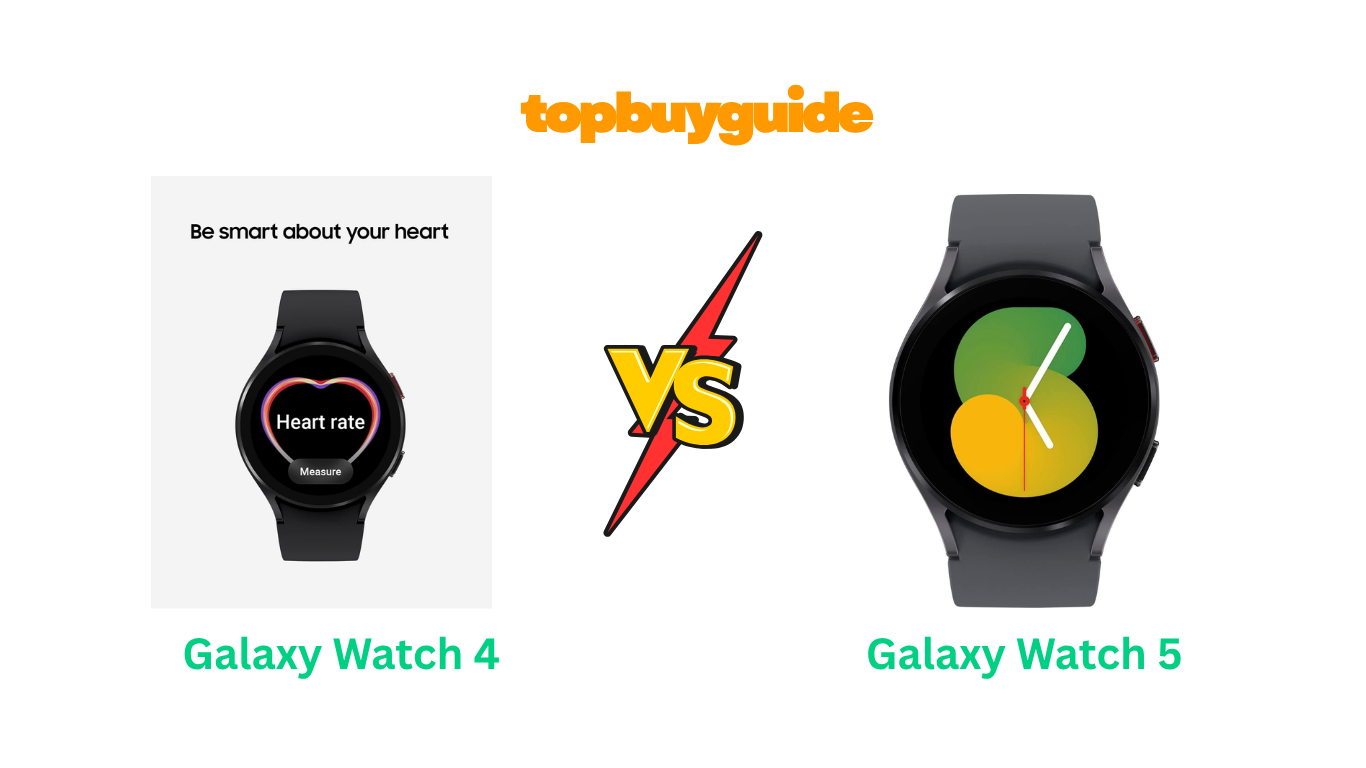
Samsung’s Galaxy Watch lineup continues evolving with subtle yet meaningful improvements between generations worth your attention. The Galaxy Watch 5 starts at $280, while the Watch 4 begins at $200 for budget-conscious buyers. After thorough comparison, I recommend the Galaxy Watch 5 for its superior 50% longer battery life and Sapphire Crystal Glass. The improved durability and faster charging make the $80 premium worthwhile for long-term satisfaction.
Why Do I Recommend The Galaxy Watch 5?
The Galaxy Watch 5 stands out as the superior smartwatch for several compelling reasons:
- Significantly Larger Battery Capacity: The Watch 5 features a 284mAh battery in the 40mm model versus the Watch 4’s 247mAh. Similarly, the 44mm Watch 5 packs 410mAh compared to 361mAh in the Watch 4. This translates to approximately 15% more battery capacity, delivering noticeably longer usage between charges.
- Sapphire Crystal Glass Display: Unlike the Watch 4’s standard glass, the Watch 5 uses Sapphire Crystal Glass that’s 60% stronger. This premium material resists scratches significantly better than regular glass, keeping your display pristine longer. The Watch 4’s screen scratches more easily during daily wear, diminishing its appearance over time.
- Fast Charging Technology: The Watch 5 reaches 45% charge in just 30 minutes with its new 10W charger. Additionally, it provides eight hours of sleep tracking from just an eight-minute quick charge. Conversely, the Watch 4 charges considerably slower, taking longer to reach equivalent battery levels throughout the day.
- Enhanced BioActive Sensor: The Watch 5 features a larger sensor surface area that maintains better skin contact for readings. This improvement reduces frustrating inconclusive measurements and provides more consistent heart rate and body composition data. The Watch 4’s smaller sensor occasionally struggles with accuracy, especially during movement and workouts.
- Skin Temperature Monitoring: The Watch 5 includes a dedicated skin temperature sensor for wellness insights and fertility tracking. This sensor measures temperature variations during sleep for health pattern analysis unavailable on the Watch 4. However, this feature isn’t activated in all regions, including the United States currently.
- Advanced Sleep Coaching: The Watch 5 launches with comprehensive Sleep Coaching that analyzes 30 days of sleep patterns. It provides personalized feedback, statistics, and recommendations to improve your sleep quality systematically over time. The Watch 4 received this feature later via software update but wasn’t originally designed for it.
- Improved Snoring Detection: The Watch 5 offers on-device snoring detection without requiring your smartphone nearby during sleep. This standalone functionality works independently, providing immediate feedback without external device dependencies like the Watch 4 initially required. The Watch 4 later received similar capabilities through updates but required phone proximity originally.
- Better Long-Term Value: The Watch 5’s Sapphire Crystal Glass maintains its appearance longer than the Watch 4’s standard glass. The improved durability means your watch looks newer for extended periods, maintaining resale value better. The Watch 4 shows wear faster, potentially requiring earlier replacement despite similar internal specifications and performance.
Side By Side Comparison Chart: Galaxy Watch 4 vs Galaxy Watch 5
| Feature | Galaxy Watch 4 | Galaxy Watch 5 |
| Display Size | 40mm & 44mm | 40mm & 44mm |
| Display Resolution | 396 x 396 (40mm), 450 x 450 (44mm) | 396 x 396 (40mm), 450 x 450 (44mm) |
| Display Protection | Standard Glass | Sapphire Crystal Glass |
| Durability | Standard strength | 60% stronger glass |
| Processor | Exynos W920 | Exynos W920 |
| RAM | 1.5GB | 1.5GB |
| Storage | 16GB | 16GB |
| Battery (40mm) | 247mAh | 284mAh |
| Battery (44mm) | 361mAh | 410mAh |
| Battery Life | Up to 40 hours | Up to 50 hours |
| Charging Speed | Standard | Fast (0-45% in 30 min) |
| Charger Power | Standard | 10W USB-C |
| BioActive Sensor | Standard size | Larger surface area |
| Temperature Sensor | No | Yes (region dependent) |
| Sleep Coaching | Added via update | Built-in at launch |
| Snoring Detection | Requires phone initially | On-device standalone |
| Bluetooth | 5.0 | 5.2 |
| Weight (40mm) | 25.9g | 28.7g |
| Weight (44mm) | 30.3g | 33.5g |
| Color Options | Black, Silver, Pink Gold, Green | Graphite, Pink Gold, Silver, Bora Purple |
| Starting Price | $200 | $280 |
| LTE Option | $250 | $330 |
What Common Features Can Galaxy Watch 4 vs Galaxy Watch 5 Do?
Both the Galaxy Watch 4 and Watch 5 share numerous powerful features that define Samsung’s smartwatch experience:
Exynos W920 Processor Performance
Both watches run Samsung’s Exynos W920 dual-core processor delivering smooth, lag-free performance throughout daily use. The chip handles apps, notifications, and watch faces identically without any noticeable performance differences between models. Whether launching apps or tracking complex workouts, both watches respond instantly to your commands and gestures.
Wear OS 3.5 Platform
The Watch 4 and Watch 5 both run Wear OS 3.5 with Samsung’s One UI Watch overlay. This unified software experience means identical app screens, Tiles (widgets), and navigation patterns across both models. Google Play Store access provides thousands of apps, watch faces, and complications equally on both watches.
BioActive Sensor Technology
Both watches feature Samsung’s comprehensive BioActive Sensor that captures over 2,400 data points during measurements. The sensor combines Bio-Electrical Impedance Analysis (BIA) for body composition, ECG for heart rhythm monitoring, and optical sensors. These measurements provide detailed insights into body fat percentage, skeletal muscle mass, and cardiovascular health equally.
Body Composition Analysis
The Watch 4 and Watch 5 both offer groundbreaking body composition tracking directly from your wrist. Both measure body fat percentage, skeletal muscle mass, body water, basal metabolic rate, and body mass index. This feature, previously requiring specialized scales, works identically on both models by sending small electrical signals through your body.
ECG and Blood Pressure Monitoring
Both watches include FDA-cleared ECG functionality for detecting atrial fibrillation and irregular heart rhythms accurately. Blood pressure monitoring also works on both models, though you’ll need a Samsung smartphone to calibrate initially. These medical-grade features provide identical health monitoring capabilities regardless of which watch you choose between these models.
Continuous Heart Rate Tracking
The Watch 4 and Watch 5 both monitor heart rate continuously throughout the day and night. Both detect abnormally high or low heart rates and send alerts when concerning patterns emerge. The optical heart rate sensors deliver accurate readings during rest, exercise, and sleep tracking on both watches.
Blood Oxygen Monitoring
Both models include SpO2 sensors that measure blood oxygen saturation levels on-demand or automatically during sleep. The sensors work identically, using red and infrared light to determine oxygen levels in your blood. This feature proves valuable for altitude training, sleep quality assessment, and respiratory health monitoring equally.
Comprehensive Sleep Tracking
The Watch 4 and Watch 5 both provide detailed sleep stage analysis, identifying REM, light, and deep sleep. Both track sleep duration, continuity, and quality while monitoring blood oxygen levels throughout the night. The Samsung Health app displays comprehensive sleep data with actionable insights on both watches identically now.
Over 100 Workout Modes
Both watches support tracking for more than 100 different workout types with automatic exercise detection. Running, cycling, swimming, rowing, and strength training work identically across both models with equal accuracy. The digital running coach, VO2 max estimates, and post-workout recovery insights function the same on both watches.
Built-In GPS Tracking
The Watch 4 and Watch 5 both feature built-in GPS for accurate outdoor activity tracking without your phone. Both use GPS, GLONASS, Galileo, and Beidou satellite systems for precise location data during workouts. Route tracking works identically on both watches, making either suitable for independent running and cycling activities.
5ATM Water Resistance
Both models carry IP68 dust and water resistance ratings plus 5ATM certification for swimming activities. You can wear either watch comfortably in pools or open water up to 50 meters deep. Swim tracking with lap counting and stroke recognition works equally well on both the Watch 4 and 5.
Smart Assistant Support
The Watch 4 and Watch 5 both offer Samsung Bixby and Google Assistant voice control options. Both assistants handle voice commands, set reminders, control smart home devices, and answer questions equally. You can choose your preferred assistant or switch between them seamlessly on either watch model.
Payment and Notification Features
Both watches support Samsung Pay and Google Wallet for contactless payments at millions of locations worldwide. Call, text, and app notifications display identically on both watches with quick reply options. Music controls, calendar alerts, and email previews work the same regardless of which model you own.
Common Features of Galaxy Watch 4 vs Galaxy Watch 5
| Feature | Galaxy Watch 4 | Galaxy Watch 5 |
| Exynos W920 Processor | Yes | Yes |
| RAM | 1.5GB | 1.5GB |
| Storage | 16GB | 16GB |
| Wear OS Version | 3.5 | 3.5 |
| BioActive Sensor | Yes | Yes |
| Body Composition | Yes | Yes |
| ECG Monitoring | Yes | Yes |
| Blood Pressure | Yes (with Samsung phone) | Yes (with Samsung phone) |
| Heart Rate Tracking | Continuous | Continuous |
| Blood Oxygen | Yes | Yes |
| Sleep Tracking | Yes | Yes |
| Workout Modes | 100+ | 100+ |
| Auto Exercise Detection | Yes | Yes |
| Built-in GPS | Yes | Yes |
| Water Resistance | 5ATM (50m) | 5ATM (50m) |
| Samsung Bixby | Yes | Yes |
| Google Assistant | Yes | Yes |
| Samsung Pay | Yes | Yes |
| Google Wallet | Yes | Yes |
| LTE Option | Available | Available |
| NFC | Yes | Yes |
| Fall Detection | Yes | Yes |
| SOS Features | Yes | Yes |
A Detailed Comparison Of the Galaxy Watch 4 vs Galaxy Watch 5
Display Technology and Protection
The Galaxy Watch 5 features Sapphire Crystal Glass that’s 60% stronger than the Watch 4’s standard glass. This premium material resists scratches from keys, coins, and accidental impacts significantly better than regular glass. The improved durability ensures your display maintains its pristine appearance throughout years of daily wear and use.
The Watch 4 uses standard glass protection that scratches more easily during normal wear and activities. While adequate for careful users, the display shows micro-scratches over time from everyday contact with surfaces. These scratches gradually reduce screen clarity and diminish the watch’s overall appearance despite protective measures.
Battery Capacity and Life
The Watch 5 includes substantially larger batteries—284mAh in 40mm and 410mAh in 44mm sizes—compared to the Watch 4. These increased capacities translate to approximately 50 hours of battery life versus the Watch 4’s 40 hours. You can comfortably wear the Watch 5 for two full days with moderate use before needing recharge.
The Watch 4’s smaller 247mAh and 361mAh batteries require more frequent charging to maintain all-day functionality. While the 40-hour battery life works for daily charging routines, it limits overnight sleep tracking capabilities. Many users find themselves choosing between sleep tracking or having sufficient battery for the next day’s activities.
Charging Speed and Convenience
The Watch 5 includes a new 10W fast charger that reaches 45% battery in just 30 minutes. This rapid charging proves invaluable when you’ve forgotten to charge overnight or need quick power before activities. Additionally, just eight minutes of charging provides eight hours of sleep tracking capability for overnight monitoring.
The Watch 4 charges at standard speeds, taking significantly longer to reach equivalent battery levels throughout the day. The slower charging means longer wait times tethered to the charger, reducing the watch’s usability during charging periods. This limitation becomes particularly frustrating when you need quick power-ups between activities or before bedtime tracking.
BioActive Sensor Performance
The Watch 5 features an enlarged BioActive Sensor with greater skin contact area for improved measurement accuracy. This larger sensor maintains consistent contact during movement, reducing failed readings and improving data reliability significantly. The enhanced sensor design ensures more accurate body composition, heart rate, and ECG measurements during daily wear.
The Watch 4’s smaller sensor occasionally loses proper skin contact, especially during workouts or normal wrist movement. This results in more frequent inconclusive measurements requiring retakes, which frustrates users seeking quick health data. While generally accurate when properly positioned, the sensor’s smaller size makes consistent readings more challenging to achieve.
Temperature Sensing Capabilities
The Watch 5 includes a skin temperature sensor that monitors temperature variations during sleep for wellness insights. This sensor enables fertility tracking through cycle pattern analysis and detects potential illness through temperature changes. However, Samsung hasn’t activated this feature in all regions, including the United States, limiting its immediate utility.
The Watch 4 completely lacks temperature sensing hardware, eliminating any temperature-based health tracking or fertility monitoring capabilities. Users interested in comprehensive wellness tracking miss this advanced feature that provides additional health context. The hardware limitation means software updates cannot add temperature tracking to the Watch 4 retrospectively.
Sleep Coaching Features
The Watch 5 launched with comprehensive Sleep Coaching built into the Samsung Health app from day one. This feature analyzes 30 days of sleep data, providing personalized recommendations, coaching programs, and detailed insights. The proactive guidance helps users identify sleep disruptors and establish healthier sleep habits through evidence-based suggestions.
The Watch 4 received Sleep Coaching later through software updates, but it wasn’t part of the original design. While now available on both watches, the Watch 5 offers better integration and more refined coaching algorithms. The newer model benefits from improved sleep stage detection and more accurate sleep quality assessments overall.
Snoring Detection Functionality
The Watch 5 provides standalone snoring detection that works directly on the watch without smartphone proximity during sleep. The microphones detect snoring patterns throughout the night, providing detailed reports in the morning about snoring frequency. This independent functionality means you don’t need your phone nearby, simplifying nighttime charging arrangements significantly.
The Watch 4 initially required smartphone proximity for snoring detection, limiting placement options during sleep tracking sessions. While software updates added on-device detection later, the feature wasn’t originally designed for standalone operation. Users upgrading from the Watch 4 appreciate the Watch 5’s improved independence for this health feature.
Bluetooth Connectivity Version
The Watch 5 includes Bluetooth 5.2, offering slightly improved range and connection stability over the Watch 4’s Bluetooth 5.0. While the real-world difference remains minimal for most users, Bluetooth 5.2 provides better power efficiency. This marginal improvement contributes to the Watch 5’s superior battery life alongside its larger battery capacity.
The Watch 4’s Bluetooth 5.0 remains perfectly adequate for smartwatch connectivity needs, handling phone connections reliably throughout normal use. The older Bluetooth version doesn’t create noticeable limitations in daily use for calls, music, or notifications. Most users won’t detect any practical difference between the Bluetooth versions during everyday smartwatch activities.
Weight and Comfort Considerations
The Watch 5 weighs slightly more than the Watch 4 due to its larger battery and improved materials. The 40mm model weighs 28.7g versus the Watch 4’s 25.9g, while the 44mm weighs 33.5g versus 30.3g. This approximately 10% weight increase remains barely noticeable during wear but enables the significant battery improvements users appreciate.
The Watch 4’s lighter weight provides marginal comfort advantages, especially during extended wear or sleep tracking sessions. However, the weight difference proves negligible for most users, who quickly adapt to either watch’s feel. The lighter design doesn’t compensate for the shorter battery life and less durable display over time.
Color and Style Options
The Watch 5 offers Graphite, Pink Gold, Silver, and exclusive Bora Purple color options across both sizes. Samsung eliminated the Black and Green options from the Watch 4 lineup, focusing on refined colorways. The Bora Purple provides a fresh, distinctive option unavailable on previous Galaxy Watch models for style-conscious buyers.
The Watch 4 came in Black, Silver, Pink Gold, and Green, providing slightly different aesthetic choices. While color preference remains subjective, the Watch 4’s Green option appealed to users wanting unique styling. Both watches support extensive band customization, allowing personalization beyond factory color options through Samsung’s Bespoke Studio service.
Software Update Support
Both the Watch 4 and Watch 5 receive Samsung’s promised four years of software updates from their launch. This means the Watch 4, released in 2021, receives updates through 2025, while the Watch 5 continues through 2026. Both watches run identical Wear OS 3.5 software currently, ensuring feature parity for most functionality.
The Watch 5’s longer support timeline provides slightly extended software longevity for future features and security patches. However, the one-year difference doesn’t significantly impact most users’ ownership experiences given typical smartwatch replacement cycles. Both watches receive regular updates maintaining performance, security, and feature additions throughout their supported lifespans.
Price and Value Comparison
The Watch 5 starts at $280 for the 40mm Bluetooth model, positioning it $80 above the Watch 4’s $200 entry price. LTE variants cost $330 for the Watch 5 versus $250 for the Watch 4 cellular option. The premium buys you better battery life, improved durability, and enhanced sensors that justify the cost.
The Watch 4 offers exceptional value at $200, especially for first-time smartwatch buyers or budget-conscious consumers. The lower price point makes advanced health tracking and Wear OS features accessible without significant investment. For users who don’t prioritize maximum battery life or display durability, the Watch 4 remains perfectly adequate.
Conclusion
The Galaxy Watch 5 earns my recommendation for its significantly improved 50-hour battery life and durable Sapphire Crystal Glass. The 10W fast charging reaches 45% in 30 minutes, eliminating battery anxiety during busy days completely. The larger BioActive Sensor and temperature tracking provide enhanced health insights worth the $280 investment. If you value longevity and advanced wellness features, the Watch 5 delivers outstanding performance. Click above to order yours and experience Samsung’s most refined smartwatch technology available today.
FAQs
Q: Is the Galaxy Watch 5 worth upgrading from the Watch 4?
A: The upgrade depends on your priorities—if battery anxiety or screen scratches frustrate you daily, absolutely yes. The 50% longer battery life and Sapphire Crystal Glass significantly improve the daily experience. However, if your Watch 4 works perfectly and you charge nightly without issues, waiting another generation makes financial sense.
Q: Can I use Galaxy Watch 4 or 5 with an iPhone?
A: No, both Galaxy watches require Android smartphones and won’t work with iPhones at all. Samsung designed these watches exclusively for the Android ecosystem with no iOS compatibility. iPhone users should consider the Apple Watch instead, as it’s specifically designed for seamless iPhone integration and functionality.
Q: Does the Galaxy Watch 5 have a rotating bezel like Watch 4 Classic?
A: No, the standard Galaxy Watch 5 uses a digital bezel just like the Watch 4 standard model. Samsung discontinued the Classic model with the physical rotating bezel for the Watch 5 generation. However, the digital bezel provides smooth, accurate navigation through the touchscreen interface on both standard models equally.
Q: How much longer does the Watch 5 battery actually last?
A: The Watch 5 delivers approximately 50 hours compared to the Watch 4’s 40 hours under similar usage. This translates to comfortable two-day wear with moderate use versus barely making it through the second day. Light users report three-day battery life on the Watch 5, while the Watch 4 typically requires daily charging.
Q: Can both watches track swimming workouts?
A: Yes, both watches feature 5ATM water resistance (50 meters) suitable for pool and open water swimming. Both track swim workouts with lap counting, stroke detection, and SWOLF score calculation identically. The identical water resistance means neither watch has advantages for aquatic activities or shower wear resistance.
Q: Does the temperature sensor work in the United States?
A: Currently, Samsung hasn’t activated the temperature sensor in the United States due to regulatory considerations and feature development. The sensor exists in the hardware but remains non-functional in certain regions including the US. Samsung may activate it through future software updates once regulatory approvals are obtained regionally.
Q: Are the watch bands interchangeable between Watch 4 and Watch 5?
A: Yes, both watches use identical 20mm band attachments, making all bands completely interchangeable between models. Any band that fits the Watch 4 works perfectly with the Watch 5 and vice versa. This compatibility extends to Samsung’s official bands and third-party options available through various retailers worldwide.
Q: Which watch is better for serious fitness tracking?
A: Both watches offer identical fitness tracking capabilities with 100+ workout modes and accurate GPS tracking. The Watch 5’s larger BioActive Sensor provides slightly more consistent readings during intense movement compared to the Watch 4. However, for dedicated athletes, both watches perform admirably without significant practical differences in workout data accuracy.

Alex Turner is a dedicated product researcher and reviewer at TopBuyGuide.com, known for his clear, honest, and data-driven insights. He spends countless hours testing, comparing, and analyzing products to help readers make confident and informed buying decisions.