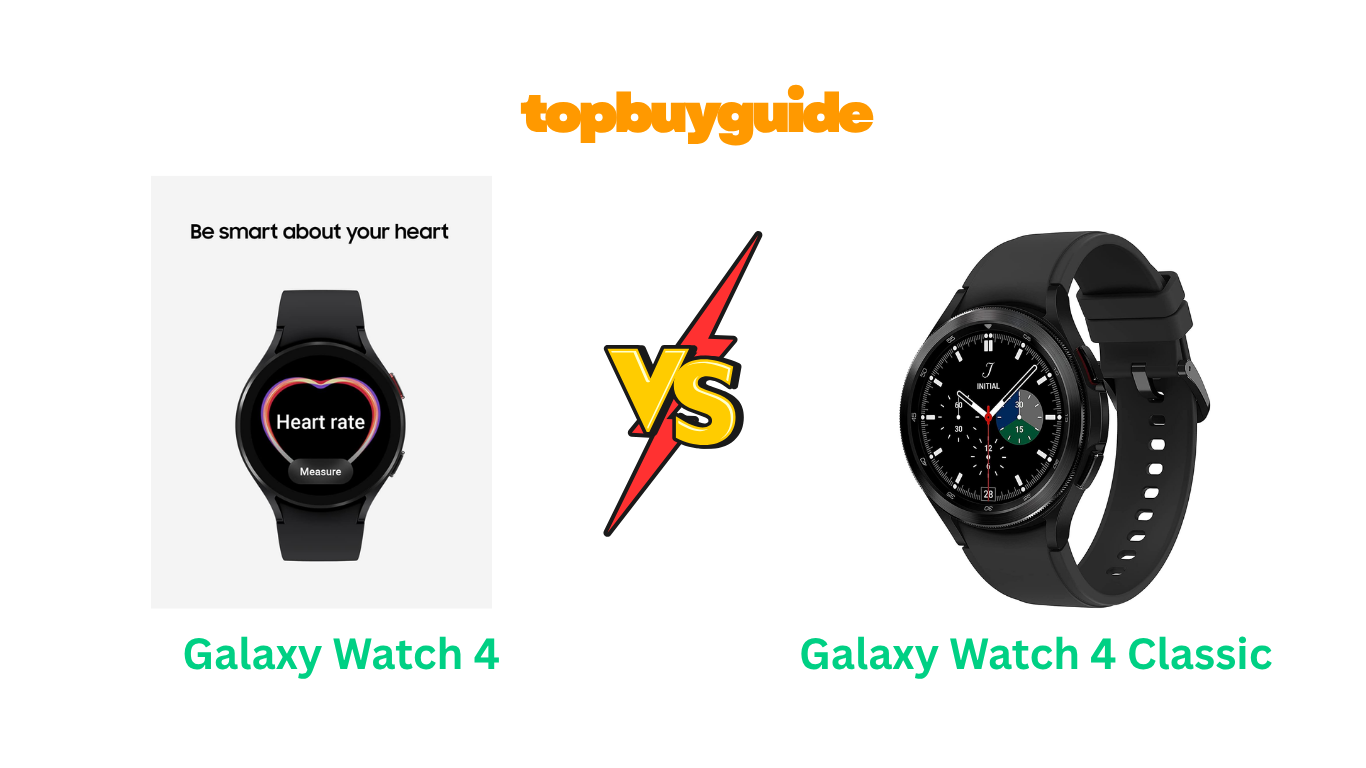
Choosing between the Galaxy Watch 4 and Classic feels overwhelming when they share identical internals. Both watches run Wear OS 3 and pack the same health sensors. I recommend the Galaxy Watch 4 Classic for its premium stainless steel build and physical rotating bezel. The tactile bezel navigation beats the virtual alternative. Plus, the Classic’s refined design suits both casual and professional settings effortlessly.
Why Do I Recommend The Galaxy Watch 4 Classic?
The Galaxy Watch 4 Classic stands out as the superior choice for several compelling reasons:
Premium Stainless Steel Construction: Unlike the aluminum Galaxy Watch 4, the Classic features durable stainless steel casing. This material resists scratches better and feels more substantial on your wrist.
Physical Rotating Bezel: The Classic’s signature feature provides tactile navigation that feels intuitive and responsive. Meanwhile, the standard Watch 4 relies on a virtual bezel that lacks the same satisfying interaction.
Enhanced Display Protection: Both watches feature Gorilla Glass, but the Classic’s raised bezel acts as a bumper. This design element protects your screen from accidental impacts and scratches.
Professional Aesthetic: The Classic’s traditional watch design makes it appropriate for formal occasions and business meetings. In contrast, the standard Watch 4 leans toward a sporty, casual appearance.
Better Long-term Durability: Stainless steel maintains its appearance longer than aluminum under daily wear. The Classic ages gracefully without showing minor dings and scratches as prominently.
Superior Tactile Feedback: Physical buttons and the rotating bezel provide precise control without touching the screen. This feature proves invaluable during workouts or when wearing gloves.
Timeless Design Language: The Classic’s aesthetic draws from traditional watch design principles. This approach ensures your smartwatch won’t look outdated in coming years.
Higher Resale Value: Premium materials and classic styling help the Watch 4 Classic retain better trade-in value. This factor matters when upgrading to newer models.
Side By Side Comparison Chart: Galaxy Watch 4 vs Classic
| Feature | Galaxy Watch 4 | Galaxy Watch 4 Classic |
| Case Material | Aluminum | Stainless Steel |
| Weight (42/44mm) | 25.9g / 30.3g | 46.5g / 52g |
| Case Sizes | 40mm, 44mm | 42mm, 46mm |
| Bezel Type | Virtual Touch Bezel | Physical Rotating Bezel |
| Thickness | 9.8mm | 11mm (42mm), 11.2mm (46mm) |
| Glass Protection | Gorilla Glass DX+ | Gorilla Glass DX |
| Color Options | Silver, Black, Pink Gold, Green | Silver, Black |
| Design Style | Sporty, Modern | Classic, Traditional |
| Price (Starting) | $249 | $349 |
| Best For | Fitness enthusiasts, casual wear | Professional settings, traditional style |
What Common Galaxy Watch 4 vs Classic Features Can Do?
Both smartwatches share an impressive array of features that make them powerful health and fitness companions.
Wear OS 3 with One UI Watch
The Galaxy Watch 4 and Classic both run on Wear OS 3 co-developed by Samsung and Google. This operating system combines Google’s app ecosystem with Samsung’s intuitive interface. One UI Watch provides seamless integration with Samsung devices while maintaining compatibility with all Android phones. Users enjoy access to the Google Play Store, enabling downloads of thousands of apps.
The interface feels responsive and smooth during navigation. Watch faces can be customized extensively through Samsung’s design studio. Automatic syncing between Samsung devices creates a cohesive ecosystem experience.
Advanced Health Monitoring
Both watches feature the innovative BioActive sensor that tracks multiple health metrics simultaneously. This 3-in-1 sensor monitors heart rate, blood oxygen levels, and performs electrocardiograms. The body composition analysis feature uses bioelectrical impedance to measure body fat percentage and skeletal muscle mass. Sleep tracking monitors sleep stages and provides detailed analysis upon waking.
Continuous heart rate monitoring alerts users to irregular rhythms or abnormal patterns. Stress monitoring helps users identify tension levels throughout the day. Blood oxygen monitoring tracks SpO2 levels for respiratory health insights.
Comprehensive Fitness Tracking
Over 90 workout modes cover everything from running and swimming to yoga and HIIT training. Automatic workout detection starts tracking when it recognizes physical activity patterns. GPS tracking provides accurate distance and pace measurements without requiring a phone connection.
Real-time coaching offers personalized guidance during exercises to optimize performance. Post-workout analysis breaks down calories burned, heart rate zones, and recovery time. The MIL-STD-810G rating ensures both watches withstand tough workout conditions. Water resistance up to 5ATM allows swimming and water sports tracking.
Smart Connectivity Features
Both watches support LTE connectivity for making calls and streaming music independently. Samsung Pay enables contactless payments directly from the wrist at compatible terminals. Notification mirroring displays texts, emails, and app alerts without touching your phone.
Voice assistant support through Bixby provides hands-free control for various tasks. Music streaming services can be accessed directly, with 16GB storage for offline playback. Find My Phone helps locate misplaced smartphones quickly through the watch interface.
Common Features of Galaxy Watch 4 vs Classic
| Feature | Galaxy Watch 4 | Galaxy Watch 4 Classic |
| Processor | Exynos W920 | Exynos W920 |
| RAM | 1.5GB | 1.5GB |
| Storage | 16GB | 16GB |
| Operating System | Wear OS 3 + One UI Watch | Wear OS 3 + One UI Watch |
| Battery (40/42mm) | 247mAh | 247mAh |
| Battery (44/46mm) | 361mAh | 361mAh |
| Battery Life | Up to 40 hours | Up to 40 hours |
| Display Type | Super AMOLED | Super AMOLED |
| Resolution (Small) | 396 x 396 pixels | 396 x 396 pixels |
| Resolution (Large) | 450 x 450 pixels | 450 x 450 pixels |
| Water Resistance | 5ATM + IP68 | 5ATM + IP68 |
| Durability | MIL-STD-810G | MIL-STD-810G |
| GPS | Built-in | Built-in |
| NFC | Yes | Yes |
| Heart Rate Monitor | Yes | Yes |
| ECG | Yes | Yes |
| SpO2 Monitoring | Yes | Yes |
| Body Composition | Yes | Yes |
| Sleep Tracking | Yes | Yes |
| Workout Modes | 90+ | 90+ |
| LTE Option | Available | Available |
A Detailed Comparison Of the Galaxy Watch 4 vs Classic
Design and Build Quality
The Galaxy Watch 4 embraces a modern, minimalist aesthetic with its aluminum construction. This lightweight material keeps the watch comfortable during extended wear and intense workouts. The sleek profile sits flush against your wrist without creating bulk under sleeves. Color options include silver, black, pink gold, and green, offering variety for personal style preferences.
The Galaxy Watch 4 Classic takes a traditional approach with premium stainless steel construction. This material choice adds substantial weight but delivers exceptional durability and scratch resistance. The raised rotating bezel creates a distinctive profile that commands attention. Available in silver and black finishes, it prioritizes timeless elegance over trendy color options.
Physical Dimensions and Weight
The standard Galaxy Watch 4 comes in 40mm and 44mm case sizes. The 40mm model weighs just 25.9 grams, making it barely noticeable on smaller wrists. The 44mm version tips scales at 30.3 grams, still maintaining impressive portability. Both sizes measure 9.8mm thick, allowing them to slide easily under shirt cuffs.
The Classic model offers 42mm and 46mm case options for those preferring larger displays. The 42mm Classic weighs 46.5 grams, significantly heavier than its standard counterpart. The 46mm model reaches 52 grams due to steel construction and larger battery. Thickness increases to 11mm for the 42mm and 11.2mm for the 46mm variant.
Bezel Navigation System
The Galaxy Watch 4 features a touch-sensitive virtual bezel around the display perimeter. Users swipe along the screen edge to navigate menus and adjust settings. This system works adequately but requires visual attention and precise finger placement. Some users find it less intuitive than physical alternatives.
The Classic’s physical rotating bezel revolutionizes smartwatch navigation with tactile precision. The mechanical dial clicks satisfyingly as it rotates, providing haptic feedback without vibration. Navigation becomes second nature, allowing operation without looking at the screen. The raised bezel also protects the display from scratches and impacts.
Display Quality and Protection
Both watches utilize Super AMOLED technology for vibrant colors and deep blacks. The smaller models feature 1.2-inch displays with 396 x 396 pixel resolution. Larger versions boast 1.4-inch screens with 450 x 450 pixel clarity. Both deliver exceptional outdoor visibility and smooth graphics rendering.
The standard Watch 4 incorporates Gorilla Glass DX+ for superior scratch resistance. This premium glass coating withstands daily wear better than standard alternatives. The Classic uses Gorilla Glass DX, slightly less scratch-resistant but still highly durable. However, its raised bezel compensates by shielding the display from direct impacts.
Performance and Processing Power
The Galaxy Watch 4 runs on Samsung’s Exynos W920 dual-core processor. This 5nm chipset delivers 20% faster performance than previous generations. Paired with 1.5GB RAM, it handles multitasking smoothly without lag. The 16GB storage accommodates numerous apps and offline music libraries.
The Classic shares identical internal specifications with the W920 processor and 1.5GB RAM. Performance remains consistent across both models during app launches and interface navigation. The 16GB storage provides ample space for apps, watch faces, and media. Neither watch shows performance advantages over the other in real-world usage.
Battery Life and Charging
The 40mm Watch 4 and 42mm Classic both house 247mAh batteries. Under typical usage, they last approximately 24 to 36 hours between charges. Heavy GPS and streaming usage reduces this to around one full day. Power-saving modes can extend battery life significantly when needed.
Larger models with 361mAh batteries provide improved endurance, lasting up to 40 hours. The 44mm Watch 4 and 46mm Classic perform similarly in battery tests. Real-world usage patterns affect battery life more than model differences. Both watches support fast wireless charging, reaching full charge in approximately two hours.
Health and Fitness Features
The Galaxy Watch 4 excels at fitness tracking with its lightweight, comfortable design. Aluminum construction prevents fatigue during long workouts or all-day wear. The sporty aesthetic matches athletic clothing and gym environments perfectly. Automatic workout detection captures exercises even when you forget to start tracking.
The Classic offers identical health monitoring capabilities in a more refined package. The stainless steel build provides confidence during intense activities despite added weight. Traditional styling makes it suitable for office wear before and after gym sessions. All health metrics remain equally accurate across both models.
Smart Features and Connectivity
Both watches support Samsung Pay for contactless payments at retail terminals. LTE variants enable phone calls and message responses without carrying your smartphone. Notification management keeps you informed without constantly checking your phone. Voice assistant integration through Bixby provides hands-free control for quick tasks.
The Classic and standard models offer identical smart connectivity options and capabilities. App compatibility through Google Play Store remains consistent across both versions. Integration with Samsung’s ecosystem provides seamless device switching and data synchronization. Neither watch provides feature advantages in terms of smart functionality.
Price and Value Proposition
The Galaxy Watch 4 starts at $249 for the 40mm Bluetooth model. LTE connectivity adds $50 to the price across all configurations. The 44mm model costs $279 for Bluetooth and $329 for LTE. This pricing makes it accessible for budget-conscious buyers seeking Samsung quality.
The Classic commands a $100 premium, starting at $349 for 42mm Bluetooth. LTE adds another $50, reaching $399 for full connectivity. The 46mm variant starts at $379 for Bluetooth and $429 for LTE. Premium materials and the rotating bezel justify the higher cost for many users.
Conclusion
After extensive comparison, the Galaxy Watch 4 Classic emerges as the superior choice for most users. The premium stainless steel construction ensures longevity and maintains its appearance over years. The physical rotating bezel provides intuitive navigation that outperforms touch-sensitive alternatives. Its timeless design transitions seamlessly between gym, office, and formal occasions.
While the $100 price premium seems steep initially, the enhanced durability and refined experience justify the investment. The Classic delivers identical health tracking and smart features in a more sophisticated package. For those prioritizing long-term value and professional aesthetics, the Classic represents the smarter purchase.
FAQs
Q: Can I use Galaxy Watch 4 or Classic with non-Samsung Android phones?
Yes, both watches work with any Android phone running version 6.0 or higher. However, body composition analysis and ECG features require Samsung Galaxy smartphones. Most core functions operate normally regardless of phone brand.
Q: How accurate is the body composition analysis feature?
The bioelectrical impedance analysis provides reasonably accurate measurements for trends over time. Results may vary by about 3-5% compared to professional equipment. Consistency in measurement conditions yields the most reliable tracking data.
Q: Is the rotating bezel worth the extra $100 on the Classic?
The physical bezel significantly improves navigation efficiency and user satisfaction. Combined with premium stainless steel construction, many users find the upgrade worthwhile. However, budget-conscious buyers receive identical functionality with the standard model.
Q: Can these watches track swimming workouts accurately?
Both models feature 5ATM water resistance and dedicated swim tracking modes. They accurately measure lap counts, stroke types, and calories burned. However, heart rate monitoring becomes less accurate underwater due to sensor limitations.
Q: How long does the battery actually last in real-world use?
Expect 24 to 36 hours with moderate use including fitness tracking and notifications. Always-on display and continuous heart monitoring reduce battery life to approximately 20 hours. Larger models provide several additional hours compared to smaller variants.
Q: Do these watches require a Samsung phone to function fully?
No, but Samsung Galaxy phones unlock additional features like ECG and body composition. All other functions work perfectly with any compatible Android device. iPhone users cannot pair these watches at all.
Q: Can I replace the watch bands with third-party options?
Yes, both models use standard watch band connections supporting aftermarket options. Samsung offers official bands in various materials and styles. Third-party manufacturers provide extensive band selections at lower prices.
Q: Will these watches receive software updates for several years?
Samsung typically provides 4-5 years of software support for Galaxy Watch models. Both Watch 4 variants continue receiving regular updates and new features. Security patches arrive consistently to maintain protection against vulnerabilities.

Alex Turner is a dedicated product researcher and reviewer at TopBuyGuide.com, known for his clear, honest, and data-driven insights. He spends countless hours testing, comparing, and analyzing products to help readers make confident and informed buying decisions.