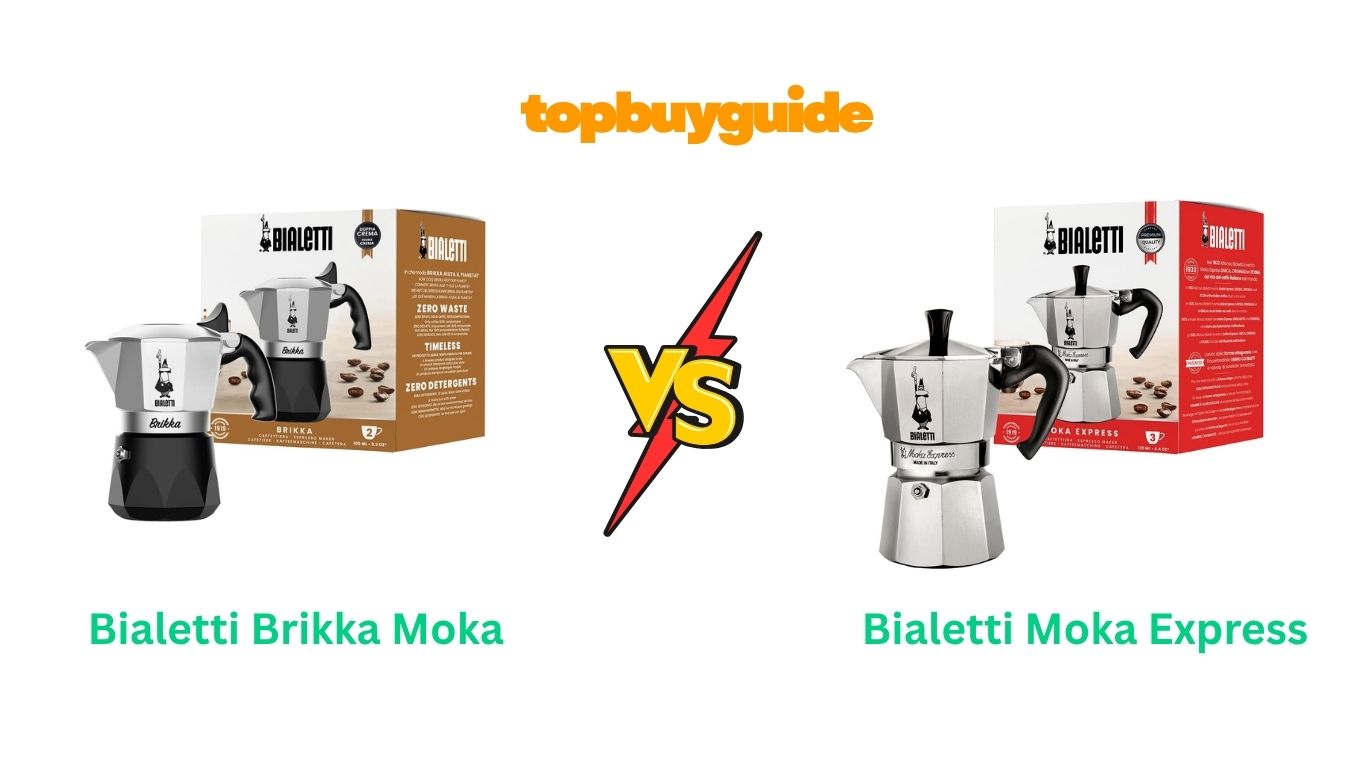
Deciding between Bialetti Brikka vs Express is a choice between tradition and an espresso-like upgrade. I wholeheartedly recommend the Bialetti Brikka for coffee enthusiasts. The Brikka features a specialized pressure valve that creates a rich layer of crema. This innovative design delivers a significantly stronger and thicker coffee compared to the classic Moka Express.
Why Do I Recommend The Bialetti Brikka?
I recommend the Bialetti Brikka because it is the superior choice for users chasing a brew closer to authentic espresso. While the Moka Express is a foundational classic, the Brikka employs modern technology to actively enhance the coffee’s body, strength, and visual appeal. This patented technology makes the Brikka a worthwhile upgrade for a more intense and satisfying coffee experience.
- It is equipped with a patented weighted pressure valve for crema.
The Brikka utilizes a unique weighted or silicone pressure valve system on the funnel inside the upper chamber. This valve delays the flow of coffee until higher pressure is achieved, which creates a visible, velvety layer of crema on the finished brew. In contrast, the Moka Express uses a simple open spout. This traditional design prevents the necessary pressure increase, resulting in a brew that completely lacks crema. - The Brikka delivers a notably stronger, more concentrated coffee.
The delayed release of the weighted valve forces more pressure through the grounds, leading to a higher extraction yield and a denser coffee concentrate. This results in a coffee that is closer to the intensity of true espresso. However, the Moka Express brews at a lower pressure, which often results in a final cup that tastes less intense and slightly more watery compared to the Brikka. - It often requires a specific, measured amount of water for optimal results.
The Brikka is typically sold with a specific measuring cup or has an internal water line to ensure precise water volume. This precision is necessary for the pressure valve system to work correctly and create the crema. Conversely, the Moka Express simply requires filling water to just below the safety valve. The Brikka’s measured approach encourages a more consistent, professional brew. - The Brikka features an open top design to facilitate crema formation.
The newer Brikka models have a hole in the lid or a flip-up lid to allow air to swirl above the brewing coffee. This aeration is essential for trapping oils and forming the desirable velvety cream. While the Moka Express has a solid, non-vented lid. The traditional design focuses purely on collecting the coffee without any mechanism for aeration or crema production. - The Brikka generally brews faster due to the pressure mechanism.
Tests often show that the Brikka can complete a brewing cycle more quickly than a similarly sized Moka Express once the optimal heat is applied. The internal pressure build-up and rapid release accelerate the process. Since the Moka Express relies solely on a steady, gradual build-up of steam pressure, its brewing time tends to be longer and less predictable. - It is available only in smaller, high-intensity serving sizes.
The Brikka is manufactured specifically in two-cup and four-cup sizes, reflecting its purpose of creating a concentrated, espresso-like shot. This size limitation focuses the design on quality over volume. On the other hand, the Moka Express is available in a vast array of sizes, from one cup up to twelve cups, accommodating various household needs and providing maximum flexibility. - The Brikka coffee is considered better suited for milk-based drinks.
Because the Brikka delivers a stronger, more concentrated coffee with crema, it holds up better when mixed with steamed milk for lattes and cappuccinos. The flavor cuts through the milk effectively. Although the Moka Express coffee can be used with milk, its lower concentration means the coffee flavor is often overpowered by the milk.
Side By Side Comparison Chart (Bialetti Brikka vs Express)
| Feature | Bialetti Brikka | Bialetti Moka Express |
| Crema Production | Yes, Patented Weighted Pressure Valve | No, Simple Open Spout |
| Coffee Strength | Significantly Stronger, More Concentrated | Traditional Strength (Often milder) |
| Water Requirement | Specific Measuring Cup/Internal Line | Fill to just below Safety Valve |
| Lid Design | Open hole or Flip-up Lid for Aeration | Solid, Closed Lid |
| Base Material | Aluminum (Like Moka Express) | Aluminum (Classic Material) |
| Available Sizes | Limited to Two-Cup and Four-Cup | Extensive Range (One-Cup up to Twelve-Cup) |
| Price Point | Premium / Higher Cost | Budget-Friendly / Accessible |
| Cleaning | More care needed for valve | Simple rinsing of spout |
Common Features of Bialetti Brikka vs Express
What Common Bialetti Brikka vs Express Can Do?
Despite the significant functional differences introduced by the Brikka’s pressure valve, the Bialetti Brikka and the Moka Express share the same core identity as stovetop moka pots. Both are rooted in the same Italian design and utilize the same fundamental heat-driven process. Their shared features ensure both produce a style of intense, concentrated coffee distinctly different from drip or immersion methods.
- Fundamental Stovetop Moka Pot Brewing
Both the Bialetti Brikka and the Moka Express rely on the classic moka pot principle of steam pressure. Water is heated in the lower boiler, creating steam that builds pressure. This pressure then forces the hot water to travel upward through the bed of coffee grounds. This identical physical process is what separates moka pots from other brewing methods. - Construction Material and Classic Design
Both models are typically constructed using the traditional material: food-grade cast aluminum. This classic material is lightweight and offers excellent heat conductivity, allowing the water to heat up quickly. Both brewers also feature the iconic Bialetti octagonal shape, which aids in diffusing heat from the stovetop and is instantly recognizable as a piece of Italian design. - Use of the Essential Safety Valve
The lower boiler chamber of both the Brikka and the Moka Express is fitted with the essential safety release valve. This crucial component is designed to automatically vent any excess steam pressure. This prevents the pot from over-pressurizing due to fine grinding or clogging. The valve also serves as a mandatory maximum fill line for water in both units. - Identical Coffee Preparation Requirements
The necessary coffee preparation is identical for both pots. Both require a medium-fine grind size, which is slightly coarser than the grind used for commercial espresso machines. The coffee grounds must be filled level into the filter basket but should never be tamped or compressed. This identical routine ensures proper flow and safe operation for both models. - Requires Hand Washing Only for Maintenance
Due to their aluminum construction, both the Brikka and the Moka Express must be hand-washed using only water, and harsh detergents and dishwashers must be strictly avoided. This maintenance ensures the longevity of the aluminum and protects the essential “seasoned” patina of coffee oils that develops inside the metal over time. - Thermoplastic Handles and Knobs
Both models utilize heat-resistant thermoplastic material for the handle and lid knob. This choice of material allows the user to safely handle the pot and lift the lid immediately after brewing is complete. This common safety feature is essential for comfortable operation of both the Brikka and the Moka Express.
Common Features of Bialetti Brikka vs Express Chart
| Feature | Bialetti Brikka | Bialetti Moka Express |
| Brewing Method | Stovetop Steam Pressure (Moka Pot) | Stovetop Steam Pressure (Moka Pot) |
| Body Material | Food-Grade Aluminum (Traditional) | Food-Grade Aluminum (Traditional) |
| Safety Feature | Integrated Pressure Release Valve (Boiler) | Integrated Pressure Release Valve (Boiler) |
| Required Grind | Medium-Fine (Untamped) | Medium-Fine (Untamped) |
| Handle Material | Heat-Resistant Thermoplastic | Heat-Resistant Thermoplastic |
| Base Shape | Iconic Octagonal Base | Iconic Octagonal Base |
| Cleaning | Hand-wash only (No soap/dishwasher) | Hand-wash only (No soap/dishwasher) |
A Detailed Comparison Of the Bialetti Brikka vs Express
Pressure Regulation and Crema Generation
The primary mechanical difference lies in how pressure is regulated and released into the upper chamber. The Bialetti Brikka incorporates a patented pressure valve or column that sits atop the coffee funnel. This valve remains closed until the steam pressure reaches a higher level than the standard moka pot, forcing a more violent and concentrated burst of coffee through the grounds. This pressure and the unique open-lid aeration process work together to create a visible, light-colored foam known as crema.
The Bialetti Moka Express operates with a simple, open funnel spout that leads directly into the upper chamber. As soon as the steam pressure is sufficient to push the water upward, the coffee begins to flow immediately, without any artificial delay or pressure build-up beyond the natural steam pressure. While this process is reliable and traditional, it results in a coffee concentrate that is extracted at a lower pressure, which is why it never produces the recognizable layer of crema.
Coffee Strength and Recommended Serving
The resulting strength of the brew is a clear distinguishing factor between the two pots. The Brikka’s increased pressure and higher extraction rate result in a final coffee product that is noticeably stronger, bolder, and has a higher concentration of dissolved solids. This robust nature makes the Brikka coffee an excellent substitute for espresso shots, especially when used in milk drinks like macchiatos.
The Moka Express produces the classic moka pot coffee, which is strong but generally milder in flavor and concentration than the Brikka’s output. The Moka Express is often preferred by those who enjoy a full cup of coffee rather than just a concentrated shot. The traditional Moka Express is more forgiving and produces a brew that is excellent for a strong morning cup or diluted with hot water for a café-style Americano.
Brewing Consistency and User Forgiveness
The Brikka’s specialized pressure valve and required water precision make it a less forgiving brewer than the Moka Express. To achieve the coveted crema, the user must carefully manage the water level, grind size, and heat source to ensure the pressure valve is correctly engaged. This requirement for precise parameters means the Brikka can be prone to inconsistent results or splashes if the process is not carefully followed.
The Moka Express, with its simpler open-spout design, is highly forgiving and easy to use, making it the ideal choice for moka pot beginners. As long as the water is below the safety valve and the coffee is not overly tamped, the Moka Express reliably produces a good cup of coffee. Its simple mechanics ensure high consistency regardless of minor variations in heat or water volume.
Available Sizes and Usage Scenarios
The range of available sizes dictates the pot’s suitability for different brewing needs. The Bialetti Brikka is limited to smaller sizes, typically only two-cup and four-cup models, which is perfect for one or two people desiring concentrated, espresso-style shots. This size constraint reinforces the Brikka’s identity as a personal specialty brewer focused on quality shots.
The Bialetti Moka Express is available in a vast array of sizes, from a tiny one-cup model up to a large twelve-cup model. This wide range makes the Moka Express highly adaptable for brewing coffee for large families or gatherings. Its versatility in sizing makes it the practical choice for a user whose daily brewing volume might vary significantly.
Conclusion
For the dedicated coffee drinker who desires a strong, espresso-like shot topped with rich crema, the Bialetti Brikka is the clear choice. Its patented pressure valve system delivers a higher concentration and a superior aesthetic, justifying the higher cost. The Brikka is an essential upgrade for those seeking the ultimate stovetop intensity. Choose the Brikka to bring the bar-quality crema experience directly into your home kitchen.
FAQs
1. Does the Bialetti Brikka make true espresso?
No, the Bialetti Brikka does not make true espresso. Real espresso requires nine bars of pressure, while the Brikka achieves only around two to three bars. However, the Brikka’s patented valve system creates a rich, visible crema, making the coffee significantly closer to espresso than the Moka Express.
2. Is the Brikka harder to clean than the Moka Express?
The Brikka is slightly more difficult to clean because of its weighted pressure valve in the upper chamber. While the body parts are cleaned the same way, the user must ensure the valve mechanism is clear of any coffee grounds. The Moka Express requires only simple rinsing of its open spout.
3. Which Bialetti pot is better for making lattes?
The Bialetti Brikka is better for making lattes. Its specialized pressure system results in a stronger, more concentrated coffee with crema. This robust concentration ensures the coffee flavor is not lost or overwhelmed when mixed with the volume of steamed milk.
4. Can I use the Brikka and the Moka Express on an induction stovetop?
No, neither the aluminum Brikka nor the aluminum Moka Express will work directly on an induction stovetop. Both require a separate stainless steel induction adapter plate to be used with that type of cooking surface due to the magnetic requirements of induction.
5. Why does the Moka Express not produce any crema?
The Moka Express does not produce crema because it lacks the necessary pressure-regulating mechanism. The coffee flows freely once the steam pressure is sufficient. Crema requires a higher, delayed burst of pressure to emulsify the coffee oils, which is what the Brikka’s valve provides.
6. Do I need a specific water level for the Brikka?
Yes, the Brikka requires a very specific water level to function correctly and create crema. It is often sold with a measuring cup or features an internal water line. Overfilling or underfilling the boiler will prevent the patented pressure valve from engaging properly.
7. Which pot is recommended for a moka pot beginner?
The Bialetti Moka Express is generally recommended for beginners. Its simple, robust design is highly reliable and less sensitive to small errors in heat or grind size. The Brikka requires more precise technique to consistently produce the desired crema.
8. Are the gaskets and filter baskets interchangeable between the two models?
The general size and shape of the gaskets and filter baskets are often similar between the Moka Express and Brikka of the same nominal cup size. However, given the Brikka’s specialized pressure column, it is safest to use the specific replacement parts designed for the Brikka model.

Alex Turner is a dedicated product researcher and reviewer at TopBuyGuide.com, known for his clear, honest, and data-driven insights. He spends countless hours testing, comparing, and analyzing products to help readers make confident and informed buying decisions.