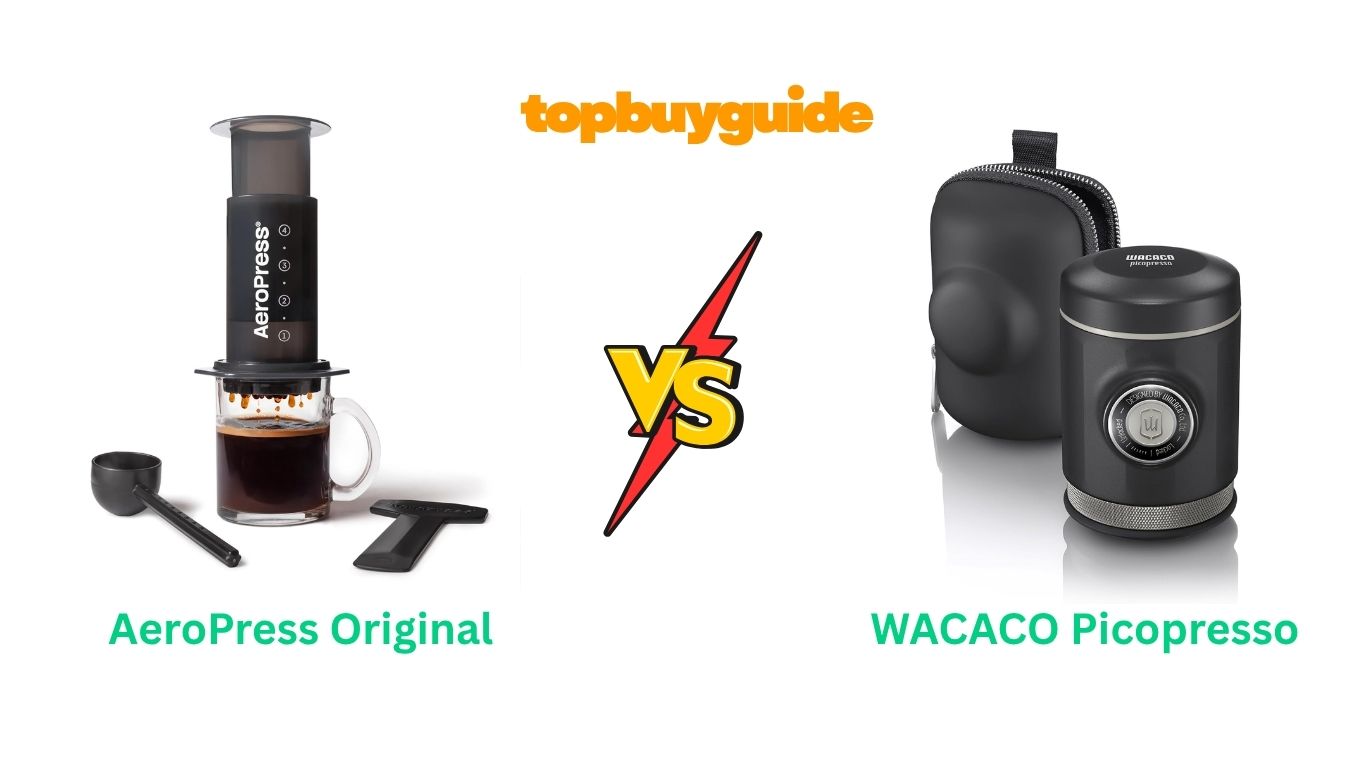
Choosing a portable coffee maker depends entirely on your desired final drink. The showdown between AeroPress vs Wacaco Picopresso is a battle of brewing methods. I recommend the Wacaco Picopresso for its ability to produce rich, café-quality espresso shots. It achieves a genuine, crema-topped espresso, which the AeroPress cannot match. This guide will show you which device truly fits your coffee style.
Why Do I Recommend The Wacaco Picopresso?
I strongly recommend the Wacaco Picopresso for coffee enthusiasts seeking authentic, high-quality espresso on the go. The Picopresso is engineered to achieve the precise pressure and extraction needed for true espresso. This capability fundamentally differentiates it from the AeroPress, which is an immersion brewer. The Picopresso is the ultimate portable device for those who demand intense, concentrated coffee.
- It is capable of producing real, crema-topped espresso.
The Wacaco Picopresso is specifically designed to generate over 18 bars of stable pressure using its manual pump system. This high pressure is absolutely essential for extracting true espresso with a rich, velvety layer of crema. In contrast, the AeroPress uses lower, user-generated pressure, typically around 0.3 to 0.7 bars. This pressure is excellent for concentrated coffee but is insufficient for making genuine espresso shots. - It utilizes a standard 52mm professional-grade portafilter basket.
The Picopresso incorporates a highly professional, 52mm stainless steel filter basket. This large basket capacity holds up to 18 grams of coffee grounds. This large dose is crucial for producing the intense, double-shot volume required for authentic espresso. However, the AeroPress uses small paper microfilters and a plastic chamber. It is designed to brew an American-style coffee concentrate, not the intense volume of a traditional espresso shot. - The Picopresso offers a true bottomless portafilter design.
The design of the Picopresso features a bottomless portafilter. This allows the user to monitor the extraction process visually. Monitoring the flow helps diagnose issues with grind size or tamping technique. Conversely, the AeroPress extracts coffee through a plastic filter cap and directly into the cup. It offers no visibility of the coffee bed or the quality of the extraction process. - It requires and rewards a fine espresso grind size.
The Picopresso demands a very fine, espresso-specific grind size, which is critical for generating high pressure and optimal flavor. Achieving this fine, consistent grind yields the best possible extraction. While the AeroPress is versatile, it generally works best with a medium-fine grind size. Using the extremely fine espresso grind in an AeroPress often leads to a completely clogged brew chamber and a messy, difficult press. - It provides a superior, robust, and highly metallic build quality.
The Picopresso utilizes high-quality, durable materials, including PBT, silicone, and large stainless steel components. Its compact, rugged design is built to withstand extremely high pressure reliably. Compared to the AeroPress, which is constructed entirely of durable plastic, the Picopresso provides a more premium, professional, and dense feel in the hand. - The included accessories are geared toward professional workflow.
The Picopresso comes standard with essential espresso tools, including a distribution tool and a funnel. These tools are necessary for achieving a professional, consistent puck preparation. Conversely, the AeroPress comes with a scoop and a stirrer, accessories that are designed for its simpler immersion method, not for demanding espresso preparation. - It is exceptionally compact and travel-focused in its design.
The Picopresso is designed as an ultra-compact, all-in-one package for maximum portability. It is arguably one of the smallest true manual espresso makers available. Although the AeroPress is also highly portable, its larger cylindrical shape still occupies more space than the Picopresso’s dense, highly-engineered component assembly. - The Picopresso has a built-in tamping feature for convenience.
The system includes a metal tamping tool that integrates seamlessly into the design when packed. Proper tamping is non-negotiable for true espresso pressure generation. In comparison, the AeroPress relies on a light stir or a very gentle press of the plunger to level the grounds, as heavy tamping is not required for its low-pressure method.
Side By Side Comparison Chart (AeroPress vs Wacaco)
| Feature | AeroPress Original Coffee Press | Wacaco Picopresso |
| Final Product | Coffee Concentrate/Americano | True Espresso Shot with Crema |
| Required Pressure | Low (0.3–0.7 bar, user-generated) | Very High (Up to 18 bar, manual pump) |
| Grind Size | Medium-Fine to Medium | Very Fine, Espresso Grind |
| Max Dose Size | Approx. 14–16 grams | Up to 18 grams (Standard Double Shot) |
| Required Tamping | Not required (Light leveling only) | Mandatory, Hard Tamping |
| Filter Type | Paper Microfilters (Disposable) | 52mm Stainless Steel Basket |
| Brewing Style | Full Immersion/Press | Percolation/Pressure Extraction |
| Cleanup Time | Extremely Fast (Dry puck ejected) | Slightly Slower (Requires rinsing of basket) |
Common Features of Aero Press and Wacaco
What Common AeroPress vs Wacaco Can Do?
Despite their fundamentally different brewing methods, the AeroPress and the Wacaco Picopresso share several key capabilities. Both devices are designed to provide high-quality coffee away from home. Their common strengths lie in portability, durability, and a commitment to flavor control. They represent the pinnacle of manual, non-electric coffee preparation for travelers.
- Superior Portability and Compact Design
Both the AeroPress and the Wacaco Picopresso are expertly engineered for exceptional portability. Each device is small, lightweight, and specifically designed to be easily carried in a bag or backpack. Their compact designs make them ideal choices for travel, camping, hiking, or brewing at the office. This small form factor ensures that the user never has to compromise on their preferred coffee quality, regardless of their location. The ability to brew premium coffee virtually anywhere is a core shared advantage. - Manual Operation Requiring No Electricity
A major shared benefit is the reliance on purely manual operation for brewing. Neither the AeroPress nor the Wacaco Picopresso requires any external power source, such as batteries or wall sockets. The user provides the necessary force (plunge or pump) and the hot water. This freedom from electricity is essential for off-grid travel, remote camping, or during power outages. This manual control makes both devices incredibly reliable in any global environment. - Quick Brewing Time
Both the AeroPress and the Wacaco Picopresso are known for their fast preparation and brewing times compared to traditional electric methods. The AeroPress can produce a cup of concentrated coffee in under two minutes total. The Picopresso, once heated water is added, can pull a full espresso shot in about 30 seconds of pumping. This speed is a crucial advantage for users who need a high-quality coffee fix quickly, especially during a busy commute or morning routine. - BPA-Free and Durable Construction
Both devices are built using durable, high-quality, food-grade materials that are certified to be completely BPA-free. This commitment to non-toxic materials is paramount for both brands. The robust construction ensures that both the plastic-bodied AeroPress and the stainless steel-heavy Picopresso are built to last. They can reliably withstand the wear and tear associated with frequent travel and consistent daily use over many years. - Requirement of Hot Water Source
Although neither device needs electricity to operate itself, both require access to a source of hot water. The hot water must be added manually to the brewing chamber to begin the process. Whether it is boiled on a stove, a camping burner, or supplied by a hotel kettle, a consistent supply of near-boiling water is necessary for both. This means that while they are portable, they are not self-contained heating units. - Control Over Final Flavor
Both devices offer the user significant control over the final flavor profile of the drink. The AeroPress allows users to easily adjust the grind size, water temperature, and steep time. The Picopresso gives the user control over the grind size, dose, tamping pressure, and extraction time (by pumping speed). This high degree of user control allows dedicated enthusiasts to fine-tune their brew for optimal, personalized taste results.
Common Features of AeroPress vs Wacaco Chart
| Feature | AeroPress Original Coffee Press | Wacaco Picopresso |
| Operation | Fully Manual (Requires no electricity) | Fully Manual (Requires no electricity) |
| Portability | Excellent (Lightweight, compact cylinder) | Excellent (Ultra-compact, dense assembly) |
| Construction | Durable, BPA-Free Plastic | Durable, BPA-Free/Stainless Steel |
| Brewing Time | Very Quick (Under 2 minutes for a concentrate) | Very Quick (Shot pulled in under 30 seconds) |
| Water Source | Requires separate hot water supply | Requires separate hot water supply |
| Flavor Control | High Degree (Grind, Steep Time, Temperature) | High Degree (Grind, Dose, Tamping, Pump Speed) |
| Longevity | Known for exceptional multi-year lifespan | Built with robust, professional-grade parts |
A Detailed Comparison Of the AeroPress vs Wacaco
Brewing Method and Pressure
The fundamental difference between the two devices lies in their core brewing method. The AeroPress uses a full immersion method, much like a French Press, where the coffee grounds steep fully in the water. The subsequent manual plunge uses low pressure, typically less than one bar. This low pressure helps to push the water through the paper micro-filter quickly. This process is excellent for producing a clean, rich, concentrated coffee that is free of bitterness.
The Wacaco Picopresso operates on a percolation principle that is identical to a commercial espresso machine. The user generates extremely high pressure, up to 18 bars, by manually pumping a built-in piston. This high pressure forces the water through a densely packed “puck” of finely ground coffee. The result of this process is a true espresso shot, characterized by its intense flavor, low volume, and signature layer of golden-brown crema.
Filter and Grind Requirement
The filter system dictates the required coffee grind size for optimal performance. The AeroPress uses small, disposable paper micro-filters that sit in a screw-on cap. The paper micro-filter prevents virtually all fine silt from entering the cup. This system works best with a medium-fine grind size, similar to table salt. An overly fine, powder-like grind will likely clog the paper filter and make the plunge extremely difficult.
The Wacaco Picopresso utilizes a large, professional-style 52mm non-pressurized stainless steel filter basket. This requires the user to utilize an extremely fine, consistent, and fresh espresso-specific grind size. The basket is designed to resist the high pressure generated by the pump. The correct fine grind and firm tamping are absolutely essential to build the necessary pressure for true espresso extraction.
Final Coffee Product and Versatility
The ultimate output of each device is designed for a completely different kind of drink. The AeroPress produces a smooth, strong coffee concentrate. This concentrate is typically diluted with hot water to make a full cup of Americano or with milk for a latte base. Its versatility lies in the range of ratios, temperatures, and brewing techniques it supports, but it cannot make true espresso.
The Wacaco Picopresso’s entire purpose is to produce a single or double shot of authentic espresso. Its high pressure guarantees a concentrated, complex, and professional-quality shot with crema. While the shot can be used to make other drinks, its core strength is the pure espresso. The Picopresso is therefore less versatile in the types of non-espresso base coffee it can produce compared to the AeroPress.
Ease of Use and Learning Curve
The learning curve required to achieve an excellent result is significantly different between the two devices. The AeroPress is famously easy to use, with a very low barrier to entry. Beginners can achieve a fantastic cup of coffee on their very first attempt. The instructions are simple, and the process is highly forgiving of inconsistencies in grind size or technique. Its fast cleanup also adds to its overall ease of daily use.
The Wacaco Picopresso requires a much steeper learning curve to master. Achieving a perfect espresso shot requires a precision grinder, accurate dosing, consistent tamping, and controlled pumping technique. It is a demanding device that rewards high-level proficiency and is less forgiving of errors. Its complex workflow means it is best suited for experienced home baristas who are willing to perfect their technique.
Durability and Build Material Focus
Both devices offer exceptional durability, but their construction materials reflect their functional differences. The AeroPress is made entirely of robust, medical-grade plastic, which is incredibly lightweight and practically indestructible if dropped. Its plastic body makes it an excellent choice for casual, worry-free travel.
The Wacaco Picopresso features a high-end, rugged build that heavily incorporates stainless steel components, including the large filter basket and the piston rod. The exterior casing is made from highly durable, professional-grade plastics. This combination gives it the density and strength necessary to withstand the enormous internal pressures required for espresso, making it a professional-grade portable tool.
Cleanup and Maintenance
The speed and ease of cleanup are a major advantage for the AeroPress. After brewing, the spent coffee puck and filter are ejected cleanly and easily with a final push of the plunger. The entire cleanup process takes literally seconds and only requires a quick rinse of the two main parts. This simplicity is a major selling point for those prioritizing fast routines.
The Wacaco Picopresso requires a more involved, though still simple, cleanup process. The metal portafilter basket must be unscrewed and the spent grounds removed. The basket and the machine’s internal parts must then be carefully rinsed to remove any fine espresso residue. This process takes longer than the AeroPress, reflecting the difference between high-pressure extraction and low-pressure immersion.
Conclusion
The recommendation is clear: choose the Wacaco Picopresso if your ultimate goal is true espresso. Its 18-bar manual pump and professional 52mm filter basket deliver genuine, crema-topped shots, which the AeroPress cannot replicate. For experienced users demanding café-quality concentrated coffee on the go, the Picopresso is the ultimate tool. Invest in the Picopresso today to bring professional espresso quality to your travels.
FAQs
1. Can the AeroPress make real espresso with crema?
No, the AeroPress cannot make real espresso. It generates only low pressure, which is ideal for a strong coffee concentrate. True espresso requires at least 9 bars of pressure, which the Wacaco Picopresso’s manual pump can generate to create a rich layer of crema.
2. Which device is easier for a beginner to use successfully?
The AeroPress is significantly easier for a beginner. Its simple, immersion-based process is highly forgiving. The Wacaco Picopresso requires a fine, precise grind and consistent tamping technique. This makes the Picopresso more suitable for experienced coffee enthusiasts.
3. Which coffee maker needs a more expensive grinder?
The Wacaco Picopresso requires a much higher-quality, expensive grinder. It demands a highly consistent, espresso-fine grind size to build high pressure. The AeroPress is much more forgiving and works well with a wide range of medium-fine grinders.
4. Can I use a reusable metal filter with both the Wacaco and the AeroPress?
Yes, both devices can use reusable metal filters. The Wacaco Picopresso includes its own non-pressurized stainless steel basket. The AeroPress has optional third-party metal filters that replace the paper filter.
5. How long does it take to pull a shot with the Picopresso?
Once the hot water is added to the chamber, a typical double espresso shot can be pulled with the Picopresso in about 20 to 30 seconds of active pumping. The total time for prep and cleanup is longer than the AeroPress but fast for true espresso.
6. Is the Wacaco Picopresso much heavier than the AeroPress?
The Wacaco Picopresso is generally heavier and denser than the AeroPress. The Picopresso incorporates a substantial amount of stainless steel and high-pressure components. The AeroPress is almost entirely made from lightweight, BPA-free plastic.
7. Which device is better for making a large volume of black coffee?
The AeroPress is superior for making a larger volume of black coffee. It is designed to make a strong concentrate that can be diluted easily to fill a large mug for Americano. The Picopresso is designed specifically for small-volume, high-concentration espresso shots.
8. Do I need to buy a separate tamper for the Wacaco Picopresso?
No, you do not need to buy a separate tamper for the Picopresso. The Picopresso system includes its own dedicated metal tamping tool, which is an essential accessory for packing the grounds tightly to achieve the necessary high brewing pressure.

Alex Turner is a dedicated product researcher and reviewer at TopBuyGuide.com, known for his clear, honest, and data-driven insights. He spends countless hours testing, comparing, and analyzing products to help readers make confident and informed buying decisions.