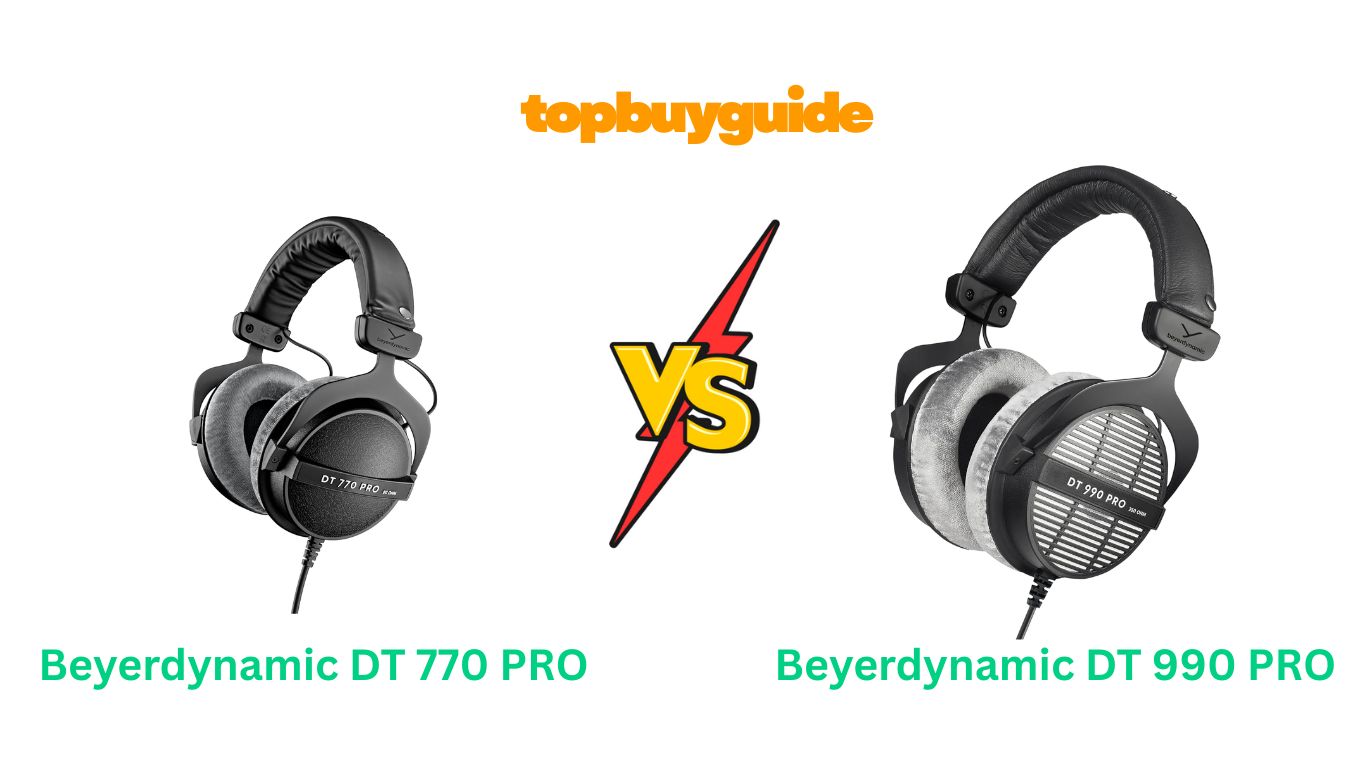
Choosing between the beyerdynamic DT 770 PRO and DT 990 PRO can feel overwhelming. Both are legendary studio headphones with decades of proven performance, but they serve different purposes. If you’re looking for powerful bass isolation and closed-back design, the DT 770 PRO stands out. However, if you prioritize an open, spacious soundstage for mixing and mastering, the DT 990 PRO delivers. This comprehensive comparison will help you understand which model matches your specific needs.
Why Do I Recommend The DT 990 PRO?
After extensive testing and comparison, I recommend the beyerdynamic DT 990 PRO for most studio applications. Here’s why:
- Superior Soundstage: The open-back design creates a significantly wider, more natural soundstage that’s essential for accurate mixing and mastering decisions.
- Enhanced Transparency: The DT 990 PRO offers exceptional clarity across the frequency spectrum, making it easier to identify subtle details in your mix.
- Better for Long Sessions: The open-back design allows airflow, reducing heat buildup and fatigue during extended listening sessions.
- Ideal for Critical Listening: The spacious, analytical sound signature makes these headphones perfect for editing and making precise mix adjustments.
- Excellent Treble Detail: While the DT 770 PRO has strong bass, the DT 990 PRO provides more detailed highs that help with mastering decisions.
- Professional Standard: The DT 990 PRO remains the go-to choice for mixing engineers who need accurate spatial representation.
- Natural Sound Reproduction: The open-back design produces a less colored, more reference-quality sound than closed designs.
- Comfortable for All-Day Work: The combination of velour pads and open design makes these remarkably comfortable for professional use.
Side By Side Comparison Chart
| Feature | DT 770 PRO (80 Ohm) | DT 990 PRO (250 Ohm) |
| Design Type | Closed-back | Open-back |
| Impedance | 80 Ohm | 250 Ohm |
| Best Use | Recording, monitoring, tracking | Mixing, mastering, editing |
| Sound Isolation | Excellent | Minimal |
| Soundstage | Moderate | Wide and spacious |
| Bass Response | Strong, emphasized | Deep but leaner |
| Treble | Bright | Bright, analytical |
| Cable Type | Single-sided, 3m straight | Single-sided, 3m coiled |
| Sound Leakage | Minimal | Significant |
| Ambient Noise Blocking | High | Low |
| Price | $199.99 | $199.99 |
| Made In | Germany | Germany |
| Ear Pads | Replaceable velour | Replaceable velour |
| Amplification Needed | Minimal (80 Ohm) | Recommended (250 Ohm) |
What Common Features Do These Studio Headphones Share?
Both the DT 770 PRO and DT 990 PRO represent beyerdynamic’s commitment to professional-grade audio equipment and share numerous core features.
German Engineering and Build Quality: Both models are handcrafted in Germany with exceptional attention to detail. The construction utilizes durable materials including robust metal forks, reinforced plastic housings, and high-quality components throughout. This manufacturing standard ensures longevity and reliability in demanding studio environments.
Velour Ear Pads: Both headphones feature luxuriously soft, circumaural velour ear pads that provide outstanding comfort during extended listening sessions. These replaceable pads are breathable, reduce sweating, and create a gentle seal around the ears without excessive pressure.
Adjustable Headband Design: The rugged, padded headband uses a unique click-adjustment system that allows precise sizing. The spring steel construction maintains consistent pressure without feeling tight, and the padded top prevents discomfort during all-day use.
Single-Sided Cable: Both models feature a practical single-sided cable connection (left side) that reduces tangling and makes it easier to put on and remove the headphones quickly. The 3-meter cable length provides ample freedom of movement in studio settings.
Replaceable Parts: Beyerdynamic designed both models with serviceability in mind. All major components—including ear pads, headband padding, and internal drivers—can be replaced, extending the life of your investment significantly.
Frequency Response: Both headphones deliver impressive frequency ranges with the DT 770 PRO covering 5 Hz – 35,000 Hz and the DT 990 PRO reaching similar extremes, ensuring you capture every detail in your audio.
Common Features Chart
| Feature | DT 770 PRO | DT 990 PRO |
| Country of Origin | Germany | Germany |
| Ear Pad Material | Velour | Velour |
| Ear Pad Replacement | Yes | Yes |
| Headband Type | Padded, adjustable | Padded, adjustable |
| Cable Connection | Single-sided | Single-sided |
| Cable Length | 3 meters | 3 meters |
| Plug Type | 3.5mm with 6.3mm adapter | 3.5mm with 6.3mm adapter |
| Build Materials | Metal and plastic | Metal and plastic |
| All Parts Replaceable | ✓ | ✓ |
| Professional Grade | ✓ | ✓ |
| Weight | 9.5 oz | Similar |
| Warranty | Manufacturer warranty | Manufacturer warranty |
A Detailed Comparison Of Studio Headphones
Design: Closed-Back vs Open-Back
The DT 770 PRO features a closed-back design with sealed ear cups that provide excellent isolation from external noise. This design creates a more intimate listening experience and prevents sound leakage, making them ideal for recording sessions where microphone bleed is a concern.
The DT 990 PRO uses an open-back design with perforated ear cups that allow air and sound to pass through freely. This architecture creates a more natural, spacious soundstage that closely mimics listening to speakers in a treated room. However, this also means they leak sound significantly and don’t block ambient noise.
Sound Signature and Frequency Response
The DT 770 PRO delivers a V-shaped sound signature with emphasized bass and treble. The bass is punchy and powerful without becoming muddy, making these excellent for bass-heavy genres and gaming. The closed design reinforces low frequencies, creating a fuller, more impactful bass response.
The DT 990 PRO offers a more analytical, reference-quality sound with emphasized treble clarity. The bass is present and deep but leaner than the 770, while mids are clear and well-defined. The open-back design provides exceptional detail retrieval, making it easier to identify subtle nuances in recordings during mixing and mastering work.
Comfort and Long-Session Wearability
The DT 770 PRO provides excellent comfort with its velour pads and well-distributed clamping force. However, the closed design can trap heat against your ears during very long sessions, potentially causing warmth buildup after 2-3 hours of continuous use.
The DT 990 PRO excels in extended-wear comfort thanks to the open-back design that allows constant airflow around your ears. Many users report wearing these for 4-6 hours without discomfort, making them ideal for professional mixing engineers who spend entire days with headphones on.
Impedance and Power Requirements
The DT 770 PRO comes in 32, 80, and 250 Ohm variants, with the 80 Ohm version offering the best balance for most users. It can be driven adequately by computers, audio interfaces, and mobile devices, though it benefits from a dedicated headphone amplifier for optimal performance.
The DT 990 PRO is available in 80 and 250 Ohm versions, with the 250 Ohm model being most common. This higher impedance requires proper amplification—laptops and smartphones won’t provide sufficient power. A quality headphone amp or audio interface with a strong headphone output is recommended to achieve the full dynamic range and detail these headphones can deliver.
Use Cases and Applications
The DT 770 PRO excels in recording and tracking scenarios where isolation is critical. Vocalists, drummers, and other performers benefit from the sound isolation that prevents headphone bleed into microphones. They’re also excellent for field recording, gaming, and casual listening where you don’t want to disturb others or be disturbed by your environment.
The DT 990 PRO is purpose-built for mixing, mastering, and critical listening applications. The open, accurate soundstage helps engineers make better spatial decisions, while the detailed frequency response reveals problems that might hide in more colored headphones. They’re also popular among audiophiles for home listening but aren’t suitable for public use due to sound leakage.
Cable Configuration
The DT 770 PRO ships with a straight, 3-meter cable that’s practical for studio setups where you’re seated at a consistent distance from your audio interface. The straight cable reduces coiling and tangling, though some users find it can get in the way during movement.
The DT 990 PRO includes a coiled, 3-meter cable that extends and contracts as needed. This design provides flexibility and keeps excess cable from cluttering your workspace, making it particularly useful at mixing desks where you might move around while maintaining your connection.
Sound Leakage and Isolation
The DT 770 PRO provides exceptional sound isolation with minimal leakage. You can listen at high volumes without disturbing others nearby, and external noise is effectively blocked. This makes them suitable for noisy environments, commuting (though the cable is long), and shared studio spaces.
The DT 990 PRO leaks sound considerably—anyone nearby will clearly hear what you’re listening to, even at moderate volumes. Similarly, they provide virtually no isolation from ambient noise. These characteristics make them unsuitable for recording sessions, libraries, or anywhere sound leakage is problematic, but perfect for private mixing environments.
Build Quality and Durability
The DT 770 PRO features robust construction with metal reinforcements in critical areas and high-grade plastics for the housings. The closed design protects internal components better, and the overall build feels solid and road-worthy. Many users report these lasting 5-10 years with proper care.
The DT 990 PRO matches the build quality with identical construction principles. The open grilles are the only vulnerable difference, potentially accumulating dust over time. However, they’re easily cleaned, and the overall durability matches the 770. Both models are built to withstand daily professional use in studio environments.
Conclusion
Choose the beyerdynamic DT 990 PRO if you need accurate, spacious sound for mixing and mastering in a private environment. The open-back design delivers exceptional soundstage and analytical clarity that makes professional mixing decisions easier, while the comfortable design supports all-day sessions. With proper amplification from a quality headphone amp or audio interface, these headphones reveal every detail in your recordings and help you create better mixes.
Select the DT 770 PRO if you need isolation for recording, work in noisy environments, or want powerful bass response with minimal sound leakage. The closed-back design excels at tracking sessions, gaming, and any situation where you need to prevent sound from bleeding in or out.
Both are exceptional studio headphones built to last, but your specific workflow determines which is right. For critical mixing and mastering work, the DT 990 PRO is the professional choice.
FAQs
Q: Can I use the DT 990 PRO for recording vocals?
A: No, the open-back design leaks sound significantly, which will bleed into your microphone during recording sessions. The DT 770 PRO’s closed design is specifically built for tracking and recording applications.
Q: Do I need an amplifier for the 250 Ohm DT 990 PRO?
A: Yes, the 250 Ohm impedance requires proper amplification to reach adequate volume and reveal the full detail these headphones can deliver. A dedicated headphone amp or audio interface with strong output is essential for optimal performance.
Q: Which headphones have better bass?
A: The DT 770 PRO has more emphasized, punchy bass due to its closed-back design. The DT 990 PRO has deep, well-defined bass that’s leaner but more accurate for mixing purposes.
Q: Are these headphones comfortable for glasses wearers?
A: Both models can cause pressure on glasses frames during extended use due to their clamping force. However, the velour pads are more forgiving than leather alternatives, and many glasses wearers use them successfully for several hours at a time.
Q: Can I replace the cable on either model?
A: No, both the DT 770 PRO and DT 990 PRO feature non-detachable cables. This is the only major component that cannot be replaced, though the cables are durable and rarely fail under normal use.
Q: Which model is better for gaming?
A: The DT 770 PRO is generally preferred for gaming due to its powerful bass, sound isolation, and lack of sound leakage. The closed design also helps you focus without disturbing others around you.
Q: How do these compare to the DT 880 PRO?
A: The DT 880 PRO sits between these models with a semi-open design that offers some isolation while providing a more open soundstage than the 770. It’s often considered the most neutral of the three.
Q: Will these work with my smartphone?
A: The 80 Ohm versions of both headphones can work with smartphones, though volume may be limited. The 250 Ohm DT 990 PRO will be too quiet without proper amplification. For portable use, consider lower impedance options.

Alex Turner is a dedicated product researcher and reviewer at TopBuyGuide.com, known for his clear, honest, and data-driven insights. He spends countless hours testing, comparing, and analyzing products to help readers make confident and informed buying decisions.