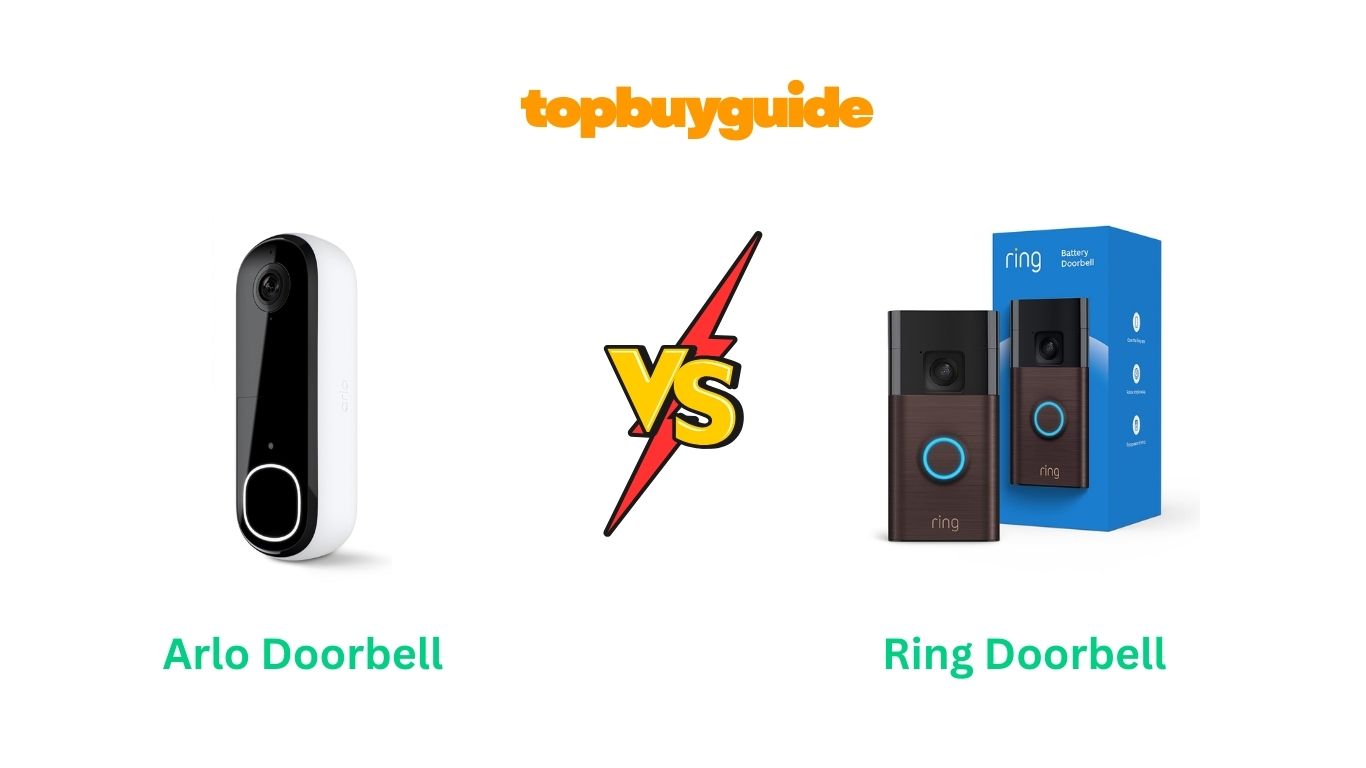
Selecting between Arlo Video Doorbell 2K and Ring Battery Doorbell demands understanding their unique strengths. Both brands offer reliable smart security with distinct advantages for different homeowners. I recommend the Ring Battery Doorbell for most buyers seeking versatile, budget-friendly protection. Ring’s $99.99 price undercuts Arlo’s $129 cost while offering quick-release batteries and extensive smart home integration. Though Arlo delivers sharper 2K video, Ring’s practical features and affordability make it the smarter choice.
Why Do I Recommend The Ring Battery Doorbell?
Ring Battery Doorbell provides superior value across critical categories that matter to everyday homeowners. Here’s why Ring earns my recommendation:
- More Affordable Entry Price: Ring costs $99.99 compared to Arlo’s $129 pricing, saving you $30 upfront. The lower price point makes premium doorbell features accessible to budget-conscious consumers seeking reliable home security.
- Quick-Release Battery System: Ring’s one-button battery removal lets you charge without dismounting the entire doorbell unit. Conversely, Arlo’s non-removable battery requires taking down the whole device, leaving your entrance unmonitored during charging sessions.
- Extended Cloud Storage Duration: Ring stores footage for 180 days with Protect subscriptions, significantly exceeding Arlo’s 30-60 day retention. The extended history proves invaluable when reviewing older incidents or providing evidence to authorities weeks later.
- Color Night Vision Technology: Ring delivers vibrant color footage in darkness using advanced sensor processing and ambient light. Arlo relies on standard infrared night vision producing clear but monochrome images lacking color identification capabilities.
- Lower Subscription Costs: Ring Protect starts at $4 monthly per device or $10 for unlimited devices annually. Arlo Secure costs $7.99-$24.99 monthly, making Ring more economical for long-term ownership and multi-device setups.
- Broader Ecosystem Integration: Ring connects seamlessly with extensive Ring security products including cameras, alarms, and smart lighting. Arlo’s ecosystem, while solid, offers fewer complementary devices and integration options for comprehensive home security systems.
- Head-to-Toe Coverage Design: Ring’s unique 1:1 aspect ratio (150°x150°) specifically captures everything from faces to ground packages. Arlo’s 180-degree diagonal view, though wider, uses standard ratios that occasionally miss low-placed deliveries requiring adjustments.
- Better Value Proposition: Ring delivers essential features at lower prices with longer storage and removable batteries. Arlo’s higher resolution doesn’t justify the premium cost and inconvenient charging process for most typical users.
Side By Side Comparison Chart: Arlo Doorbell vs Ring
| Feature | Arlo Video Doorbell 2K | Ring Battery Doorbell |
| Video Resolution | 2K (1944×1944) HDR | 1440p HD (1:1 ratio) |
| Field of View | 180° diagonal | 150° x 150° |
| Aspect Ratio | 1:1 square | 1:1 square |
| Night Vision | Infrared (20 feet) | Color Night Vision |
| Battery Type | Non-removable rechargeable | Quick-release rechargeable |
| Battery Life | 3-6 months | 6-12 months |
| Installation | Battery or hardwired | Battery or hardwired |
| Digital Zoom | 12x zoom | Standard zoom |
| Two-Way Audio | Full-duplex | Audio+ with noise cancellation |
| Pre-Recorded Messages | Yes | Yes |
| Smart Detection | People, packages, vehicles, animals | People, packages, vehicles |
| Built-in Siren | Yes | No (Ring Chime Pro only) |
| Local Storage | No | No |
| Cloud Storage | 30-60 days | 180 days |
| Subscription Cost | $7.99/month (basic) | $4/month (basic) |
| Smart Home Integration | Alexa, Google Home, IFTTT | Alexa, Google Home |
| WiFi Connectivity | 2.4GHz only | 2.4GHz and 5GHz |
| Weather Resistance | IP65 rated | IP55 rated |
| Price | $129 (2K) / $79 (HD) | $99.99 |
What Common Arlo Doorbell vs Ring Can Do?
High-Definition Video Streaming
Both Arlo and Ring deliver crystal-clear HD video capturing detailed facial features and surroundings effectively. Arlo records at impressive 2K resolution (1944×1944 pixels) with HDR technology reducing glare during bright conditions. The enhanced sharpness proves valuable for zooming into specific details during playback or identifying small characteristics. Ring captures footage at 1440p resolution, providing excellent clarity for typical doorbell monitoring scenarios and recognition. Both systems stream live video instantly to smartphones when motion activates or visitors press buttons. The high-definition quality ensures every important security detail remains clearly visible during real-time viewing sessions.
Head-to-Toe Square Aspect Ratio
Innovative 1:1 square video format defines both Arlo and Ring doorbell designs for comprehensive coverage. The square aspect ratio specifically captures everything from visitor faces down to ground-level packages simultaneously. Traditional 16:9 format doorbells often miss low-placed deliveries, requiring angle adjustments or higher mounting positions. Both Arlo and Ring eliminated this blind spot through thoughtful engineering and customer feedback integration. The head-to-toe coverage proves essential in modern delivery-focused households receiving frequent packages throughout weeks. Neither doorbell forces you to choose between seeing faces or packages during single viewing frames.
Battery and Hardwired Power Options
Installation flexibility through dual power options accommodates diverse home configurations for both doorbell brands. Arlo operates on internal rechargeable batteries lasting 3-6 months or connects to existing doorbell wiring. The hardwired option provides trickle charging, extending battery life while maintaining backup power during outages. Ring functions on quick-release rechargeable batteries lasting 6-12 months or hardwires to standard transformer systems. Both wireless installation methods eliminate complex electrical work, enabling DIY setups within 15-20 minutes typically. The dual power configurations ensure every homeowner finds suitable installation methods regardless of existing infrastructure.
Two-Way Audio Communication
Real-time conversations with visitors define modern doorbell functionality for both Arlo and Ring effectively. Arlo provides full-duplex two-way audio allowing simultaneous speaking and listening without audio cutting off. The clear communication proves sufficient for delivery instructions, greeting guests, or deterring unwanted visitors remotely. Ring incorporates Audio+ technology with advanced noise cancellation filtering wind and background sounds automatically during conversations. Both systems let you speak through smartphone apps, responding to visitors from anywhere worldwide instantly. The two-way audio transforms doorbells into interactive security devices beyond simple passive video surveillance.
Customizable Motion Detection Zones
Precise motion monitoring through adjustable zones minimizes false alerts for both Arlo and Ring systems. Arlo allows creating Activity Zones focusing on specific doorstep areas while ignoring sidewalks and streets. You can adjust sensitivity levels ensuring doorbells only alert about movements within designated important zones. Ring similarly provides comprehensive motion zone customization with adjustable boundaries and multiple sensitivity settings available. Both systems help focus on relevant security events while filtering passing cars, pedestrians, or pets. The customizable zones prove essential for homes on busy streets where constant motion could overwhelm notifications.
Smart AI Detection Features
Intelligent detection distinguishes specific objects and people in both Arlo and Ring doorbell systems accurately. Arlo features AI-powered recognition identifying people, packages, vehicles, and animals through subscription plans separately. The smart detection sends targeted notifications for specific events rather than generic motion throughout coverage. Ring provides person and package detection through advanced algorithms recognizing shapes and movement patterns effectively. Both systems dramatically reduce false alerts from irrelevant environmental movements like swaying branches or weather. The intelligent filtering improves notification usefulness, ensuring you only receive alerts about actual potential visitors.
Common Features of Arlo Doorbell vs Ring
| Feature | Arlo Video Doorbell 2K | Ring Battery Doorbell |
| HD Video Quality | ✓ (2K HDR) | ✓ (1440p) |
| 1:1 Square Aspect Ratio | ✓ | ✓ |
| Head-to-Toe Coverage | ✓ | ✓ |
| Two-Way Audio | ✓ | ✓ |
| Night Vision | ✓ | ✓ |
| Motion Detection | ✓ | ✓ |
| Customizable Zones | ✓ | ✓ |
| Battery Powered | ✓ | ✓ |
| Hardwired Option | ✓ | ✓ |
| Mobile App Control | ✓ | ✓ |
| Live View Streaming | ✓ | ✓ |
| Smart Detection | ✓ | ✓ |
| Package Detection | ✓ | ✓ |
| Cloud Storage | ✓ | ✓ |
| Alexa Integration | ✓ | ✓ |
| Google Home Compatible | ✓ | ✓ |
| Weather Resistant | ✓ | ✓ |
A Detailed Comparison Of Arlo Doorbell vs Ring
Video Resolution and Image Quality
Arlo Video Doorbell 2K captures footage at impressive 2K resolution (1944×1944 pixels) with HDR technology. The higher pixel count delivers noticeably sharper images, especially when digitally zooming into specific frame areas. HDR specifically prevents overexposure during bright sunlight, maintaining detail in shadows and highlights simultaneously throughout recordings. The 12x digital zoom capability lets you magnify details without excessive pixelation degrading image usefulness.
Ring Battery Doorbell records at 1440p resolution, providing excellent clarity for typical doorbell monitoring requirements. While lower than Arlo’s 2K, Ring’s resolution proves sufficient for facial recognition within 20 feet. The image quality meets industry standards, delivering sharp videos that identify visitors, delivery personnel, and suspicious activity. For most homeowners, Ring’s resolution adequately serves security needs without requiring premium specifications unnecessarily.
Night Vision Capabilities
Arlo Video Doorbell 2K employs infrared night vision with single 850nm LED illuminating up to 20 feet. The infrared system captures clear monochrome footage showing facial features and general clothing shapes effectively. Video quality remains sharp during nighttime hours, though lacking color distinction for identifying specific clothing or vehicle shades. The black-and-white footage proves functional but limits identification accuracy compared to color systems available.
Ring Battery Doorbell incorporates Color Night Vision technology maintaining vibrant hues even in complete darkness. The advanced sensor system uses available ambient light from streetlamps or porch lights for illumination. Color footage dramatically improves identification accuracy, distinguishing clothing colors, vehicle shades, and package characteristics clearly. Ring’s color capability provides significantly more valuable evidence for law enforcement or identifying specific visitor details.
Battery Design and Charging
Arlo Video Doorbell 2K features a non-removable internal battery requiring full device removal for charging. When battery levels drop, you must unmount the entire doorbell from walls, leaving entrances unmonitored. The charging process using included USB-C cables typically takes 2-4 hours before reinstallation becomes possible. This inconvenience proves frustrating for homeowners needing continuous monitoring without gaps during charging periods repeatedly.
Ring Battery Doorbell provides quick-release battery packs sliding out with single button presses within seconds. You simply remove the battery, charge it indoors using included cables, and reinstall without dismounting. The convenient system lets you maintain backup batteries, swapping them instantly for uninterrupted security coverage. Ring’s thoughtful battery design eliminates monitoring gaps and reduces maintenance frustration compared to Arlo’s approach.
Cloud Storage and Pricing
Arlo requires subscriptions for video recording with Arlo Secure plans starting at $7.99 monthly per camera. The basic plan stores footage for 30 days, while higher tiers extend retention to 60 days. Without subscriptions, Arlo only provides live viewing without recording or playback functionality whatsoever. The subscription costs add up significantly for long-term ownership, especially with multiple cameras throughout properties.
Ring requires Ring Protect subscriptions starting at $4 monthly per device for recording capabilities consistently. The basic plan stores footage for 180 days, dramatically exceeding Arlo’s retention periods significantly overall. Ring also offers unlimited device plans at $10 monthly covering all cameras and doorbells. While Ring mandates subscriptions, the affordable pricing and extended storage provide superior long-term value propositions.
Smart Home Integration
Arlo Video Doorbell 2K integrates with Amazon Alexa, Google Home, and IFTTT for automation possibilities. You can create routines triggering smart lights, locks, or other devices when doorbell events occur. The IFTTT support enables advanced custom automations connecting disparate smart home platforms effectively together. Arlo’s ecosystem includes cameras and floodlights, though lacking the breadth of Ring’s complementary security products.
Ring Battery Doorbell connects seamlessly with Alexa and Google Home for comprehensive smart home control. You can create complex routines throughout extensive Ring ecosystem including cameras, alarms, and lighting. Ring’s broader product range enables building complete security systems with unified management and automation. The extensive integration makes Ring ideal for users seeking comprehensive smart home systems beyond individual devices.
WiFi Connectivity Options
Arlo Video Doorbell 2K connects exclusively to 2.4GHz WiFi networks, limiting speed and reliability potential. The single-band connection often suffers from congestion in areas with numerous competing networks nearby. Many users experience slower streaming speeds and occasional connectivity drops during high-traffic periods throughout homes. The 2.4GHz limitation proves increasingly problematic in modern dense wireless environments with multiple devices competing.
Ring Battery Doorbell supports dual-band WiFi connecting to both 2.4GHz and 5.0GHz networks seamlessly. The 5.0GHz capability delivers significantly faster video streaming and reduces latency during live viewing. This advancement proves especially valuable in modern homes with multiple connected devices competing for bandwidth. Ring’s dual-band support ensures more reliable connectivity and superior performance compared to Arlo’s single-band limitation.
Conclusion
Ring Battery Doorbell emerges as the superior choice for value-conscious homeowners seeking reliable doorbell security. The $99.99 price undercuts Arlo by $30 while delivering practical advantages like quick-release batteries and Color Night Vision. Ring’s 180-day cloud storage dramatically exceeds Arlo’s 30-60 day retention at lower subscription costs ($4 vs $7.99 monthly). The dual-band WiFi connectivity and extensive ecosystem integration provide future-proof versatility. While Arlo offers sharper 2K resolution, Ring’s balanced features and affordability make it the smarter investment.
FAQs
Q: Which doorbell has better video quality, Arlo or Ring? Arlo Video Doorbell 2K provides superior resolution at 2K (1944×1944) compared to Ring’s 1440p footage. The higher resolution delivers sharper images especially when zooming during playback. However, Ring’s 1440p quality proves sufficient for typical doorbell monitoring and facial recognition needs within 20 feet.
Q: Can I charge Ring and Arlo doorbells without removing them? Ring Battery Doorbell allows quick-release battery removal for charging without dismounting the entire unit from walls. Arlo Video Doorbell 2K requires complete device removal since its battery is non-removable. Both models support hardwiring for continuous trickle charging while maintaining battery backup capabilities.
Q: Which doorbell offers longer cloud storage? Ring provides significantly longer cloud storage with 180-day video history through Ring Protect subscriptions starting at $4 monthly. Arlo stores footage for 30-60 days through Arlo Secure plans starting at $7.99 monthly. Ring’s extended retention proves more valuable for reviewing historical incidents weeks later.
Q: Does Arlo or Ring have better night vision? Ring Battery Doorbell delivers superior night vision with Color Night Vision technology maintaining vibrant colors in darkness. Arlo uses standard infrared night vision producing clear monochrome footage up to 20 feet away. Ring’s color capability significantly improves identification accuracy for clothing and vehicle details at night.
Q: Which doorbell requires cheaper subscriptions? Ring Protect subscriptions cost less starting at $4 monthly per device or $10 for unlimited devices. Arlo Secure costs $7.99-$24.99 monthly depending on features selected and camera quantities. Ring’s lower subscription pricing makes it more economical for long-term ownership and multi-camera installations throughout properties.
Q: Can both doorbells work without subscriptions? Yes, both Arlo and Ring doorbells function without subscriptions providing live viewing and instant motion alerts. However, video recording requires subscriptions for both brands. Without subscriptions, you cannot review past footage or access advanced AI detection features like package or person recognition capabilities.
Q: Which doorbell has better smart home integration? Ring offers broader ecosystem integration with extensive Ring security products including cameras, alarms, and smart lighting. Arlo integrates with Alexa, Google Home, and IFTTT for automation. Both work well, but Ring’s comprehensive product line enables building complete unified security systems more easily than Arlo.
Q: Do these doorbells support 5GHz WiFi? Ring Battery Doorbell supports dual-band WiFi connecting to both 2.4GHz and 5.0GHz networks for faster streaming. Arlo Video Doorbell 2K only connects to 2.4GHz WiFi networks, limiting speed and reliability potential. Ring’s dual-band support provides superior connectivity in modern crowded wireless environments.

Alex Turner is a dedicated product researcher and reviewer at TopBuyGuide.com, known for his clear, honest, and data-driven insights. He spends countless hours testing, comparing, and analyzing products to help readers make confident and informed buying decisions.