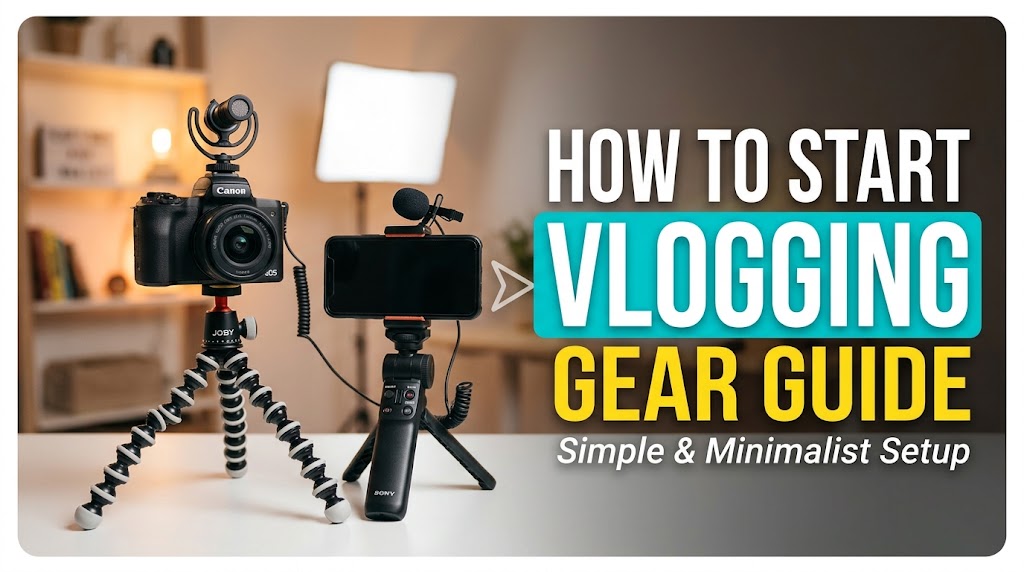
Starting a vlog in 2026 is one of the most powerful ways to build a personal brand, share your passion, or establish a lucrative full-time creative career. Yet, thousands of aspiring creators quit before posting their tenth video. The culprit? Getting paralyzed by gear choices, overspending on unnecessary equipment, or producing poor video and audio that drives viewers away.
The truth is, you don’t need a $10,000 Hollywood production rig to build a thriving audience on YouTube, TikTok, or Instagram. You need a targeted vlogging gear stack that solves the specific physical and environmental challenges of video creation: clear voice capture, stable motion, flattering light, and crisp resolution.
This complete guide breaks down the exact equipment you need across every budget level. Whether you are filming talking-head videos in your bedroom, dynamic travel vlogs on mountain trails, or daily lifestyle content on the move, this framework ensures every dollar spent translates into noticeable production value.
1. Understanding the Modern Vlogger’s Gear Pyramid
Before spending a single dollar, you must understand how visual and auditory perception affects audience retention. Most beginner creators make the mistake of spending 90% of their budget on a high-end camera body while neglecting sound, stabilization, and lighting.
The Vlogging Audio Rule: Viewers will tolerate average 1080p video quality if your story is compelling, but they will exit a 4K video within 5 seconds if the audio is muffled, echoing, or wind-distorted.
To build a balanced rig, prioritize your spending according to the Vlogging Gear Pyramid:
-
Audio (Base Tier): Clean vocal capture is non-negotiable.
-
Lighting & Stabilization (Mid Tier): Good light makes cheap camera sensors look professional; stabilization keeps footage watchable.
-
Camera Body & Optics (Top Tier): Auto-focus efficiency, flip screens, and sensor performance elevate your aesthetic.
-
Accessories & Workflow (Capstone): Fast storage, batteries, and portable grips keep production seamless.
2. Choosing Your Primary Visual Engine: Cameras Simplified
Your camera choice determines how quickly you can shoot, edit, and publish content. Vlogging cameras fall into four distinct categories based on shooting environment and creator portability needs.
Category A: Smartphones (The Zero-Cost Entry)
Modern flagship smartphones feature multi-lens arrays, cinematic depth modes, and sophisticated digital image stabilization.
-
Best For: Beginners, daily lifestyle creators, and short-form video specialists.
-
Key Advantages: Instant file transfers, built-in editing capabilities, and zero extra weight.
-
Pro Tip: Download a manual camera app (such as Filmic Pro or Blackmagic Camera) to lock your shutter speed to double your framerate (e.g., 1/100s for 50/60fps) and lock white balance to eliminate flickering.
Category B: Compact Vlog Cameras (Point-and-Shoot)
Featuring 1-inch sensors, fixed wide-angle zoom lenses, and fully articulating flip screens, these compact units eliminate complex lens changing while drastically improving low-light clarity over smartphones.
-
Best For: Travel vloggers, street interviewers, and daily hand-held creators.
-
Key Features to Look For:
-
Tally Lights: Front-facing red indicators showing active recording.
-
Product Showcase Modes: Quick focus shifting from your face to objects held near the lens.
-
Directional 3-Capsule Mics: Integrated wind guards for quick run-and-gun recording.
-
Category C: Mirrorless Interchangeable Lens Cameras (APS-C & Full Frame)
When you want cinematic shallow depth-of-field (blurred backgrounds) and pristine low-light rendering, mirrorless systems are the industry standard.
+-----------------------------------------------------------------------+
|                      MIRRORLESS CAMERA SELECTION                      |
+-----------------------------------------------------------------------+
|  APS-C Sensors (e.g., Sony ZV-E10 series, Fujifilm X-S series)        |
|  --> Lightweight, cost-effective lenses, excellent 4K video.          |
+-----------------------------------------------------------------------+
|  Full-Frame Sensors (e.g., Sony A7 IV, Panasonic Lumix S5 II)          |
|  --> Superior dynamic range, unmatched low-light performance.         |
+-----------------------------------------------------------------------+
Category D: Action Cameras & Pocket Gimbals
-
Action Cameras: Waterproof, shockproof ultra-wide setups engineered for extreme sports and outdoor action.
-
Pocket-Sized Gimbal Cameras: Built-in 3-axis mechanical tracking heads that fit in your pocket, perfect for smooth walking shots without heavy gear.
3. Audio Equipment: The Silent Growth Engine
Sound quality accounts for more than half of viewer retention. Ambient room bounce, wind noise, and traffic hum ruin otherwise beautiful video.
                   +-------------------------------+
                   |    VLOGGING MICROPHONE TYPES   |
                   +-------------------------------+
                                   |
         +-------------------------+-------------------------+
         |                                                   |
         v                                                   v
+------------------------+                          +------------------------+
|  Wireless Lavalier Mics|                          |   Shotgun / On-Camera  |
+------------------------+                          +------------------------+
| - Omnidirectional      |                          | - Directional pickup   |
| - Hands-free clipping  |                          | - Mounts on hot-shoe   |
| - Excellent outdoors   |                          | - Zero batteries/sync  |
+------------------------+                          +------------------------+
Option 1: Wireless Lavalier Systems
Compact wireless transmitter/receiver pairs have revolutionized video creation. You clip the small transmitter onto your collar while receiver units plug directly into your smartphone or mirrorless camera hot-shoe.
-
When to Use: Walking outdoors, filming in noisy spaces, or standing more than 6 feet away from the lens.
-
Pro Tip: Always equip your transmitter clip with a synthetic fur wind-muff (“deadcat”) when shooting outdoors to cancel out low-frequency rumble.
Option 2: Shotgun (On-Camera) Microphones
Directional shotgun microphones sit directly on top of your camera body. They utilize shotgun pickup patterns to isolate sound directly in front of the capsule while damping ambient side/rear noise.
-
When to Use: Desktop vlogging, indoor product reviews, or quick run-and-gun shooting without transmitter setup.
4. Lighting & Stabilization: Elevating Production Value
Even cheap camera sensors deliver pristine, noise-free video when given adequate light and steady support.
Lighting Frameworks for Vlogging
-
Key Light (Primary Source): Placed at a 45-degree angle to your face. Softbox light panels or diffused ring lights eliminate harsh facial shadows.
-
Fill Light or Reflector: Softens the shadows created by your key light.
-
Background/Practical Light: RGB LED light bars placed behind you add visual depth and separate you from the wall background.
Example Setup for Studio Vlogging: Position a 60W softbox light slightly above eye level, angled down 45 degrees toward your face. Add a warm LED practical light on a desk behind you to create separation and a professional YouTube aesthetic.
Stabilization Solutions
Unstabilized handheld footage creates visual fatigue. Match your stabilization tool to your shooting environment:
5. Recommended Gear Kits by Budget
To streamline your purchasing decisions, here are three complete vlogging gear stacks tailored to specific budgets:
Kit 1: The Starter Stack ($0 – $150)
-
Camera: Existing Smartphone (1080p/4K at 30/60fps)
-
Audio: Wired Lavalier Microphone ($20) or Budget Wireless Mic ($50)
-
Stabilization: Smartphone Tripod Grip with Cold Shoe ($25)
-
Lighting: Compact Clip-On LED Ring Light ($20)
Kit 2: The Mid-Tier Creator Stack ($800 – $1,500)
-
Camera: Sony ZV-1 II or Sony ZV-E10 with Kit Lens
-
Audio: Compact Dual Wireless Lavalier System (DJI Mic 2 or Rode Wireless PRO)
-
Stabilization: Flexible Grip Tripod (Joby GorillaPod 3K)
-
Lighting: Key Light LED Panel with Softbox Diffuser
Kit 3: The Professional Studio & Travel Stack ($2,500+)
-
Camera: Sony A7C II or Panasonic Lumix S5 II + Wide Prime Lens (e.g., 20mm f/1.8)
-
Audio: On-Camera Shotgun Mic + Dual Wireless Mic Backup System
-
Stabilization: Professional 3-Axis Gimbal (DJI RS3 / RS4)
-
Lighting: COB Studio Light (100W+) with Large Lantern Softbox
6. Essential Vlogging Gear Checklist
Before heading out to film, verify your rig against this quick pre-flight checklist:
7. Common Vlogging Gear Pitfalls to Avoid
Avoid these costly mistakes made by beginner content creators:
-
Buying Lenses That Are Too Narrow: A 50mm lens looks great for portraits, but when held at arm’s length for a vlog, it clips your forehead. Stick to 16mm–24mm full-frame equivalents.
-
Ignoring Storage Speed Ratings: Shooting 4K video requires high-speed SD cards. Always check for a V30, V60, or V90 speed class rating to avoid dropped frames or abrupt recording cut-offs.
-
Over-relying on Auto-Gain Audio: Leaving microphone levels on automatic causes distracting background hiss during quiet pauses. Set your camera’s internal gain low and boost input volume on your microphone receiver.
8. Frequently Asked Questions (FAQ)
What is the best camera focal length for vlogging?
The ideal focal length for handheld vlogging is between 16mm and 24mm (full-frame equivalent). This wide field of view keeps your face in frame while capturing your surrounding environment without unnatural distortion.
Do I really need 4K resolution for vlogging?
While 1080p Full HD is still sufficient for viewing on mobile devices, shooting in 4K gives you the ability to crop into shots, re-frame video in post-production, and deliver crisper downsampled output for platform algorithms.
How do I stop wind noise when filming outside?
Use a synthetic fur windscreen (often called a “deadcat”) over your microphone capsule. Foam windscreens only protect against mild indoor air currents, whereas high-density fur disrupts heavy gusts before they hit the microphone membrane.
Conclusion
Great vlogging equipment doesn’t make a great creator, but it eliminates technical friction so your personality and story can shine. Start with the gear you currently own, invest first in clear audio, add soft lighting, and upgrade your camera body as your channel grows and generates revenue.
Ready to launch your channel? Pick one audio solution and light setup from this guide, record a 60-second test video today, and review your vocal clarity!

Alex Turner is a dedicated product researcher and reviewer at TopBuyGuide.com, known for his clear, honest, and data-driven insights. He spends countless hours testing, comparing, and analyzing products to help readers make confident and informed buying decisions.