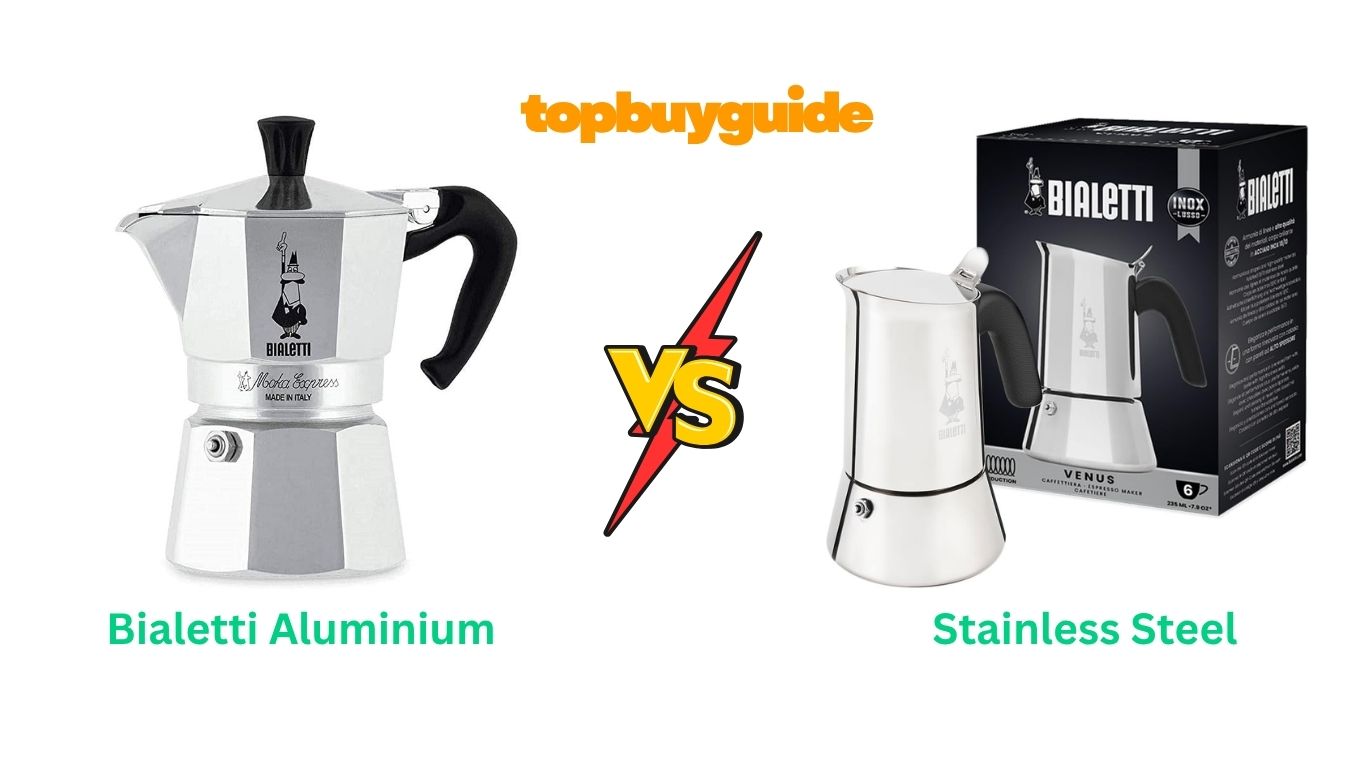
Choosing between Bialetti aluminum vs stainless steel moka pots requires balancing tradition and modern convenience. I strongly recommend the Bialetti Stainless Steel Venus model for its superior versatility and durability. The stainless steel construction ensures it is compatible with all stovetops, including induction. This makes it the most flexible and future-proof choice for any kitchen.
Why Do I Recommend The Bialetti Stainless Steel Venus?
I recommend the Bialetti Stainless Steel Venus for its fusion of traditional brewing with high-end, modern functionality. The switch to stainless steel solves the main practical limitations of the original aluminum design. The Venus model is a more convenient, durable, and versatile appliance for the contemporary coffee lover.
- It offers complete induction stovetop compatibility.
The Stainless Steel Venus is fully compatible with all heat sources, including modern induction cooktops, due to its ferromagnetic base. In contrast, the classic Aluminum Moka Express is not compatible with induction hobs. Users must purchase a separate induction adapter plate or use only gas or electric stoves with the aluminum model. - The construction material ensures long-term durability.
The Venus is made from 18/10 food-grade stainless steel, which is highly resistant to corrosion, rust, and physical dents. However, the Aluminum Moka Express is made from a softer metal that is prone to scratching, staining, and denting if it is dropped or roughly handled. The steel model represents a more rugged, long-lasting investment. - The stainless steel surface is much easier to clean.
The non-porous surface of the Stainless Steel Venus does not absorb coffee oils, making cleanup quicker and simpler. This ensures a clean, consistent flavor with every use. Conversely, the porous aluminum pot absorbs oils over time, creating a ‘seasoned’ patina. While some purists appreciate this, it makes the pot harder to clean and requires special care to avoid discoloration. - It features a modern, sleek, and elegant design.
The Venus has a curved, minimalist, and polished cylindrical shape that looks contemporary and stylish in any modern kitchen setting. Compared to the Aluminum Moka Express, which has the traditional octagonal shape and rustic casting marks, the Venus offers a refined, high-end aesthetic. - The stainless steel material prevents aluminum leaching concerns.
While deemed safe, some consumers worry about aluminum potentially leaching into the coffee, particularly if the pot is scrubbed with harsh detergents. Since the Venus is made from stainless steel, this concern is entirely eliminated, offering peace of mind to health-conscious users. - It often retains heat for a longer period after brewing.
Stainless steel is a poorer conductor of heat than aluminum but retains heat better once hot. This allows the coffee in the upper chamber to stay warmer for longer after the brewing process is complete. Though the aluminum Moka Express heats up faster, it also loses its heat more quickly, resulting in coffee that cools sooner. - The Venus often features an ergonomic, heat-resistant handle.
The Venus design often incorporates a wider, more rounded, heat-resistant nylon handle for a comfortable grip and safer pouring. While the Moka Express also uses a plastic handle, the Venus’s design typically offers more clearance from the hot steel body.
Side By Side Comparison Chart (Bialetti Aluminum vs Stainless Steel)
| Feature | Bialetti Aluminum Moka Express | Bialetti Stainless Steel Venus |
| Material | Food-Grade Cast Aluminum | 18/10 Polished Stainless Steel |
| Induction Compatibility | No (Gas/Electric only) | Yes, fully compatible |
| Heat Conduction | Excellent (Heats up faster) | Good (Heats up slower, retains heat longer) |
| Durability | Prone to dents, stains, and scratches | Highly durable, resistant to corrosion |
| Cleaning | Hand-wash only (Develops a ‘patina’) | Easier to clean (Non-porous, resists stains) |
| Design | Classic Octagonal (Rustic look) | Modern Cylindrical (Sleek, polished look) |
| Price Point | Budget-Friendly / Traditional | Higher-End / Premium Investment |
| Patina/Seasoning | Develops an internal oil ‘seasoning’ | Maintains a clean, neutral flavor profile |
Common Features of Bialetti Aluminum and Stainless Steel
What Common Bialetti Aluminum vs Stainless Steel Can Do?
Despite the fundamental difference in material, the Aluminum Moka Express and the Stainless Steel Venus are both classic Bialetti moka pots. They share the same core Italian brewing mechanism and are designed to produce the identical style of rich, concentrated stovetop coffee. Their shared features guarantee the traditional, robust flavor profile known across Italy.
- Stovetop Pressure Brewing Mechanism
Both the Aluminum Moka Express and the Stainless Steel Venus function using the time-honored stovetop pressure brewing method. Water is heated in the lower chamber, creating steam pressure that forces the hot water upward through the bed of coffee grounds. This high-pressure percolation extracts a strong, concentrated brew that collects in the upper chamber. This shared principle is the foundation of moka pot coffee. - Produce Strong, Concentrated Moka Coffee
The final beverage produced by both materials is a signature strong, concentrated brew, often called “stove-top espresso.” The pressure achieved, typically one to two bars, is not true espresso pressure, which is nine bars. However, the coffee is significantly stronger than drip or pour-over coffee. This robust concentrate is perfect for drinking black or for use as a base in Americanos and lattes. - Require Identical Grind Size and Tamping
Both models require the same specific, medium-fine grind size, slightly coarser than what is used for commercial espresso machines. The coffee grounds should be filled level into the filter basket but never tamped or pressed down. This consistency in preparation ensures the safety valve works correctly and the water pressure can pass through the grounds evenly for optimal extraction. - Incorporate the Essential Safety Valve
A crucial safety feature, the pressure release valve, is found on the lower water chamber of both the aluminum and stainless steel pots. This valve is engineered to vent excess steam pressure if the pot becomes clogged or overheated. The valve also serves a practical function, marking the absolute maximum water fill level for safe and consistent brewing. - Disassemble Easily for Cleaning and Part Replacement
Both the aluminum and stainless steel pots are designed to be easily taken apart into three primary parts: the boiler, the filter funnel, and the collector. This allows the user to perform necessary maintenance and thorough cleaning. Crucially, the internal rubber gaskets and filter screens are often interchangeable between similarly sized models, regardless of the pot’s material. - Represent Iconic Italian Design and Heritage
Both the Moka Express and the Venus carry the authentic Bialetti heritage, founded by Alfonso Bialetti. The iconic ‘Little Man with the Moustache’ logo is found on both models, symbolizing their connection to the original Italian invention. Owning either pot is a direct link to the cultural tradition of Italian home coffee preparation.
Common Features of Bialetti Aluminum vs Stainless Steel Chart
| Feature | Bialetti Aluminum Moka Express | Bialetti Stainless Steel Venus |
| Brewing Method | Stovetop Steam Pressure (Moka Pot) | Stovetop Steam Pressure (Moka Pot) |
| Final Brew | Strong Coffee Concentrate (Moka Coffee) | Strong Coffee Concentrate (Moka Coffee) |
| Safety Feature | Integrated Pressure Release Valve | Integrated Pressure Release Valve |
| Required Grind | Medium-Fine (Untamped) | Medium-Fine (Untamped) |
| Disassembly | Three main components | Three main components |
| Brand Heritage | Iconic Bialetti Logo and Design | Iconic Bialetti Logo and Design |
| Internal Parts | Gasket and Filter often interchangeable | Gasket and Filter often interchangeable |
A Detailed Comparison Of the Bialetti Aluminum vs Stainless Steel
Heat Conduction and Brewing Speed
The differing heat properties of aluminum and stainless steel significantly affect the brewing time and temperature control. The Aluminum Moka Express is an exceptional heat conductor, meaning it rapidly absorbs heat from the stovetop and heats the water quickly. This rapid heat transfer results in a noticeably faster brewing cycle, often completing the brew in just a few minutes, which is beneficial for speed.
The Stainless Steel Venus, conversely, takes longer to heat up initially because stainless steel is a poorer heat conductor than aluminum. This slower heating provides a more gradual pressure build-up, which some enthusiasts believe offers better control over the final extraction process. Once hot, however, the stainless steel retains its heat more effectively, keeping the finished coffee warm for a longer duration.
Cleaning and Maintenance Requirements
Maintenance is a key practical difference that influences the daily user experience. The Aluminum Moka Express must be hand-washed with water only, and detergents are strictly avoided to prevent the metal from oxidizing, pitting, or becoming discolored. Over time, the porous aluminum develops an internal coating of coffee oils, called a patina, which is considered essential for the classic, rich flavor.
The Stainless Steel Venus simplifies the cleaning process significantly because its non-porous material is entirely resistant to staining and corrosion from coffee oils. This allows the user to clean the pot with soap and water for a completely sanitary result. This ease of maintenance makes the Venus a much better choice for those who prioritize a clean, bright flavor and low-effort cleanup.
Stovetop Compatibility and Versatility
The primary advantage of the stainless steel material is its broad compatibility with modern cooking appliances. The Stainless Steel Venus is fully functional on all types of stovetops, including induction, gas, and electric, without needing additional accessories. This makes it an ideal choice for households with induction ranges or for gifting, where the recipient’s stovetop type may be unknown.
The Aluminum Moka Express is restricted to use on gas and electric stovetops because the metal is not ferromagnetic. It will not work on an induction hob. This limitation is a significant drawback in modern kitchens, forcing users to buy a separate, often expensive, induction adapter plate to use the pot. The lack of universal compatibility reduces the pot’s overall versatility and user-friendliness.
Flavor Profile and Material Impact
The traditional, seasoned flavor often attributed to moka pot coffee is closely linked to the aluminum material. The Aluminum Moka Express, over time, retains the residual coffee oils within its porous walls. This ‘seasoning’ is believed by many long-time users to contribute depth and richness to the flavor that is characteristic of the original brew.
The Stainless Steel Venus offers a cleaner, more neutral flavor profile. Since the non-porous stainless steel does not absorb oils or aromas, the flavor of the coffee is solely determined by the beans and the water quality. This ensures that every brew tastes exactly as intended, without any residual flavor influence from previous batches, appealing to those who prefer purity.
Conclusion
For maximum convenience, durability, and versatility, the Bialetti Stainless Steel Venus is the recommended purchase. Its 18/10 stainless steel construction ensures it is fully induction-compatible and exceptionally easy to clean. While the aluminum model offers classic flavor at a lower price, the Venus is the better long-term investment for a modern kitchen. Choose the Venus for a reliable, superior, and stylish coffee companion.
FAQs
1. Is the Aluminum Moka Express safe to use?
Yes, the Aluminum Moka Express is entirely safe to use. It is made from food-grade aluminum, which is non-toxic. The small amounts of aluminum that may leach are considered negligible. The pot is designed with a safety release valve for secure pressure management.
2. Can I use the Stainless Steel Venus on a gas stove?
Yes, the Stainless Steel Venus is fully compatible with gas stovetops. Its stainless steel base is highly durable and resistant to the open flame. This universal compatibility with induction, electric, and gas hobs is a major benefit of the steel design.
3. Does the stainless steel model change the taste of the coffee?
The stainless steel Venus maintains a clean, pure flavor because it is non-porous and does not absorb coffee oils. The aluminum Moka Express, over time, develops a “seasoning” that many purists believe adds traditional flavor complexity.
4. Why is the aluminum pot so much cheaper?
Aluminum is a significantly less expensive material to source and manufacture than high-grade 18/10 stainless steel. The lower material cost and simpler production process allow Bialetti to sell the Aluminum Moka Express at a much more affordable, budget-friendly price.
5. Which model is easier to clean after use?
The Stainless Steel Venus is easier to clean. Its smooth, non-porous surface can be washed with water and mild detergent. The porous aluminum model should only be rinsed with water and should never be scrubbed with soap to avoid damaging the essential patina.
6. Does the stainless steel Venus take longer to brew?
Yes, the Venus generally takes slightly longer to brew than the aluminum model. Aluminum is a better heat conductor, causing the water to boil and the pressure to build more quickly than with the stainless steel base of the Venus.
7. Is a stainless steel moka pot heavier than aluminum?
Yes, the Venus is noticeably heavier than a comparable-sized Aluminum Moka Express. Stainless steel is a denser, more robust metal. The added weight contributes to its feeling of quality and overall durability.
8. Can I use a very fine espresso grind in neither pot?
No, neither pot should use an extremely fine espresso-style grind. A fine grind will cause the filter to clog, creating excessive pressure. Use a medium-fine grind, slightly coarser than true espresso, and never tamp the grounds.

Alex Turner is a dedicated product researcher and reviewer at TopBuyGuide.com, known for his clear, honest, and data-driven insights. He spends countless hours testing, comparing, and analyzing products to help readers make confident and informed buying decisions.