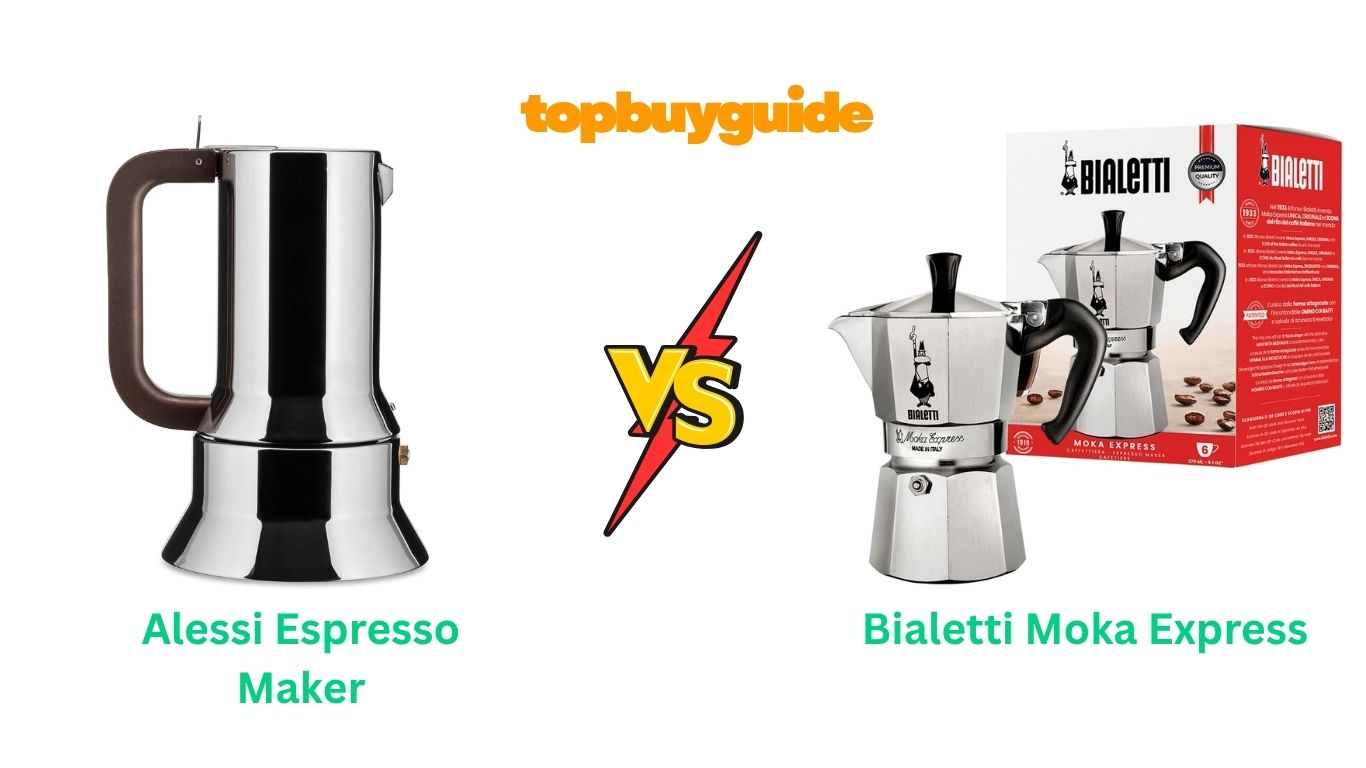
Choosing an Italian stovetop brewer is a choice between two legends: Alessi 9090 vs Bialetti Moka Express. While both deliver classic moka coffee, I recommend the Alessi 9090 for its superior materials and innovative design features. It is made from high-quality stainless steel and features a unique lever-lock handle. This design makes it a true collector’s item and a more versatile kitchen tool.
Why Do I Recommend The Alessi 9090?
I recommend the Alessi 9090 for users who value a blend of functional innovation, superior build quality, and iconic design. The 9090, designed by Richard Sapper, elevates the simple moka pot into a piece of art. It offers key performance and aesthetic advantages over the traditional aluminum Bialetti Moka Express. Investing in the Alessi 9090 means buying a functional art piece.
- It is constructed from premium 18/10 Stainless Steel.
The Alessi 9090 is built entirely from high-grade 18/10 stainless steel. This material is exceptionally durable, non-corrosive, and non-porous. In contrast, the Bialetti Moka Express is made of traditional food-grade aluminum. Aluminum can stain easily and requires specific care to prevent corrosion over time. The steel construction of the 9090 ensures superior longevity. - The Alessi 9090 is fully compatible with induction stovetops.
Due to its stainless steel construction, the Alessi 9090 is readily compatible with all types of stovetops, including modern induction hobs. This offers maximum kitchen versatility. However, the classic aluminum Bialetti Moka Express is incompatible with induction cooktops. Users must buy a separate induction adapter plate or purchase a different Bialetti model for induction use. - It features an innovative, single-handed lever-lock opening system.
The 9090 replaces the traditional screw-on mechanism with a simple lever-lock handle that secures the upper and lower chambers. This unique feature allows for easy, one-handed opening and closing. Conversely, the Bialetti requires the traditional method of twisting the aluminum chambers together. This can become difficult and stiff when the pot is hot. - The design includes a distinctive anti-drip spout.
Richard Sapper’s design integrates a unique, well-formed anti-drip spout that ensures clean and precise pouring into the cup. This prevents messy spills. While the Bialetti has a functional spout, its traditional angular shape is more prone to dripping or dribbling, especially when pouring the last remnants of coffee. - The Alessi 9090 is an award-winning design classic.
The 9090 is the recipient of the prestigious Compasso d’Oro design award and is part of the Permanent Design Collection at the New York MoMA. This status provides a unique collector’s value. Compared to the Bialetti Moka Express, which is an iconic mass-market design, the 9090 represents high-end, gallery-worthy industrial art. - It often includes a filter reducer for half-pot brewing.
The 9090 frequently comes with a metal filter reducer that allows you to easily cut the dose in half. This ensures the coffee quality remains excellent even when brewing smaller volumes. In contrast, the Bialetti Moka Express does not include a standard reducer. Brewing a half-pot often means the coffee is under-dosed and can result in weaker extraction. - The internal gasket material offers a tighter, more reliable seal.
Reviews often note that the 9090 utilizes a thick, pliable silicone gasket that creates a particularly tight seal between the chambers. This can lead to more consistent pressure and better extraction. While the Bialetti uses a standard rubber gasket, its seal can sometimes be less robust, potentially leading to steam leaks if not screwed together tightly. - It possesses a wider, more stable base for superior heat absorption.
The base of the Alessi 9090 is specifically widened, a design feature Sapper included to maximize heat contact with the stovetop. This allows for quicker and more uniform heat transfer. However, the Bialetti Moka Express has a traditional octagonal base. While functional, its design does not maximize the burner contact area as effectively as the 9090.
Side By Side Comparison Chart (Alessi 9090 vs Bialetti)
| Feature | Alessi 9090 Espresso Coffee Maker | Bialetti Moka Express |
| Material | 18/10 Polished Stainless Steel | Food-Grade Cast Aluminum |
| Induction Compatibility | Yes, Fully Compatible | No (Requires adapter or different model) |
| Opening Mechanism | Unique Lever-Lock Handle | Traditional Screw-Together Threads |
| Handle Material | Metal (Can get hot) | Heat-Resistant Black Nylon/Plastic |
| Design Status | MoMA Permanent Collection, Compasso d’Oro Winner | Iconic, Mass-Market Classic |
| Price Point | Premium / Luxury | Budget / Accessible |
| Cleaning | Easier (Stainless steel does not stain) | Harder (Aluminum is porous and stains easily) |
| Filter Reducer | Often Included for half-dose brewing | Not standard (Must buy separately) |
Common Features of Alessi 9090 and Bialetti
What Common Alessi 9090 vs Bialetti Can Do?
Despite the significant differences in material and design philosophy, the Alessi 9090 and the Bialetti Moka Express are fundamentally the same type of brewer. They are both moka pots, meaning they share the same core Italian brewing technology and capability. This shared foundation guarantees a particular style of strong, concentrated coffee that has been loved worldwide for decades.
- Stovetop Pressure Brewing Principle
Both the Alessi 9090 and the Bialetti Moka Express operate using the identical scientific principle of stove-top pressure brewing. The process starts with water placed in the bottom chamber and coffee grounds in the middle filter basket. As the water heats and boils, the resulting steam pressure forces the hot water up through the coffee grounds. This creates a highly concentrated coffee brew that flows into the upper chamber. This shared mechanism is what gives moka pot coffee its distinctive strong taste and texture. - Achieve Strong, Concentrated Moka Coffee
The final product from both devices is a strong, full-bodied coffee often mistakenly called “stove-top espresso.” The brewing pressure typically reaches around one to two bars. This is significantly lower than the nine bars required for true espresso. The resulting coffee concentrate, however, is much stronger than drip coffee. This robust, intense brew is ideal for drinking black or using as a base for milk-based drinks like lattes and cappuccinos. - Require Medium-Fine Grind Size
Both models perform optimally when using a medium-fine grind size, which is slightly coarser than what is used for true espresso. The coffee grounds should be filled level in the filter basket and left untamped. This specific grind and preparation method is necessary to allow the steam pressure to pass through the grounds correctly without clogging the filter or creating excessive pressure. Using a very fine, espresso-tamped grind can be hazardous in either device. - Feature a Safety Release Valve
The lower boiler chamber of both the Alessi 9090 and the Bialetti Moka Express includes a small, essential safety release valve. This valve is engineered to automatically open and release excess steam pressure if the pot becomes dangerously clogged or overheated. This critical component ensures the safe operation of both brewers. It also serves as a guide, marking the maximum water level allowed in the lower chamber. - Disassemble for Easy Cleaning
Both moka pots are designed to be easily disassembled into three primary parts: the boiler base, the filter funnel/basket, and the collector/upper chamber. This simple screw-apart design allows the user to access all areas that come into contact with water and coffee. Easy disassembly is crucial for proper maintenance, as the pots should ideally be rinsed thoroughly after every use. - Made with Food-Safe Materials
Both the Alessi 9090 and the Bialetti Moka Express are constructed using food-safe materials suitable for heating. The Alessi uses polished 18/10 stainless steel, and the Bialetti uses food-grade cast aluminum. While the materials are different, both are considered safe for boiling water and brewing coffee. Both companies adhere to strict manufacturing standards to ensure the final product is safe and non-toxic. - Iconic Italian Heritage
Both brands represent the rich, iconic heritage of Italian coffee culture. Bialetti invented the original Moka Express in 1933, making it the original design. Alessi is a celebrated Italian design house known for elevating everyday objects. Owning either pot connects the user to the long tradition of the simple, potent Italian ritual of brewing moka coffee on the stove.
Common Features of Alessi 9090 vs Bialetti Chart
| Feature | Alessi 9090 Espresso Coffee Maker | Bialetti Moka Express |
| Brewing Method | Stovetop Steam Pressure (Moka Pot) | Stovetop Steam Pressure (Moka Pot) |
| Final Brew | Strong Coffee Concentrate (Moka Coffee) | Strong Coffee Concentrate (Moka Coffee) |
| Safety Feature | Integrated Safety Release Valve | Integrated Safety Release Valve |
| Required Grind | Medium-Fine (Not true espresso fine) | Medium-Fine (Not true espresso fine) |
| Tamping | Not Required / Not Recommended | Not Required / Not Recommended |
| Disassembly | Disassembles into Three Primary Parts | Disassembles into Three Primary Parts |
| Water Level | Fill water below the safety valve | Fill water below the safety valve |
A Detailed Comparison Of the Alessi 9090 vs Bialetti
Construction Material and Cleaning
The construction material creates the most significant practical difference between the two iconic coffee makers. The Alessi 9090 is meticulously crafted from 18/10 polished stainless steel, giving it a heavier, more luxurious feel and a brilliant, lasting shine. This material is completely non-porous and will not absorb coffee oils or develop the patina often associated with moka pots. Stainless steel is also far easier to clean, as a simple wash and thorough rinse will prevent any residue buildup.
The Bialetti Moka Express, the original design, is made from lightweight food-grade aluminum. Aluminum is porous, and over time, it naturally develops an internal patina of coffee oils. Many purists believe this patina is essential to the classic Bialetti flavor. However, aluminum is susceptible to staining, is easily damaged if placed in a dishwasher, and requires careful hand-washing to maintain its surface integrity. The material choice reflects the traditional, utilitarian approach to stovetop brewing.
Induction Compatibility and Heat Transfer
Stovetop compatibility is a major differentiating factor for owners of modern kitchens. The Alessi 9090’s stainless steel boiler is naturally ferromagnetic and is compatible with all stovetops, including induction burners. This broad compatibility makes the 9090 a future-proof kitchen appliance that will work with any heat source, adding to its versatility. Its wide base also maximizes contact with the burner for efficient heat transfer.
The Bialetti Moka Express is traditionally made from aluminum, which is not ferromagnetic. This means the classic Moka Express will not work on induction cooktops without a separate, often bulky, stainless steel induction adapter plate. Bialetti does offer stainless steel versions, but the classic Moka Express model is limited to gas and electric coil stovetops. This lack of inherent induction compatibility can be a major inconvenience for many modern users.
Opening Mechanism and Usability
The mechanical design for connecting the upper and lower chambers is a key functional difference between the two brewers. The Alessi 9090 replaces the need to twist the metal threads tightly with a unique, easy-to-use lever lock. The user simply aligns the two chambers and clamps the lever handle down. This process is secure, simple, and is a major practical upgrade over the traditional screw-on design.
The Bialetti Moka Express requires the user to manually screw the aluminum top and bottom halves together. To achieve a good pressure seal, this often requires tightening the pot firmly, which can be difficult to do when the pot is already hot. This traditional, friction-based thread closure is reliable but lacks the smooth, single-motion ease and elegance provided by the Alessi 9090’s innovative lever system.
Aesthetic Design and Heritage
The aesthetic value and history of the Alessi 9090 place it in a different league of design. Designed by Richard Sapper, the 9090 features a sleek, cylindrical, polished steel body, earning it a prestigious Compasso d’Oro award. Its modern, artistic design has secured its place in museum collections, signifying it as a piece of functional industrial art that commands a luxury price point.
The Bialetti Moka Express, designed by Alfonso Bialetti, is the iconic, original moka pot. Its famous octagonal aluminum design and the ‘Little Man with the Moustache’ logo are instantly recognizable symbols of Italian coffee culture worldwide. While it is not a high-end design award winner like the Alessi, its mass-market appeal and historical significance make it a beloved, accessible classic that represents tradition and value.
Conclusion
For the definitive moka pot experience, I recommend the Alessi 9090. While it carries a premium price, its 18/10 stainless steel construction ensures induction compatibility and superior durability. The unique lever-lock handle and award-winning design transform your daily coffee ritual into an elegant, effortless experience. Invest in the Alessi 9090 to own a piece of functional art that makes perfect moka coffee for years to come.
FAQs
1. Can I put either the Alessi 9090 or the Bialetti in the dishwasher?
No, you should not put either moka pot in the dishwasher. The detergents will aggressively react with the aluminum of the Bialetti, causing discoloration and corrosion. For the Alessi 9090, harsh detergents can damage the seals and potentially dull the high polish of the stainless steel.
2. Which moka pot is the better option for an induction cooktop?
The Alessi 9090 is the superior option for induction cooktops. It is made entirely of stainless steel, which is magnetic and fully induction-compatible right out of the box. The classic aluminum Bialetti Moka Express is not induction-compatible.
3. Does the metal handle of the Alessi 9090 get hot during brewing?
Yes, the metal lever handle of the Alessi 9090 can become quite hot, especially if using a gas stovetop where the flame is too large. It is recommended to use a potholder or oven mitt when opening or carrying the pot after brewing.
4. Why is the Alessi 9090 so much more expensive than the Bialetti?
The Alessi 9090 is more expensive due to its premium 18/10 stainless steel material, which is costlier than aluminum. The price also reflects its status as an iconic Richard Sapper-designed piece of industrial art with a Compasso d’Oro award.
5. How much coffee grounds should I use in both moka pots?
You should fill the filter basket completely level with coffee grounds, but do not compress or tamp them down. The amount of coffee is fixed by the pot’s size and the filter basket’s capacity. Using less coffee can lead to poor extraction.
6. Does the Bialetti Moka Express come in a stainless steel version?
The original Bialetti Moka Express is always aluminum and is not induction-compatible. However, Bialetti does sell other moka pot models, such as the Bialetti Venus, which are made from stainless steel and are induction-friendly.
7. Which moka pot is easier to seal and open?
The Alessi 9090 is easier to seal and open due to its innovative lever-lock system, which requires less manual force than the Bialetti’s traditional screw-on threads. The lever-lock is especially convenient when the pot is hot.
8. Is the coffee from the stainless steel Alessi better than the aluminum Bialetti?
The difference in taste is subjective. The stainless steel Alessi provides a cleaner flavor profile. The aluminum Bialetti may develop a slight metallic note over time that some traditionalists appreciate as part of the classic moka coffee taste.

Alex Turner is a dedicated product researcher and reviewer at TopBuyGuide.com, known for his clear, honest, and data-driven insights. He spends countless hours testing, comparing, and analyzing products to help readers make confident and informed buying decisions.