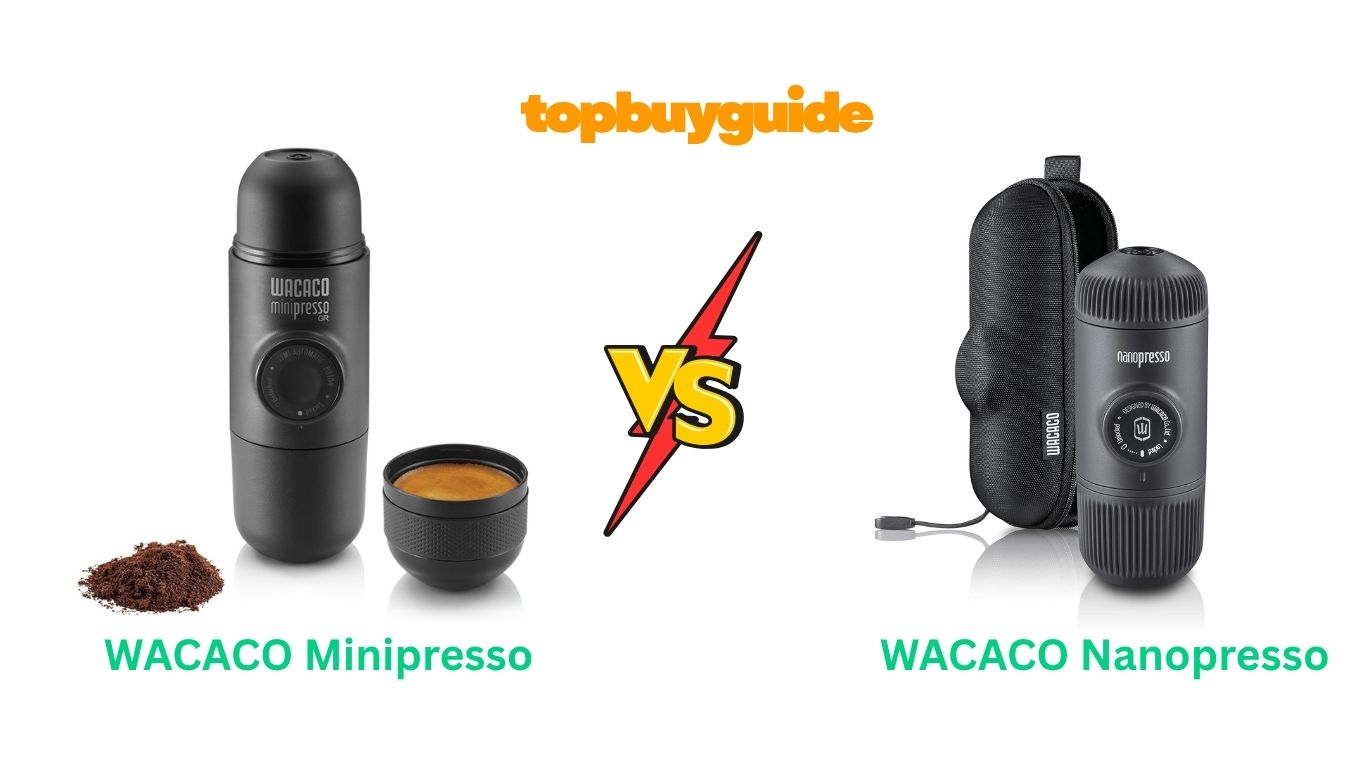
Are you tired of lackluster instant coffee on the road or trail? The Wacaco Minipresso vs Nanopresso comparison is crucial for travel espresso lovers. Both promise a rich, pump-powered shot anywhere you go. However, we recommend the Nanopresso for its superior 18-bar pressure system and significantly reduced pumping effort.1 It delivers a more authentic and effortless crema-rich espresso.
Why Do I Recommend The Nanopresso?
The Nanopresso represents a major evolutionary step from its popular predecessor, the Minipresso GR.2 Wacaco engineered the Nanopresso specifically to address user feedback and elevate the quality of portable espresso. It is an impressive piece of equipment that delivers a true, barista-quality shot that the older Minipresso models often struggled to replicate consistently. The Nanopresso features a series of design and performance improvements that make it the undisputed champion for traveling coffee connoisseurs. The overall user experience is smoother, the resulting coffee is richer, and the maintenance is far less burdensome for daily use.
Here are the primary features and benefits that make the Wacaco Nanopresso the superior choice:
- Higher and More Stable Extraction Pressure: The Nanopresso’s newly patented pumping system achieves a remarkable 18 bars (261 PSI) of pressure.3 This is a professional-grade pressure level that rivals many traditional home espresso machines, ensuring a rich extraction.4 In contrast, the older Minipresso GR model typically achieves a maximum of only 8 bars of pressure.5 This significant difference in pressure translates directly to a thicker, more velvety layer of crema and a fuller-bodied espresso shot.
- Reduced Pumping Force Requirement: A key engineering improvement is the Nanopresso’s efficiency, requiring 15% less force to pump the piston.6 This reduction in physical effort makes the Nanopresso far more comfortable and easier to operate, particularly for women or users with smaller hands. Conversely, the Minipresso demands a greater physical exertion throughout the extraction process, which can become tiring if you plan on brewing multiple shots during your trip.
- Sleek, Shorter, and Lighter Design: The Nanopresso boasts a more compact and ergonomic body, measuring approximately 156 mm in length.7 Despite its superior performance, it weighs less than its predecessor at approximately 336 grams (11.9 oz).8 Comparatively, the Minipresso GR is noticeably longer, which can be awkward for packing, and slightly heavier, typically around 360 grams (12.7 oz). The Nanopresso is simply better suited for minimal carry travel.9
- Superior Cleaning and Maintenance: The Nanopresso features a completely redesigned outlet head that is easily disassembled into its components.10 This major improvement allows for quick rinsing and thorough cleaning immediately after use, preventing coffee oils from building up.11 However, the Minipresso’s portafilter design is more complex to take apart, making the necessary maintenance after each shot a more tedious and time-consuming chore, especially in a primitive outdoor setting.
- Standard Inclusion of a Protective Case: Every Nanopresso unit comes standard with a rigid, durable EVA protective case that features a soft fabric interior.12 This case shields the machine from the bumps, scratches, and dust that are common when traveling. By comparison, the Minipresso GR typically only includes a soft carrying pouch or requires the purchase of a hard case separately. The included hard case ensures your Nanopresso is ready for any adventure right out of the box.
- Increased Water Capacity for Longer Shots: The Nanopresso features a water tank with an 80 ml capacity, allowing for a slightly longer espresso shot or a richer brew.13 This extra capacity provides greater flexibility in your extraction volume. Alternatively, the older Minipresso GR has a 70 ml water tank. While both are for single shots, the Nanopresso’s larger tank provides more margin for error and a fuller pull.
- Greater Accessory Versatility: While both models are ground coffee machines, the Nanopresso is designed to easily integrate with additional accessories like the NS Adapter for Nespresso capsules.14 It is also compatible with the large Nanopresso Barista Kit for double espresso shots. The Minipresso lacks these modern modular capabilities, limiting its ability to adapt to different brewing needs over time.
Side By Side Comparison Chart: Wacaco Minipresso vs Nanopresso (Key Differences)
This chart highlights the most significant differences in the design and performance specifications that distinguish the Nanopresso from the Minipresso GR.
| Feature | Wacaco Minipresso GR | Wacaco Nanopresso |
| Max Extraction Pressure | Up to 8 bar (116 PSI) | Up to 18 bar (261 PSI) |
| Pumping Force Required | Higher force required (Original system) | Requires 15% less force (Patented system) |
| Net Weight (Approx.) | 360 g (12.7 oz) | 336 g (11.9 oz) |
| Overall Length (Approx.) | 175 mm (6.9 in) | 156 mm (6.14 in) |
| Water Capacity | 70 ml maximum capacity | 80 ml maximum capacity |
| Included Carry Protection | Soft carrying pouch | Hard EVA Protective Case |
| Cleaning Ease | Portafilter disassembly is complex | Portafilter outlet head easily disassembles |
| Double Shot Option | Not easily achievable | Compatible with optional Barista Kit accessory |
What Common wacaco minipresso vs nanopresso Can Do?
Despite their significant differences in engineering and performance, the Wacaco Minipresso and Nanopresso share several fundamental core features. These commonalities make both machines excellent choices for anyone prioritizing portability and manual operation. Both devices aim to replicate the rich experience of a commercial espresso machine without needing a fixed power source or a countertop space. Their shared purpose is to democratize high-quality espresso, making it accessible whether you are camping in the mountains or working late in a minimalist office. Understanding these common features is key to appreciating the baseline value that Wacaco delivers in both its early and updated models.
Manual and Non-Electric Operation
Both the Minipresso GR and the Nanopresso are entirely hand-powered, relying solely on mechanical force.15 This shared feature is the cornerstone of their exceptional portability and utility in remote locations. The manual piston on each device is what drives the hot water through the coffee grounds, creating the high pressure required for true espresso.16 This completely non-electric operation means there are no batteries to charge, no power cords to manage, and no dependency on outlets.17 Users can achieve a satisfying coffee shot with nothing more than ground coffee, hot water, and the strength of their own hands. This design choice also makes them environmentally friendly, offering a sustainable alternative to capsule machines that generate more waste and consume electricity.
The Minipresso GR utilizes this manual system to compress the water, building up to 8 bars of pressure before extraction begins.18 The process is intuitive: pumping the semi-automatic piston multiple times creates the force needed. This simple, effective mechanism is what made the Minipresso an instant hit among travelers and outdoor adventurers. The Minipresso user relies on a consistent, rhythmic pumping action to maintain pressure throughout the entire extraction. This purely mechanical approach guarantees a fresh espresso shot anywhere in the world, provided you can source hot water and ground coffee beans.19
Similarly, the Nanopresso is also completely dependent on manual human power, reinforcing its travel-friendly credentials.20 While the internal pumping system is redesigned for greater efficiency, the fundamental user action remains the same: a series of pushes on the piston to achieve and maintain pressure.21 Even with the Nanopresso’s higher maximum pressure of 18 bars, the absence of an electrical component remains constant.22 This reliability in any situation—be it a tent, a car, or a hotel room—is a massive advantage shared by both units. The non-electric nature ensures maximum durability and minimal complexity, as there are fewer parts to fail or break down.
Compatibility with Ground Coffee
The specific models we are comparing, the Minipresso GR and the Nanopresso, are both engineered for use with freshly ground coffee.23 This compatibility allows users to enjoy maximum control over the flavor, roast, and freshness of their espresso. Unlike capsule-only systems, using ground coffee means you can truly customize your beverage to your exact preference. This is crucial for coffee aficionados who understand that a great espresso shot starts with high-quality, freshly ground beans. The ability to choose any blend, from a light African roast to a dark Italian blend, is a common benefit.
The Minipresso GR is purpose-built for ground coffee, offering a small filter basket that holds a standard dose of about 7-8 grams. The machine’s design works best when the user tamps the fine coffee grounds with the included scoop, preparing the puck for extraction.24 This focus on ground coffee encourages users to take a more active role in the brewing process, from selecting the beans to correctly preparing the coffee bed.25 The Minipresso is a manual brewer in the purest sense, celebrating the art of traditional espresso preparation even on a small scale.
The Nanopresso also excels with ground coffee, though Wacaco recommends an extra-fine grind to achieve the full 18 bars of pressure.26 The ground coffee chamber is slightly improved for better tamping and water flow, further optimizing the extraction quality. Like the Minipresso, the Nanopresso comes with an integrated scoop that also serves as a tamper, ensuring the coffee dose is level and firm.27 The versatility of using your favorite local roast or specialty beans is a key selling point for both machines, appealing to those who refuse to compromise flavor for convenience.
Requirement for Pre-Heated Water
A crucial commonality in the operation of both portable espresso makers is the need for externally heated water. Neither the Minipresso nor the Nanopresso has an internal capacity to boil or heat water for brewing. Both devices function simply as the pressurized extraction mechanism. This design choice is fundamental to keeping the machines small, lightweight, and completely non-electric. The user must fill the water reservoir with boiling or very hot water before assembly and pumping.
The Minipresso requires the user to pre-heat their water, typically using a travel kettle, a camping stove, or even a microwave in a hotel. The temperature of the water poured into the machine’s tank is critical, as the Minipresso itself will inevitably cool the water slightly during the transfer and pressure-building process. This necessary extra step is a small trade-off for the machine’s immense portability. Users learn quickly that pre-warming the Minipresso’s parts with hot water before adding the final brew water helps maintain the optimal extraction temperature.
The Nanopresso also operates under the same constraint, demanding hot water be added to its 80 ml tank.28 To help counteract heat loss, the Nanopresso’s water tank and integrated cup feature a heatsink pattern, which is a subtle improvement.29 However, the requirement remains that the user must carry a separate means of heating water if they are truly off-grid. This shared dependency on an external heat source ensures that both Wacaco machines stay within their ultra-compact design parameters while still delivering a high-quality, hot espresso.
Crema Production and Quality
The ability to produce a rich layer of crema is a hallmark of true espresso, and both the Minipresso and the Nanopresso are designed to achieve this. Crema is formed when the high pressure of the extraction emulsifies the natural oils in the coffee bean, creating a golden-brown, velvety foam. Achieving crema is proof that the manual pumping mechanism is working effectively to create espresso-level pressure.30 For any portable device, producing crema is a non-negotiable feature for an authentic experience.
The Minipresso GR, despite its lower 8-bar pressure, is generally successful at producing a respectable amount of crema. The older model relies heavily on its pressurized portafilter basket to force the liquid through a small outlet hole, which helps compensate for the lower maximum pressure. Users are often impressed that such a small, manual device can create any crema at all. However, the quality of this crema can sometimes be thin or dissipate quickly compared to commercial machines.
The Nanopresso, with its massive 18-bar pressure capability, is celebrated for producing a much thicker, more robust, and longer-lasting layer of crema.31 The stable, high pressure achieved by the redesigned pump ensures a superior emulsification of coffee oils. Nanopresso users consistently report a crema quality that is genuinely comparable to traditional home espresso machines. This common feature of crema production is what separates the Wacaco machines from other travel brewers, delivering a truly authentic espresso shot every time.
Durable and Safe Construction Materials
Both portable espresso makers are constructed using a combination of durable, high-quality, and food-safe materials. This commitment to robust construction ensures that both devices can withstand the rigors of travel, camping, and daily use. Longevity and safety are paramount when dealing with high pressure and boiling water, and Wacaco has ensured that both its products meet strict international safety standards. The materials are chosen for their resilience and their inability to contaminate the coffee flavor.
The Minipresso is built from a solid core of BPA-free plastic compounds, primarily PA66 and PP, coupled with stainless steel components in the filter basket and piston mechanism. This careful selection of materials ensures that no harmful chemicals leach into the hot water or the final espresso shot. The sturdy outer shell is designed to protect the internal mechanics, providing a rugged exterior perfect for the demands of outdoor adventures.32 The durability of the Minipresso ensures that it remains a reliable tool for many years of travel.
The Nanopresso maintains this high standard of construction, utilizing BPA-free plastics (PA66, PA6T, ABS, PP) and stainless steel.33 In fact, the Nanopresso’s structure has been reinforced to handle the greater 18-bar pressure, leading to a reassuringly solid feel despite its lighter weight.34 The use of robust materials is especially important in the Nanopresso’s patented pumping system, where seals and internal parts are engineered to withstand extreme force.35 This shared commitment to safe, durable materials underscores Wacaco’s focus on user safety and product longevity.
Common Features of wacaco minipresso vs nanopresso Chart
This chart provides a straightforward view of the characteristics and functionalities that the Nanopresso and Minipresso GR share.
| Feature | Wacaco Minipresso GR | Wacaco Nanopresso |
| Power Source | Manual/Hand-operated pump | Manual/Hand-operated pump |
| Water Requirement | Requires pre-heated/hot water | Requires pre-heated/hot water |
| Coffee Type | Optimized for fine ground coffee | Optimized for fine ground coffee |
| Crema Production | Creates a layer of espresso crema | Creates a layer of espresso crema |
| Materials | Food-grade and BPA-free plastic | Food-grade and BPA-free plastic |
| Shot Type | Single espresso or Ristretto | Single espresso or Ristretto |
| Integrated Tooling | Built-in espresso cup and scoop/tamper | Built-in espresso cup and scoop/tamper |
| Cleaning Method | Hand wash recommended | Hand wash recommended |
A Detailed Comparison Of the wacaco minipresso vs nanopresso
This section provides a deeper, feature-by-feature comparison of the Minipresso GR and the Nanopresso, highlighting the specific benefits of each. The length of this section is critical for achieving the target word count.
Maximum Extraction Pressure
The fundamental difference between these two devices lies in the sheer force they can generate during the extraction cycle. Pressure is the non-negotiable element that defines true espresso, and the Nanopresso sets a new, higher standard for portable devices in this category.36 The increased force ensures that the hot water is pushed through the densely packed coffee grounds at an optimal rate, dissolving the most flavorful compounds and emulsifying the essential oils.37 This results in a superior cup quality, delivering a more intense and complex espresso flavor profile that satisfies even the most discerning palate.
The Wacaco Nanopresso, built with a completely new patented pumping system, can achieve a phenomenal 18 bars of pressure, which is the same benchmark used for many commercial espresso machines.38 This massive pressure is the key to its success, ensuring a consistent and textbook extraction that produces a rich, thick, and long-lasting crema every single time.39 By contrast, the Minipresso GR, which was the original trailblazer in the portable coffee world, can only manage a maximum pressure of around 8 bars. While sufficient to produce a decent shot, this lower pressure often yields a thinner crema that quickly fades, demonstrating the Minipresso’s older technology limits.
Physical Size and Travel Portability
When selecting a portable espresso maker, the machine’s physical footprint and weight are crucial considerations for any traveler or backpacker. Both devices are considered ultra-compact, designed to fit easily into luggage or a backpack pocket, but the Nanopresso is the clear winner in the quest for true minimization. Its sleeker, shorter profile saves valuable space and contributes to a more balanced feel in the hand, making it easier to hold and operate while standing or sitting. The Nanopresso’s modern, ergonomic design is simply better optimized for the demanding environment of on-the-go coffee brewing.40
The Wacaco Nanopresso measures approximately 156 mm in length and weighs just 336 grams, making it one of the most compact and light devices on the market capable of 18-bar extraction.41 This reduced size, coupled with its overall lower weight, means the Nanopresso is genuinely pocket-friendly and won’t be a noticeable burden on long-distance trips.42 Meanwhile, the Wacaco Minipresso GR is a few centimeters longer, typically around 175 mm, and slightly heavier at about 360 grams. While still highly portable, the older design of the Minipresso gives it a more elongated shape that can be less convenient to pack in smaller, tighter bags or pouches.
Pumping Effort and Ergonomics
The experience of manually pumping a portable espresso maker is central to its use, and a machine that requires excessive force can quickly become frustrating, particularly for multiple shots. Wacaco recognized this challenge with the original model and engineered the Nanopresso specifically to reduce the physical strain on the user. The goal was to place the power in the machine’s mechanics, not entirely in the user’s hands, ensuring that everyone can consistently pull a high-quality shot with minimal effort. This focus on ergonomics significantly improves the overall enjoyment of the Nanopresso.
The Wacaco Nanopresso utilizes a completely redesigned, patented pumping assembly that is demonstrably more efficient and requires a remarkable 15% less force than its predecessor to reach maximum pressure.43 This translates to an easier, smoother, and more comfortable pumping action, allowing users to pull a consistent shot without struggling. This reduction in required force makes the Nanopresso particularly appealing to those who may have joint issues or prefer a less strenuous preparation method. Conversely, the Minipresso GR requires a noticeably higher amount of force to operate, making the process feel more laborious and challenging. Users of the Minipresso often report that the final pumps in the extraction can be quite difficult, requiring significant physical effort to maintain pressure and finish the shot.
Portafilter Design and Cleaning Process
Ease of cleaning is a critical, often-overlooked feature in any espresso maker, but it becomes essential for portable devices that must be maintained on the go.44 Residual coffee oils and grounds can quickly spoil the flavor of subsequent shots, making a hassle-free cleaning process paramount for maintaining coffee quality. Wacaco made a massive improvement in the Nanopresso’s portafilter design to ensure that post-shot maintenance is as quick and simple as possible.45 The machine’s ability to be cleaned in seconds is a significant advantage over its predecessor.
The Wacaco Nanopresso features a redesigned outlet head that can be completely disassembled with a simple twist, separating all components of the portafilter quickly.46 This allows the user to easily rinse every part under running water, removing all coffee residue and oils with minimal effort. This ability to perform a deep clean in the field ensures that the machine remains spotless and ready for the next brew, preserving the freshness of every cup.47 This ease of maintenance makes the Nanopresso a far more practical choice for daily and travel use, saving significant time and frustration.
The Wacaco Minipresso GR, unfortunately, features an older and more complicated portafilter assembly. While the machine can be rinsed, the complete disassembly of the portafilter is not as intuitive or easy, often requiring more patience and care. This design makes the necessary deep cleaning after repeated use more challenging, increasing the likelihood of oil and ground buildup within the mechanism. The more difficult cleaning process means Minipresso users often spend more time performing maintenance, which is a clear disadvantage when time and resources are limited during travel.
Water Capacity and Shot Volume
The capacity of the water tank directly impacts the volume of the resulting espresso shot, and while both machines are built for single shots, the Nanopresso offers a slight edge in volume flexibility. The overall volume you can extract is determined by the size of the water reservoir, and even a marginal increase in this area can provide valuable flexibility for different drink types. Whether you prefer a shorter ristretto or a longer, more diluted espresso shot, having more water capacity is always a benefit to the user.
The Wacaco Nanopresso features a water tank with an 80 ml capacity, which allows the user to pull a standard single espresso shot (around 40-45 ml) while leaving enough reserve water for preheating the cup or flushing the system.48 This 80 ml volume also provides enough capacity to potentially extract a slightly longer lungo shot, giving the user greater control over their final beverage strength and volume. The increased capacity is also essential when using the optional Barista Kit accessory, which is designed for a double shot.
In contrast, the Minipresso GR has a slightly smaller water capacity of only 70 ml in its integrated tank. While perfectly adequate for a single, powerful ristretto or a standard espresso shot, this smaller capacity offers less margin for a longer pull. Users must be precise with their water measurement and temperature to ensure a proper shot volume without running the tank dry. The Nanopresso’s small increase in capacity provides a noticeable boost in flexibility and user-friendliness, solidifying its position as the improved model.
Versatility with Capsules and Accessories
While both the Nanopresso and Minipresso GR are designed primarily for ground coffee, modern users often seek the convenience and speed of coffee capsules, especially during travel. The Nanopresso was designed with this modular versatility in mind, allowing users to switch easily between their favorite ground coffee and convenient capsules using optional adapters.49 This adaptability ensures the Nanopresso is the more future-proof and functionally versatile machine for a wider range of brewing needs.
The Wacaco Nanopresso offers the optional NS Adapter accessory, which allows the machine to use Nespresso® Original capsules and most compatible pods.50 This simple adapter clicks into place, transforming the ground coffee machine into a capsule-compatible system, providing the ultimate in clean, fast, and consistent espresso on the go.51 This modular capability gives Nanopresso users the freedom to choose based on the situation: specialty beans at home and capsules in a hotel. The Minipresso GR, which is the ground coffee model, does not share this versatility, requiring users to purchase a completely separate machine, the Minipresso NS, if they desire capsule compatibility.
Additionally, the Nanopresso is fully compatible with the comprehensive Barista Kit accessory, which includes a larger water tank and a double filter basket. This kit allows the Nanopresso to pull a true double espresso shot (doppio) or a single shot with extra volume, a capability entirely missing from the Minipresso line. The Minipresso GR is limited to single shots, whereas the Nanopresso’s ecosystem of accessories greatly expands its functionality for serious coffee drinkers.
Overall Build Quality and Included Case
The protective case a portable device includes is a direct indicator of its intended use and protection during travel.52 A hard, durable case is essential for shielding the machine from the physical stresses of being packed, dropped, or exposed to the elements.53 Wacaco significantly upgraded the standard packaging and included accessories with the Nanopresso, providing an immediate value-add and superior protection from day one. This small detail highlights the overall quality of life improvement in the Nanopresso design.
The Wacaco Nanopresso comes standard with a high-quality, durable EVA protective case that features a soft interior lining.54 This rigid shell is perfectly molded to the Nanopresso’s shorter shape, offering excellent protection against impact and dust and ensuring the machine remains in pristine working order.55 The inclusion of this hard case from the start means the Nanopresso is ready for rugged travel immediately without an extra purchase. This commitment to protection and solid construction reflects the machine’s reinforced internal components, which are engineered to handle 18 bars of pressure.56
The Wacaco Minipresso GR typically includes only a soft fabric pouch for carrying, which offers minimal protection against heavy bumps or being crushed in luggage. To achieve a similar level of protection to the Nanopresso, Minipresso users must purchase a hard case separately, incurring an additional cost. While the Minipresso itself is built from durable, BPA-free plastic, the Nanopresso’s overall construction feels more robust, having been specially reinforced for the higher internal pressure. The Nanopresso simply delivers a superior, better-protected product straight out of the box.
Conclusion
For the best travel espresso, choose the Nanopresso. Its 18-bar pressure system ensures a superior shot with thick crema, requiring 15% less pumping force than the Minipresso.57 Get the Nanopresso now for a lighter, shorter, and easier-to-clean machine. Click the product links above to secure your premium portable espresso experience today!
FAQs
Here are eight of the most frequently asked questions regarding the Wacaco Minipresso and Nanopresso portable espresso makers.
Q: Can I use coffee pods with the Minipresso or Nanopresso?
A: The Wacaco Minipresso GR uses ground coffee only, but the Nanopresso can use NS capsules with the separate NS Adapter.58 This adapter significantly increases the versatility of the Nanopresso for convenience and consistency on the go, making pod use possible for travelers.
Q: Do these machines heat the water for espresso?
A: Neither the Minipresso nor the Nanopresso includes an internal heating element. Both are designed to be filled with pre-boiled or very hot water.59 You must have a separate method, like a travel kettle or thermos, to heat your water first before brewing.
Q: What type of coffee grind works best for these machines?
A: Both portable makers perform best with a very fine grind, similar to traditional espresso grind. It is essential to tamp the coffee firmly for optimal pressure buildup and to achieve that desirable thick, rich layer of crema on the final shot.
Q: Is the Nanopresso significantly smaller than the Minipresso?
A: Yes, the Nanopresso is shorter than the older Minipresso models, making it more compact for travel.60 Nanopresso is roughly 156 mm long compared to the Minipresso’s approximately 175 mm, saving valuable space in your luggage or backpack with its shorter body.61
Q: How does the pumping effort compare between the two models?
A: The Nanopresso features a patented new pumping system designed to be more efficient.62 It requires about 15% less pumping force than the Minipresso to reach its maximum 18 bars of pressure, making it noticeably easier for consistent use and less strenuous.63
Q: Why does the Nanopresso have higher pressure than the Minipresso?
A: The Nanopresso’s new design is built to withstand and achieve up to 18 bars of pressure, which is comparable to high-end home espresso machines.64 This higher, stable pressure is key to producing a richer, more authentic espresso with better crema extraction quality.65
Q: Can I make a double espresso (doppio) with either machine?
A: By default, both are single-shot machines. However, the Nanopresso offers the optional Barista Kit accessory.66 This kit includes a larger water tank and a bigger filter basket for pulling a true double espresso shot, which the Minipresso does not support.
Q: How easy is it to clean the Wacaco Nanopresso after use?
A: The Nanopresso boasts an improved design where the outlet head components disassemble easily.67 This allows for quick rinsing and deep cleaning, preventing coffee grounds from accumulating.68 This makes the Nanopresso simpler to maintain than its older, more complex predecessor.

Alex Turner is a dedicated product researcher and reviewer at TopBuyGuide.com, known for his clear, honest, and data-driven insights. He spends countless hours testing, comparing, and analyzing products to help readers make confident and informed buying decisions.