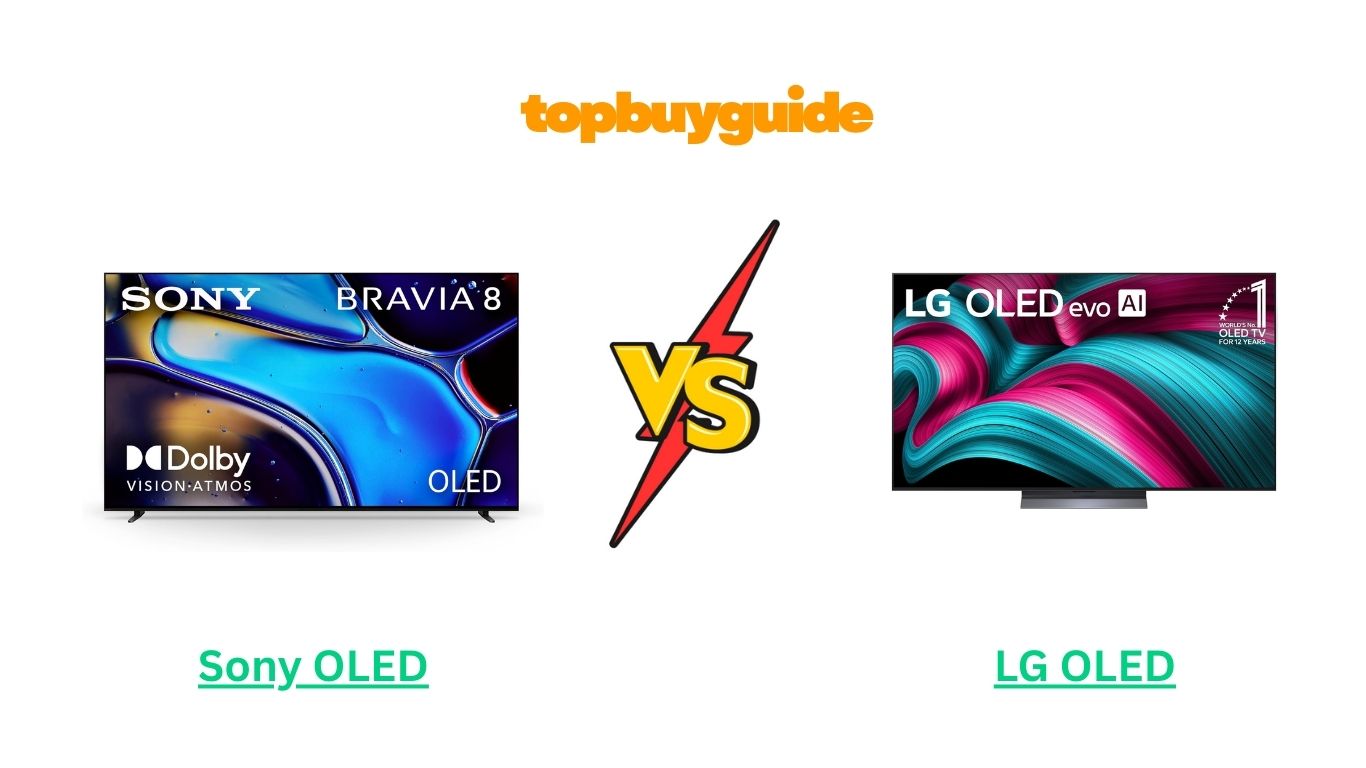
When it comes to high-end OLED TVs, Sony OLED vs LG OLED often sparks debate among enthusiasts. Both brands deliver stunning visuals and deep blacks, but one slightly edges out for cinematic color accuracy and smart performance. In this review, we’ll help you decide which OLED TV suits your viewing preferences. Our pick? Sony OLED, thanks to its advanced processing and lifelike picture quality.
Why Do I Recommend the Sony OLED?
Sony OLED is our recommendation for those seeking premium picture quality and accurate colors. Here’s why it stands out over LG OLED:
- Cognitive Processor XR: Sony’s processor analyzes the scene like the human eye, optimizing contrast, color, and sharpness. LG OLED offers excellent processing too, but Sony’s XR Processor produces a more lifelike image, especially for complex HDR scenes.
- Superior Motion Handling: With XR OLED Motion, fast-moving scenes are smooth and blur-free, perfect for sports or action movies. LG’s motion handling is solid but slightly trails in high-speed sequences.
- Accurate Color Reproduction: Sony’s OLED reproduces colors with near-perfect accuracy, making it ideal for cinematic content. LG is vibrant but sometimes slightly oversaturated.
- Enhanced HDR Experience: Sony OLED excels in HDR brightness and contrast management. Highlights pop without losing shadow detail, whereas LG OLED may dim extreme bright zones slightly.
- Gaming Optimizations: Sony’s OLED supports HDMI 2.1 and variable refresh rates, delivering exceptional gaming visuals with minimal input lag. LG OLED is also great for gaming but slightly less optimized for PlayStation integration.
- Acoustic Surface Audio: The screen itself produces sound in Sony OLED, providing immersive audio that moves with the picture. LG uses traditional speakers, which are excellent but less integrated with the display.
- AI Upscaling: Sony’s AI upscales lower-resolution content impressively, giving 4K clarity to HD and Full HD sources. LG has good upscaling, but Sony’s XR Upscaling is more refined.
- Design & Build Quality: Sony’s minimalistic design fits seamlessly into living rooms, offering sturdy build quality that ensures longevity. LG OLED is sleek but slightly bulkier in some models.
Verdict: While both TVs offer premium OLED quality, Sony OLED wins for those prioritizing cinematic color accuracy, motion handling, and advanced processing.
Side By Side Comparison Chart: Sony OLED vs LG OLED
| Features | Sony OLED | LG OLED |
| Processor | Cognitive XR Processor | α9 Gen 6 AI Processor |
| Motion Handling | XR OLED Motion | TruMotion 120Hz |
| Color Accuracy | Near-perfect cinematic colors | Vibrant, slightly oversaturated |
| HDR Brightness | Excellent highlights with detail retention | High brightness, slight peak limit |
| Gaming Performance | HDMI 2.1, VRR, low input lag | HDMI 2.1, VRR, slightly higher input lag |
| Audio Technology | Acoustic Surface Audio | AI Sound, traditional speakers |
| Upscaling | XR AI Upscaling | AI 4K Upscaling |
| Design | Sleek, minimalistic | Stylish but slightly bulkier |
What Common Sony OLED vs LG OLED Can Do?
Despite brand differences, both OLED TVs share premium features that enhance your viewing experience:
- Perfect Black Levels: Both TVs can turn off individual pixels, achieving infinite contrast and perfect blacks. This ensures cinematic depth, particularly in dark scenes.
- Wide Viewing Angles: Both TVs maintain color and contrast from side angles, ideal for large living rooms.
- Smart TV Features: Google TV (Sony) and webOS (LG) provide app ecosystems, voice assistants, and streaming compatibility.
- 4K Resolution: Both support 4K Ultra HD resolution, delivering sharp, detailed visuals.
- HDR Support: Dolby Vision and HDR10 support on both models enhance highlights and shadows.
- Connectivity: Multiple HDMI ports, USB inputs, and Wi-Fi capabilities are standard for both TVs.
- Gaming Features: Both support variable refresh rates, low input lag, and 120Hz refresh rates, making them excellent for modern gaming.
Common Features Chart: Sony OLED vs LG OLED
| Features | Sony OLED | LG OLED |
| Black Levels | Infinite, perfect blacks | Infinite, perfect blacks |
| Viewing Angles | Wide, consistent color | Wide, consistent color |
| Smart TV | Google TV ecosystem | webOS ecosystem |
| 4K Resolution | Yes | Yes |
| HDR Support | Dolby Vision, HDR10 | Dolby Vision, HDR10 |
| Connectivity | HDMI, USB, Wi-Fi | HDMI, USB, Wi-Fi |
| Gaming Features | 120Hz, VRR, low input lag | 120Hz, VRR, low input lag |
A Detailed Comparison of Sony OLED vs LG OLED
1. Picture Quality & Color Accuracy
- Sony OLED: Sony OLED TVs feature the Cognitive Processor XR, which analyzes each frame with human-eye-like perception. This allows the TV to reproduce lifelike colors and precise contrast across the entire screen. Cinematic scenes are brought to life with subtle gradients, realistic skin tones, and accurate shadow details. Dark scenes retain depth, while bright highlights never appear washed out. Sony OLED also supports Dolby Vision and HDR10, ensuring maximum dynamic range for both movies and TV shows.
- LG OLED: LG OLEDs use the α9 Gen 6 AI Processor, which delivers excellent image processing and vibrant visuals. Colors are bold and punchy, which works well for bright living rooms or content that benefits from vivid hues. However, in comparison, some users may find LG’s colors slightly oversaturated, and fine shadow details can be less nuanced than Sony’s. HDR content is impressive but not quite as refined in terms of natural contrast handling.
Verdict: Sony OLED is more suitable for cinematic enthusiasts who want colors and contrast to feel lifelike and natural, while LG OLED is ideal if you prefer more vivid, eye-catching visuals.
2. Motion Handling & Gaming
- Sony OLED: Motion is a strong suit for Sony OLED, thanks to XR OLED Motion technology. Fast-moving scenes like sports, action sequences, or video games remain smooth and blur-free. For gamers, Sony supports HDMI 2.1, Variable Refresh Rate (VRR), and 120Hz refresh rates, delivering minimal input lag. PlayStation 5 and Xbox Series X owners will especially notice the superior responsiveness and smooth frame transitions, which enhances competitive gaming.
- LG OLED: LG OLED also supports 120Hz refresh rates, VRR, and low input lag. Its TruMotion technology reduces motion blur effectively but may struggle slightly in extremely fast HDR sequences. While gaming experience is excellent, especially for casual and competitive play, Sony’s motion processing is more refined for extremely dynamic content.
Verdict: Sony OLED slightly outperforms LG OLED in high-speed motion clarity, making it a better choice for action-packed movies and next-gen gaming.
3. HDR & Brightness Performance
- Sony OLED: Sony OLED excels in HDR performance, using XR HDR Brightness to balance highlights and shadow details. Bright scenes remain vivid without overpowering dark areas, providing a natural look. Dolby Vision and HDR10 content are displayed with impressive depth, making the TV ideal for dark rooms as well as well-lit living spaces.
- LG OLED: LG OLED supports Dolby Vision and HDR10, providing strong dynamic range. Brightness peaks are slightly lower than Sony’s, which can make highlights less striking in very bright environments. Still, HDR performance remains excellent for cinematic and everyday viewing.
Verdict: Sony OLED delivers a more balanced and immersive HDR experience.
4. Audio Technology
- Sony OLED: Sony’s Acoustic Surface Audio technology transforms the screen into a speaker, producing sound directly from the picture. Dialogue clarity is superb, directional audio matches on-screen action, and bass depth enhances immersion. This integration creates a true cinematic experience without relying on external sound systems.
- LG OLED: LG employs AI Sound and standard speaker systems. While dialogue and effects are clear, the audio doesn’t move with the on-screen content, requiring external soundbars or speaker systems for an immersive experience.
Verdict: Sony OLED’s screen-integrated audio is a significant advantage for users who want immersive sound without additional equipment.
5. Smart TV Interface
- Sony OLED: Sony OLED uses Google TV, which offers personalized recommendations, a vast library of apps, and built-in Chromecast. Voice commands with Google Assistant allow easy navigation, and updates keep the interface current. Content discovery feels natural and intuitive, making it easy to find new shows and movies.
- LG OLED: LG OLED runs webOS, which is user-friendly and fast, supporting popular streaming apps and voice control via Alexa or Google Assistant. Content discovery is intuitive but lacks the same level of personalized recommendations found in Google TV.
Verdict: Both are excellent, but Sony OLED’s Google TV provides slightly better content organization and personalization.
6. Upscaling & AI Enhancement
- Sony OLED: XR 4K Upscaling enhances HD and Full HD content, making it appear closer to 4K quality. Details like textures, facial expressions, and environmental nuances are preserved, ensuring even older content looks modern and crisp.
- LG OLED: LG OLED’s AI 4K Upscaling works effectively but occasionally softens finer details, particularly in high-motion sequences.
Verdict: Sony OLED offers superior upscaling performance for non-4K content.
7. Design & Build Quality
- Sony OLED: Sony’s OLED TVs feature a sleek, minimalistic design with ultra-thin bezels. The build quality is robust, providing long-term durability while fitting seamlessly into modern living rooms.
- LG OLED: LG OLED is stylish and modern, but some models are slightly bulkier. Build quality is strong but may not match Sony’s refined finish.
Verdict: Sony OLED has a more elegant, minimalistic design that integrates better into living spaces.
8. Connectivity
- Sony OLED: Equipped with multiple HDMI 2.1 ports, USB slots, Wi-Fi, and Bluetooth, Sony OLED ensures compatibility with a wide range of devices, including gaming consoles, sound systems, and streaming devices.
- LG OLED: LG OLED offers similar connectivity options with multiple HDMI ports, USB, Wi-Fi, and Bluetooth, allowing seamless integration with home entertainment systems.
Verdict: Both are comparable, but Sony’s ports are optimized for next-gen gaming and high-speed data transfer.
Conclusion
After a thorough comparison of Sony OLED vs LG OLED, Sony OLED emerges as the superior choice for:
- Exceptional cinematic color accuracy and realistic visuals.
- Smooth motion handling and next-gen gaming performance.
- Immersive Acoustic Surface Audio technology.
- Advanced AI upscaling and HDR optimization.
- Sleek, minimalistic design for modern living rooms.
While LG OLED remains an excellent alternative with vibrant colors, webOS features, and competitive gaming performance, Sony OLED provides a more balanced, natural, and premium viewing experience.
Affiliate Recommendation: For those looking for a cinematic home theater experience combined with gaming excellence, Sony OLED is the top pick.
FAQs: Sony OLED vs LG OLED
- Which has better color accuracy?
Sony OLED delivers near-perfect cinematic colors, while LG OLED offers slightly more vibrant but less natural hues. - Which is better for gaming?
Both support HDMI 2.1, VRR, and 120Hz refresh rates. Sony OLED edges out with smoother motion and lower input lag for competitive gaming. - Do both TVs achieve perfect blacks?
Yes, OLED technology allows both TVs to display infinite contrast and perfect black levels. - Which TV is better for HDR content?
Sony OLED offers more natural HDR with excellent highlight and shadow balance, while LG OLED is bright but slightly less nuanced. - Are both TVs prone to burn-in?
Yes, as OLED panels, both can experience burn-in if static images are displayed for prolonged periods. Regular content rotation reduces risk. - Which smart TV interface is superior?
Google TV on Sony provides personalized recommendations and seamless content integration. LG webOS is intuitive but less personalized. - Do both support Dolby Vision and Atmos?
Yes, both TVs support Dolby Vision HDR and Dolby Atmos for immersive visuals and audio. - Which is better for movies and streaming?
Sony OLED is ideal for cinematic content with natural colors, immersive sound, and dynamic HDR performance.

Alex Turner is a dedicated product researcher and reviewer at TopBuyGuide.com, known for his clear, honest, and data-driven insights. He spends countless hours testing, comparing, and analyzing products to help readers make confident and informed buying decisions.