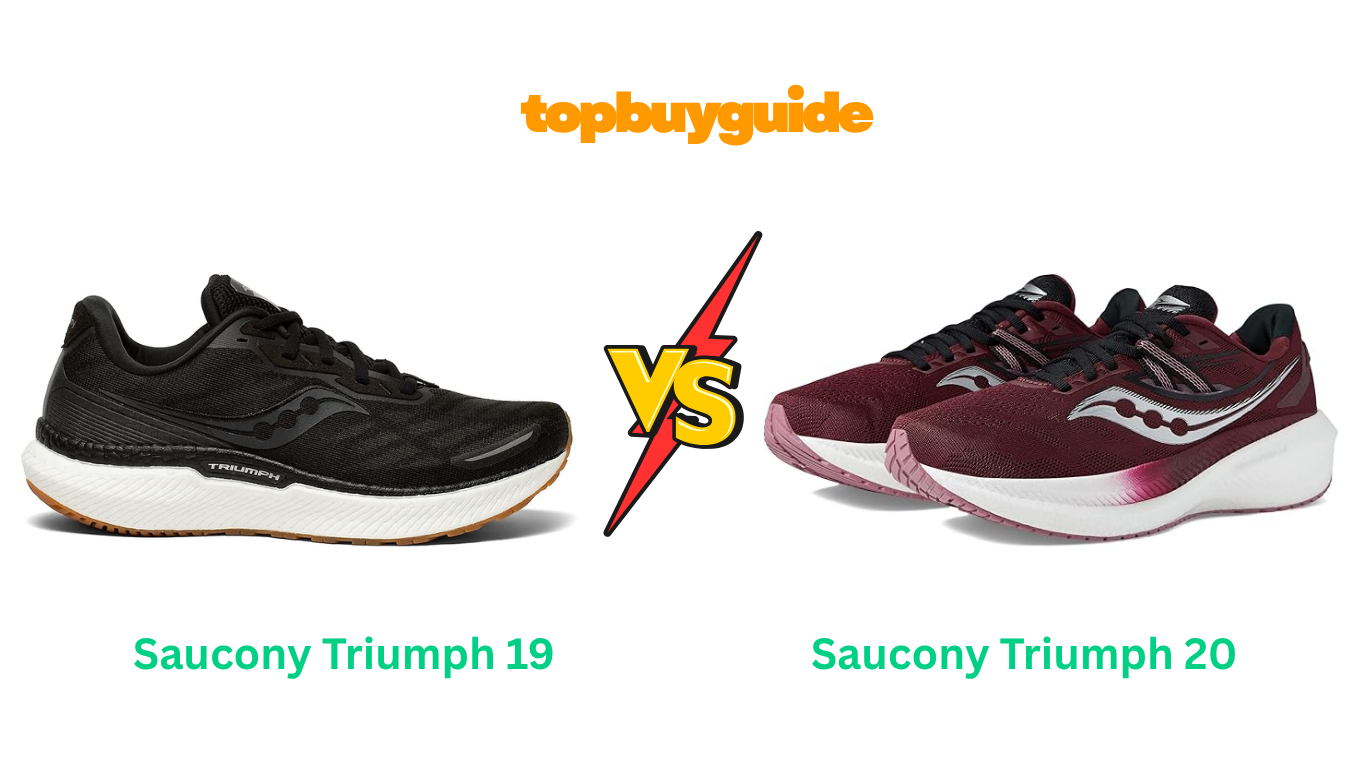
Deciding between Triumph 19 and 20 feels like choosing between great and exceptional. Both shoes deliver Saucony’s commitment to premium cushioned comfort for runners. I recommend the Triumph 20 for its revolutionary foam and lighter weight. The reformulated PWRRUN+ creates softer, bouncier rides with every stride taken. The increased stack height provides maximum cushioning without sacrificing responsiveness levels.
While the Triumph 19 offers reliable comfort, the 20 represents true evolution. Let’s explore what makes each version worth consideration today.
Why Do I Recommend The Saucony Triumph 20?
The Triumph 20 represents Saucony’s finest max-cushioned daily trainer to date. Here’s why this upgraded model deserves your hard-earned investment:
• Reformulated PWRRUN+ Foam Technology – The Triumph 20 features softer, lighter PWRRUN+ with enhanced bounce. In contrast, the Triumph 19 uses denser, firmer original PWRRUN+ formulation. This creates noticeably more responsive and enjoyable rides throughout miles.
• Increased Stack Height for Maximum Cushioning – The Triumph 20 boasts 37mm heel and 27mm forefoot stack. Meanwhile, the Triumph 19 offers 32.5mm heel and 24.5mm forefoot measurements. This extra cushioning protects joints significantly better during long distances.
• Lighter Weight Despite More Cushioning – The Triumph 20 weighs 9.7 ounces for men’s size 9. Conversely, the Triumph 19 weighs 10.2 ounces for identical sizing. This half-ounce weight loss makes significant difference during extended runs.
• 10mm Drop for Better Heel Strike Comfort – The Triumph 20 features 10mm heel-to-toe drop geometry. However, the Triumph 19 maintains Saucony’s traditional 8mm drop philosophy. The higher drop reduces Achilles stress and improves comfort effectively.
• Enhanced Rocker Geometry and Transitions – The Triumph 20 incorporates redesigned midsole geometry with smoother rolling. In contrast, the Triumph 19 has standard midsole shaping throughout. This creates more effortless toe-off transitions during running cadence.
• Improved Upper Breathability and Comfort – The Triumph 20 uses refined engineered mesh with better airflow. Meanwhile, the Triumph 19 features slightly thicker, less breathable mono-mesh. The upgraded material enhances comfort during warmer running conditions consistently.
• Better Versatility Across Pace Ranges – The Triumph 20 handles recovery runs, long runs, and tempo efforts. However, the Triumph 19 feels heavy and sluggish during faster pacing. The bouncier foam makes the 20 more adaptable for training.
• Superior Outsole Grip and Durability – The Triumph 20 features redesigned lug patterns with improved traction. Conversely, the Triumph 19 uses standard rubber coverage without refinement. The updated outsole grips wet surfaces better while maintaining durability.
Side By Side Comparison Chart: Saucony Triumph 19 vs 20
| Feature | Saucony Triumph 19 | Saucony Triumph 20 |
| Release Year | 2021 | 2022 |
| Weight (Men’s Size 9) | 10.2 oz (289g) | 9.7 oz (275g) |
| Stack Height (Heel/Forefoot) | 32.5mm / 24.5mm | 37mm / 27mm |
| Heel-to-Toe Drop | 8mm | 10mm |
| PWRRUN+ Foam | Original denser formulation | Reformulated softer lighter version |
| Midsole Geometry | Standard flat design | Sculptured rocker geometry |
| Price Range | $150 | $160 |
| Upper Material | Engineered mono-mesh | Refined engineered air-mesh |
| Tongue Design | Padded gusseted tongue | Extra plush gusseted tongue |
| Outsole Pattern | Standard lug design | Redesigned improved lugs |
| Flexibility | Moderate forefoot flex | Enhanced flexibility throughout |
| Energy Return | Moderate response | Enhanced bouncy response |
| Best For | Daily training and recovery | Versatile training all paces |
| Durability | 400-450 miles | 450-500 miles |
What Common Features Can Saucony Triumph 19 vs 20 Deliver?
Premium PWRRUN+ Midsole Cushioning
Both shoes showcase Saucony’s signature PWRRUN+ foam technology throughout their midsoles. This proprietary TPU-based foam delivers exceptional cushioning with superior durability characteristics. The material maintains its cushioning properties across hundreds of training miles. Runners experience reduced impact stress that protects joints during daily training.
Both models provide soft landings that make long runs comfortable and enjoyable. The PWRRUN+ foam works equally well in cold and hot weather. This consistency makes both shoes reliable year-round training partners for runners.
Neutral Running Shoe Platform Design
The Triumph 19 and 20 both cater to neutral runners exclusively. Neither model includes medial posts, guide rails, or stability correction features. The wide base design provides inherent stability through geometric engineering principles. Both shoes accommodate runners who don’t need aggressive pronation control guidance.
The neutral platform allows natural foot motion throughout the entire gait. Runners with normal to high arches find both models comfortable consistently. This design philosophy makes both versions accessible for various foot types.
FORMFIT Technology 3D Contoured Fit
Both models incorporate Saucony’s FORMFIT technology throughout the upper construction. This system creates 3D contoured fit that adapts to unique foot shapes. The seamless construction wraps feet comfortably like custom-molded socks would. Runners experience personalized fit from the very first wear immediately.
Both shoes eliminate pressure points that cause discomfort during extended runs. The FORMFIT technology works harmoniously with padded heel collars throughout. This combination creates secure lockdown without restrictive tightness anywhere.
Gusseted Tongue Anti-Migration System
The Triumph 19 and 20 both feature gusseted tongues that stay centered. This design prevents annoying tongue migration during dynamic running movements effectively. The gusseting eliminates the need for constant mid-run lace adjustments. Both tongues provide adequate padding for comfortable lace pressure distribution.
The construction creates secure midfoot lockdown without excessive compression feelings. Runners appreciate reduced friction between tongue and foot during long distances. This design detail enhances overall comfort without adding significant weight.
Durable Rubber Outsole Construction
Both shoes feature high-quality rubber compounds across their outsoles completely. The blown rubber provides excellent traction on dry and wet surfaces. The material proves durable enough to withstand hundreds of training miles. Both outsoles include strategically placed flex grooves for natural foot motion. The rubber coverage extends from heel through toe for complete protection. Runners get reliable grip during various weather conditions and road surfaces. The outsole rubber maintains effectiveness even after significant mileage accumulation occurs.
Padded Heel Collar and Counter
The Triumph 19 and 20 both incorporate plush padded heel collars. This cushioning wraps ankles comfortably while providing secure heel lockdown. The internal heel counters deliver moderate support without excessive rigidity throughout. Both designs prevent heel slippage during acceleration and directional changes effectively.
Runners experience comfortable step-in sensation from the very first wear. The padded collars maintain their cushioning even after extensive use periods. This construction detail contributes significantly to overall comfort both shoes deliver.
Wide Width Availability Options
Both models come in wide width options for broader feet. Men’s versions offer standard D width and wide 2E width. Women’s versions provide standard B width and wide D width. This commitment demonstrates Saucony’s dedication to accessibility for all runners.
Runners between standard and wide widths can choose appropriate sizing. Both shoes accommodate various foot shapes without requiring sizing compromises. This availability makes both versions accessible to broader running communities.
Common Features of Saucony Triumph 19 vs 20
| Feature | Saucony Triumph 19 | Saucony Triumph 20 |
| PWRRUN+ Foam | ✓ TPU-based cushioning | ✓ Reformulated version |
| Neutral Support | ✓ No stability features | ✓ No corrective elements |
| FORMFIT Technology | ✓ 3D contoured fit | ✓ Custom adaptation |
| Gusseted Tongue | ✓ Anti-migration design | ✓ Centered stability |
| Blown Rubber Outsole | ✓ Durable coverage | ✓ Strategic placement |
| Padded Heel Collar | ✓ Plush construction | ✓ Secure lockdown |
| Wide Width Available | ✓ 2E men’s / D women’s | ✓ 2E men’s / D women’s |
| True to Size Fit | ✓ Slightly narrow | ✓ More accommodating |
| Premium Daily Trainer | ✓ Max cushioned | ✓ Versatile performer |
| Recycled Materials | ✓ Sustainable construction | ✓ Vegan friendly |
A Detailed Comparison Of the Saucony Triumph 19 vs 20
Midsole Foam Formulation and Feel
The Triumph 19 utilizes the original PWRRUN+ foam throughout its midsole. This formulation provides firm, dense cushioning that feels stable and predictable. The foam compresses moderately under body weight without excessive softness anywhere. Runners experience reliable cushioning that borders on being too firm sometimes. However, the dense foam lacks the lively bounce that enhances running. The ride quality remains consistent but somewhat uninspiring for varied pacing.
The Triumph 20 features reformulated PWRRUN+ foam that’s noticeably softer and lighter. This upgraded formulation delivers enhanced bounce and energy return characteristics consistently. The foam compresses more under weight while rebounding more energetically afterward. Runners feel enhanced propulsion that makes maintaining pace easier and natural. The softer foam maintains support while adding performance characteristics missing previously. This transformation elevates the Triumph from comfortable shoe to versatile trainer.
Stack Height and Cushioning Levels
The Triumph 19 features 32.5mm heel and 24.5mm forefoot stack heights. This moderate cushioning provides good protection from road impact forces. The stack height feels substantial without being excessively tall or tippy. Runners experience comfortable cushioning that works well for daily training needs. The moderate stack maintains reasonable ground feel and connection throughout. The cushioning level suits runners wanting balanced protection without maximum softness.
The Triumph 20 boasts significantly taller 37mm heel and 27mm forefoot stacks. This represents 4.5mm more heel cushioning and 2.5mm more forefoot protection. The additional foam creates maximum cushioning platform for joint protection purposes. Runners feel noticeably softer landings that reduce impact stress significantly better. The taller stack distances runners more from ground feel and feedback. This maximum cushioning approach prioritizes comfort over performance connection entirely.
Weight Distribution and Running Feel
The Triumph 19 weighs 10.2 ounces for men’s size 9 shoes. This moderate weight feels appropriate but slightly heavy for daily trainers. The weight becomes noticeable during faster running efforts and extended distances. Runners experience some fatigue from carrying the shoe’s mass throughout runs. However, the weight doesn’t severely hinder easy-paced running or recovery. The Triumph 19 works best for comfortable, relaxed running without ambitions.
The Triumph 20 weighs 9.7 ounces despite having more cushioning foam. This half-ounce weight reduction comes from foam reformulation and construction refinements. The lighter weight feels immediately noticeable during first runs and continues. Runners experience less fatigue during extended runs despite minimal weight difference. The responsive foam makes the shoe feel even lighter than specifications. The Triumph 20 feels more nimble and engaging throughout various paces.
Heel-to-Toe Drop Geometry
The Triumph 19 maintains Saucony’s traditional 8mm heel-to-toe drop consistently. This moderate drop suits most running mechanics and foot strike patterns. The geometry accommodates heel strikers while working for midfoot strikers too. Runners with flexible Achilles tendons adapt easily to this standard offset. However, the 8mm drop provides less protection for tight lower legs. The traditional geometry represents Saucony’s longstanding engineering philosophy throughout their lineup.
The Triumph 20 breaks from tradition with 10mm heel-to-toe drop. This higher offset represents significant departure from Saucony’s decade-long 8mm philosophy. The elevated heel reduces stress on Achilles tendons and calf muscles. Runners recovering from injuries appreciate the additional protection it provides consistently. The 10mm drop encourages more natural heel-first landing patterns comfortably. This geometry change makes the Triumph 20 more accessible for various runners.
Midsole Geometry and Transition Quality
The Triumph 19 features standard flat midsole geometry without special shaping. The forefoot includes horizontal flex grooves for moderate flexibility during transitions. Runners experience predictable but not exceptional heel-to-toe rolling throughout strides. The transitions work adequately for easy running without dramatic acceleration assistance. The flat geometry requires more muscular effort to push through forefoot. This standard design feels somewhat sluggish when attempting faster pacing efforts.
The Triumph 20 showcases sculptured midsole geometry with enhanced rocker characteristics carefully. The redesigned shaping creates smoother, more effortless rolling transitions from heel. Runners notice more pronounced forward momentum that assists natural foot motion. The improved geometry makes toe-off feel more energetic and less labored. The sculptured design works synergistically with the softer, bouncier foam underneath. This combination creates significantly better transitions than the previous generation offered.
Upper Material and Breathability
The Triumph 19 uses engineered mono-mesh throughout the upper construction. This material provides good breathability for moderate temperature running conditions adequately. The mono-mesh feels slightly thick which can reduce ventilation during hot weather. However, the seamless construction eliminates irritation and hot spot development effectively. The material proves durable enough to withstand hundreds of training miles. Some runners find the mesh less breathable than competing models currently.
The Triumph 20 employs refined engineered air-mesh with improved ventilation properties. This upgraded material enhances breathability significantly compared to the previous version. The mesh feels lighter and more premium against skin during wear. The improved airflow keeps feet cooler during extended runs in heat. The material maintains structural integrity while providing superior comfort throughout usage. Runners appreciate the more breathable feel during summer training conditions consistently.
Outsole Lug Pattern and Traction
The Triumph 19 features standard rubber lug patterns across the outsole. This traditional design provides adequate traction on dry road surfaces reliably. The lugs work reasonably well on wet pavement without exceptional grip. However, the pattern doesn’t optimize the midsole foam’s performance characteristics fully. Runners experience decent but not outstanding traction during various conditions. The outsole proves durable but adds noticeable weight to overall construction.
The Triumph 20 showcases redesigned lug patterns with improved geometric shaping. The updated design creates wider contact patches for better surface engagement. The long strip configuration works better with the softer midsole underneath. Runners notice enhanced traction on wet surfaces compared to previous versions. The improved lug geometry also enhances flexibility during toe-off transitions significantly. This redesign creates better overall performance without sacrificing durability anywhere.
Price Point and Value Proposition
The Triumph 19 retails at $150 positioning it as premium neutral trainer. This price point reflects Saucony’s flagship cushioned daily trainer positioning clearly. The reliable comfort and durability justify the investment for comfort-focused runners. However, the firmer ride and heavier weight reduce overall value somewhat. Seasonal sales frequently discount prices making it attractive to budget shoppers. The Triumph 19 represents solid value when found at reduced prices.
The Triumph 20 commands $160 reflecting the advanced foam technology upgrades. The $10 price increase represents meaningful innovation over the previous generation. The improved responsiveness, lighter weight, and better cushioning enhance value significantly. Serious runners appreciate the performance upgrades that justify the premium pricing. However, casual runners might question whether improvements warrant the additional cost. The Triumph 20 offers superior value for runners seeking versatile trainers.
Conclusion
The Triumph 20 stands as the clear winner for most runners. Its reformulated PWRRUN+ foam delivers superior softness, bounce, and responsiveness simultaneously. The lighter weight and increased cushioning create the ultimate comfort package. The 10mm drop and improved geometry make every run more enjoyable. At $160, you’re investing in Saucony’s finest max-cushioned daily trainer ever. Click through to Amazon and experience why the Triumph 20 represents evolution. Your legs deserve the plush, bouncy comfort this exceptional shoe delivers.
FAQs
Q: Is the Triumph 20 worth upgrading from Triumph 19?
A: Absolutely. The reformulated foam provides noticeably better cushioning and bounce characteristics. The half-ounce weight reduction makes significant difference during long runs. The improved geometry and rocker enhance transitions dramatically compared to 19. If you can afford the upgrade, the Triumph 20 delivers superior value.
Q: Can I use either shoe for marathon training?
A: Both excel for marathon training, especially long runs and recovery days. The maximum cushioning protects joints during high-mileage training blocks effectively. The Triumph 20 handles tempo runs better than the 19. Consider rotating them with lighter shoes for speed work and racing.
Q: Do these shoes run true to size?
A: Both models run true to size for most runners consistently. The Triumph 19 fits slightly narrower through the midfoot area. The Triumph 20 offers more accommodating fit without sizing adjustments. Both are available in wide widths for broader feet needs.
Q: Which shoe lasts longer before needing replacement?
A: The Triumph 20 typically lasts 450-500 miles under normal conditions. The Triumph 19 shows wear around 400-450 miles consistently. The reformulated foam maintains cushioning properties better over time significantly. Proper rotation with other shoes extends lifespan for both models.
Q: Are these shoes good for heavier runners?
A: Both work well for heavier runners needing maximum cushioning protection. The Triumph 20’s softer foam and taller stack provide better support. Runners over 200 pounds particularly benefit from the enhanced cushioning. The durable construction maintains integrity under higher body weights effectively.
Q: Can beginners use the Triumph 20 effectively?
A: Absolutely. The Triumph 20 works excellently for beginning runners needing cushioned protection. The maximum cushioning protects inexperienced legs from impact stress during adaptation. The responsive foam makes running feel easier and more natural immediately. New runners appreciate the comfort that encourages consistent training habits.
Q: How do these compare to Brooks Glycerin?
A: The Glycerin 20 provides slightly softer, more pillowy cushioning overall. The Triumph 20 delivers firmer, more responsive ride characteristics comparatively. Both offer excellent maximum cushioning for long runs and recovery. Choose Triumph for versatility or Glycerin for pure plush comfort.
Q: Which shoe is better for faster tempo runs?
A: The Triumph 20 significantly outperforms the Triumph 19 for tempo workouts. The bouncier foam and lighter weight make faster paces feel manageable. The improved rocker geometry assists turnover during increased speeds effectively. The Triumph 19 feels heavy and sluggish when attempting speed work.

Alex Turner is a dedicated product researcher and reviewer at TopBuyGuide.com, known for his clear, honest, and data-driven insights. He spends countless hours testing, comparing, and analyzing products to help readers make confident and informed buying decisions.