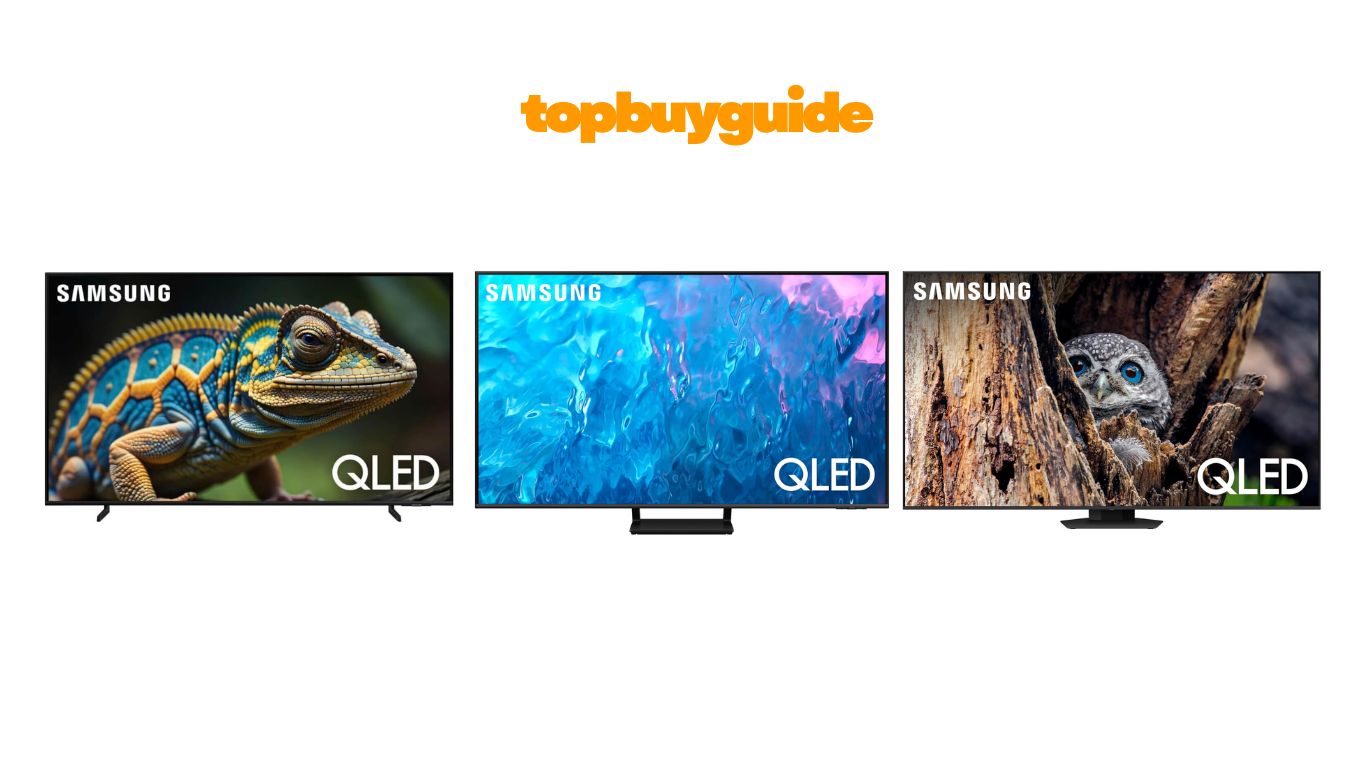
Choosing between Samsung’s Q60, Q70, and Q80 series can feel overwhelming. While all three offer a stunning QLED 4K experience, they cater to different needs and budgets. After a thorough review of their specs and features, I recommend the Samsung Q80D for most users. It provides the best balance of premium features like Direct Full Array and a powerful AI processor without the highest price tag, making it an excellent all-around performer for movies and gaming.
Why Do I Recommend The Samsung Q80D?
The Samsung Q80D hits the sweet spot in the QLED lineup, offering significant upgrades over the Q60D and Q70C that justify its price. Here’s a breakdown of why it stands out as the top recommendation.
- Superior Backlight Technology: The Q80D uses Direct Full Array backlighting. This technology places LEDs directly behind the screen, allowing for precise control over brightness and darkness in different zones. In contrast, the Q60D and Q70C use Dual LED edge-lighting, which offers good contrast but cannot achieve the same deep blacks and detailed highlights as the Q80D. This makes the Q80D far better for high-contrast HDR content.
- Advanced AI Processor: The Q80D is equipped with the NQ4 AI Gen2 Processor. This is a more powerful chip than the Quantum Processor Lite 4K in the Q60D and the standard Quantum Processor 4K in the Q70C. The NQ4 AI Gen2 processor uses 20 specialized AI networks to deliver superior 4K upscaling, better sound optimization, and enhanced picture quality, making all your content look its best, regardless of the source.
- Enhanced Gaming Performance: While the Q70C offers an excellent 120Hz refresh rate, the Q80D matches this with Motion Xcelerator 120Hz and adds 4K AI Upscaling. This combination ensures exceptionally smooth motion for fast-paced games and sports. The Q60D, with its 60Hz refresh rate, is less suitable for competitive gamers who demand the smoothest possible experience.
- More Immersive Audio: The Q80D features Dolby Atmos and Object Tracking Sound Lite. This creates a 3D surround sound experience where the audio follows the action on the screen. Conversely, the Q70C and Q60D also have Object Tracking Sound Lite but lack native Dolby Atmos support through the TV speakers, offering a less dimensional soundstage out of the box.
- Better Picture Depth and Realism: The Q80D includes Real Depth Enhancer, a feature not present in the Q60D or Q70C. It mimics how the human eye processes depth by increasing foreground contrast, making the on-screen image feel more three-dimensional and lifelike.
- Optimized HDR Performance: With Quantum HDR+, the Q80D provides a wider range of contrast and brightness compared to the standard Quantum HDR found on the Q60D and Q70C. This means brighter highlights and deeper blacks, allowing you to see more detail in both the brightest and darkest parts of a scene.
- Premium Build and Design: The Q80D has a more robust build quality and a sleek design that reflects its position as a higher-tier model. It feels more substantial and premium than the more basic construction of the Q60D and Q70C.
- Brighter and More Vibrant Picture: The Direct Full Array backlighting not only improves contrast but also allows the Q80D to achieve higher peak brightness levels than the Q60D and Q70C. This makes it a better choice for viewing in bright rooms, as the picture remains vivid and resists glare more effectively.
Side By Side Comparison Chart (Samsung Q60 vs Q70 vs Q80)
| Feature | Samsung Q60D | Samsung Q70C | Samsung Q80D |
| Backlight | Dual LED | Dual LED | Direct Full Array |
| Processor | Quantum Processor Lite 4K | Quantum Processor 4K | NQ4 AI Gen2 Processor |
| Refresh Rate | 60Hz | 120Hz | 120Hz |
| Motion Technology | Motion Xcelerator | Motion Xcelerator Turbo+ | Motion Xcelerator 120Hz |
| HDR | Quantum HDR | Quantum HDR | Quantum HDR+ |
| Sound | OTS Lite | OTS Lite | Dolby Atmos & OTS Lite |
| Picture Enhancement | – | – | Real Depth Enhancer |
| Design | AirSlim | AirSlim | Stylish (Thicker) |
| Price Point | Entry-level | Mid-range | Upper Mid-range |
What Common Features Can These Samsung QLEDs Deliver?
Despite their differences, the Q60D, Q70C, and Q80D share a strong foundation of Samsung’s QLED technology, ensuring a high-quality viewing experience across the board.
100% Color Volume with Quantum Dot
All three models feature Samsung’s Quantum Dot technology, which allows them to produce over a billion shades of color. This technology ensures that colors remain vibrant and accurate at any brightness level. Whether you’re watching a brightly lit nature documentary or a dark, moody film, the colors will stay true to the creator’s intent, providing a rich and immersive picture.
Samsung Tizen OS
The backbone of the smart experience on these TVs is the Samsung Tizen OS. This user-friendly platform provides quick access to a vast library of streaming services, apps, and live TV channels. You can easily find your favorite shows on Netflix, stream games through the Gaming Hub, or even get a workout in with a virtual trainer. The interface is intuitive, making it simple to navigate and discover new content.
Samsung Gaming Hub
All three TVs come with the Samsung Gaming Hub, which centralizes your gaming experience. It allows you to stream games from popular cloud services like Xbox Game Pass directly to your TV without needing a console. The hub also provides easy access to your connected consoles, recommends new games based on your preferences, and lets you quickly adjust gaming settings.
Q-Symphony
A clever audio feature shared by all three models is Q-Symphony. When you connect a compatible Samsung soundbar, this technology allows the TV’s speakers to work in harmony with the soundbar instead of being muted. This creates a fuller, more immersive soundscape that fills the room, enhancing the audio experience for movies, sports, and games.
Alexa Built-in and Multiple Voice Assistants
For convenient, hands-free control, the Q60D, Q70C, and Q80D all come with Alexa built-in. You can use your voice to change channels, search for content, control smart home devices, and more. They are also compatible with other popular voice assistants, giving you flexibility in how you interact with your TV.
AirSlim Design
Both the Q60D and Q70C feature Samsung’s AirSlim design. This ultra-thin profile allows the TV to blend seamlessly into your wall, offering a minimalist and clutter-free look. While the Q80D is slightly thicker to accommodate its Direct Full Array backlight, it still maintains a sleek and modern aesthetic.
Common Features of Samsung Q60 vs Q70 vs Q80
| Feature | Samsung Q60D | Samsung Q70C | Samsung Q80D |
| Display Technology | QLED | QLED | QLED |
| Resolution | 4K UHD | 4K UHD | 4K UHD |
| Color Technology | 100% Color Volume w/ Quantum Dot | 100% Color Volume w/ Quantum Dot | 100% Color Volume w/ Quantum Dot |
| Smart TV Platform | Samsung Tizen OS | Samsung Tizen OS | Samsung Tizen OS |
| Gaming Hub | Yes | Yes | Yes |
| Voice Assistant | Alexa Built-in | Alexa Built-in | Alexa Built-in |
| Audio Feature | Q-Symphony | Q-Symphony | Q-Symphony |
| Remote | SolarCell Remote | SolarCell Remote | SolarCell Remote |
A Detailed Comparison Of the Samsung Q60 vs Q70 vs Q80
Picture Quality & Processor
The biggest differentiator among these TVs is the combination of backlighting and processor. The Samsung Q60D, as the entry-level model, uses a Quantum Processor Lite 4K and an edge-lit Dual LED system. This setup provides good color and a step-up from standard UHD TVs, but its contrast control is limited, which can result in blacks appearing more like dark grays, especially in a dimly lit room. It’s a solid performer for everyday viewing in bright rooms but lacks the refinement needed for cinematic HDR content.
The Samsung Q70C improves on this with a more capable Quantum Processor 4K, which offers better 4K upscaling and overall picture processing. However, it still relies on the same Dual LED edge-lighting system as the Q60D. While its processor helps enhance the picture, it is still fundamentally limited by its inability to control lighting on a granular level. The picture is vibrant and clear, but it won’t deliver the ‘pop’ that comes from superior contrast.
The Samsung Q80D is where the picture quality takes a significant leap. It pairs the powerful NQ4 AI Gen2 Processor with Direct Full Array backlighting. This allows for precise control of individual lighting zones across the screen, producing deep, inky blacks right next to bright, punchy highlights. This makes HDR content look spectacular. The advanced AI processor also ensures that lower-resolution content is upscaled to near-4K quality with remarkable clarity and detail, making it the clear winner for cinephiles.
Gaming Features
For gamers, the refresh rate is a critical factor. The Samsung Q60D has a native 60Hz refresh rate. This is sufficient for casual gaming, but players with a PlayStation 5 or Xbox Series X will not be able to take advantage of the 120fps modes offered by many modern games. It’s a decent TV for a family room but not for a dedicated gaming setup.
The Samsung Q70C is a huge step up for gamers, featuring a native 120Hz panel and Motion Xcelerator Turbo+. This allows for fluid, responsive gameplay at up to 4K @ 120Hz. It also includes AMD FreeSync Premium Pro, which reduces screen tearing and stuttering for a smooth experience. This TV is an excellent choice for serious gamers who want high performance without paying top-tier prices.
The Samsung Q80D matches the Q70C’s gaming prowess with its 120Hz refresh rate and Motion Xcelerator 120Hz. Its more powerful AI processor can also enhance motion and clarity in real time. For most gamers, the experience will be very similar to the Q70C, delivering smooth and immersive action. The primary gaming advantage of the Q80D comes from its superior contrast and brightness, which makes HDR games look more vibrant and detailed.
Sound Quality
All three models come equipped with Object Tracking Sound Lite (OTS Lite), which uses virtual top channel audio to create a 3D sound that follows the action on screen. For standard TV shows and news, the sound from all three models is clear and perfectly adequate. You’ll hear dialogue clearly, and the soundscape is a step above basic TV speakers.
The key difference lies with the Samsung Q80D, which adds native Dolby Atmos support. This allows the TV to create a more convincing and immersive multi-dimensional sound experience, especially with content that has a Dolby Atmos audio track. While the Q60D and Q70C can pass through a Dolby Atmos signal to a compatible soundbar, the Q80D can simulate that experience with its built-in speakers, giving it a distinct audio advantage out of the box.
Design and Build
In terms of design, the Samsung Q60D and Q70C are nearly identical, sporting the ultra-thin AirSlim profile. This sleek design is less than an inch thick, allowing the TVs to sit almost flush against a wall for a very modern and minimalist look. They are lightweight and have a clean aesthetic that fits well in any room.
The Samsung Q80D is slightly thicker than its siblings. This is a direct result of its Direct Full Array backlight technology, which requires more space behind the panel. While not as strikingly thin as the other two, it still boasts a premium and stylish design with a solid, sturdy stand and minimal bezels. The trade-off in thickness is well worth the substantial improvement in picture quality.
Conclusion
Deciding between the Samsung Q60D, Q70C, and Q80D comes down to your priorities and budget. The Samsung Q60D is a great entry point into the world of QLED, offering vibrant colors and smart features for everyday viewing. However, for a small step up in price, the Samsung Q70C delivers a massive upgrade for gamers with its 120Hz panel, making it a fantastic mid-range choice.
Ultimately, the Samsung Q80D is the best value proposition of the three. It combines the high refresh rate of the Q70C with a far superior Direct Full Array backlight and an advanced AI processor. This results in breathtaking contrast, deeper blacks, and a more immersive viewing experience for both movies and games. If you want a TV that excels in every area without breaking the bank, the Q80D is the one to get.
FAQs
Q: Is the Samsung Q80D worth the extra money over the Q70C?
A: For most people, yes. The upgrade to Direct Full Array backlighting in the Q80D provides a significant improvement in contrast and HDR performance, making movies and games look much more dynamic and lifelike. If you value picture quality, the extra cost is justified.
Q: Which TV is best for gaming?
A: Both the Q70C and Q80D are excellent for gaming due to their 120Hz refresh rates and support for features like FreeSync Premium Pro. The Q80D has a slight edge due to its better contrast, which can make HDR games look more impressive. The Q60D is only suitable for casual gaming.
Q: Do all three TVs support 4K upscaling?
A: Yes, all three models feature 4K upscaling. However, the Q80D’s NQ4 AI Gen2 Processor is the most advanced and does the best job of converting lower-resolution content to sharp, clear 4K.
Q: What is the main difference between Dual LED and Direct Full Array?
A: Dual LED is an edge-lighting system that uses warm and cool-toned LEDs along the TV’s frame to improve color tone. Direct Full Array places a grid of LEDs directly behind the screen, allowing for precise control of brightness in specific zones for much better contrast.
Q: Can I use a soundbar with these TVs?
A: Absolutely. All three TVs support soundbars via HDMI eARC or optical connections. Using a compatible Samsung soundbar will also allow you to take advantage of the Q-Symphony feature for an even more immersive audio experience.
Q: How is the viewing angle on these QLED TVs?
A: QLED TVs, in general, have narrower viewing angles than OLED TVs. The Q80D, with its Direct Full Array panel, typically offers slightly better viewing angles than the edge-lit Q60D and Q70C, but for the best experience, you’ll want to be seated directly in front of the screen.
Q: Does the SolarCell Remote need batteries?
A: No, the SolarCell Remote does not need disposable batteries. It can be charged via indoor or outdoor light, or with a USB-C cable. This eco-friendly remote is included with all three models.
Q: Which TV is best for a bright room?
A: The Samsung Q80D is the best choice for a bright room. Its Direct Full Array backlight allows it to achieve higher peak brightness levels than the Q60D and Q70C, which helps it overcome glare and maintain a vibrant picture in well-lit environments.

Alex Turner is a dedicated product researcher and reviewer at TopBuyGuide.com, known for his clear, honest, and data-driven insights. He spends countless hours testing, comparing, and analyzing products to help readers make confident and informed buying decisions.