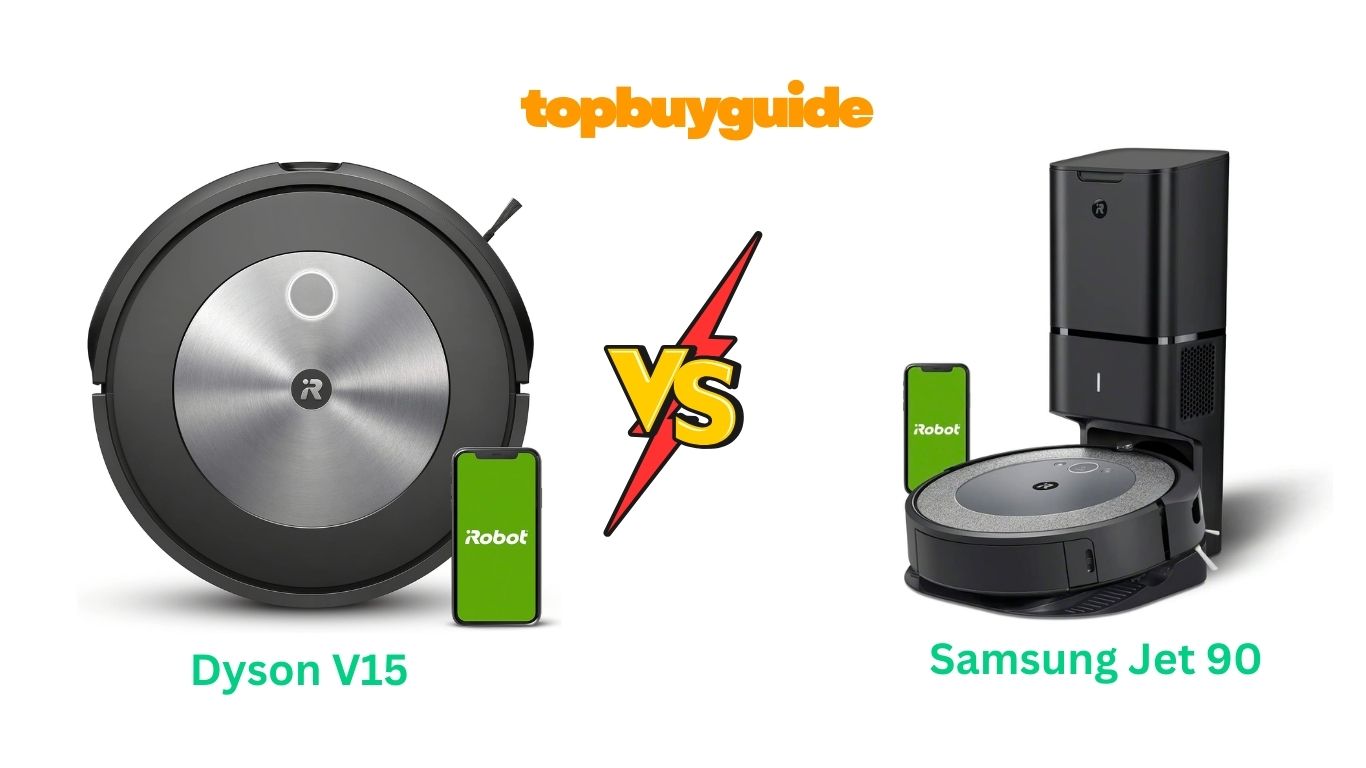
Stop tripping over robot vacuums that miss obstacles like pet waste and cords. The Roomba J7offers significantly superior intelligence and precision mapping. We recommend the J7 for its advanced object detection and unique P.O.O.P. (Pet Owner Official Promise) guarantee. It provides reliable, worry-free cleaning that truly operates autonomously.
Detailed Feature Analysis and Core Comparison
Why Do I Recommend The Roomba J7?
The Roomba J7 is the recommended choice because it represents a major leap forward in robot vacuum autonomy and intelligence. It moves beyond simple collision-based cleaning, offering real obstacle awareness and mapping precision. This results in a truly set-it-and-forget-it cleaning experience that the more basic i3 cannot replicate. The J7 protects itself and your home from the most common robot vacuum pitfalls.
- Advanced Object Avoidance:
The J7 uses PrecisionVision Navigation, which actively recognizes and avoids common obstacles like charging cables and pet waste. This prevents the nightmare scenario of smearing messes around the house. In contrast, the i3 uses simpler Reactive Sensor Technology. This means the i3 often bumps into or attempts to drive over obstacles, risking damage and creating a significant mess. - Unique Pet Mess Guarantee:
The J7 includes iRobot’s unique P.O.O.P. (Pet Owner Official Promise) guarantee. This promises a free replacement if the J7 fails to avoid solid pet waste. However, the i3 does not include this crucial promise, making it a riskier and less reliable choice for pet owners who want complete peace of mind during cleaning cycles. - Superior Mapping Intelligence:
The J7 builds sophisticated Imprint Smart Maps and actively learns to identify and categorize temporary obstacles. It even sends photos to the iRobot app for user input. Therefore, unlike the i3, the J7 can learn and navigate around specific temporary hazards, improving its efficiency with every run. - Precise Keep Out Zones:
The J7 supports the creation of true, software-defined Keep Out Zones and Clean Zones within its detailed maps. This allows for precise control over where the robot cleans. By comparison, the i3’s mapping is less sophisticated, sometimes requiring physical Dual Mode Virtual Wall barriers to define no-go areas, adding setup complexity. - Front-Facing Camera for Vision:
The J7 features a crucial front-facing camera that works in conjunction with its AI to process visual information for navigation. This camera is the source of its superior object recognition abilities. Consequently, the i3 relies primarily on bumper-based tactile sensors and VSLAM without a forward camera, severely limiting its capability to see and react to ground obstacles. - Increased Schedule Reliability:
The J7’s advanced camera and vision system provide much more reliable navigation and consistent schedule adherence. Its ability to see problems helps it avoid getting hopelessly stuck. The i3, due to simpler sensors, can sometimes get lost or immobilized by clutter more easily. This can interrupt the cleaning cycle and require user intervention more frequently. - Hardware and Software Potential:
The J7’s superior camera hardware positions it better for receiving future, cutting-edge software updates from iRobot. Its hardware is designed for future intelligence. The i3’s simpler core hardware limits its potential for adopting new smart features later in its life cycle, making the J7 a more future-proof investment. - Real-Time Obstacle Photos:
During a cleaning run, the J7 will automatically pause when encountering an unrecognized obstacle and send a photo to the user’s app. The user can then instruct the robot to clean around or avoid the item permanently. The i3 simply alerts the user that it is stuck or requires help without providing visual context, making troubleshooting more difficult.
Side By Side Comparison Chart (roomba j7 vs i3)
This chart highlights the primary different features that distinguish the premium Roomba J7 from the essential Roomba i3 model.
| Feature | Roomba i3 | Roomba J7 |
| Primary Navigation/Avoidance | Reactive Sensor Technology (Bump-based) | PrecisionVision Navigation (Camera/AI) |
| Camera for Object Recognition | No (Relies on VSLAM/Sensors) | Yes (Front-facing camera) |
| Obstacle Identification | Bumps/reacts to obstacles | Actively identifies and avoids obstacles |
| Pet Waste Guarantee (P.O.O.P.) | No (Must purchase separately) | Yes (Pet Owner Official Promise) |
| Object Photo & Review | No (Basic Error Alerts) | Yes (Sends photos to app) |
| Avoids Cords/Pet Messes | No, often runs over them | Yes, actively avoids recognized hazards |
| Mapping Capability | Imprint Smart Mapping (Basic) | Imprint Smart Mapping (Advanced) |
| Keep Out Zones | Limited or requires accessory (Virtual Wall) | Software-defined Keep Out Zones |
In-Depth Feature Comparison and Conclusion
What Common roomba j7 vs i3 Can Do?
Despite their crucial differences in navigation intelligence, the Roomba J7 and Roomba i3 share a powerful, proven cleaning platform. This core commonality ensures that both vacuums are capable of providing a high-quality clean across various floor types in the home. They both leverage iRobot’s reliable technologies for strong suction and effective debris capture. This shared foundation guarantees that regardless of the model chosen, the user receives an effective floor cleaning machine.
Powerful 10x Power-Lifting Suction:
Both the Roomba J7 and the Roomba i3 models are engineered with 10x the power-lifting suction compared to the older Roomba 600 series. This strong suction capability is crucial for effective cleaning, especially on carpets where dirt can be deeply embedded. This shared level of power ensures that both models can handle significant amounts of fine dust, large debris, and pet hair on both hard floors and carpets. The identical suction strength guarantees a high standard of cleaning performance across all home surfaces.
Dual Multi-Surface Rubber Brushes:
A hallmark of high-end Roomba vacuums, both the J7 and i3 utilize Dual Multi-Surface Rubber Brushes. These two counter-rotating brushes work in tandem, flexing to stay in constant contact with the floor surface. The rubber material is highly effective at grabbing and lifting debris, while minimizing hair tangles. This identical brush system ensures that both models deliver consistent deep cleaning performance and superior debris pickup, particularly when dealing with long human hair or pet fur.
Imprint Link Technology and Smart Home Integration:
Both the Roomba J7 and the Roomba i3 feature Imprint Link Technology, allowing them to communicate with an iRobot Braava Jet Mop. This shared technology enables the vacuum to finish its cleaning run, then automatically instruct the mop to begin its session. Furthermore, both models seamlessly integrate with popular voice assistants like Google Assistant and Alexa. This shared smart functionality allows users to start or schedule cleaning with simple voice commands, enhancing convenience.
Automatic Dirt Disposal Capability:
Both the Roomba J7 and the Roomba i3 are available in “Plus” versions (J7+ and i3+). These versions include the Clean Base Automatic Dirt Disposal unit. This feature allows the robot to automatically empty its own dustbin into an enclosed bag in the base station. This shared capability provides up to 60 days of hands-free cleaning, significantly improving user convenience and minimizing exposure to dust and allergens during disposal.
Dirt Detect Technology:
Both the Roomba J7 and the Roomba i3 models are equipped with Dirt Detect Technology. This is a proprietary feature that allows the robot to sense areas of concentrated dirt. When a particularly dirty spot is found, such as heavy debris under a kitchen table, the robot will automatically spend more time cleaning that specific area. This shared intelligence ensures that both models focus their efforts where they are needed most, maximizing the cleanliness of the entire floor space.
High-Efficiency Filter System:
Both the Roomba J7 and the Roomba i3 utilize a high-efficiency filter to trap fine particles and allergens. This filter is crucial for improving the air quality within the home by capturing 99% of dust, pollen, and pet dander allergens. The identical filter design ensures that both models are equally excellent choices for households with allergy sufferers. This shared commitment to air quality makes them both effective cleaning tools for healthier living spaces.
Wi-Fi Connectivity and App Control:
Both the Roomba J7 and the Roomba i3 connect to the home network via Wi-Fi. This connectivity allows users to fully control and manage the vacuum using the iRobot Home App on their smartphone. Users can start, stop, schedule, and monitor cleaning sessions remotely using the app. This shared, robust app control provides convenience and flexibility to manage home cleaning from anywhere.
Recharge and Resume Functionality:
Both models are equipped with the convenient Recharge and Resume feature, which is essential for cleaning large or multi-story homes. If the battery runs low mid-cycle, the robot will automatically return to its base to recharge. Once it has enough power, it resumes cleaning exactly where it left off. This shared function ensures that both the Roomba J7 and the Roomba i3 can complete every cleaning job, regardless of home size.
Common Features of roomba j7 vs i3
This chart highlights the features that are identical between the Roomba J7 and the Roomba i3, demonstrating their shared core cleaning technology.
| Feature | Roomba i3 | Roomba J7 |
| Suction Power | 10x Power-Lifting Suction | 10x Power-Lifting Suction |
| Main Brushes | Dual Multi-Surface Rubber Brushes | Dual Multi-Surface Rubber Brushes |
| Dirt Sensing | Yes (Dirt Detect Technology) | Yes (Dirt Detect Technology) |
| Automatic Disposal | Yes (i3+ Clean Base) | Yes (J7+ Clean Base) |
| Mop Integration | Yes (Imprint Link Technology) | Yes (Imprint Link Technology) |
| Filter Type | High-Efficiency Filter | High-Efficiency Filter |
| Control Method | Wi-Fi and iRobot Home App | Wi-Fi and iRobot Home App |
| Large Home Coverage | Yes (Recharge and Resume) | Yes (Recharge and Resume) |
A Detailed Comparison Of the roomba j7 vs i3
Navigation Technology and Object Avoidance
The Roomba J7 utilizes a revolutionary feature called PrecisionVision Navigation, making it truly autonomous and highly intelligent. This sophisticated system employs a front-facing camera and powerful AI to actively recognize and avoid obstacles in its path. The J7 can confidently steer clear of charging cables, shoes, socks, and critically, solid pet messes. This advanced navigation prevents the J7 from causing major messes or getting stuck frequently, making it a reliable cleaning partner.
The Roomba i3 relies on Reactive Sensor Technology paired with Visual Simultaneous Localization and Mapping (VSLAM), a far simpler approach. The i3 does not have a front-facing camera to see obstacles ahead of time. Instead, it navigates primarily by sensing and bumping into objects and walls. This means the i3 is prone to accidentally running over common household clutter, which can lead to it getting tangled or, worst of all, smearing pet waste across the floor.
Pet Mess Guarantee and Reliability
The Roomba J7 provides unique protection for pet owners with its Pet Owner Official Promise (P.O.O.P.) guarantee. iRobot is so confident in the J7’s ability to avoid pet waste that it offers a free replacement if it fails. This guarantee eliminates the primary fear many pet owners have when using a robot vacuum. The J7’s active avoidance and mess prevention capabilities make it the superior choice for any household with pets.
The Roomba i3 offers no such protection against pet messes, leaving the owner fully responsible for any incidents that occur. While the i3 is excellent at handling pet hair due to its dual rubber brushes, its simpler navigation system increases the risk of colliding with or running over solid waste. The lack of the guarantee confirms the i3 is not designed for the same level of worry-free operation as the J7 in environments where accidents are possible.
Mapping Precision and Functionality
The Roomba J7 creates highly detailed and accurate Imprint Smart Maps of your home, complete with specific room separation and object recognition. This advanced mapping allows the user to define precise Keep Out Zones and Clean Zones within the app. The J7 also adds encountered obstacles to the map for future reference. This level of map precision provides users with complete and seamless command over where and when the robot cleans.
The Roomba i3 also uses VSLAM to create Smart Maps, but they are less sophisticated than those generated by the J7. The i3’s mapping primarily serves to ensure efficient, straight-line cleaning and knowledge of which areas have been covered. However, the i3 often requires the use of physical Dual Mode Virtual Wall Barriers to establish no-go zones. This adds cost and clutter, showing the i3 lacks the J7’s true software-defined boundary control.
In-App Visual Feedback and Learning
The Roomba J7 utilizes its camera to offer unparalleled in-app visual feedback and learning during every cleaning run. If the J7 encounters an unfamiliar object, it automatically pauses, takes a photo, and sends it to the user’s app for review. The user can then quickly instruct the J7 to avoid the object permanently, clean around it, or classify it as a temporary item. This interactive learning process continuously improves the J7’s performance.
The Roomba i3’s lack of a front-facing camera prevents it from offering any visual feedback about obstacles. When the i3 gets stuck or encounters an issue, it provides a generic error alert through the app. This requires the user to physically locate the robot and manually resolve the issue without knowing the exact cause. The i3’s feedback system is passive and requires more active intervention from the homeowner, unlike the J7’s proactive approach.
Price Point and Overall Value Proposition
The Roomba J7 is positioned at a higher price point than the i3, reflecting its significant technological advantage in navigation and obstacle avoidance. The J7’s premium cost is justified by its camera, AI-driven software, and the valuable Pet Owner Official Promise. For users who value autonomy, pet safety, and the ability to schedule cleaning without prior clutter cleanup, the J7 offers the best long-term value and peace of mind.
The Roomba i3 is positioned as the more budget-friendly option, offering the essential Roomba cleaning technology at a lower cost. The i3 is an excellent choice for homes that are already relatively clutter-free or those without pets. While it provides strong suction and excellent dirt removal, the user sacrifices the smart avoidance features and advanced mapping. For users prioritizing core cleaning power and an automatic emptying feature over intelligence, the i3 is a solid, economical selection.
Integration with Clean Base Automatic Disposal
Both the Roomba J7 and the Roomba i3 are fully compatible with iRobot’s Clean Base Automatic Dirt Disposal system in their respective “Plus” versions. This shared feature automatically empties the robot’s bin into a sealed bag within the base station. This capability is highly valued because it allows for up to 60 days of completely hands-free operation. This convenience ensures both robots are excellent for users seeking to minimize their time spent on maintenance and dust disposal.
The Clean Base system adds significant value to both the Roomba J7+ and the Roomba i3+. It is a massive convenience upgrade that eliminates the most tedious part of robot vacuum ownership: emptying the small internal bin. Since this feature is identical and available on both models, it is not a deciding factor between the J7 and i3. Users can expect the same high level of hygienic, automated bin emptying regardless of which model they choose.
Conclusion
For maximum peace of mind and true hands-off operation, the Roomba J7 is the required robot vacuum upgrade. Its PrecisionVision Navigation actively avoids pet messes and cords, a crucial advantage the i3 lacks. The included P.O.O.P. guarantee makes the J7 the safest bet for every home. Click here now to invest in the J7 and experience the most reliable, autonomous cleaning on the market today.
FAQs
- What is the P.O.O.P. guarantee offered with the Roomba J7?
The P.O.O.P. (Pet Owner Official Promise) guarantee is iRobot’s unique assurance that the J7 will actively avoid solid pet waste. If the J7 fails to avoid a solid pet mess, iRobot guarantees a free replacement unit. The guarantee is only offered with the J7 model.
- Which model is better at cleaning carpets?
Both the Roomba J7 and the Roomba i3 are equipped with the same core cleaning components. They both utilize the powerful 10x suction and the effective Dual Multi-Surface Rubber Brushes. Therefore, both models deliver an equally strong and consistent performance on both carpets and hard floors.
- Does the Roomba i3 create maps of my home?
Yes, the Roomba i3 uses Visual Simultaneous Localization and Mapping (VSLAM) technology to create simple Smart Maps of your home. These maps allow it to clean in neat, efficient rows. However, the i3’s maps are less detailed and precise than those created by the camera-equipped J7.
- How does the Roomba J7 avoid obstacles like power cords?
The Roomba J7 uses its front-facing camera and AI-driven PrecisionVision Navigation to actively identify and classify objects. It learns what obstacles look like and avoids them before making contact. This visual recognition system is the primary difference from the i3’s bumper-based navigation.
- Are both models compatible with the Clean Base automatic emptying station?
Yes, both the Roomba J7 and the Roomba i3 are compatible with the Clean Base Automatic Dirt Disposal. These versions, known as the J7+ and i3+, automatically empty the robot’s dustbin into a sealed bag in the base station, providing up to 60 days of maintenance-free cleaning.
- Can I set No-Go Zones with both the J7 and i3?
The Roomba J7 fully supports software-defined Keep Out Zones within its advanced app-based maps. The Roomba i3 sometimes requires the use of separate physical accessories, such as the Dual Mode Virtual Wall Barrier, to establish specific boundary areas.
- Is the Roomba J7 much louder than the Roomba i3?
No, both robot vacuums generate a comparable level of noise during standard operation because they share the same motor and suction system. The J7’s sound profile is slightly different when its camera is active, but the suction noise is essentially the same as the i3’s.
- Which vacuum is better for a home that is often cluttered?
The Roomba J7 is significantly better for cluttered homes. Its camera and AI actively detect and navigate around unexpected items like shoes and clothes. The Roomba i3 would likely get tangled or stuck in a cluttered environment much more frequently, requiring constant user intervention.

Alex Turner is a dedicated product researcher and reviewer at TopBuyGuide.com, known for his clear, honest, and data-driven insights. He spends countless hours testing, comparing, and analyzing products to help readers make confident and informed buying decisions.