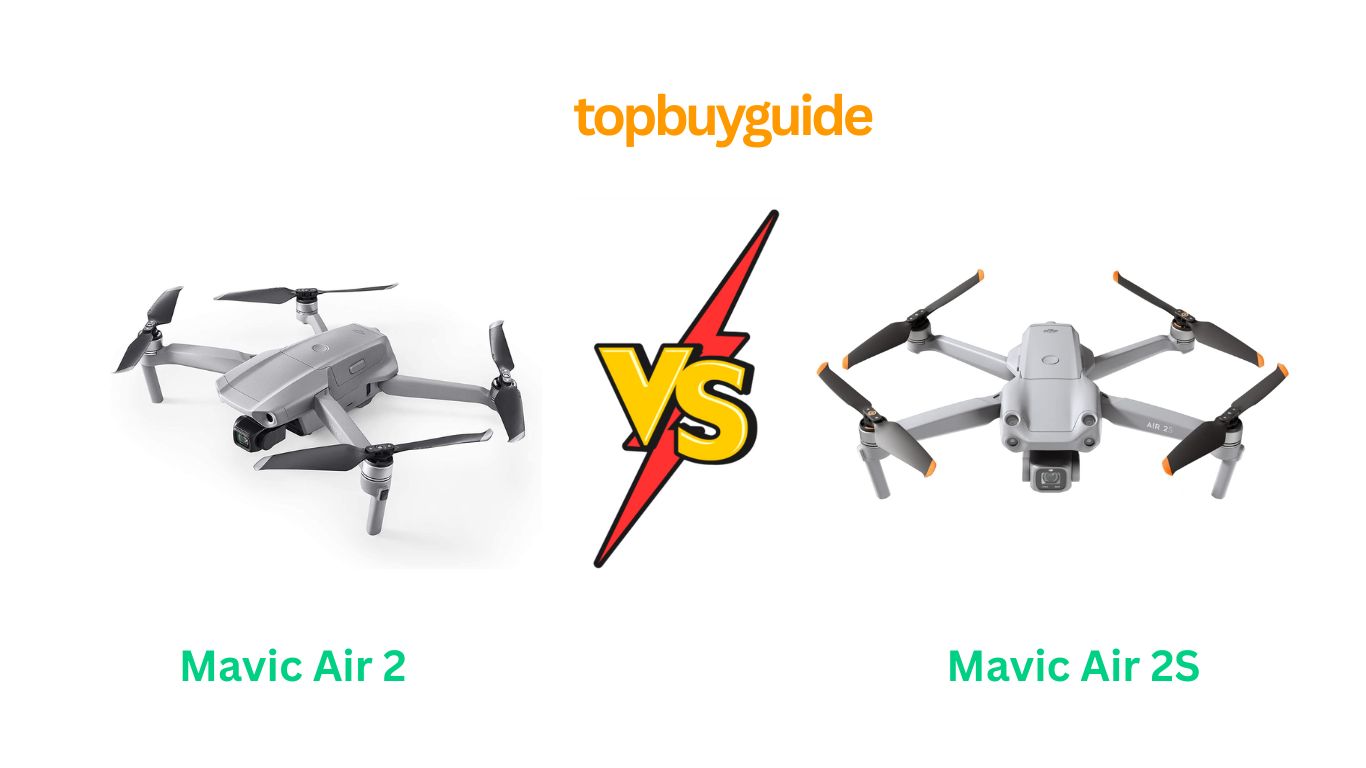
Choosing between the DJI Mavic Air 2 and the Air 2S can be tough. Both are fantastic drones, but the Air 2S is my top recommendation. Its larger 1-inch CMOS sensor and advanced MasterShots feature provide a significant leap in image quality and creative potential. While it comes at a higher price, the superior video and photo capabilities make it the clear winner for creators who demand the best.
Why Do I Recommend The DJI Air 2S?
When comparing the Mavic Air 2 and the Air 2S, the upgrades in the newer model become evident. The Air 2S offers superior performance and features that justify the investment for serious creators. Here’s a breakdown of why it stands out.
- Superior Camera Sensor: The DJI Air 2S is equipped with a 1-inch CMOS sensor. This is a massive upgrade compared to the Mavic Air 2’s 1/2-inch sensor. A larger sensor captures more light and detail, resulting in significantly better low-light performance, higher dynamic range, and richer colors.
- Higher Video Resolution: While the Mavic Air 2 shoots impressive 4K video at 60fps, the Air 2S pushes the boundary further by offering 5.4K video at 30fps. This higher resolution gives you more flexibility in post-production for cropping and reframing without losing quality.
- Advanced Intelligent Features: The Air 2S introduces MasterShots, an evolution of QuickShots. With a single tap, the drone autonomously plans and flies a complex flight path, capturing a variety of cinematic shots of your subject. The Mavic Air 2, in contrast, offers the more basic QuickShots function.
- Improved Obstacle Sensing: Safety is paramount, and the Air 2S enhances this with four-directional obstacle sensing (forward, backward, downward, and upward). The Mavic Air 2 only has three-directional sensing (forward, backward, and downward), making the Air 2S more capable of avoiding collisions in complex environments.
- Enhanced Transmission System: The Air 2S uses DJI’s more advanced O3 (OcuSync 3.0) transmission system, providing a more stable and reliable video feed up to 12 km (7.5 miles). In comparison, the Mavic Air 2 uses OcuSync 2.0, which has a maximum range of 10 km (6.2 miles) and can be more susceptible to interference.
- Richer Color Profile: For professional color grading, the Air 2S offers a 10-bit D-Log M color profile, capable of recording over one billion colors. This provides much more information and flexibility in post-processing than the 8-bit D-Cinelike profile found on the Mavic Air 2.
- Larger Pixel Size: The 1-inch sensor on the Air 2S features large 2.4μm pixels. The Mavic Air 2’s smaller sensor has smaller pixels. Larger pixels gather more light, which directly contributes to better image quality, especially in challenging lighting conditions like dawn or dusk.
Side By Side Comparison Chart: Mavic Air 2 vs Air 2S
| Feature | Mavic Air 2 | Mavic Air 2S |
| Image Sensor | 1/2-inch CMOS | 1-inch CMOS |
| Max Video Resolution | 4K/60fps | 5.4K/30fps |
| Photo Resolution | 48MP | 20MP |
| Pixel Size | 0.8 μm | 2.4 μm |
| Obstacle Sensing | 3-Directional (Forward, Backward, Downward) | 4-Directional (Forward, Backward, Downward, Upward) |
| Video Transmission | OcuSync 2.0 (O2) | OcuSync 3.0 (O3) |
| Transmission Range | 10 km (6.2 miles) | 12 km (7.5 miles) |
| Intelligent Features | Spotlight 2.0, ActiveTrack 3.0, POI 3.0 | MasterShots, Spotlight 2.0, ActiveTrack 4.0, POI 3.0 |
| Color Profile | 8-bit D-Cinelike | 10-bit D-Log M |
| Max Flight Time | 34 minutes | 31 minutes |
| Weight | 570 g | 595 g |
What Common Features Can Mavic Air 2 vs Air 2S Do?
Despite their differences, the Mavic Air 2 and Air 2S share a foundation of powerful features that make DJI a leader in the drone industry. Both are designed to be portable, powerful, and user-friendly, offering a range of capabilities that appeal to beginners and experienced pilots alike. These shared functionalities ensure that no matter which drone you choose, you are getting a high-quality aerial tool.
One of the most notable common features is the 3-axis gimbal. This mechanical stabilization system is crucial for capturing smooth, cinematic footage. It physically counteracts the drone’s movements, tilts, and vibrations, ensuring your videos are rock-solid and free from shaky motion, even when flying in windy conditions or performing dynamic maneuvers. This technology is fundamental to the professional-quality video that both drones can produce.
Both drones also come equipped with intelligent flight modes designed to make capturing complex shots easy. Point of Interest (POI) allows the drone to autonomously circle a subject, keeping the camera trained on it. Spotlight is another shared feature, where the pilot can manually fly the drone while the camera remains locked on a chosen subject. These modes take the guesswork out of flying and filming simultaneously, empowering even novice pilots to create impressive content.
In terms of portability, both the Mavic Air 2 and Air 2S feature a foldable design. The arms of the drones fold inward, making them incredibly compact and easy to transport in a small bag. This design is a hallmark of the Mavic series and is perfect for creators on the move, whether you’re hiking to a remote location or traveling on vacation. The convenience of this design cannot be overstated, as it removes the barrier of carrying bulky equipment.
Finally, both drones utilize the DJI Fly app. This app provides a simplified and intuitive user interface for controlling the drone, accessing flight settings, and editing photos and videos. It includes tutorials to help new users get started and offers a streamlined experience for capturing, editing, and sharing your aerial creations directly from your smartphone. The app’s user-friendly design makes the sophisticated technology of these drones accessible to everyone.
Common Features of Mavic Air 2 vs Air 2S
| Feature | Mavic Air 2 | Mavic Air 2S |
| 3-Axis Gimbal Stabilization | Yes | Yes |
| Foldable & Portable Design | Yes | Yes |
| Spotlight Mode | Yes | Yes |
| Point of Interest (POI) Mode | Yes | Yes |
| Remote Controller Design | Yes | Yes |
| Use of DJI Fly App | Yes | Yes |
| Wind Resistance | Level 5 | Level 5 |
| Hyperlapse Capabilities | Yes | Yes |
A Detailed Comparison Of the Mavic Air 2 vs Air 2S
Camera and Image Quality
The most significant upgrade in the DJI Air 2S is its camera system, which is built around a 1-inch CMOS sensor. This sensor is substantially larger than the 1/2-inch sensor in the Mavic Air 2. A larger sensor with bigger pixels (2.4μm on the Air 2S) captures more light, leading to superior image quality, especially in low-light situations. It also provides a wider dynamic range, preserving details in both the highlights and shadows of a scene.
While the Mavic Air 2 impresses with its ability to capture 48MP photos using a Quad Bayer sensor, the Air 2S focuses on quality over sheer pixel count with its 20MP sensor. The larger sensor and pixels on the Air 2S produce cleaner, more detailed images with less noise. For videographers, the Air 2S’s ability to shoot in 5.4K resolution and a 10-bit color profile offers unparalleled creative freedom for color grading, a clear advantage over the Mavic Air 2’s 4K and 8-bit capabilities.
Flight Performance and Safety
Both drones are stable and reliable in the air, but the DJI Air 2S offers enhanced safety with its four-directional obstacle sensing. The addition of upward-facing sensors helps the drone detect and avoid obstacles above it, which is particularly useful when flying in complex environments like forests or urban areas. The Mavic Air 2 has three-directional sensing, which is effective but lacks that extra layer of protection from above.
The Air 2S also features DJI’s O3 (OcuSync 3.0) video transmission technology. This updated system provides a more robust and reliable connection between the controller and the drone, extending the maximum transmission distance to 12 km from the 10 km offered by the Mavic Air 2’s OcuSync 2.0. This means a clearer, more stable live video feed, giving the pilot greater confidence when flying at a distance.
Intelligent Flight Modes
DJI has always excelled at creating intelligent features that simplify complex cinematography, and the Air 2S takes this to another level with MasterShots. This feature allows the drone to automatically perform a series of professional-level maneuvers around a subject, creating a short cinematic video with just one tap. It’s an incredibly powerful tool for creators who want to produce polished content quickly.
The Mavic Air 2 is no slouch, featuring ActiveTrack 3.0 and POI 3.0, which are highly effective for tracking subjects. However, the Air 2S improves upon this with ActiveTrack 4.0, which features more advanced tracking algorithms for smoother and more reliable subject following. While both drones make it easy to get great shots, the intelligent features on the Air 2S are more advanced and automated, streamlining the creative process even further.
Conclusion
While the DJI Mavic Air 2 is a powerful and capable drone, the DJI Air 2S is the clear winner for those who prioritize image quality and advanced features. The 1-inch sensor, 5.4K video capability, and 10-bit color profile are game-changers for videographers and photographers. Combined with superior obstacle sensing and the intuitive MasterShots feature, the Air 2S offers a more professional and streamlined creative experience, making it a worthwhile investment for capturing breathtaking aerial content.
FAQs
- Is the DJI Air 2S better for beginners than the Mavic Air 2?
Both drones are excellent for beginners thanks to their intuitive controls and safety features. However, the Air 2S’s four-directional obstacle sensing provides an extra layer of safety, which can be beneficial for new pilots learning to navigate complex environments. - What is the main advantage of the 1-inch sensor on the Air 2S?
The 1-inch sensor on the Air 2S captures more light and detail. This results in significantly better video and photo quality, especially in low-light conditions. It also allows for a wider dynamic range and more flexibility in post-production. - Does the Mavic Air 2 have a longer flight time than the Air 2S?
Yes, the Mavic Air 2 has a slightly longer maximum flight time of 34 minutes, compared to the 31 minutes of the Air 2S. This difference is minor and, in real-world flying, may not be very noticeable depending on flight conditions and style. - Can I use my Mavic Air 2 batteries with the Air 2S?
No, the batteries for the Mavic Air 2 and Air 2S are not interchangeable. Despite looking similar, they are designed specifically for their respective drone models and cannot be swapped. - What is MasterShots on the DJI Air 2S?
MasterShots is an advanced intelligent feature that allows the drone to automatically plan a flight path and execute a sequence of 10 different maneuvers while keeping your subject in the center of the frame. It then generates a short cinematic video, edited with music. - Is the video transmission better on the Air 2S?
Yes, the Air 2S uses DJI’s O3 (OcuSync 3.0) transmission system, which offers a longer range (12 km vs. 10 km) and a more stable, reliable video feed compared to the OcuSync 2.0 system on the Mavic Air 2. - Why does the Mavic Air 2 have a 48MP photo mode while the Air 2S only has 20MP?
The Mavic Air 2 uses a Quad Bayer sensor that can combine pixels to produce a 48MP image. The Air 2S has a larger, higher-quality 1-inch sensor that captures 20MP images with larger individual pixels, resulting in better overall image quality, dynamic range, and low-light performance. - Do I need a license to fly the Mavic Air 2 or Air 2S?
In the US, any drone weighing over 250g, which includes both the Mavic Air 2 (570g) and Air 2S (595g), must be registered with the FAA for recreational flying. Additional rules and commercial licenses (Part 107) apply depending on how you plan to use the drone. Always check local regulations.

Alex Turner is a dedicated product researcher and reviewer at TopBuyGuide.com, known for his clear, honest, and data-driven insights. He spends countless hours testing, comparing, and analyzing products to help readers make confident and informed buying decisions.