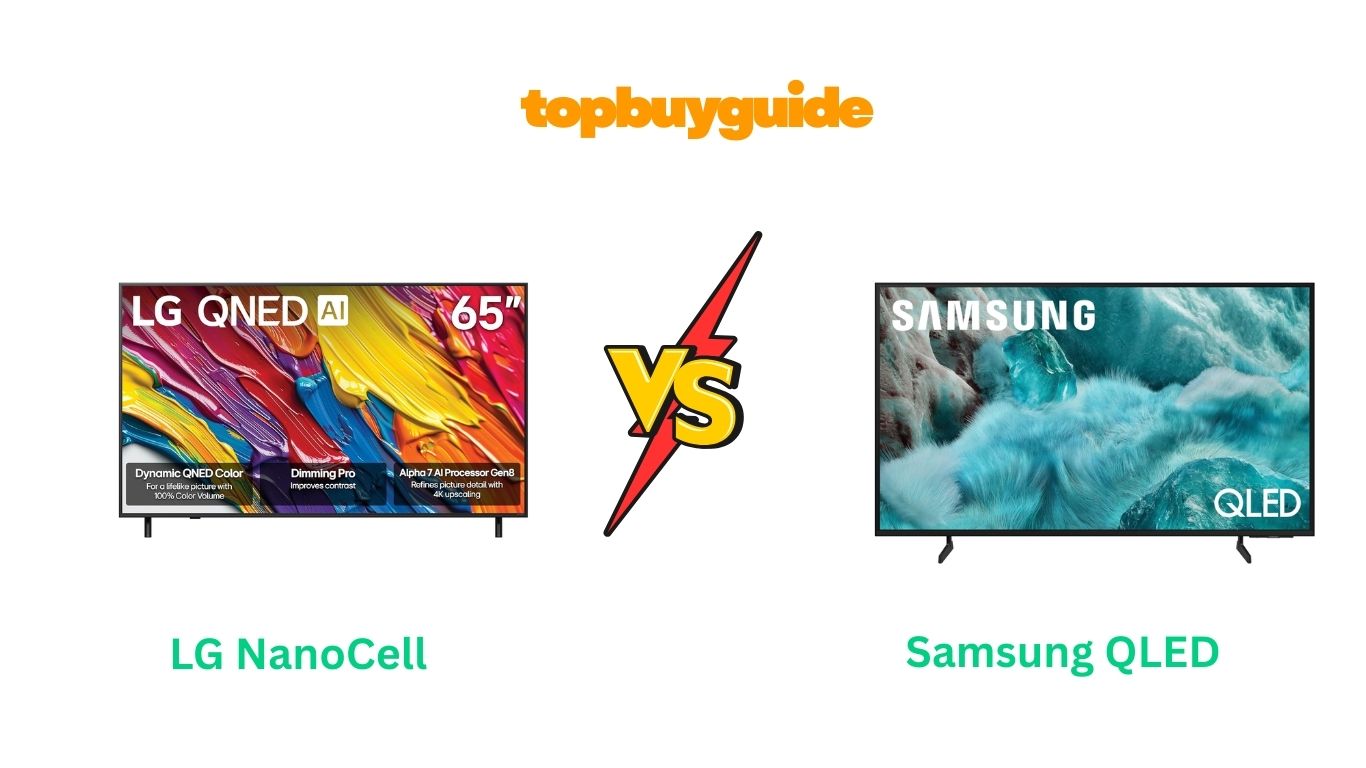
Deciding between an LG NanoCell and a Samsung QLED can be a real challenge, as both brands deliver impressive 4K technology. However, if you’re looking for superior contrast and vibrant colors that truly pop, the Samsung QLED TV is my top recommendation. Its Quantum Dot technology creates a brighter, more lifelike picture that stands out, especially in well-lit rooms. This review will explore why the Samsung QLED is the better choice for most viewers.
Why I Recommend The Samsung QLED TV
While the LG NanoCell QNED82A is a strong contender with its own unique strengths, the Samsung QLED Q7F consistently delivers a more visually striking experience. Samsung’s dedication to refining its Quantum Dot technology results in a television that excels in the areas most viewers care about. Here are the key reasons why the Samsung QLED TV is the superior choice for your home entertainment needs.
- Superior Color Volume and Vibrancy: The Samsung QLED Q7F uses Quantum Dot technology to achieve 100% color volume. This means it can produce a full spectrum of over a billion colors that remain vivid and true-to-life at any brightness level. In comparison, while the LG NanoCell also boasts 100% color volume, Samsung’s QLED technology often provides a more perceptibly vibrant and saturated image, making everything from movies to nature documentaries look exceptionally realistic.
- Enhanced Contrast with Quantum HDR: Samsung’s Quantum HDR technology, specifically HDR10+ on the Q7F model, dynamically maps tones to deliver deeper blacks and bolder contrast. This brings out hidden details in both the darkest and brightest parts of a scene. While the LG NanoCell features Dimming Pro to improve contrast, the precision of Samsung’s HDR processing generally results in a more dramatic and impactful visual experience, giving the picture a greater sense of depth.
- AI-Powered Picture and Sound Optimization: The Samsung QLED TV is equipped with an advanced AI processor that analyzes what you’re watching in real-time to optimize both picture and sound. This means color, contrast, and audio are fine-tuned according to the specific content, whether it’s a fast-paced action movie or a quiet dialogue scene. The LG NanoCell has a similar α7 AI Processor, but Samsung’s AI upscaling and optimization are often praised for their seamless and effective performance.
- Sleek and Minimalist Design: Samsung is known for its design aesthetic, and the Q7F is no exception. It features an incredibly slim profile and minimalist bezels that allow the TV to blend effortlessly into any room. While the LG NanoCell is also well-designed, Samsung’s focus on creating a sleek, almost frameless look often gives it a more premium and modern feel.
- Robust Security with Samsung Knox: In an age of connected devices, security is paramount. The Samsung QLED TV integrates Samsung Knox, a multi-layered security platform that protects your personal data, like passwords and PINs, from malicious software and phishing attempts. This triple-layer protection, which also safeguards connected IoT devices, offers peace of mind that is a significant, though often overlooked, advantage over competitors.
- Endless Free Content with Samsung TV Plus: Samsung offers an extensive library of free content through Samsung TV Plus, providing access to over 2,700 channels, including more than 400 premium options. While LG also offers its own free channels, Samsung’s platform is incredibly robust, offering a vast array of news, sports, movies, and more without requiring any subscriptions, adding immense value right out of the box.
- Immersive Audio with Object Tracking Sound Lite: The Samsung QLED Q7F features Object Tracking Sound Lite (OTS Lite), which creates a 3D surround sound experience where audio follows the action on screen. This makes for a more immersive viewing experience. The LG NanoCell uses AI Sound Pro for virtual surround, but Samsung’s OTS Lite technology is often considered more effective at creating a sense of directionality and immersion.
Side By Side Comparison Chart (LG NanoCell vs Samsung QLED)
| Feature | LG NanoCell TV (65QNED82AUA) | Samsung QLED TV (55Q7F) |
| Display Technology | LED with NanoCell | QLED (Quantum Dot LED) |
| Processor | α7 AI Processor Gen8 | Q4 AI Gen1 Processor |
| Color Technology | Dynamic QNED Color, 100% Color Volume | Quantum Dot, 100% Color Volume |
| HDR Support | HDR10 Pro | Quantum HDR (HDR10+) |
| Sound System | AI Sound Pro (Virtual 5.1 Surround) | Object Tracking Sound Lite |
| Smart Platform | webOS 24 | Tizen OS |
| Gaming Features | FreeSync, VRR, Game Optimizer | Gaming Hub |
| Refresh Rate | 60 Hz | 60 Hz |
| Voice Assistants | Alexa, Google Assistant, LG ThinQ | Alexa Built-in |
| Security | Standard Smart TV Security | Samsung Knox (Triple-layer protection) |
| Free Content | LG Channels (350+ free channels) | Samsung TV Plus (2,700+ free channels) |
What Common LG NanoCell vs Samsung QLED Can Do?
Despite their differences, the LG NanoCell and Samsung QLED TVs share a solid foundation of modern features that ensure a high-quality viewing experience no matter which you choose. Both are designed to be the centerpiece of a contemporary smart home, offering cutting-edge technology that brings your favorite content to life. Understanding these shared capabilities is essential, as they demonstrate how both LG and Samsung are pushing the boundaries of 4K television.
At their core, both TVs are built around a 4K Ultra HD resolution (3840 x 2160 pixels), which provides four times the detail of a standard Full HD TV. This means you can expect incredibly sharp and clear images, whether you’re watching the latest blockbuster or streaming a 4K nature documentary. To make the most of this resolution, both the LG NanoCell and the Samsung QLED feature powerful AI-driven processors. These processors are designed to upscale lower-resolution content (like HD cable broadcasts or older movies) to near-4K quality, intelligently enhancing detail and reducing noise. This ensures that everything you watch looks its best on these impressive displays.
For gamers, both televisions are equipped with features to provide a smooth and responsive experience. They both include a Game Mode or Game Optimizer, which reduces input lag and adjusts picture settings for optimal gameplay. Both support essential gaming technologies and have a 60 Hz refresh rate, which is suitable for most console gaming. Whether you’re exploring vast open worlds or competing in fast-paced multiplayer matches, both of these TVs are well-equipped to keep you in the action.
Smart functionality is another area where both models excel. The LG NanoCell runs on webOS 24, while the Samsung QLED uses the Tizen OS. Both smart platforms provide intuitive, user-friendly interfaces to access a wide array of streaming apps like Netflix, Disney+, and Amazon Prime Video. Both TVs also come with built-in voice assistants (Alexa and Google Assistant for LG, Alexa for Samsung), allowing you to control your TV, search for content, and manage smart home devices using just your voice. Connectivity is also a strong suit for both, with multiple HDMI and USB ports, as well as Bluetooth and Wi-Fi capabilities to connect all your devices seamlessly.
Common Features of LG NanoCell vs Samsung QLED
| Feature | LG NanoCell TV (65QNED82AUA) | Samsung QLED TV (55Q7F) |
| Resolution | 4K Ultra HD (3840 x 2160) | 4K Ultra HD (3840 x 2160) |
| AI Upscaling | 4K Super Upscaling | 4K AI Upscaling |
| Smart Platform | webOS 24 | Tizen OS |
| Gaming Mode | Game Optimizer & Game Dashboard | Gaming Hub |
| Voice Control | Built-in Alexa and Google Assistant | Built-in Alexa |
| Connectivity | Bluetooth, Wi-Fi, Ethernet, HDMI, USB | Bluetooth, Wi-Fi, Ethernet, HDMI, USB |
| Refresh Rate | 60 Hz | 60 Hz |
| Built-in Speaker | Yes | Yes |
A Detailed Comparison Of the LG NanoCell vs Samsung QLED
While the LG NanoCell and Samsung QLED share many foundational features, a closer look reveals key differences that will likely sway your decision. These distinctions lie in their core display technologies, sound systems, and unique smart features.
Picture Quality and Color
The Samsung QLED Q7F stands out with its Quantum Dot technology. This technology allows the TV to produce an incredibly wide range of colors that maintain their vibrancy even at high brightness levels. Combined with Quantum HDR, which enhances the contrast between the darkest and brightest parts of the image, the Q7F delivers a picture that is dynamic, rich, and full of depth. This makes it an excellent choice for watching HDR content or for use in rooms with a lot of natural light, as the image remains punchy and clear.
The LG NanoCell QNED82A, on the other hand, uses NanoCell technology combined with an LED backlight. This technology filters out dull colors to produce a purer, more accurate RGB spectrum. The result is a picture with vivid, lifelike colors and wide viewing angles. However, when directly compared to a QLED, it may not achieve the same level of peak brightness or the deep, inky blacks that Samsung’s contrast-enhancing technologies provide. For viewers who prioritize color accuracy from any seat in the room, the LG NanoCell is a strong performer.
Sound Performance
When it comes to built-in audio, the Samsung QLED Q7F has a distinct advantage with its Object Tracking Sound Lite (OTS Lite) technology. This system uses virtual top-channel audio to create a 3D sound experience where the audio seems to move with the action on the screen. For example, a car driving from left to right will sound like it’s actually moving across your room. This creates a much more immersive audio-visual experience without the immediate need for a soundbar.
The LG NanoCell QNED82A utilizes AI Sound Pro, which intelligently analyzes the audio signal and up-mixes it into a virtual 5.1 surround sound experience. While this technology does a good job of creating a more spacious soundstage than standard TV speakers, it doesn’t offer the same level of directional precision as Samsung’s OTS Lite. The sound is clear and balanced, but it lacks the dynamic, three-dimensional quality that makes the Samsung QLED’s audio so engaging.
Smart Features and Ecosystem
The LG NanoCell QNED82A runs on webOS 24, which is known for its clean, intuitive interface and the popular Magic Remote. The remote allows you to point, click, and scroll, making navigation feel fluid and natural. LG also includes its LG Channels, giving you access to over 350 free channels. Furthermore, LG’s Re:New Program promises software updates for five years, ensuring your TV’s features stay fresh.
The Samsung QLED Q7F operates on the Tizen OS, a fast and responsive platform that excels at content discovery. Its standout feature is Samsung TV Plus, which offers an enormous selection of over 2,700 free live channels—far surpassing what most other smart TV platforms provide. Additionally, Samsung puts a strong emphasis on security with its multi-layered Samsung Knox platform, giving you extra peace of mind when connecting your TV to the internet and other smart devices.
Conclusion
After a detailed comparison, the Samsung QLED Q7F stands out as the superior choice for most buyers. Its Quantum Dot technology delivers unparalleled color volume and brightness, making every scene look vibrant and lifelike. The addition of Object Tracking Sound Lite provides a truly immersive audio experience that LG’s system can’t quite match. With its vast library of free content on Samsung TV Plus and robust Knox security, the Samsung QLED offers a more complete and compelling package. If you want the best possible picture and sound for your money, the Samsung QLED is the clear winner.
FAQs
- Which TV is better for a bright room, the LG NanoCell or Samsung QLED?
The Samsung QLED TV is generally better for bright rooms. Its Quantum Dot technology allows it to achieve higher peak brightness levels, which helps to combat glare and maintain a vibrant picture even with significant ambient light. - Are both TVs good for gaming?
Yes, both TVs are well-suited for gaming with features like Game Mode and a 60 Hz refresh rate. However, the Samsung QLED Q7F includes the Samsung Gaming Hub, which centralizes cloud gaming services and other gaming settings for a more streamlined experience. - Do I need a soundbar for these TVs?
While both TVs have decent built-in speakers, a soundbar will always provide a more immersive audio experience. The Samsung QLED’s Object Tracking Sound Lite offers a better out-of-the-box experience, but for true cinematic sound, a soundbar is recommended for either model. - What is the main difference between NanoCell and QLED technology?
QLED (Quantum Dot Light Emitting Diode) uses a layer of quantum dots to enhance color and brightness. NanoCell technology, used by LG, employs nanoparticles to filter out unwanted light wavelengths, resulting in purer colors. Generally, QLED offers higher brightness and better contrast. - Which smart platform is easier to use, webOS or Tizen?
Both webOS (LG) and Tizen (Samsung) are user-friendly and offer access to all major streaming apps. The choice often comes down to personal preference. LG’s Magic Remote with its point-and-click functionality is a favorite for many, while others may prefer Tizen’s fast and simple layout. - Do both TVs support voice control?
Yes, both TVs have built-in voice assistants. The LG NanoCell supports both Alexa and Google Assistant, giving you a choice. The Samsung QLED has Alexa built-in, allowing you to control the TV and compatible smart home devices with your voice. - Which TV offers more free content?
The Samsung QLED TV offers significantly more free content through Samsung TV Plus, which provides access to over 2,700 live channels. The LG NanoCell TV offers LG Channels, which includes over 350 free channels. - How do the warranties compare?
Both LG and Samsung typically offer a standard one-year manufacturer’s warranty that covers parts and labor for defects. It’s always a good idea to check the specific warranty details at the time of purchase, as they can vary.

Alex Turner is a dedicated product researcher and reviewer at TopBuyGuide.com, known for his clear, honest, and data-driven insights. He spends countless hours testing, comparing, and analyzing products to help readers make confident and informed buying decisions.