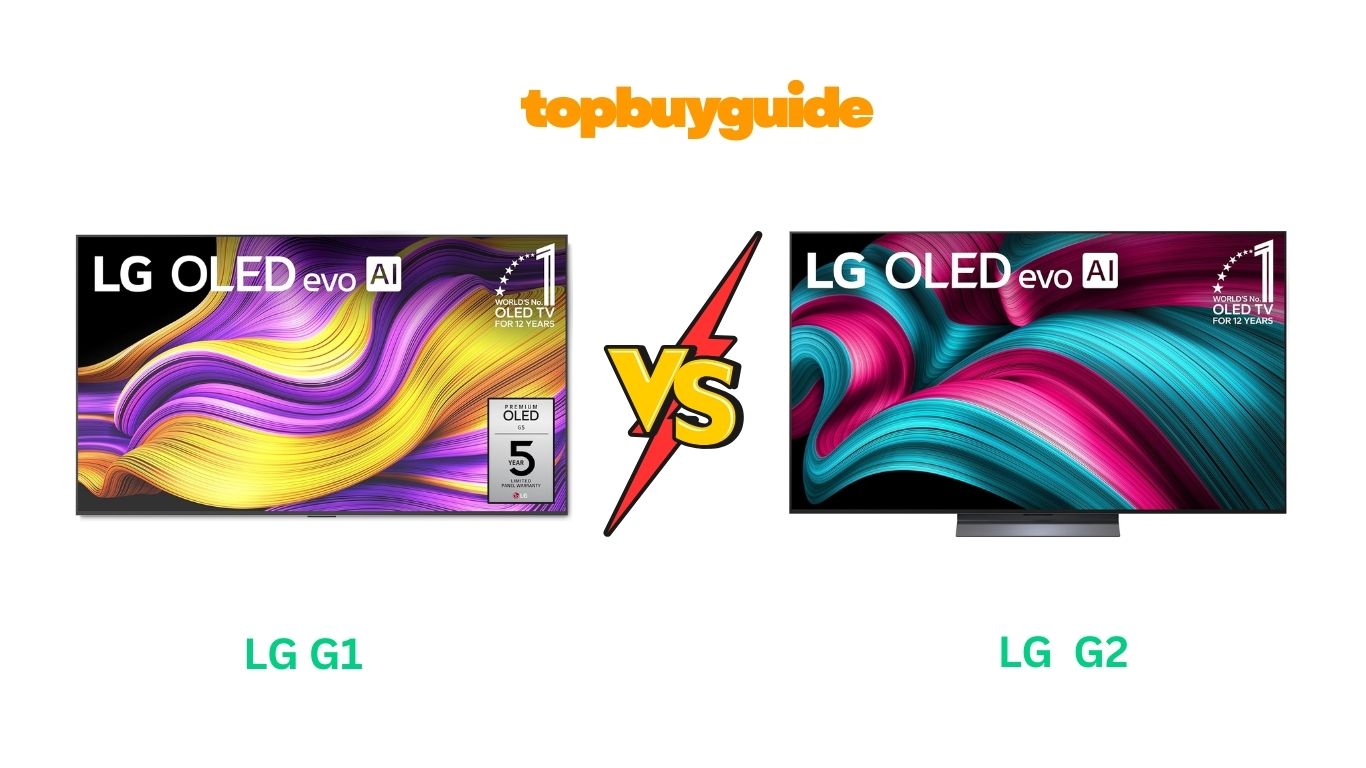
Choosing between the LG G1 and LG G2 can be tough. Both are fantastic OLED TVs. However, the LG G2 is the clear winner for most people. It offers a significant leap in brightness and a more advanced processor. These upgrades deliver a noticeably better viewing experience. Let’s dive into the details to see why the G2 is the superior choice for your next home entertainment centerpiece.
Why I Recommend The LG G2
The LG G2 stands out as the superior option for several compelling reasons. It builds upon the solid foundation of the G1 and introduces meaningful upgrades that enhance the overall user experience, from picture quality to gaming performance.
- Significantly Brighter Display: The LG G2 is the first LG OLED to feature Brightness Booster Max technology. This makes it substantially brighter than the LG G1. In practice, this means HDR content pops with more vibrant highlights, and the TV performs much better in well-lit rooms where the G1 might struggle with reflections and ambient light.
- Next-Generation Processor: The G2 is powered by the α9 Gen 5 AI Processor. In contrast, the G1 uses the older α9 Gen 4. The newer chip offers improved AI upscaling, which makes lower-resolution content look sharper and more detailed on the 4K screen. It also provides better dynamic tone mapping, leading to more accurate HDR representation scene by scene.
- Enhanced Gaming Performance: While both TVs are excellent for gaming, the LG G2 supports a higher refresh rate of up to 144Hz for PC gaming. The LG G1, on the other hand, is capped at 120Hz. This gives the G2 an edge for competitive PC gamers looking for the smoothest possible motion.
- More Refined Design: The LG G2 introduces a more streamlined and lightweight design. It has thinner bezels and weighs less than the G1, making it easier to handle and mount. The redesigned chassis also includes better heat dissipation, which is crucial for sustaining the higher brightness levels of the OLED evo panel.
- Improved Heat Management: The G2 incorporates a new heatsink design that the G1 lacks. This advanced thermal management system allows the OLED pixels to be driven harder for increased brightness without risking burn-in. This innovation is a key reason why the G2 can achieve its impressive peak brightness levels, a feat the G1 cannot match.
- Upgraded WebOS Platform: The LG G2 launched with webOS 22, a more refined and user-friendly version of the smart TV interface compared to the webOS 6.0 on the G1. It introduced user profiles, offering personalized recommendations and home screens for different family members, a feature not available on the G1 at launch.
- Superior Sound Capabilities: The processor in the LG G2 enables better AI Sound Pro features, including virtual 7.1.2 channel up-mixing. This creates a more immersive and three-dimensional soundscape from the TV’s internal speakers. The G1, with its older processor, offers a less advanced virtual surround sound experience.
Side-By-Side Comparison Chart (LG G1 vs G2)
| Feature | LG G1 | LG G2 |
| Peak Brightness | Good (~750 nits HDR) | Excellent (~950 nits HDR) |
| Processor | α9 Gen 4 AI Processor 4K | α9 Gen 5 AI Processor 4K |
| Design | Gallery Design | Lighter Gallery Design with Heatsink |
| Max Refresh Rate | 120Hz | 144Hz (for PC) |
| Heat Sink | No | Yes |
| Smart Platform | webOS 6.0 | webOS 22 |
| Virtual Sound | AI Sound Pro (5.1.2 up-mix) | AI Sound Pro (7.1.2 up-mix) |
| Weight (65-inch) | ~29 kg (without stand) | ~22.8 kg (without stand) |
What Can Common Features of the LG G1 and G2 Do?
Despite their differences, the LG G1 and LG G2 share a core set of premium features that make them both exceptional choices for a high-end home theater. These shared technologies ensure that no matter which model you choose, you are getting a top-tier OLED experience.
OLED Display Technology
Both the LG G1 and LG G2 utilize OLED (Organic Light Emitting Diode) panels. Unlike traditional LED TVs that use a backlight, each of the 8.3 million pixels in an OLED screen can turn on and off independently. This self-lit pixel technology is the key to achieving perfect black levels. When a pixel is off, it emits no light, resulting in true, inky blacks. This creates an infinite contrast ratio, where the brightest whites and the darkest blacks can coexist on screen without any blooming or halo effect. This capability allows both TVs to display stunningly realistic and detailed images, especially in dark scenes, providing a level of depth and immersion that is difficult for other display technologies to replicate.
4K Resolution
Both TVs boast a 4K Ultra HD resolution of 3840 x 2160 pixels. This high pixel density means that images are incredibly sharp, clear, and packed with fine detail. Whether you are watching a native 4K movie on Blu-ray, streaming high-quality content from services like Netflix or Disney+, or even upscaling 1080p content, the sharpness is remarkable. This resolution is ideal for larger screen sizes, as it allows you to sit closer to the screen without seeing individual pixels, creating a more cinematic and immersive viewing experience right in your living room.
Dolby Vision IQ and Dolby Atmos
Support for both Dolby Vision IQ and Dolby Atmos is a hallmark of both the G1 and G2. Dolby Vision is an advanced HDR format that optimizes picture quality on a scene-by-scene basis, adjusting brightness, color, and contrast dynamically. Dolby Vision IQ takes this a step further by using a light sensor in the TV to adjust the picture based on the ambient lighting conditions of your room, ensuring a perfect picture no matter the time of day. On the audio front, Dolby Atmos delivers an object-based, three-dimensional sound experience. It creates a sound bubble that makes you feel like you are in the middle of the action, with sound coming from all around you, including overhead.
Ultimate Gaming Features
Gamers will be thrilled with either the LG G1 or G2. Both are equipped with features that deliver an incredibly responsive and smooth gaming experience. They offer a near-instantaneous 0.1ms response time, which eliminates motion blur. They also support key gaming technologies like NVIDIA G-Sync and AMD FreeSync Premium, which synchronize the TV’s refresh rate with the game’s frame rate to prevent screen tearing. Variable Refresh Rate (VRR) and Auto Low Latency Mode (ALLM) are also included. ALLM automatically switches the TV to its gaming mode when a console is detected, and VRR ensures fluid gameplay. With four HDMI 2.1 ports on both models, you can connect multiple next-gen consoles and a PC without compromise.
Gallery Design
The “G” in G1 and G2 stands for Gallery. Both TVs are designed to be mounted flush against the wall, resembling a piece of art in a gallery. They come with a specialized slim wall mount in the box and do not include a traditional stand (though one can be purchased separately). This design choice makes them incredibly sleek and minimalist, allowing them to blend seamlessly into any modern living space. The ultra-thin profile and nearly non-existent bezels ensure that all your attention is on the stunning picture.
Common Features of LG G1 vs G2
| Feature | LG G1 | LG G2 |
| Display Technology | OLED (Self-Lit Pixels) | OLED (Self-Lit Pixels) |
| Resolution | 4K Ultra HD (3840 x 2160) | 4K Ultra HD (3840 x 2160) |
| HDR Support | Dolby Vision IQ, HDR10, HLG | Dolby Vision IQ, HDR10, HLG |
| Audio Support | Dolby Atmos | Dolby Atmos |
| Gaming Features | G-Sync, FreeSync, VRR, ALLM | G-Sync, FreeSync, VRR, ALLM |
| HDMI Ports | 4 x HDMI 2.1 | 4 x HDMI 2.1 |
| Design Philosophy | Gallery Design (Wall-Mount Focused) | Gallery Design (Wall-Mount Focused) |
| Included Mount | Slim Wall Mount | Slim Wall Mount |
A Detailed Comparison Of the LG G1 vs G2
Brightness
The LG G1 was a bright TV for its time, featuring LG’s first-generation OLED evo panel. It pushed peak brightness to around 750 nits for HDR highlights, which delivered impressive contrast and a great HDR experience in dark to moderately lit rooms. It represented a solid step up from previous OLED generations.
However, the LG G2 takes a significant leap forward. Thanks to its new heatsink and Brightness Booster Max technology, the G2 can sustain higher brightness levels for longer periods. It achieves peak HDR brightness levels of around 950 nits, which is a very noticeable 25-30% increase over the G1. This extra brightness makes HDR content look more spectacular and lifelike. More importantly, it improves the TV’s performance in bright rooms, making it a more versatile choice for various living environments.
Processor and Picture Quality
The LG G1 is equipped with the powerful α9 Gen 4 AI Processor. This chip does an excellent job with 4K upscaling, motion handling, and dynamic tone mapping, producing a sharp, clean, and vibrant image. Its AI Picture Pro technology can recognize objects and genres to optimize the picture accordingly, delivering a fantastic viewing experience across all types of content.
The LG G2, with its newer α9 Gen 5 AI Processor, refines this performance further. The improved AI algorithms offer more sophisticated object enhancement and more nuanced dynamic tone mapping. This means the G2 is even better at bringing out details in both bright and dark areas of the picture simultaneously. The upscaling is also a touch more refined, making 1080p and even 720p content look cleaner and closer to native 4K.
Design
Both TVs feature the beautiful, art-inspired Gallery Design, intended for a flush wall-mount. The LG G1 is impressively thin and looks stunning on a wall, with its slim profile and minimal bezels making the picture the absolute star of the show.
The LG G2 maintains this aesthetic but makes it even better. LG used new composite fiber materials to make the G2 significantly lighter than the G1. For example, the 65-inch G2 is over 6 kg (around 13 lbs) lighter than the 65-inch G1. This makes it much easier to unbox, handle, and mount securely. The bezels are also slightly thinner, creating an even more immersive, all-picture look.
Gaming
The LG G1 is a gamer’s dream, offering four HDMI 2.1 ports, support for 4K gaming at 120Hz, and compatibility with both NVIDIA G-Sync and AMD FreeSync Premium. It delivers the incredibly low input lag and instantaneous response time that OLED is known for, providing a competitive edge in fast-paced games.
The LG G2 includes all of these fantastic gaming features and adds one more for the high-end PC gaming crowd: support for a 144Hz refresh rate. While consoles like the PS5 and Xbox Series X max out at 120Hz, a high-end gaming PC can push frame rates to 144fps. The G2’s ability to match this provides an even smoother and more fluid motion experience, making it the ultimate choice for gamers who demand the absolute best performance.
Conclusion
While the LG G1 remains an excellent OLED TV, the LG G2 is the definitive upgrade and the better purchase. The G2’s substantial increase in brightness makes it more versatile for different room lighting and adds significant impact to HDR content. Its more advanced α9 Gen 5 processor delivers smarter, more refined picture processing. The lighter design and 144Hz gaming support are the cherries on top. If your budget allows, the LG G2 is the clear choice for a superior, future-proofed viewing experience.
FAQs
- Is the LG G2 much brighter than the G1?
Yes, the LG G2 is significantly brighter. Thanks to its Brightness Booster Max technology and new heatsink, it can reach peak brightness levels around 25-30% higher than the G1. This makes a noticeable difference, especially for HDR content and in bright rooms. - Do both the LG G1 and G2 come with a stand?
No, neither the LG G1 nor the G2 come with a tabletop stand in the box. Both are part of the “Gallery” series and are designed for wall mounting. They include a special slim wall mount to achieve a flush-to-the-wall look. Stands can be purchased separately. - Is the LG G2 better for gaming than the G1?
For most gamers, the experience will be very similar and equally fantastic. However, the LG G2 has a slight edge for PC gamers as it supports a 144Hz refresh rate, while the G1 is limited to 120Hz. Both offer HDMI 2.1, VRR, and other essential gaming features. - Can I use the LG G1 or G2 in a bright room?
You can, but the LG G2 will perform better. Its higher peak brightness helps to overcome ambient light and reduce the impact of reflections. The LG G1 is best suited for dark to moderately lit rooms for an optimal HDR experience. - What is the main design difference between the G1 and G2?
The main difference is that the LG G2 is significantly lighter due to the use of new composite materials. It also has slightly thinner bezels. Both share the same “Gallery Design” philosophy, which is focused on a slim, flush wall-mount installation. - Does the newer processor in the LG G2 make a big difference?
Yes, the α9 Gen 5 AI Processor in the G2 offers noticeable improvements. Its AI upscaling is more effective, making non-4K content look cleaner. It also has better dynamic tone mapping, which leads to more accurate and impactful HDR picture quality compared to the G1’s α9 Gen 4 processor. - Is there a risk of burn-in with these TVs?
OLED burn-in is a possibility but is rare with modern TVs and normal viewing habits. Both the G1 and G2 have features like pixel shifting and logo luminance adjustment to prevent it. The heatsink in the G2 also helps reduce the risk by managing panel temperature more effectively. - Is the LG G1 still a good buy?
Yes, if you can find the LG G1 at a significant discount, it is still a fantastic OLED TV. It offers incredible contrast, great gaming features, and a beautiful design. However, if the price difference is not substantial, the improvements in the LG G2 make it the better long-term investment.

Alex Turner is a dedicated product researcher and reviewer at TopBuyGuide.com, known for his clear, honest, and data-driven insights. He spends countless hours testing, comparing, and analyzing products to help readers make confident and informed buying decisions.