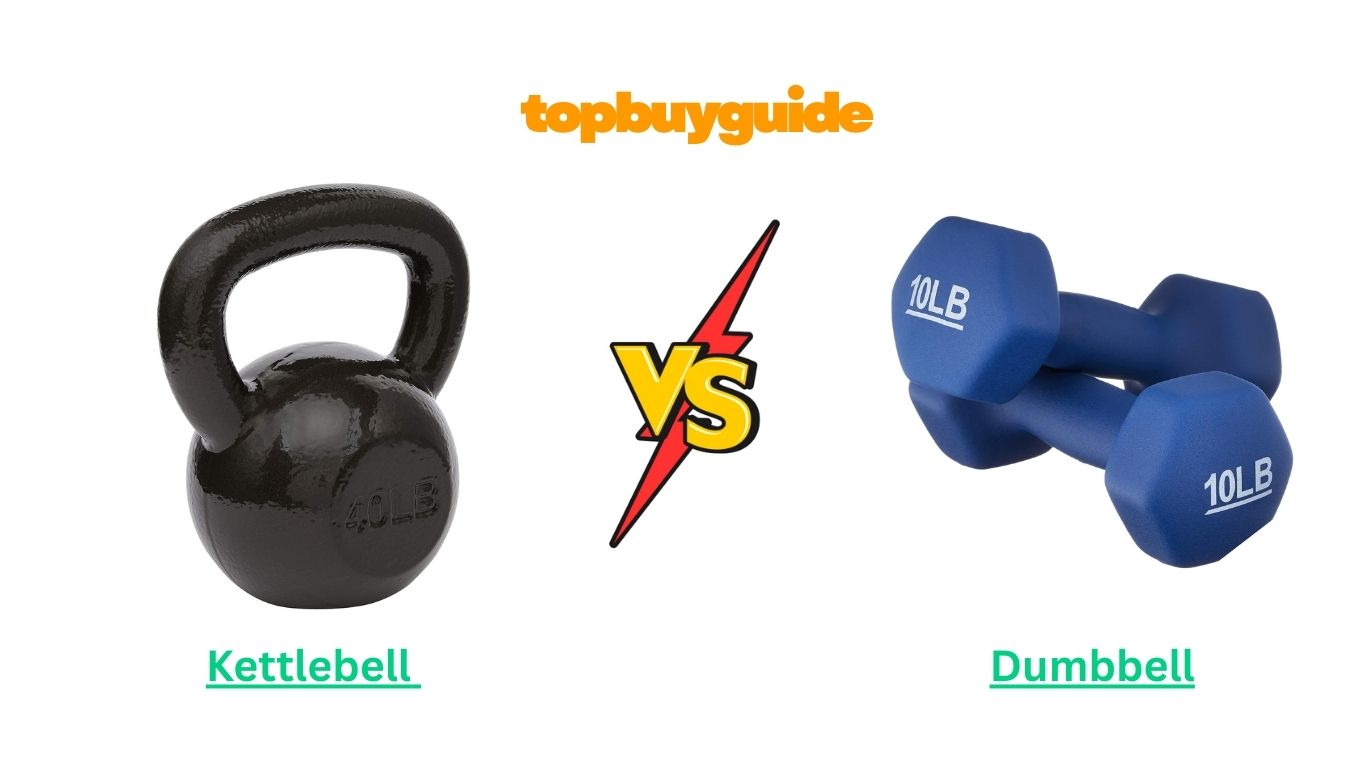
When it comes to building strength and sculpting your body, the kettlebell and dumbbell are two timeless champions. Yet, if I had to pick one, I’d go with the Amazon Basics Kettlebell — it offers full-body engagement, better calorie burn, and functional movement versatility that traditional dumbbells can’t match.
Why Do I Recommend the Amazon Basics Kettlebell?
The Amazon Basics Enamel Kettlebell (40-Pound) stands out as the ultimate choice for both beginners and advanced fitness enthusiasts. Here’s why this powerhouse beats the Amazon Basics Dumbbells in performance, versatility, and results:
- Full-Body Activation: Unlike dumbbells that mostly isolate muscles, kettlebells engage multiple muscle groups simultaneously — from legs to core to shoulders — for a total-body workout.
- Superior Grip and Handling:
The wide, smooth handle design of the Amazon Basics Kettlebell allows one-handed or two-handed exercises, providing better control during swings, snatches, and cleans. The neoprene-coated dumbbells, in contrast, are limited to simpler curls and presses. - Dynamic Fat-Burning Workouts:
Kettlebell training involves high-intensity, compound movements that elevate heart rate and torch calories faster than isolated dumbbell lifts. You can build strength and endurance simultaneously. - Enhanced Functional Strength:
The off-center weight distribution of a kettlebell mimics real-life movement patterns, improving stability, balance, and joint coordination — something traditional dumbbells can’t replicate. - Durable Build Quality:
Crafted from high-quality solid cast iron with an enamel coating, the kettlebell offers excellent durability and corrosion resistance. Dumbbells, while well-made, use neoprene that can wear or peel with heavy use. - Workout Versatility:
From swings and Turkish get-ups to squats and snatches, the kettlebell provides a broader range of motion and exercise possibilities compared to dumbbells, which mainly focus on isolation movements. - Compact and Space-Efficient:
A single kettlebell can replace multiple dumbbells for different exercises, making it perfect for small home gyms or limited spaces. - Cardio and Strength in One Tool:
The kettlebell merges strength and cardio training — you lift, swing, and move dynamically. Dumbbells mostly target strength and toning but lack the cardiovascular challenge.
In short: if your goal is to build strength, boost endurance, and burn fat efficiently, the Amazon Basics Kettlebell offers far more value and functionality than its dumbbell counterpart.
Side-by-Side Comparison Chart – Kettlebell vs Dumbbell
| Feature | Amazon Basics Kettlebell (40 lb) | Amazon Basics Neoprene Dumbbell (20 lb set) |
| Material | Solid cast iron with enamel coating | Cast iron core with neoprene coating |
| Grip Design | Wide handle for one or two-handed use | Contoured handle with soft neoprene texture |
| Workout Type | Full-body, functional, dynamic | Isolated, strength-building |
| Weight Distribution | Off-center, challenges balance and core | Evenly balanced for controlled lifting |
| Durability | Highly durable, chip-resistant enamel | Moderate, neoprene may wear over time |
| Exercise Variety | Swings, cleans, presses, squats, snatches | Curls, lateral raises, tricep extensions |
| Calorie Burn Potential | High – combines cardio and strength | Moderate – primarily strength-focused |
| Training Focus | Functional fitness, endurance, coordination | Muscle isolation, toning, definition |
| Storage | Compact – single tool for multiple moves | Requires multiple sets for progression |
| Ideal For | CrossFit, HIIT, home workouts | Traditional strength training, beginners |
What Common Kettlebell vs Dumbbell Can Do
Both kettlebells and dumbbells are essential tools for resistance training — and despite their design differences, they share many powerful benefits. Let’s explore what these two fitness staples have in common and why both deserve a spot in your workout routine.
1. Strength Building
Both the kettlebell and dumbbell are excellent for developing muscular strength. Whether you’re doing goblet squats, presses, or lunges, each tool allows progressive overload — gradually increasing resistance to build stronger muscles. The kettlebell offers more dynamic, full-body engagement, while dumbbells let you target specific muscle groups with precision.
2. Muscle Toning and Sculpting
Both tools are fantastic for shaping lean muscle mass. Dumbbells excel in isolation moves like bicep curls or shoulder raises, while kettlebells help sculpt through compound movements. Regardless of your fitness goal — muscle definition or balanced tone — consistent use of either delivers visible results.
3. Core Strength and Stability
Kettlebells and dumbbells both require core engagement during exercises. Every lift, press, or swing recruits your stabilizing muscles to maintain balance and control. Kettlebells, with their uneven weight distribution, add an extra challenge to your core stability, but dumbbells also strengthen stabilizers through unilateral (one-side) exercises.
4. Versatility Across Fitness Levels
Whether you’re a beginner or a seasoned athlete, both kettlebells and dumbbells adapt to your needs. You can start light, refine your form, and progress as you grow stronger. Each tool supports various exercise intensities and training styles — from home workouts to professional gym routines.
5. Joint-Friendly Resistance
Both tools offer smoother and more natural movement patterns compared to gym machines. This reduces strain on joints while still providing effective resistance. Especially when used correctly, kettlebells and dumbbells help improve mobility and prevent injury.
6. Compact and Portable Equipment
Both are easy to store and ideal for home gyms. Their compact design makes them portable, so you can train anywhere — in your living room, garage, or even outdoors.
7. Boosts Metabolism and Endurance
Strength training with either kettlebells or dumbbells helps increase metabolism. Post-workout calorie burn continues for hours, thanks to the afterburn effect. Both tools also enhance muscular endurance over time, helping you perform better in daily life or sports.
Common Features of Kettlebell vs Dumbbell
| Feature | Amazon Basics Kettlebell | Amazon Basics Dumbbell |
| Build Quality | Durable cast iron base | Solid cast iron core |
| Handles | Ergonomic, wide handle | Non-slip neoprene handle |
| Resistance Type | Free weight | Free weight |
| Muscle Engagement | Multi-muscle activation | Targeted muscle activation |
| Workout Compatibility | HIIT, strength, cardio | Strength, toning, rehab |
| Portability | Easy to carry and store | Compact and portable |
| Adjustability | Fixed weight per kettlebell | Available in multiple weight sets |
| Training Benefits | Improves strength, power, endurance | Builds muscle tone and control |
A Detailed Comparison of the Kettlebell vs Dumbbell
Let’s dive deeper into how the Amazon Basics Kettlebell and the Amazon Basics Neoprene Dumbbell stack up across key fitness features — from workout variety to long-term durability.
1. Design and Structure
The Amazon Basics Kettlebell features a round, solid cast-iron body with an offset handle. This unique design allows fluid, swinging movements that engage multiple muscle groups. Its enamel coating gives it a polished finish and excellent corrosion resistance.
On the other hand, the Amazon Basics Dumbbell has a straightforward design: a short bar with equal weights on both ends, covered in neoprene for comfort and grip. While it’s great for stability and safety, it doesn’t offer the same freedom of movement as the kettlebell.
2. Exercise Versatility
When it comes to versatility, the kettlebell wins hands down. You can perform swings, cleans, snatches, and Turkish get-ups — exercises that train strength, endurance, and balance all at once.
Dumbbells, however, are more suited for controlled isolation moves such as bicep curls, tricep extensions, and lateral raises. They’re perfect for targeting specific muscles, but they don’t challenge coordination or cardio performance like kettlebells do.
3. Functional Training Benefits
The kettlebell’s off-center weight distribution makes it a superior tool for functional fitness. It mirrors natural movement patterns like lifting, carrying, or throwing — helping build real-world strength.
While dumbbells build muscle effectively, they lack that functional dynamic. Their symmetrical design offers balance and precision but limits rotational and swinging movements, which are crucial for full-body athletic performance.
4. Strength and Muscle Building
Both tools effectively build strength, but their approach differs. Dumbbells are ideal for progressive overload — you can increase weights incrementally to target specific muscle groups with precision.
Kettlebells, however, promote compound movements that develop strength, power, and endurance simultaneously. Instead of isolating one muscle, you’re training multiple groups together — resulting in functional, real-world strength rather than just muscle bulk.
5. Cardio and Fat Loss
Here’s where the kettlebell shines the brightest. Kettlebell workouts combine strength training with cardio through fast-paced, dynamic movements that keep your heart rate high. Just 20 minutes of kettlebell swings can burn up to 400 calories or more, according to fitness studies.
Dumbbells, in contrast, are slower-paced and strength-focused. You can add cardio elements with high-rep circuits, but they rarely match the calorie-burning intensity of a kettlebell workout.
6. Grip and Comfort
The Amazon Basics Kettlebell features a wide, smooth handle that allows both one- and two-handed grips. This is perfect for transitions and fluid movement. However, beginners might find it slightly slippery without chalk.
The Amazon Basics Dumbbell wins for comfort — its neoprene-coated handles are soft, non-slip, and comfortable to hold even for extended sessions. If you prioritize a steady, comfortable grip for static exercises, dumbbells are excellent.
7. Durability and Build Quality
Durability is a key factor in home fitness equipment. The Amazon Basics Kettlebell is built from a single piece of cast iron, coated in enamel for chip resistance. It’s built to last decades, even with intense use.
The Amazon Basics Dumbbell, while durable, uses a neoprene coating that can wear out or peel with time, especially under heavy use or sweat exposure. It’s more suited for moderate-intensity workouts.
8. Space Efficiency
For those with limited home gym space, kettlebells are more space-efficient. A single 40-pound kettlebell can replace multiple sets of dumbbells, covering various exercise needs.
Dumbbells, however, often require multiple pairs at different weights to accommodate different exercises and strength levels — which can take up more storage space.
9. Price and Value
Both Amazon Basics products are budget-friendly, but when you consider long-term versatility, the kettlebell offers more value. It can serve as both your strength and cardio tool, reducing the need for additional equipment.
Dumbbells are affordable and great for beginners, but if you want variety and full-body conditioning, you might outgrow them faster.
10. Suitability for Fitness Goals
If your primary goal is muscle building, toning, or physical therapy, the dumbbell is your best friend — it allows precise control and safer movements.
But if your focus is overall fitness, fat burning, athletic performance, and strength endurance, the kettlebell is the clear winner.
Conclusion
After evaluating both tools in depth, the Amazon Basics Kettlebell (40 lb) clearly delivers more overall benefits for most fitness enthusiasts. Its ability to engage the entire body, enhance cardiovascular endurance, and promote functional strength makes it a top-tier choice for anyone who wants a leaner, stronger, and more athletic physique.
The Amazon Basics Neoprene Dumbbells are great for beginners, targeted isolation training, and muscle toning — but they can’t match the kettlebell’s versatility, calorie-burning potential, and dynamic training power.
👉 Bottom line:
If you want a single tool that combines strength + cardio + balance, go with the Amazon Basics Kettlebell.
If you prefer targeted, slow-paced muscle toning, the Amazon Basics Dumbbells will suit you well.
FAQs – Kettlebell vs Dumbbell
1. Are kettlebells better than dumbbells for weight loss?
Yes, kettlebells typically burn more calories due to high-intensity, full-body movements that engage large muscle groups and raise heart rate faster than traditional dumbbell exercises.
2. Can beginners use kettlebells safely?
Absolutely. Start with lighter weights (10–20 lbs) and focus on form before increasing intensity. Many kettlebell exercises are scalable for beginners and easy to learn with tutorials.
3. Do dumbbells build more muscle than kettlebells?
Dumbbells are excellent for muscle hypertrophy since they isolate specific muscle groups. Kettlebells build functional, lean muscle across multiple groups but are less ideal for pure bodybuilding.
4. Which is better for home workouts — kettlebells or dumbbells?
Kettlebells save more space and offer more exercise variety. Dumbbells, however, are easier for targeted workouts and less intimidating for beginners. Choose based on your fitness goal.
5. Can kettlebells replace dumbbells completely?
For most people, yes. Kettlebells can replace dumbbells in many strength and cardio routines, though dumbbells still shine in isolation training and rehab exercises.
6. How do I choose the right kettlebell weight?
For beginners: 10–15 lbs for women and 15–25 lbs for men is ideal. Gradually increase as strength and technique improve.
7. Are neoprene dumbbells durable?
Yes, but they’re best for light to moderate workouts. The neoprene coating provides comfort and grip but may wear off over years of heavy use.
8. Can I use both kettlebells and dumbbells together?
Definitely! Combining both adds balance to your training — use kettlebells for compound, cardio-based workouts and dumbbells for focused strength isolation.

Alex Turner is a dedicated product researcher and reviewer at TopBuyGuide.com, known for his clear, honest, and data-driven insights. He spends countless hours testing, comparing, and analyzing products to help readers make confident and informed buying decisions.