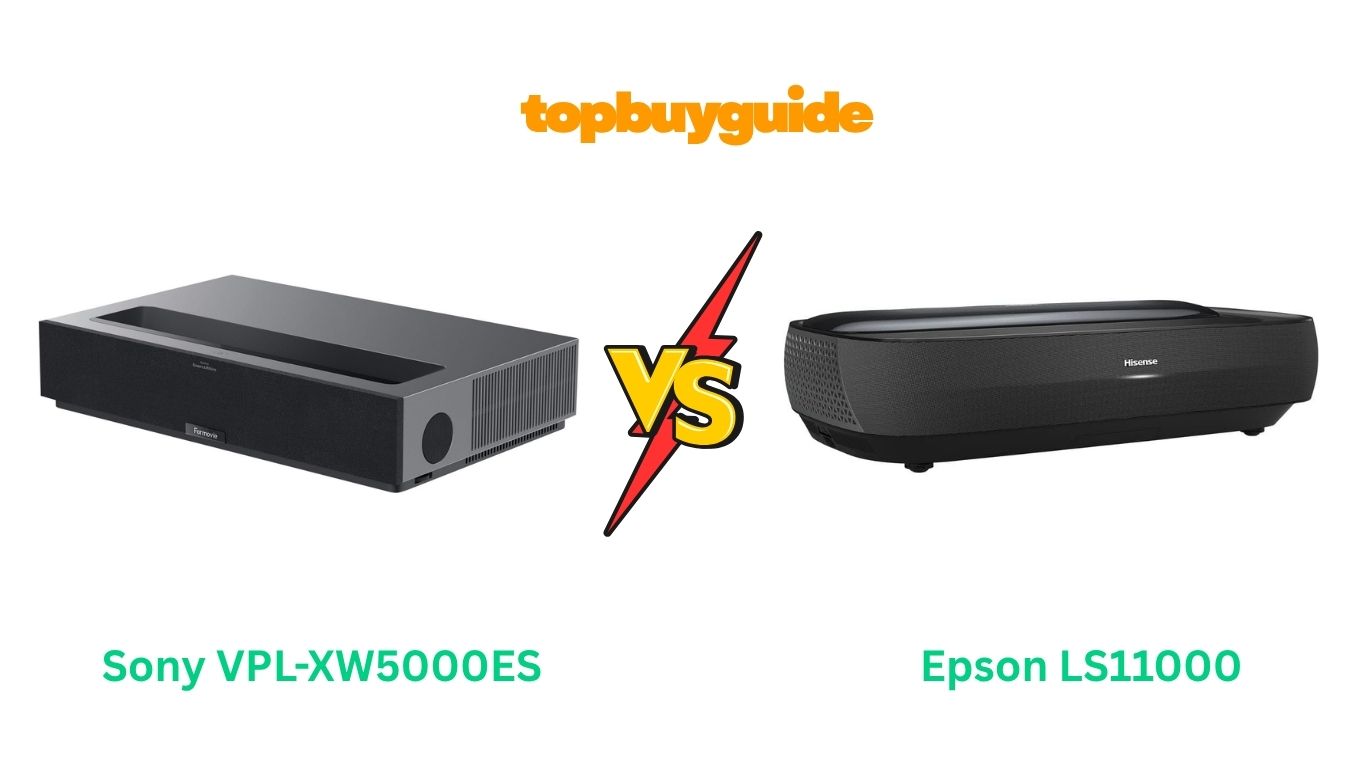
When choosing a premium Ultra Short Throw (UST) projector, you want the best cinematic experience for your money. While both the Formovie Theater and Hisense L9G are top-tier triple-laser projectors, I recommend the Formovie Theater. It delivers a superior package with its world-class Bowers & Wilkins sound and slightly better out-of-the-box color accuracy. But is it the right choice for your specific setup? Let’s dive deep into this comparison.
Why Do I Recommend The Formovie Theater?
The Formovie Theater excels by offering a more complete and refined home cinema package straight out of the box. While the Hisense L9G is a powerhouse, especially in brightness, the Formovie Theater distinguishes itself with superior audio, advanced color technology, and a more flexible design, making it the top pick for those seeking an all-in-one cinematic solution.
- World-Class Integrated Audio: The Formovie Theater features a sound system designed by the renowned audio brand Bowers & Wilkins. This 2x15W speaker system, with separate tweeters and woofers, delivers a rich, detailed, and immersive soundstage that is arguably the best built-in audio in any UST projector. In contrast, while the Hisense L9G’s 40W Dolby Atmos system is powerful, it doesn’t have the same level of audiophile-grade tuning and fidelity as the Bowers & Wilkins system, potentially saving you the cost of a separate soundbar.
- Superior Color Technology and Accuracy: The Formovie Theater utilizes the latest ALPD® 4.0 RGB+ Triple Laser technology. This advanced light engine not only covers 107% of the BT.2020 color space but is also praised for its incredible color fidelity and speckle reduction right out of the box. Conversely, the Hisense L9G also boasts a TriChroma laser engine covering the same BT.2020 space, but reviewers often note the Formovie has a slight edge in producing more natural and precisely calibrated colors without extensive user adjustments.
- Advanced HDR Support with Dolby Vision: Both projectors support HDR10, but the Formovie Theater was one of the first UST projectors to bring Dolby Vision to the table. This provides dynamic, scene-by-scene HDR optimization for compatible content, resulting in superior contrast and detail in both bright and dark scenes. While the Hisense L9G also supports Dolby Vision, Formovie’s implementation is well-regarded for providing a truly cinematic viewing experience.
- Shorter Throw Ratio for Greater Flexibility: The Formovie Theater has an ultra-short throw ratio of 0.21:1. This means you can place it closer to the wall to achieve a large image, making it more suitable for smaller rooms or shallower media consoles. The Hisense L9G, with its 0.25:1 throw ratio, requires a bit more distance from the wall for the same screen size, offering slightly less placement flexibility.
- Comprehensive Smart TV Experience: The Formovie Theater comes equipped with Google TV, which provides a user-friendly interface, access to over 10,000 apps (including native Netflix support), and robust Google Assistant integration. In comparison, the Hisense L9G uses Android TV. While similar, Google TV is generally considered the more modern and streamlined interface. Some users report issues with native Netflix support on the L9G, often requiring workarounds like a separate streaming stick.
- Sleek and Compact Design: The Formovie Theater is physically smaller and lighter (21.6 lbs) than the Hisense L9G console. Its understated, premium design with high-quality materials and speaker cloth allows it to blend more seamlessly into a living room environment. The Hisense L9G, while well-built, has a more traditional and larger form factor.
- Long-Lasting Performance: Formovie specifies a lamp life of 30,000 hours for its laser engine, which is a step up from the 25,000+ hours rated for the Hisense L9G. While both offer years of maintenance-free operation, the higher rating provides extra peace of mind for long-term use.
- Smooth Motion Handling: Equipped with MEMC (Motion Estimation, Motion Compensation) technology, the Formovie Theater effectively reduces motion blur and judder in fast-paced content like sports and action movies. This ensures a smooth and clear picture, which is on par with the Hisense L9G’s similar motion technology, making both great for watching sports.
Side By Side Comparison Chart: Formovie Theater vs Hisense L9G
| Feature | Formovie Theater | Hisense L9G |
| Light Source Technology | ALPD® 4.0 RGB+ Triple Laser | TriChroma Triple Laser |
| Brightness | 2200 ISO Lumens | 3000 Lumens |
| Color Gamut | 107% BT.2020 | 107% BT.2020 |
| Built-in Audio | Bowers & Wilkins 2x15W | 40W Dolby Atmos |
| HDR Support | Dolby Vision, HDR10, HDR10+ (decoding) | Dolby Vision, HDR10 |
| Throw Ratio | 0.21:1 | 0.25:1 |
| Smart TV OS | Google TV (with Netflix) | Android TV (Netflix issues reported) |
| Motion Technology | MEMC | MEMC |
| Included Screen | Not Included | 100″ or 120″ ALR Cinema Screen |
| Contrast Ratio (FOFO) | 3000:1 | Not specified (1,000,000:1 Dynamic) |
| Lamp Life | 30,000 Hours | 25,000+ Hours |
| Connectivity | 2x HDMI 2.1, 1x HDMI (eARC), 2x USB, LAN | 3x HDMI, 2x USB, LAN |
| Weight | 21.6 lbs | 101.2 lbs (with screen) |
What Common Features Can Formovie Theater vs Hisense L9G Do?
Despite their differences, both the Formovie Theater and the Hisense L9G are flagship projectors that share a set of incredible features, ensuring a premium 4K home cinema experience no matter which you choose. They represent the pinnacle of current Ultra Short Throw technology.
The heart of both projectors is a triple-laser light source. Unlike single-laser projectors that use a color wheel, these models use separate red, green, and blue lasers to generate the image. This eliminates the potential for rainbow artifacts and allows them to produce an exceptionally wide color gamut. Both projectors achieve an impressive 107% of the BT.2020 color space, which is far beyond what most consumer TVs and projectors can display. This results in breathtakingly rich, vibrant, and accurate colors that bring movies to life just as the director intended.
Both models deliver a stunning 4K UHD (3840 x 2160) resolution on screen, projecting over 8 million pixels for incredible sharpness and detail. You can sit close to a massive 100″ or 150″ screen and see a crisp, clear image without any visible pixel structure. This high resolution is complemented by full support for High Dynamic Range (HDR), which enhances contrast and color, providing brighter highlights and deeper, more detailed shadows for a more dynamic and lifelike picture.
For seamless viewing of fast-paced content, both projectors are equipped with MEMC (Motion Estimation, Motion Compensation) technology. This feature analyzes the video signal and inserts intermediate frames to smooth out motion, which is especially beneficial when watching sports, playing video games, or viewing high-action movie scenes. This “buttery smooth motion,” as Hisense calls it, eliminates distracting judder and blur, ensuring you never miss a moment of the action.
Common Features of Formovie Theater vs Hisense L9G
| Feature | Formovie Theater | Hisense L9G |
| Light Source | Triple Laser (RGB) | Triple Laser (RGB) |
| On-Screen Resolution | 4K UHD (3840 x 2160) | 4K UHD (3840 x 2160) |
| Color Gamut | 107% BT.2020 | 107% BT.2020 |
| HDR Support | HDR10, Dolby Vision | HDR10, Dolby Vision |
| Motion Smoothing | MEMC | MEMC |
| Keystone Correction | 8-point Correction | Automatic Geometric Correction |
| Eye Safety Feature | Yes (Auto-dims light) | Yes (Auto-dims light) |
| Laser Life | 25,000+ Hours | 25,000+ Hours |
| 3D Support | Yes | No (Check specific model) |
A Detailed Comparison Of the Formovie Theater vs Hisense L9G
Let’s break down the most important differentiating factors to help you decide which projector aligns best with your home theater aspirations.
Brightness
The Hisense L9G has a significant on-paper advantage with its 3000 Lumens of brightness. This makes it an excellent choice for viewing in rooms with moderate ambient light, such as a living room where you can’t achieve total darkness. The high brightness ensures that the image remains vibrant and punchy, overcoming some of the washout effect from daylight or indoor lighting. Customer reviews frequently praise its ability to produce a great picture even in less-than-ideal lighting conditions.
The Formovie Theater is rated at 2200 ISO Lumens. While this is lower than the Hisense, it is still exceptionally bright for a dedicated home theater environment. Its ALPD® 4.0 technology is highly efficient, and when paired with a good Ambient Light Rejecting (ALR) screen, it delivers a stunningly bright and high-contrast image. For a dark or light-controlled “bat cave” cinema room, the Formovie’s brightness is more than sufficient to create a brilliant HDR experience.
Audio Performance
The Formovie Theater integrates a custom-designed sound system by Bowers & Wilkins. This system includes two 15-watt speakers with both tweeters and woofers for precise frequency separation, housed in large sound chambers. The audio is tuned by B&W engineers to deliver a soundstage with exceptional clarity, dynamic range, and fidelity. For many users, this built-in audio is so good that it can eliminate the need for an external soundbar, making for a cleaner setup.
The Hisense L9G features a powerful 40-watt front-firing speaker system with Dolby Atmos support. This system is designed to create a sense of immersive, room-filling sound that moves around you. While very robust for a built-in solution and a definite upgrade over standard TV speakers, it doesn’t carry the same audiophile pedigree or deliver the nuanced, high-fidelity reproduction of the Bowers & Wilkins system in the Formovie.
Smart TV Platform
The Formovie Theater runs on Google TV, offering a clean, modern, and content-forward user interface. It provides access to the Google Play Store with thousands of apps, including a fully licensed and functional Netflix app right out of the box. The integration of Google Assistant also allows for seamless voice control and smart home connectivity.
The Hisense L9G uses Android TV, which is the foundation for Google TV but with a slightly older interface. It also provides access to the Play Store and has Google Assistant built-in. However, a recurring issue noted by customers is the lack of native, reliable Netflix support. Many users have had to resort to using a separate streaming stick like a Fire TV or Apple TV to watch Netflix, which adds a layer of complexity and cost.
Installation and Included Components
The Hisense L9G is typically sold as an all-in-one package that includes a perfectly paired 100-inch or 120-inch ALR Cinema Screen. This takes the guesswork out of finding a compatible screen and ensures you get optimal performance from day one. The inclusion of the screen adds significant value, though it also contributes to the higher overall cost and weight of the total package.
The Formovie Theater is sold as a standalone projector. This gives you the flexibility to choose your own screen size (from 80″ to 150″) and type, which may be preferable for users with specific needs or existing screens. However, it means you must factor in the additional cost and research of purchasing a high-quality ALR screen separately to achieve the best picture quality.
Conclusion
After an exhaustive review, the Formovie Theater stands out as my top recommendation for the majority of home cinema enthusiasts. It delivers an exceptional, all-in-one experience with its outstanding Bowers & Wilkins audio, superior color accuracy from the ALPD® 4.0 engine, and the convenience of Google TV with native Netflix support. Its shorter throw ratio and compact design offer greater placement flexibility, making it a sophisticated choice that blends performance and aesthetics.
However, the Hisense L9G is an incredibly compelling alternative, especially if raw brightness is your priority. Its 3000 lumens make it a workhorse for rooms with ambient light, and the inclusion of a high-quality ALR screen in the bundle offers fantastic value and simplifies setup. If you plan to watch primarily in a multi-purpose living space and want a hassle-free, complete system, the Hisense L9G is an excellent investment that will provide a stunning big-screen experience.
Ultimately, if you seek the most refined audio-visual package out-of-the-box, click here to get the Formovie Theater. If you need maximum brightness and the convenience of a bundled screen, the Hisense L9G is an unbeatable choice.
FAQs
- Is the Hisense L9G’s extra brightness a big deal?
Yes, if you’re placing the projector in a room with windows or significant ambient light. The 3000 lumens of the Hisense L9G will help maintain a vibrant, saturated image in brighter conditions. In a fully dark room, the 2200 lumens of the Formovie Theater is more than enough for a stunning HDR picture. - Do I really need a separate sound system for the Hisense L9G?
Not necessarily. The Hisense L9G’s 40W Dolby Atmos system is quite powerful and a big step up from typical TV speakers. However, the Bowers & Wilkins audio in the Formovie Theater is widely considered to be in a higher class, offering audiophile-level quality that might satisfy users who would otherwise buy a premium soundbar. - Can I watch Netflix easily on both projectors?
The Formovie Theater with Google TV has a fully licensed, built-in Netflix app that works seamlessly. The Hisense L9G with Android TV has historically had issues with native Netflix support, with many users reporting they need an external streaming device like a Fire TV Stick or Apple TV to watch Netflix reliably. - What is an ALR screen and why is it important?
ALR stands for Ambient Light Rejecting. It’s a special screen surface designed for UST projectors that absorbs light coming from above (like ceiling lights) and reflects light coming from the projector below. This dramatically improves contrast and color saturation in rooms that aren’t completely dark. The Hisense L9G includes one, while with the Formovie Theater, you’ll need to purchase one separately for the best results. - Which projector is better for a smaller room?
The Formovie Theater has a shorter throw ratio (0.21:1 vs. 0.25:1 for the Hisense), meaning it can be placed closer to the wall to project a large image. This makes it a slightly better option for setups where space is tight or you’re using a shallower media console. - Is there a big difference between Google TV and Android TV?
Google TV is the newer interface built on the Android TV operating system. It’s generally considered more modern, with a greater focus on content discovery and a cleaner layout. Both provide access to the Google Play Store and have Google Assistant, but most users prefer the Google TV experience on the Formovie. - Does the Formovie Theater’s 30,000-hour lamp life really matter over the Hisense L9G’s 25,000 hours?
For most users, this difference is negligible. Both offer over a decade of heavy daily use without any maintenance. A 25,000-hour lifespan is already exceptionally long, so the extra 5,000 hours on the Formovie is more of a minor bonus than a decisive feature. - What is the main benefit of triple-laser technology?
Triple-laser technology uses separate red, green, and blue lasers to create the image. This allows the projector to produce a much wider range of colors (both the Formovie and Hisense cover 107% of the BT.2020 color space) than single-laser or lamp-based projectors. It also eliminates the need for a color wheel, which can cause distracting “rainbow artifacts” for some viewers.

Alex Turner is a dedicated product researcher and reviewer at TopBuyGuide.com, known for his clear, honest, and data-driven insights. He spends countless hours testing, comparing, and analyzing products to help readers make confident and informed buying decisions.