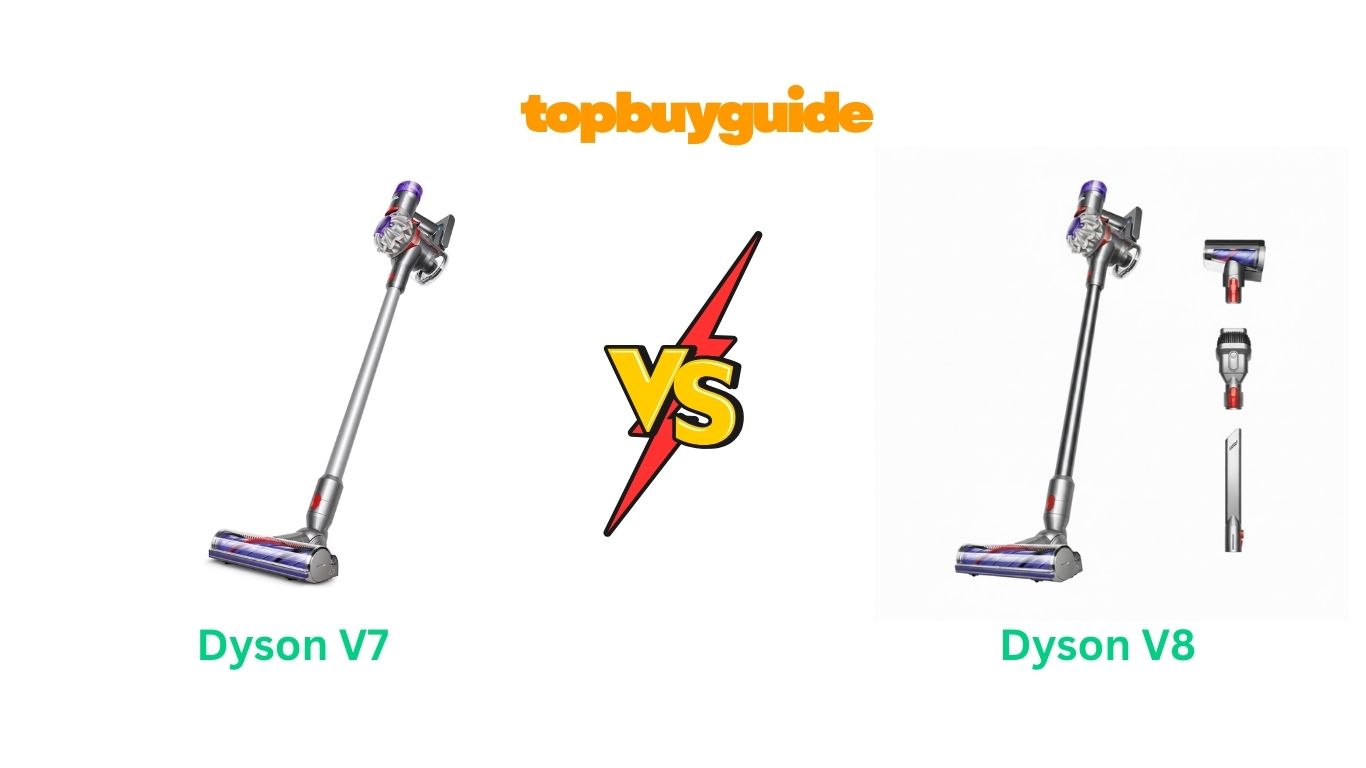
Choosing between the Dyson V7 and V8 can feel overwhelming with their similar designs. Both cordless vacuums offer powerful cleaning, but the V8 stands out as the better investment. The V8 provides 10 extra minutes of runtime and 15% more suction power than the V7. These improvements make whole-home cleaning easier without frequent recharging. If you want superior performance and longer battery life, the Dyson V8 is worth the extra investment for most households.
Why Do I Recommend The Dyson V8?
The Dyson V8 outperforms the V7 in several critical areas that enhance your cleaning experience:
- Extended Runtime: The V8 delivers up to 40 minutes of fade-free suction, while the V7 offers only 30 minutes. This 33% increase means you can clean larger homes without interruption or recharging.
- Superior Suction Power: With 115 Air Watts compared to the V7’s 100 Air Watts, the V8 provides 15% more cleaning power. This translates to better debris pickup on both carpets and hard floors.
- Advanced Battery Indicator: The V8 features three LED battery indicators showing charge levels at 33% intervals. The V7 has only one indicator, making it impossible to gauge remaining battery life accurately.
- Longer Max Mode Duration: When you need intense cleaning power, the V8 runs for 8 minutes in Max mode. The V7 provides only 6 minutes of maximum suction.
- Better Hard Floor Performance: Tests consistently show the V8 picks up larger debris on hardwood floors more effectively. The V7 struggles with items like cereal, often pushing them forward instead of capturing them.
- HEPA Filtration Standard: Most V8 models include HEPA filtration as standard equipment, trapping 99.99% of particles as small as 0.3 microns. Only select V7 models offer HEPA filters.
- Improved Quiet Operation: The V8 operates noticeably quieter than the V7, especially when using non-motorized attachments. This makes cleaning more pleasant during early mornings or late evenings.
- Larger Dirt Bin: Both models feature 0.54L capacity, but the V8’s improved design makes emptying more hygienic and efficient with its enhanced ejection mechanism.
Side By Side Comparison Chart: Dyson V7 vs V8
| Feature | Dyson V7 | Dyson V8 |
| Suction Power | 100 Air Watts | 115 Air Watts |
| Runtime (Standard Mode) | Up to 30 minutes | Up to 40 minutes |
| Runtime (Max Mode) | 6 minutes | 8 minutes |
| Battery Capacity | 2,100 mAh | 2,800 mAh |
| Charge Time | 3.5 hours | 5 hours |
| Battery Indicators | 1 LED | 3 LEDs |
| Motor Speed | 110,000 RPM | 110,000 RPM |
| Weight | 5.3 lbs (2.4 kg) | 5.75 lbs (2.6 kg) |
| Dust Bin Capacity | 0.54 L | 0.54 L |
| HEPA Filtration | Select models only | Standard on most models |
| Noise Level (Low Mode) | 85 dB | 82 dB |
| Price Range | $300-$400 | $400-$520 |
What Common Features Can Dyson V7 vs V8 Offer?
Cyclonic Filtration Technology
Both the Dyson V7 and V8 utilize Dyson’s patented 2 Tier Radial cyclone system with 15 cyclones. These cyclones work in parallel to generate powerful centrifugal forces that separate dust and debris from the air. The cyclonic action ensures no loss of suction as the bin fills. This technology eliminates the need for bags and maintains consistent performance throughout your cleaning session.
Hygienic Bin Emptying System
The V7 and V8 feature Dyson’s innovative hygienic dirt ejector mechanism. A simple pull of the red lever drives out trapped dust and debris in one smooth action. You never need to touch the dirt or put your hands inside the dustbin. This system represents a significant upgrade from older Dyson models with trap-door designs that often required manual cleaning.
Versatile 2-in-1 Design
Both vacuums transform from stick to handheld mode with a single click. This versatility allows you to clean floors, stairs, upholstery, car interiors, and ceiling corners seamlessly. The handheld configuration weighs under 4 pounds, making it easy to maneuver in tight spaces. Switch between modes without any tools or complicated assembly required.
Direct Drive Motorbar Cleaner Head
The V7 and V8 come equipped with motorized cleaner heads featuring rotating brush bars. These brush bars dig deep into carpet fibers to remove embedded dirt and pet hair. The direct drive design delivers 75% more brush bar power than previous Dyson V6 models. Hair removal vanes prevent tangling by automatically clearing long hair from the brush bar during operation.
Trigger-Based Power Control
Both models use an energy-efficient trigger mechanism instead of traditional on/off switches. Squeeze the trigger to activate suction; release it to stop. This design only uses battery power when actively cleaning. The approach maximizes runtime by preventing unnecessary power drain between cleaning spots around your home.
Wall-Mounted Docking Station
Each vacuum includes a wall-mounted charging dock that stores the unit and accessories. The dock keeps your vacuum fully charged and ready for quick cleanup sessions. All cleaning tools hang neatly on the dock, eliminating clutter. Installation requires minimal hardware and takes just minutes to complete on any wall surface.
Whole-Machine Filtration
The V7 and V8 capture allergens and expel cleaner air than most environments. Advanced filtration systems trap fine dust particles that other vacuums recirculate back into your home. The washable filters can be rinsed monthly and reused for the machine’s lifetime. This reduces ongoing maintenance costs and environmental waste from disposable filters.
Quick-Release Tool System
Both vacuums feature quick-release buttons for swapping cleaning tools instantly. Press the red release button to detach the wand or cleaning head. Snap on different attachments without fumbling with locks or clips. This seamless tool-changing system saves time when transitioning between different surfaces or cleaning tasks.
Common Features of Dyson V7 vs V8
| Feature | Dyson V7 | Dyson V8 |
| Cyclone System | 15 Cyclones (2 Tier Radial) | 15 Cyclones (2 Tier Radial) |
| Bin Emptying | Hygienic Ejector System | Hygienic Ejector System |
| Convertible Design | Stick to Handheld | Stick to Handheld |
| Power Trigger | Yes | Yes |
| Wall Docking Station | Included | Included |
| Washable Filter | Yes | Yes |
| Quick-Release Tools | Yes | Yes |
| Motor Speed | 110,000 RPM | 110,000 RPM |
| Power Modes | 2 (Standard & Max) | 2 (Standard & Max) |
| Warranty | 2 Years | 2 Years |
A Detailed Comparison Of the Dyson V7 vs V8
Runtime Performance
The Dyson V8 delivers superior battery performance with up to 40 minutes of continuous cleaning on standard mode. This extended runtime allows you to complete whole-home cleaning sessions without interruption. The six-cell lithium-ion battery maintains fade-free suction until the charge depletes completely.
The Dyson V7 provides 30 minutes of runtime, which suits smaller homes or apartments adequately. However, this shorter duration means you may need to recharge mid-session when tackling larger spaces. The V7’s smaller battery capacity of 2,100 mAh limits its endurance compared to the V8’s 2,800 mAh battery.
Suction Power Comparison
The V8 generates 115 Air Watts of powerful suction through its Dyson Digital motor V8. This motor spins at 110,000 RPM, creating strong airflow that captures debris from deep within carpet fibers. The increased power handles tough cleaning challenges like ground-in dirt and pet hair more effectively.
The V7 produces 100 Air Watts, which still delivers impressive cleaning performance for everyday messes. While 15 Air Watts difference may seem small, it becomes noticeable on hard floors with larger debris. Independent tests show the V8 requires fewer passes to achieve complete debris removal on various surfaces.
Battery Monitoring System
The V8 features three LED indicators that display battery status in real-time during cleaning. These lights show when the charge drops to 66%, 33%, and when recharging becomes necessary. This information helps you plan cleaning sessions and avoid unexpected power loss mid-task.
The V7 includes only a single LED that illuminates when power remains in the battery. It provides no indication of charge level percentage or remaining runtime. The battery cuts out suddenly without warning, which can be frustrating during important cleaning sessions.
Weight Distribution
The V7 weighs 5.3 pounds, making it slightly lighter and easier to maneuver during extended cleaning sessions. The reduced weight becomes especially noticeable when using the vacuum in handheld mode or cleaning above floor level. This makes the V7 ideal for users who prioritize portability and ease of handling.
The V8 weighs 5.75 pounds due to its larger battery and enhanced filtration components. The additional 0.45 pounds rarely impacts usability significantly. Most users find the weight difference negligible, and the performance benefits justify the minimal increase in heft.
Charging Requirements
The V7 requires 3.5 hours to fully recharge from empty to 100% capacity. This faster charging time means less waiting between cleaning sessions. If you forget to charge overnight, a few hours on the dock gets you back to cleaning quickly.
The V8 needs 5 hours for complete recharging due to its higher-capacity battery. While this extended charging period requires more planning, the longer runtime compensates for the wait. Most users charge overnight, making the difference irrelevant for typical household use patterns.
Filtration System
The V8 includes HEPA filtration as standard equipment on most models, capturing 99.99% of microscopic particles as small as 0.3 microns. This advanced filtration benefits allergy sufferers and homes with pets by trapping allergens effectively. The fully-sealed system ensures captured particles don’t escape back into your home’s air.
The V7 offers HEPA filtration only on specific models like the V7 HEPA variant. Standard V7 models use whole-machine filtration that captures particles but doesn’t meet true HEPA standards. If allergies concern you, verify which V7 model includes HEPA filtration before purchasing.
Noise Levels
The V8 operates quieter than the V7 thanks to improved acoustic engineering. Dyson incorporated sound-dampening materials like acoustic felt and closed-cell foam to absorb vibrations. In standard mode, the V8 registers approximately 82 decibels, making conversations possible during cleaning.
The V7 produces around 85 decibels, which represents a noticeable increase in perceived loudness. While still quieter than traditional upright vacuums, the V7 can be disruptive during early morning or late evening cleaning. The higher noise level results from less advanced sound-dampening technology.
Floor Performance
The V8 excels on all floor types, delivering consistent debris removal across carpets and hard surfaces. Tests show excellent pickup of large particles like cereal and cat litter on hardwood floors. The powerful suction and optimized airflow prevent debris from being pushed forward during cleaning.
The V7 performs admirably on carpets but struggles occasionally with larger debris on bare floors. Users report needing multiple passes to capture items that the V8 picks up in one swipe. The reduced suction power becomes most apparent when transitioning from carpet to hard flooring surfaces.
Conclusion
The Dyson V8 emerges as the superior choice for most households seeking reliable cordless cleaning performance. Its 40-minute runtime eliminates recharging interruptions during whole-home cleaning sessions. The 115 Air Watts of suction power tackles tough messes more effectively than the V7’s 100 Air Watts. Three battery indicators provide valuable runtime information that the single-LED V7 lacks. While the V8 costs $100-150 more, these performance advantages deliver exceptional value. Choose the V8 for superior cleaning power, extended battery life, and enhanced user features.
FAQs
Can I use Dyson V7 attachments on the V8?
Yes, all Dyson V7 and V8 attachments are completely interchangeable between models. The quick-release mechanism and wand diameter remain identical across both vacuum lines. This compatibility allows you to purchase additional tools that work seamlessly with either vacuum. You can even share attachments between family members who own different models without compatibility concerns.
How long does the Dyson V8 battery last before replacement?
The Dyson V8 lithium-ion battery typically maintains optimal performance for 3-5 years with regular use. Battery degradation depends on charging habits and usage frequency. Avoid leaving the vacuum on the charger continuously after reaching full charge. Dyson offers replacement batteries through their website and authorized service centers when performance eventually diminishes.
Which model is better for pet hair removal?
The Dyson V8 handles pet hair more effectively due to its increased suction power and improved motorbar design. The 115 Air Watts provide stronger airflow that lifts embedded pet hair from carpets and upholstery. Both models feature anti-tangle technology, but the V8’s enhanced power makes it the preferred choice for multi-pet households or heavy shedders.
Does the Dyson V7 include a HEPA filter?
Standard Dyson V7 models do not include HEPA filtration. Only the V7 HEPA and V7 Allergy variants come equipped with true HEPA filters. The regular V7 Motorhead and V7 Animal use whole-machine filtration that captures particles but doesn’t meet official HEPA standards. Check your specific model’s specifications before purchasing if HEPA filtration is essential.
Can I replace just the battery on these vacuums?
Yes, both Dyson V7 and V8 batteries are replaceable when performance declines over time. Dyson sells official replacement batteries through their website and authorized retailers. Third-party batteries are available at lower prices but may not deliver the same performance or safety standards. Replacing the battery extends your vacuum’s useful life by several years.
What’s the difference between V8 Animal and V8 Absolute?
The Dyson V8 Absolute includes both the direct drive cleaner head and the soft roller fluffy head for hard floors. It also comes with additional accessories like the mini motorized tool. The V8 Animal includes only the direct drive head, making it suitable primarily for carpeted homes. Both models share identical motors, batteries, and suction power.
How often should I clean the filters?
Dyson recommends washing both V7 and V8 filters at least once monthly for optimal performance. Remove the filter, rinse under cold water until water runs clear, and allow 24 hours to air dry completely. Never use the vacuum with a damp filter, as moisture can damage the motor. Regular filter maintenance ensures maximum suction and prevents odors.
Which vacuum is better for hardwood floors?
The Dyson V8 performs significantly better on hardwood floors, especially when picking up larger debris like cereal or cat litter. The increased suction power prevents items from being pushed forward during cleaning. For optimal hardwood performance, consider the V8 Absolute model, which includes the soft roller cleaner head specifically designed for hard surface cleaning.

Alex Turner is a dedicated product researcher and reviewer at TopBuyGuide.com, known for his clear, honest, and data-driven insights. He spends countless hours testing, comparing, and analyzing products to help readers make confident and informed buying decisions.