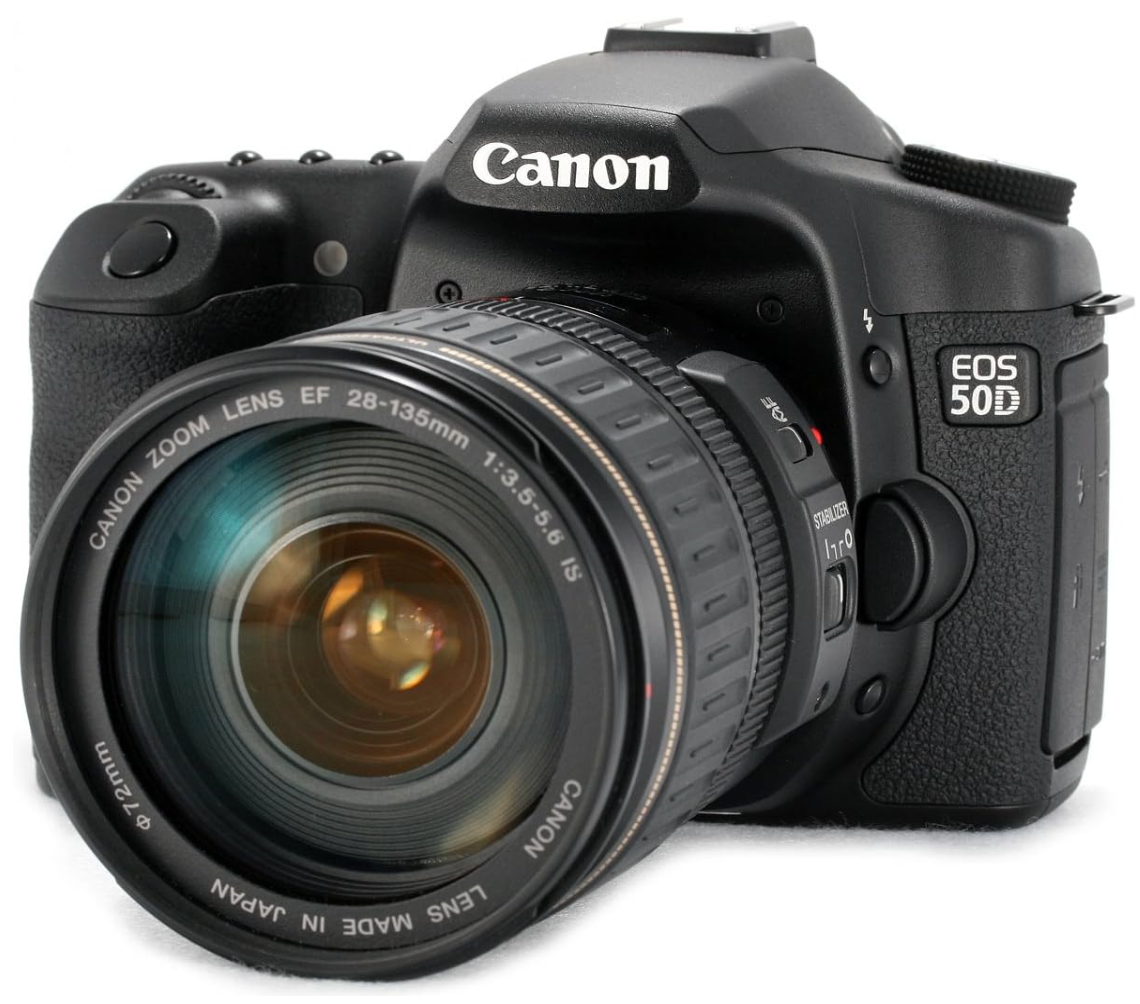
Looking for a reliable DSLR that won’t break the bank? The Canon EOS 50D delivers solid performance for enthusiasts and semi-professionals alike. With its 15.1-megapixel sensor and robust build, this camera remains relevant even years after its release.
Why Do I Recommend The Canon EOS 50D?
The Canon EOS 50D strikes an impressive balance between features and affordability. Here’s why this camera deserves your attention:
- High-Resolution Sensor: The 15.1MP CMOS sensor captures detailed images with excellent clarity, giving you plenty of room for cropping and large prints.
- Superior Low-Light Performance: ISO range from 100-3200 (expandable to 12800) lets you shoot confidently in challenging lighting conditions without excessive noise.
- Fast Continuous Shooting: Capture action at 6.3 frames per second, with burst buffers up to 90 JPEGs using UDMA cards.
- Professional Build Quality: Sturdy magnesium alloy construction feels solid in hand and withstands regular professional use.
- High-Resolution LCD Screen: The 3-inch, 920,000-dot display with anti-reflective coating makes image review easy, even in bright sunlight.
- Extensive Lens Compatibility: Works with all Canon EF and EF-S lenses, giving you access to one of photography’s most comprehensive lens ecosystems.
- Advanced Features Made Accessible: Creative Auto mode helps beginners transition from point-and-shoot cameras while offering full manual control for experienced photographers.
- Excellent Value: Available at attractive prices on the used market, often paired with quality lenses for complete shooting systems.
Specification Chart: Canon EOS 50D
| Feature | Canon EOS 50D |
| Sensor | 15.1MP APS-C CMOS |
| Sensor Size | APS-C (22.3 x 14.9mm) |
| Image Processor | DIGIC 4 |
| ISO Range | 100-3200 (expandable to 12800) |
| Autofocus Points | 9 cross-type |
| Continuous Shooting | 6.3 fps |
| Burst Buffer | Up to 90 JPEGs (UDMA) |
| LCD Screen | 3.0-inch, 920,000 dots |
| Viewfinder Coverage | 95% |
| Video Recording | No |
| Memory Card | CompactFlash Type I/II, UDMA |
| Battery Life | Approximately 800 shots |
| Weight | 1.8 lbs (730g body only) |
| Lens Mount | Canon EF/EF-S |
| Built-in Flash | Yes |
Pros and Cons of Canon EOS 50D
| Pros | Cons |
| ✓ Excellent 15.1MP image quality with fine detail | ✗ No video recording capability |
| ✓ Strong high ISO performance (up to 3200 standard) | ✗ Only 9 AF points (competitors offer more) |
| ✓ Fast 6.3 fps continuous shooting | ✗ 95% viewfinder coverage (not 100%) |
| ✓ Robust, weather-sealed build quality | ✗ Discontinued, available only used |
| ✓ Bright, high-resolution LCD screen | ✗ Smaller buffer than newer models |
| ✓ Long battery life (800 shots) | ✗ Requires quality lenses for best results |
| ✓ Excellent value on used market |
A Detailed Overview Of Canon EOS 50D
Image Quality and Sensor Performance
The Canon EOS 50D features a 15.1-megapixel APS-C CMOS sensor that delivers impressive image quality. The sensor uses gapless microlenses to maximize light-gathering capability, resulting in cleaner images at higher ISO settings. Photos exhibit excellent sharpness, accurate color reproduction, and good dynamic range for the class. The resolution is ideal for prints up to 13″ x 19″ and provides flexibility for cropping without losing detail. This makes the 50D particularly valuable for event photographers who need to work quickly and refine composition in post-processing.
High ISO and Low-Light Capabilities
One of the 50D’s standout features is its high ISO performance. The standard range extends from ISO 100 to 3200, with expansion options up to 12800. At ISO 1600, images remain remarkably clean with minimal noise, making this camera suitable for wedding receptions, indoor events, and evening photography without flash. The DIGIC 4 image processor includes high ISO noise reduction with four settings: standard, low, strong, and disable. This flexibility lets you balance noise reduction against detail preservation based on your specific shooting needs.
Autofocus System
The Canon EOS 50D employs a 9-point autofocus system with all cross-type sensors. While modest compared to newer cameras, these AF points are highly accurate and work well in various lighting conditions down to EV -0.5. The cross-type sensors detect both horizontal and vertical contrast, ensuring reliable focus acquisition. The center AF point features enhanced sensitivity at f/2.8, providing even better performance with fast professional lenses. For most photography situations—portraits, landscapes, and general shooting—this AF system proves more than adequate.
Continuous Shooting and Buffer
With a burst rate of 6.3 frames per second, the EOS 50D handles action photography capably. Using a UDMA CompactFlash card, you can capture up to 90 large/fine JPEGs or 16 RAW files before the buffer fills. This makes it suitable for sports, wildlife, and event coverage where you need sustained shooting speed. The fast DIGIC 4 processor clears the buffer quickly, minimizing downtime between shooting sequences.
LCD Screen and Live View
The 3-inch LCD monitor features 920,000 dots of resolution—four times that of the 40D. More importantly, Canon added a two-layer anti-reflective coating that dramatically improves outdoor visibility. Reviewing images in bright sunlight is no longer a struggle. Live View functionality includes three focusing modes: Quick mode, Live mode, and Face Detection Live mode. The Face Detection feature works well for portraits and group shots, automatically identifying and focusing on faces in the frame. The 30 fps refresh rate makes Live View smooth and responsive for composition and manual focusing.
Build Quality and Ergonomics
The Canon EOS 50D features a magnesium alloy body with weather sealing against dust and moisture. The construction feels solid and professional, inspiring confidence during extended shooting sessions. Button placement is logical and within easy reach, allowing intuitive operation without taking your eye from the viewfinder. The camera handles comfortably, even with larger lenses attached. The textured grip provides secure handling in various conditions.
Creative Features and Customization
The Creative Auto mode bridges the gap between full automatic and manual control. Users can adjust background blur, brightness, and picture style using simple on-screen controls—no technical knowledge required. This feature helps beginners understand photographic concepts while producing quality results. The Quick Control Screen provides fast access to shooting parameters without navigating through menus. Simply press the multi-controller down to access and adjust ISO, white balance, drive mode, and other settings directly from the LCD.
Lens Peripheral Illumination Correction
The EOS 50D includes a database of 26 Canon lenses for automatic vignetting correction. This feature can save significant post-processing time, especially when shooting with lenses wide open in low light. You can add data for 14 additional lenses manually.
Battery Life
The LP-E5 battery provides approximately 800 shots per charge—excellent longevity for a camera in this class. Heavy Live View use will reduce battery life, but for standard shooting, you can comfortably work through most events on a single charge.
Conclusion
The Canon EOS 50D remains an excellent choice for photographers seeking professional-level features without the premium price tag. Its 15.1-megapixel sensor delivers detailed images with strong high ISO performance. The robust build quality ensures it can handle regular professional use. While it lacks video recording and offers fewer autofocus points than modern competitors, the 50D excels at its primary purpose: capturing high-quality still photographs. The extensive Canon lens ecosystem provides virtually unlimited creative possibilities. For event photography, portraits, landscapes, and general enthusiast work, the Canon EOS 50D delivers outstanding value. Pair it with quality glass—like the Canon EF 24-105mm f/4L IS or Canon EF 70-200mm f/2.8L IS—and you’ll have a capable system that produces images rivaling much more expensive equipment.
FAQs
Is the Canon EOS 50D good for beginners?
Yes, the Canon EOS 50D works well for beginners thanks to its Creative Auto mode and automatic scene modes. These features help new photographers learn while producing quality results. The camera also offers full manual control for growth as skills develop.
Does the Canon EOS 50D shoot video?
No, the Canon EOS 50D does not have video recording capability. It’s designed exclusively for still photography. If you need video, consider the Canon EOS 7D or later models.
What lenses work with the Canon EOS 50D?
The Canon EOS 50D accepts all Canon EF and EF-S mount lenses. This gives you access to over 60 native lenses plus countless third-party options from manufacturers like Sigma, Tamron, and Tokina.
How does the Canon EOS 50D perform in low light?
The EOS 50D performs admirably in low light with usable images up to ISO 1600. ISO 3200 is acceptable for most situations. The expanded ISO 6400 and 12800 settings work for emergency situations where getting the shot matters more than perfect quality.
Is the Canon EOS 50D still worth buying in 2025?
Yes, the Canon EOS 50D remains worthwhile for budget-conscious photographers. Used models offer excellent value, especially when bundled with quality lenses. The image quality, build, and features still compete with entry-level modern DSLRs.
What memory cards does the Canon EOS 50D use?
The Canon EOS 50D uses CompactFlash Type I or II cards. For best performance, use UDMA-compatible cards which dramatically improve burst buffer capacity and write speeds.
Can I use my Canon EOS 50D for professional work?
Yes, many professionals use the Canon EOS 50D for events, portraits, and commercial photography. The 15.1MP resolution, fast burst rate, and reliable build make it suitable for paid work when paired with professional lenses.
What’s the difference between the Canon 40D and 50D?
The main differences include: the 50D has 15.1MP versus 10MP, improved high ISO performance, a higher resolution LCD screen, Face Detection Live View, and expanded ISO range to 12800. Both share similar build quality and handling.

Alex Turner is a dedicated product researcher and reviewer at TopBuyGuide.com, known for his clear, honest, and data-driven insights. He spends countless hours testing, comparing, and analyzing products to help readers make confident and informed buying decisions.