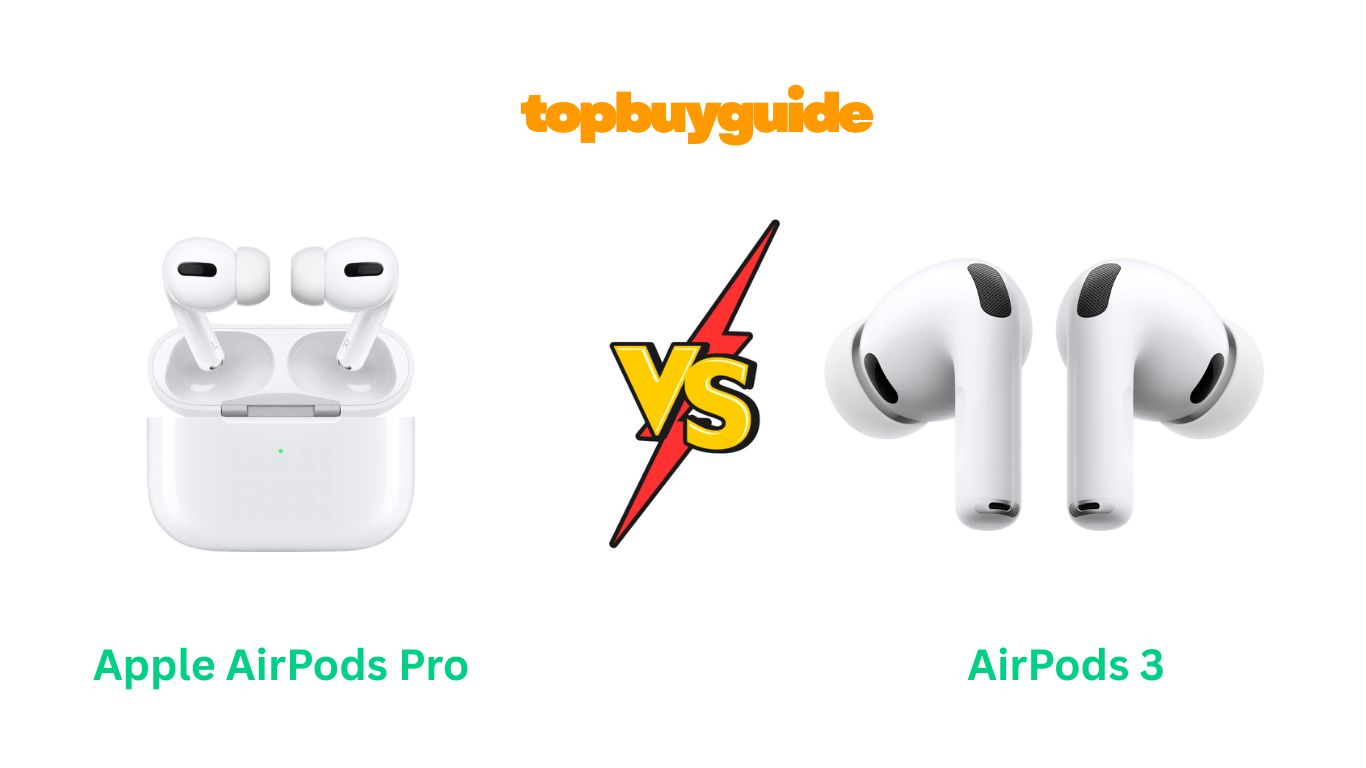
Choosing between Apple’s AirPods lineup can feel overwhelming, especially when comparing the AirPods Pro and AirPods 3. Both deliver excellent audio experiences, but they serve different needs. After extensive testing, I recommend the AirPods Pro (2nd generation) for most users. The Pro model offers superior active noise cancellation and better overall sound quality through its sealed in-ear design. These features make it worth the extra investment for anyone seeking premium audio performance.
Why Do I Recommend The Apple AirPods Pro?
The AirPods Pro stands out as the superior choice for several compelling reasons:
- Advanced Active Noise Cancellation (ANC): The AirPods Pro delivers twice the noise cancellation compared to its predecessor. This feature blocks environmental sounds effectively, making it perfect for commuting or working in noisy spaces. Meanwhile, the AirPods 3 lacks any noise cancellation technology whatsoever.
- Adaptive Transparency Mode: This intelligent feature balances ambient awareness with noise reduction automatically. The Pro adjusts to your environment in real-time, while the AirPods 3 offers no comparable transparency control.
- Superior Sound Quality with Sealed Design: The silicone ear tips create a proper seal for enhanced bass response and audio clarity. This sealed design prevents sound leakage, unlike the open AirPods 3 which allows audio to escape.
- Extended Battery Life: The AirPods Pro offers up to 6 hours of listening time with ANC enabled. The charging case provides 30 hours total, compared to the AirPods 3’s similar but slightly lower performance.
- Premium H2 Chip Technology: The upgraded H2 processor enables advanced computational audio processing at 48,000 times per second. The AirPods 3 uses the older H1 chip with fewer advanced capabilities.
- Volume Control via Swipe Gestures: The Pro model allows intuitive volume adjustment by swiping up or down on the stems. The AirPods 3 requires you to use your device or voice commands for volume changes.
- Extra-Small Ear Tips Included: Four different silicone tip sizes ensure a perfect fit for various ear shapes. The AirPods 3 comes with a one-size-fits-all open design that may not suit everyone comfortably.
- Enhanced Find My Features: The Pro charging case includes a U1 chip with precision tracking and built-in speaker. These features make locating lost earbuds significantly easier than with the AirPods 3.
Side By Side Comparison Chart – Apple AirPods Pro vs AirPods 3
| Feature | Apple AirPods Pro (2nd Gen) | Apple AirPods 3 (3rd Gen) |
| Active Noise Cancellation | Yes (2x better than 1st gen) | No |
| Transparency Mode | Adaptive Transparency | None |
| Chip Technology | H2 Chip | H1 Chip |
| Bluetooth Version | Bluetooth 5.3 | Bluetooth 5.0 |
| Design Type | In-ear with silicone tips | Open-ear (no tips) |
| Ear Tip Sizes | XS, S, M, L included | One-size-fits-all |
| Volume Control | Swipe gestures on stem | Device or voice only |
| Battery Life (single charge) | Up to 6 hours with ANC | Up to 6 hours |
| Total Battery with Case | Up to 30 hours | Up to 30 hours |
| Case Features | U1 chip, speaker, Find My | Basic Find My support |
| Charging Options | USB-C, MagSafe, Qi, Apple Watch charger | Lightning, MagSafe, Qi |
| Water Resistance | IPX4 | IPX4 |
| Conversation Awareness | Yes (with iOS 17+) | No |
| Adaptive Audio | Yes | No |
| Sound Isolation | Excellent (sealed design) | Minimal (open design) |
| Vent System | Yes (pressure equalization) | No |
| Weight per Earbud | 5.3g | 4.3g |
What Common Features Do Apple AirPods Pro and AirPods 3 Share?
Spatial Audio with Dynamic Head Tracking
Both models deliver immersive three-dimensional audio experiences through personalized Spatial Audio technology. This feature creates a theater-like soundstage for movies, music, and games. The dynamic head tracking adjusts audio positioning based on your head movements. You’ll need an iPhone with TrueDepth camera to create your personalized profile initially. The experience syncs across all your Apple devices running compatible software versions. Content must support Spatial Audio to utilize this feature effectively.
Adaptive EQ Technology
Adaptive EQ automatically tunes music to your ear shape in real-time. Both earbuds analyze what you’re hearing and adjust frequencies accordingly. This computational audio processing ensures consistent sound quality across different genres. The technology compensates for how sound sits in your unique ear structure. You experience balanced audio without manual equalizer adjustments. The feature works seamlessly in the background without requiring any user intervention.
High-Quality Apple Audio Drivers
Both models feature custom high-excursion Apple drivers paired with high dynamic range amplifiers. These components deliver powerful bass, crisp mids, and clear highs. The drivers handle wide frequency ranges with minimal distortion at high volumes. Apple designed these audio components specifically for optimal performance in compact earbud form. The amplifiers ensure clean sound reproduction across all volume levels. Together, these create Apple’s signature audio quality.
Seamless Apple Ecosystem Integration
Both AirPods automatically pair with all devices signed into your Apple Account. The H-series chips enable instant device switching between iPhone, iPad, Mac, and Apple Watch. You can share audio with another set of AirPods easily. The earbuds appear in Find My app for location tracking immediately. One-tap setup makes initial pairing effortless for Apple users. This seamless experience represents Apple’s ecosystem advantage.
IPX4 Water and Sweat Resistance
Both models carry IPX4 ratings for protection against sweat and water splashes. You can safely use them during workouts or in light rain. The rating covers non-water sports and exercise activities. However, neither model should be submerged in water or used for swimming. The charging cases do not share this water resistance rating. Always dry the earbuds before placing them in the case.
Force Sensor Controls
Both feature pressure-sensitive force sensors on the stems for intuitive control. Single press plays, pauses, or answers calls easily. Double press skips forward, while triple press goes backward. Long press activates Siri for voice commands. The sensors provide tactile feedback confirming your inputs. This stem-based control system proves more reliable than touch-sensitive surfaces.
Premium Voice Call Quality
Dual beamforming microphones on both models deliver excellent call clarity. Speech-detecting accelerometers help isolate your voice from background noise. Inward-facing microphones enhance voice pickup and noise reduction. People on calls report that users sound nearly as clear as phone calls. The stem design positions microphones optimally for voice capture. Both models excel at voice call performance.
Extended Battery Life with Case
Both provide approximately 6 hours of listening per charge. The included charging cases extend total listening time to 30 hours. Five minutes of charging gives about one hour of playback. Fast charging capabilities ensure minimal downtime between listening sessions. Battery performance varies based on volume levels and features used. Both models support wireless charging via MagSafe or Qi chargers.
Common Features of Apple AirPods Pro vs AirPods 3
| Feature | Apple AirPods Pro (2nd Gen) | Apple AirPods 3 (3rd Gen) |
| Spatial Audio with Head Tracking | ✓ Yes | ✓ Yes |
| Adaptive EQ | ✓ Yes | ✓ Yes |
| Custom Apple Audio Driver | ✓ Yes | ✓ Yes |
| High Dynamic Range Amplifier | ✓ Yes | ✓ Yes |
| Seamless Device Switching | ✓ Yes | ✓ Yes |
| One-Tap Pairing | ✓ Yes | ✓ Yes |
| Find My Support | ✓ Yes | ✓ Yes |
| IPX4 Water Resistance | ✓ Yes | ✓ Yes |
| Force Sensor Controls | ✓ Yes | ✓ Yes |
| Dual Beamforming Mics | ✓ Yes | ✓ Yes |
| Speech-Detecting Accelerometer | ✓ Yes | ✓ Yes |
| Siri Voice Activation | ✓ Yes | ✓ Yes |
| Audio Sharing | ✓ Yes | ✓ Yes |
| MagSafe Charging | ✓ Yes | ✓ Yes |
| Qi Wireless Charging | ✓ Yes | ✓ Yes |
| Listening Time (single charge) | Up to 6 hours | Up to 6 hours |
| Total Battery with Case | Up to 30 hours | Up to 30 hours |
| Fast Charging | ✓ Yes | ✓ Yes |
A Detailed Comparison Of the Apple AirPods Pro vs AirPods 3
Active Noise Cancellation Technology
The AirPods Pro features advanced ANC powered by the H2 chip that blocks environmental noise effectively. This computational audio processing happens 48,000 times per second for real-time noise cancellation. The sealed design with silicone tips enhances the noise blocking by creating physical isolation. Users experience significantly quieter environments during commutes, flights, or in noisy offices.
The AirPods 3 completely lacks active noise cancellation due to its open-ear design. The absence of ear tips means external sounds freely enter your ear canal. This open design suits users who prefer ambient awareness during use. However, it cannot compete with the Pro’s ability to eliminate distracting background noise.
Ear Design and Fit Options
The AirPods Pro uses an in-ear design with interchangeable silicone tips in four sizes. This customizable fit ensures proper seal formation for optimal sound quality and noise isolation. The Ear Tip Fit Test in iOS helps users select the correct size. The sealed design prevents sound leakage, making it suitable for quiet environments.
The AirPods 3 features an open-ear, one-size-fits-all design without any silicone tips. This semi-in-ear fit sits loosely in the outer ear without sealing the canal. Some users find this more comfortable for extended wear periods. However, sound leakage occurs at higher volumes, and bass response suffers without a proper seal.
Chip Technology and Processing Power
The AirPods Pro utilizes Apple’s H2 chip for enhanced computational capabilities and improved efficiency. This advanced processor enables superior ANC, Adaptive Transparency, and better battery management. The H2 chip supports Bluetooth 5.3 for more stable connections. Processing power allows for advanced features like Conversation Awareness and Adaptive Audio.
The AirPods 3 runs on the older H1 chip with Bluetooth 5.0 connectivity. While still capable, it lacks the processing power for advanced noise control features. The H1 chip provides excellent basic functionality and seamless Apple ecosystem integration. However, it cannot deliver the computational audio features available on the Pro model.
Transparency and Ambient Modes
The AirPods Pro offers Adaptive Transparency that intelligently adjusts ambient sound pass-through in real-time. This feature automatically reduces harsh sounds like sirens while maintaining awareness of your surroundings. Conversation Awareness detects when you’re speaking and lowers music volume automatically. These smart features enhance everyday usability significantly.
The AirPods 3 provides natural ambient awareness through its open-ear design without any electronic processing. You constantly hear your environment since no seal blocks external sounds. This passive awareness works well for casual listening but lacks the intelligent processing. Users cannot toggle between isolation and transparency modes as needed.
Volume Control Methods
The AirPods Pro allows convenient volume adjustment through swipe gestures directly on the earbud stems. Swipe up to increase volume and swipe down to decrease without touching your device. This intuitive control method enhances usability during workouts or when your phone isn’t accessible. The touch-sensitive stems respond accurately to deliberate swipes.
The AirPods 3 requires you to use Siri voice commands or your connected device for volume changes. No physical volume controls exist on the earbuds themselves except the force sensor. This limitation proves inconvenient when you want quick volume adjustments. Users must reach for their phone or speak commands aloud.
Charging Case Features
The AirPods Pro charging case includes the U1 chip for Precision Finding in the Find My app. A built-in speaker plays sounds to help locate the case when misplaced. The case supports USB-C, MagSafe, Qi wireless charging, and even Apple Watch chargers. A convenient lanyard loop allows you to attach the case to bags or keychains.
The AirPods 3 case offers basic Find My support without the U1 chip’s precision tracking. No built-in speaker exists to help locate a misplaced case audibly. The case uses Lightning port for wired charging instead of USB-C. Charging options include MagSafe and Qi wireless charging but not Apple Watch chargers.
Vent System and Pressure Relief
The AirPods Pro incorporates a specialized vent system that equalizes air pressure within the ear canal. This technology prevents the uncomfortable pressure sensation common with sealed in-ear designs. The vents work alongside ANC to maintain comfort during extended listening sessions. Users experience less ear fatigue compared to typical silicone-tipped earbuds.
The AirPods 3 requires no vent system due to its naturally open design that allows airflow. No pressure buildup occurs since the earbuds don’t create a seal. This open architecture provides inherent comfort for users sensitive to sealed designs. However, it sacrifices the acoustic benefits of proper ear canal sealing.
Advanced Audio Features
The AirPods Pro supports Adaptive Audio that blends ANC and Transparency based on your environment dynamically. Conversation Awareness automatically adjusts audio levels when you start speaking to someone nearby. Personalized Volume learns your listening preferences across different environments over time. These intelligent features require iOS 17 or later to function properly.
The AirPods 3 lacks these advanced computational audio features entirely. The basic listening experience remains consistent across all environments. No automatic adjustments occur based on surrounding noise levels or user behavior. The simplified feature set suits users who prefer straightforward functionality.
Conclusion
The AirPods Pro (2nd generation) emerges as the clear winner for users seeking premium audio quality. The twice-as-powerful active noise cancellation delivers peaceful listening in any environment. The H2 chip enables advanced features like Adaptive Transparency and Conversation Awareness seamlessly. Four ear tip sizes ensure comfortable, secure fit with excellent sound isolation. While the AirPods 3 offers respectable audio quality and extended battery life, it cannot match the Pro’s comprehensive feature set. Choose the AirPods Pro for the best overall wireless earbud experience within Apple’s ecosystem.
Frequently Asked Questions
Q: Does the AirPods 3 have noise cancellation?
No, the AirPods 3 does not include active noise cancellation. The open-ear design without silicone tips makes ANC technically impossible. Only the AirPods Pro models feature active noise cancellation technology. If noise cancellation matters to you, choose the AirPods Pro instead.
Q: Which AirPods are better for working out?
The AirPods 3 may be better for workouts due to lighter weight and open design. The open-ear fit provides better situational awareness for outdoor running safety. However, the AirPods Pro offers superior secure fit with multiple tip sizes. Both models feature IPX4 water resistance suitable for sweaty workouts.
Q: Can I use AirPods Pro with Android devices?
Yes, AirPods Pro works with Android devices via standard Bluetooth connectivity. However, advanced features like Spatial Audio, Adaptive Transparency, and automatic device switching require Apple devices. Battery optimization and firmware updates also need iOS devices. Basic listening and calls work fine on Android.
Q: How do I know which ear tip size fits best?
Use the Ear Tip Fit Test in iPhone Settings under Bluetooth AirPods options. The test plays audio and measures how well your ear tips seal. Results indicate if your current tips provide good seal or recommend different sizes. Proper fit ensures optimal sound quality and noise cancellation performance.
Q: Is the sound quality difference noticeable between models?
Yes, the AirPods Pro delivers noticeably better sound quality due to its sealed design. The silicone tips create proper seal for enhanced bass response and clarity. Sound isolation prevents audio leakage and improves overall listening experience. The AirPods 3 sounds good but lacks the acoustic benefits of sealed in-ear design.
Q: Does the AirPods Pro work with older iPhones?
Yes, AirPods Pro works with iPhone 8 and later running recent iOS versions. Full feature access requires the latest iOS updates for advanced capabilities. Basic functionality like audio playback works on older compatible Apple devices. Check Apple’s official compatibility list for your specific iPhone model.
Q: How long does the battery actually last?
The AirPods Pro provides approximately 6 hours per charge with ANC enabled. Disabling ANC can extend listening time slightly beyond 6 hours. The charging case adds another 24 hours for total 30-hour listening. Actual battery life varies based on volume levels and features used.
Q: Can I replace lost AirPods Pro ear tips?
Yes, Apple sells replacement ear tip sets separately through their online store. Third-party ear tips are also available but may affect sound quality. The tips use a universal connector compatible across AirPods Pro generations. Always ensure proper fit by running the Ear Tip Fit Test.

Alex Turner is a dedicated product researcher and reviewer at TopBuyGuide.com, known for his clear, honest, and data-driven insights. He spends countless hours testing, comparing, and analyzing products to help readers make confident and informed buying decisions.