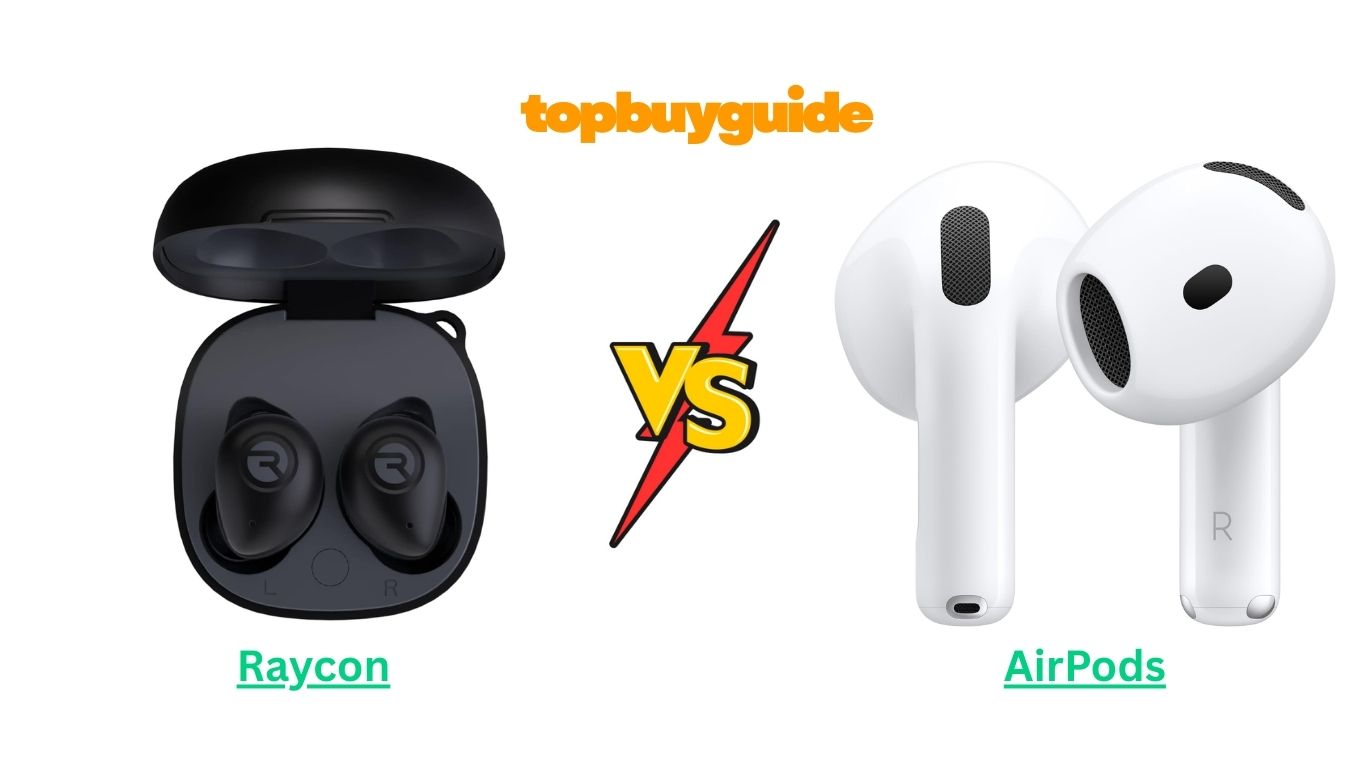
Choosing between Rayconand AirPodscan be challenging, especially with both offering compact, wireless designs. After analyzing sound quality, features, comfort, and connectivity, AirPods stand out as the better choice for most users. Their adaptive EQ, seamless Apple integration, and superior call quality make them a reliable and versatile option for everyday listening and professional use.
Why Do I Recommend the AirPods?
When comparing Raycon and AirPods, it’s not just about price — it’s about performance, comfort, and long-term usability. Here’s a deeper look at why AirPodsare my top recommendation:
- Seamless Apple Ecosystem Integration
AirPods are built to integrate with Apple devices. With the H1 chip, they pair instantly with iPhones, iPads, Macs, and Apple Watches. Switching between devices is automatic — you can finish a call on your iPhone and continue a video on your Mac without manually reconnecting. Raycon earbuds work across devices but lack this smooth ecosystem integration, requiring manual pairing each time. - Superior Sound Quality and Adaptive EQ
AirPods deliver a rich, balanced sound profile thanks to adaptive EQ, which automatically adjusts frequencies based on your ear shape and fit. This ensures vocals, bass, and treble are all crisp and clear. Raycon provides decent sound for casual listening, but it lacks adaptive sound technology, meaning certain songs, especially high-frequency tracks, may sound less detailed. - Active Noise Cancellation and Transparency Mode
AirPods Pro feature advanced active noise cancellation (ANC) that effectively blocks background noise. Transparency mode allows users to hear surroundings without removing the earbuds — ideal for walking in traffic or attending office calls. Raycon, while offering basic noise reduction, does not provide true ANC, which can make them less effective in loud environments. - Comfort and Secure Fit for Long Use
AirPods come with multiple silicone tip sizes, providing a secure and comfortable fit that suits most ear shapes. The design allows for passive noise isolation, which enhances both comfort and audio quality. Raycon uses a one-size-fits-all design that may not fit securely in every ear, sometimes causing earbuds to fall out during workouts or long listening sessions. - Advanced Touch Controls and Voice Activation
AirPods allow tap, swipe, and press gestures for playback control, volume adjustment, and activating Siri voice commands. This makes it easy to control music, make calls, and interact hands-free. Raycon offers only basic button controls, limiting convenience and reducing efficiency for multitasking. - Battery Life and Charging Convenience
AirPods Pro provide 4.5–6 hours of listening with ANC, and up to 24 hours with the charging case. The wireless charging case is convenient for on-the-go use. Raycon offers similar battery life, but its charging solution is less advanced, lacking wireless charging and faster charging options. - Call Quality and Microphone Performance
AirPods use beamforming microphones that isolate your voice from surrounding noise, making them ideal for work calls or video conferencing in busy environments. Raycon’s microphones are adequate for casual calls but may struggle with background noise, reducing call clarity. - Durability and Sweat/Water Resistance
AirPods Pro are IPX4-rated, meaning they resist sweat and light rain, perfect for workouts and outdoor use. Raycon earbuds have some water-resistant models, but durability varies across their range, making AirPods a safer bet for regular use in different environments. - Long-Term Value and Updates
Apple continuously improves AirPods with firmware updates, enhancing sound, connectivity, and features over time. Raycon does not have a similar ecosystem of updates, so long-term improvements are limited. For those investing in quality earbuds, AirPods offer better long-term value.
Summary: While Raycon is a budget-friendly option suitable for casual use, AirPods deliver a premium experience in nearly every aspect — sound, noise cancellation, comfort, connectivity, smart features, and long-term reliability. For users seeking convenience, performance, and integration with Apple devices, AirPods are the clear winner.
Side-by-Side Comparison Chart: Raycon vs AirPods
| Feature | Raycon | AirPods |
| Device Integration | Works with all devices; manual pairing | Seamless Apple ecosystem integration |
| Sound Quality | Good for casual listening | Adaptive EQ, richer and balanced audio |
| Noise Cancellation | Basic | Active Noise Cancellation & Transparency Mode |
| Fit & Comfort | Universal design, less secure | Multiple silicone tips, secure fit |
| Touch Controls | Basic buttons | Tap, swipe, and voice activation |
| Battery Life | 4–6 hours per charge | 4.5–6 hours per charge with ANC, 24 hours with case |
| Wireless Charging | ❌ | ✅ |
| Call Quality | Average | Superior with beamforming microphones |
| Water Resistance | Limited | IPX4-rated sweat & water resistance |
| Portability | Compact charging case | Compact wireless charging case |
| Smart Features | Limited | Automatic device switching, Siri support |
Common Features of Raycon vs AirPods
| Feature | Raycon | AirPods |
| Bluetooth Connectivity | ✅ | ✅ |
| Compact Charging Case | ✅ | ✅ |
| Wireless Playback | ✅ | ✅ |
| Lightweight & Portable | ✅ | ✅ |
| Sweat & Light Water Resistance | ✅ (varies) | ✅ |
| Quick Pairing | ✅ | ✅ |
| Touch/Physical Controls | ✅ | ✅ |
A Detailed Comparison of Raycon vs AirPods
1. Sound Quality
AirPods:
AirPods Pro delivers a superior audio experience with Adaptive EQ, which automatically adjusts frequencies to suit your ear shape. This technology ensures that vocals, bass, and treble are balanced perfectly for every song. Highs are clear without being harsh, mids are natural, and lows are deep without overpowering. Whether you’re listening to podcasts, pop, or classical music, AirPods offer precise and immersive sound.
Raycon:
Raycon earbuds provide a solid listening experience for their price, with enhanced bass and decent mid-range clarity. However, they lack adaptive EQ, so sound may feel less refined, particularly with high-frequency instruments and vocals. Users may notice some distortion at higher volumes, especially in bass-heavy tracks.
Verdict: AirPods clearly outperform Raycon in overall sound clarity, balance, and adaptability for different genres.
2. Noise Cancellation and Ambient Sound
AirPods:
AirPods Pro includes Active Noise Cancellation (ANC), which uses advanced microphones and software to cancel ambient noise. This feature makes them ideal for noisy environments like airplanes, public transport, or crowded offices. The Transparency Mode allows you to hear your surroundings without removing the earbuds, enhancing safety when walking outside or having quick conversations.
Raycon:
Raycon does not feature true ANC. They rely on passive noise isolation from ear tips, which blocks some sound but cannot match the efficiency of AirPods’ technology. Ambient noise may interfere with calls or listening experience in loud environments.
Verdict: For commuting, office work, or outdoor use, AirPods provide superior control over noise compared to Raycon.
3. Fit and Comfort
AirPods:
AirPods Pro comes with three sizes of silicone tips, ensuring a secure and comfortable fit for different ear shapes. The ergonomic design allows for long listening sessions without discomfort. Passive noise isolation also improves with a proper fit.
Raycon:
Raycon earbuds have a one-size-fits-all approach with a universal design. While comfortable for casual use, some users report difficulty keeping them in place during workouts or extended listening sessions.
Verdict: AirPods’ customizable tips make them more versatile and comfortable for long-term use.
4. Controls and Smart Features
AirPods:
AirPods offer touch controls for play/pause, skip tracks, volume adjustments, and Siri activation. You can even control them with “Hey Siri” voice commands for a fully hands-free experience. Automatic device switching ensures seamless connection between your iPhone, Mac, iPad, and Apple Watch.
Raycon:
Raycon relies on physical button controls. While functional for basic commands like play/pause or answering calls, they lack voice activation and gestures, making them less convenient for multitasking.
Verdict: AirPods provide a smarter, more efficient control system for daily use.
5. Battery Life and Charging
AirPods:
AirPods Pro provides 4.5–6 hours of listening per charge with ANC on, and the wireless charging case extends battery life up to 24 hours. Fast charging allows about 1 hour of playback from just 5 minutes of charging.
Raycon:
Raycon earbuds offer 4–6 hours per charge, with an extended case providing roughly 18–20 hours. However, they lack wireless charging, which can be a disadvantage for users who prefer cable-free convenience.
Verdict: AirPods slightly lead due to wireless charging, faster charging, and consistent battery performance.
6. Call Quality and Microphones
AirPods:
AirPods Pro uses beamforming microphones to focus on your voice, reducing background noise for crystal-clear calls. Whether you’re on a work call or recording a voice note, the quality remains reliable even in noisy environments.
Raycon:
Raycon microphones work well in quiet spaces but may struggle with background noise during calls. This makes them more suitable for casual conversations rather than professional use.
Verdict: AirPods excel for work calls, meetings, and voice clarity in any setting.
7. Durability and Water Resistance
AirPods:
AirPods Pro is IPX4-rated, meaning they can resist sweat and light splashes, making them perfect for workouts and outdoor use.
Raycon:
Raycon earbuds are waterproof in select models, but this is not standardized across all products. Durability may vary, especially in high-intensity use.
Verdict: AirPods offer reliable, consistent durability for everyday activities.
Conclusion
After a thorough comparison of Raycon vs AirPods, it’s clear that AirPods are the better investment for users who want superior sound, comfort, smart features, and seamless device integration. While Raycon offers affordability and decent performance, AirPods provide long-term value with advanced ANC, adaptive EQ, superior call quality, and reliable battery life.
If you’re looking for earbuds that enhance productivity, workouts, and entertainment, AirPods Pro is the smart choice.
FAQs – Raycon vs AirPods
- Are Raycon earbuds compatible with iPhones?
Yes, Raycon works with iPhones, iPads, and other Bluetooth devices, but it requires manual pairing and lacks seamless ecosystem integration. - Do AirPods work with Android phones?
Yes, AirPods can connect via Bluetooth to Android devices, but some features like automatic device switching and Siri voice control are limited. - Which earbuds have better battery life?
Both Raycon and AirPods offer around 4–6 hours per charge, but AirPods provide extended battery life with a wireless charging case and faster charging options. - Do Raycon earbuds support noise cancellation?
No, Raycon provides passive noise isolation but does not have true active noise cancellation like AirPods Pro. - Are AirPods Pro good for workouts?
Yes, AirPods Pro are IPX4-rated, resistant to sweat and light rain, making them ideal for running, gym sessions, or outdoor activities. - Which earbuds offer better call quality?
AirPods Pro have beamforming microphones that isolate your voice from background noise, delivering superior call clarity. Raycon microphones are less effective in noisy environments. - Can I use touch controls on Raycon?
Raycon only provides basic physical button controls, unlike AirPods which offer taps, swipes, and voice commands for convenience. - Are AirPods worth the price compared to Raycon?
Yes, AirPods justify the higher price with superior sound, comfort, ANC, durability, and integration with Apple devices, offering better long-term value.

Alex Turner is a dedicated product researcher and reviewer at TopBuyGuide.com, known for his clear, honest, and data-driven insights. He spends countless hours testing, comparing, and analyzing products to help readers make confident and informed buying decisions.