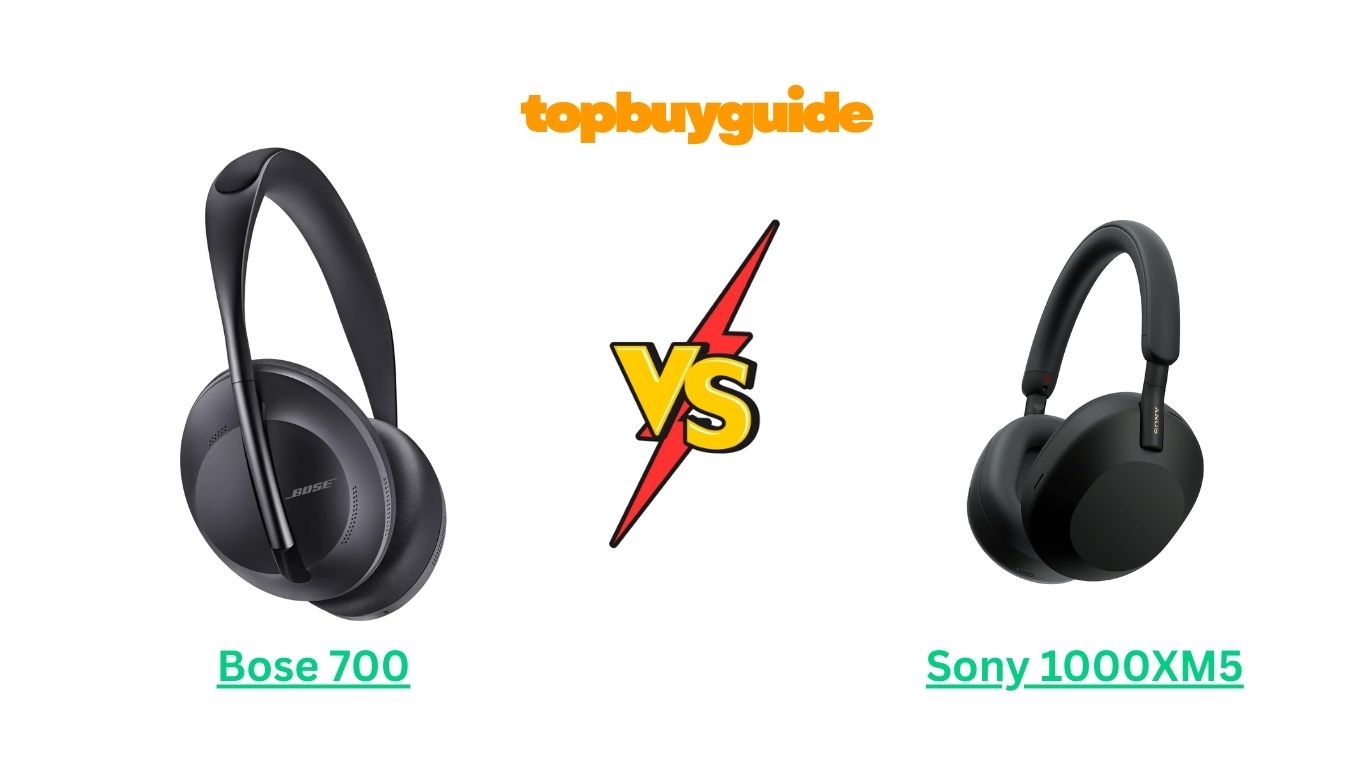
Choosing between the Bose 700and Sony 1000XM5 can be overwhelming. Both offer premium sound and top-tier noise cancellation. After detailed research and hands-on reviews, the Sony 1000XM5 emerges as the better choice for its advanced adaptive noise cancellation, customizable sound, and longer battery life, making it perfect for travelers and audiophiles. Let’s break down why.
Why Do I Recommend the Sony 1000XM5?
While the Bose 700is excellent in comfort and sound clarity, the Sony 1000XM5 offers a broader range of advanced features and better overall performance. Here’s a detailed breakdown:
- Industry-Leading Adaptive Noise Cancellation
Sony 1000XM5 uses adaptive ANC technology that automatically adjusts noise cancellation based on your environment. From airplane cabins to busy streets, it cancels low, mid, and high-frequency sounds more efficiently than Bose 700, which provides strong ANC but is less adaptive in variable settings. - Advanced Ambient Sound & Transparency Modes
Unlike Bose 700, which offers a fixed Aware Mode, Sony 1000XM5 features Adaptive Sound Control and Quick Attention Mode. This allows the headphones to detect your surroundings and activity, automatically adjusting ambient sound levels. For instance, it will let in more street noise when walking outdoors and reduce ambient noise when sitting. This intelligent adjustment makes Sony more practical for real-world use. - Superior Audio Quality & Customization
Sony 1000XM5 delivers a richer and more immersive sound profile with deep bass, clear mids, and sparkling highs. Additionally, the DSEE Extreme feature upscales compressed music files, enhancing clarity. Bose 700 has a neutral sound signature, excellent for casual listening, but it lacks this level of customization and audio enhancement. - Longer Battery Life for Extended Use
Sony 1000XM5 offers 30 hours of playback with ANC enabled, significantly more than Bose 700’s 20 hours. Quick charging is also more effective: 10 minutes of charging gives 5 hours of playback on Sony, compared to 3 hours on Bose with a 15-minute charge. This makes Sony more suitable for long flights or daily commutes. - Lightweight and Comfortable Design
The 1000XM5 is lighter than Bose 700 and features memory foam ear pads with improved airflow to reduce pressure. This makes it more comfortable during long listening sessions. While Bose 700 is well-built with plush cushions, it’s slightly heavier and has a firmer clamp, which can be noticeable during extended wear. - Touch Controls & Gestures for Convenience
Sony 1000XM5 comes with touch-sensitive controls for playback, volume, ANC toggling, and calls. The Speak-to-Chat feature automatically pauses music when you start talking. Bose 700 relies on traditional buttons, which are less intuitive and slower to operate. - Seamless Multipoint Connectivity & App Support
Sony 1000XM5 allows connecting to two devices simultaneously and automatically switches between them. Its companion Headphones Connect app provides EQ customization, ANC adjustments, and firmware updates. Bose 700 supports multipoint connection but lacks advanced app-based personalization, giving Sony a clear edge. - Call Quality & Voice Assistants
Sony 1000XM5 features multiple microphones with noise reduction for superior call clarity. It supports Google Assistant, Alexa, and Siri. Bose 700 also supports voice assistants but can pick up more background noise during calls in outdoor environments. - Build & Ergonomics
Sony 1000XM5 combines lightweight materials with a sleek, modern design. It folds neatly for travel while retaining comfort. Bose 700 uses premium stainless steel, which feels sturdy but slightly heavier.
Summary: While Bose 700 excels in simplicity and premium build, Sony 1000XM5 is superior for users who want advanced features, adaptive noise cancellation, richer sound, better battery, and smart functionality.
Side-by-Side Comparison Chart: Bose 700 vs Sony 1000XM5
| Feature | Bose 700 | Sony 1000XM5 |
| Active Noise Cancellation (ANC) | Excellent, adjustable 11 levels | Adaptive ANC for all frequencies, automatic adjustment |
| Ambient Sound / Transparency | Aware Mode | Adaptive Sound Control + Quick Attention |
| Battery Life | 20 hours | 30 hours |
| Quick Charge | 15 min = 3 hr playback | 10 min = 5 hr playback |
| Weight | 0.25 kg | 0.23 kg |
| Controls | Button-based | Touch gestures with swipe and tap |
| Multipoint Connectivity | Yes | Yes, seamless switching |
| Custom EQ | No | Yes, via app |
| Speak-to-Chat / Auto-Pause | ❌ | ✅ |
| Voice Assistant Support | Google, Alexa, Siri | Google, Alexa, Siri |
| Build & Design | Stainless steel, premium feel | Lightweight, ergonomic |
| Travel-Friendly | ✅ | ✅ |
Common Features of Bose 700 vs Sony 1000XM5
| Feature | Bose 700 | Sony 1000XM5 |
| Noise Cancellation | ✅ | ✅ |
| Bluetooth & Multipoint | ✅ | ✅ |
| Voice Assistant Support | ✅ | ✅ |
| Foldable & Travel-Friendly | ✅ | ✅ |
| Comfortable Ear Pads | ✅ | ✅ |
| Wireless Playback | ✅ | ✅ |
| USB-C Charging | ✅ | ✅ |
A Detailed Comparison of Bose 700 vs Sony 1000XM5
1. Sound Quality
Bose 700 delivers a clear, balanced sound signature with punchy mids and clean vocals, ideal for podcasts, classical music, and casual listening. However, the bass can feel slightly subdued for genres like EDM or hip-hop.
Sony 1000XM5 offers a richer, more immersive audio experience with deeper bass, crisp mids, and sparkling highs. Its DSEE Extreme technology enhances compressed audio files, making even low-bitrate tracks sound detailed. Compared to Bose, Sony produces a more dynamic soundstage that audiophiles and casual listeners alike will appreciate.
2. Active Noise Cancellation (ANC)
Bose 700’s ANC is excellent, with 11 adjustable levels allowing precise tuning to your environment. It works well in airplanes, offices, and urban areas.
Sony 1000XM5 takes ANC further with adaptive noise cancellation, automatically adjusting to ambient sound and user activity. From busy streets to quiet rooms, it optimizes noise suppression without manual adjustments. For frequent travelers or city commuters, Sony’s adaptive ANC is noticeably superior.
3. Comfort & Build
Bose 700 features a stainless steel headband with plush ear cushions. While premium, it’s slightly heavier and tighter than Sony. Extended use can lead to mild pressure on the head.
Sony 1000XM5 uses lightweight materials and soft memory foam ear pads, distributing pressure evenly. Even after several hours of wear, users report minimal fatigue. For long listening sessions, Sony offers better ergonomics and weight distribution.
4. Battery Life & Charging
Bose 700 provides 20 hours of playback with ANC on. A 15-minute quick charge offers about 3 hours of listening time.
Sony 1000XM5 offers 30 hours of battery life with ANC enabled and a 10-minute quick charge providing 5 hours of playback. This makes Sony far more reliable for long trips or all-day usage without worrying about charging.
5. Controls & Smart Features
Bose 700 uses touch-sensitive buttons for play/pause, ANC, and volume control, which work well but require a learning curve.
Sony 1000XM5 offers intuitive touch gestures, swipe controls for volume, tap for playback, and Speak-to-Chat that automatically pauses music when you speak. These smart features make Sony more convenient in real-world usage.
6. Connectivity & App Support
Both headphones support Bluetooth 5.x and multipoint connections. Bose 700 allows connection to two devices simultaneously, but switching is slightly slower.
Sony 1000XM5 not only supports seamless multipoint connectivity but also integrates with the Headphones Connect app. Users can customize the EQ, ANC levels, sound modes, and even schedule ANC adjustments. Bose lacks such detailed app-based customization.
7. Voice Assistants & Call Quality
Bose 700 supports Google Assistant, Alexa, and Siri with reliable voice commands. Call quality is good indoors but may pick up background noise outdoors.
Sony 1000XM5 has multiple microphones with superior noise reduction, ensuring clearer voice pickup even in noisy environments. Voice assistant integration is equally smooth, with more natural hands-free experience.
Conclusion
After a comprehensive comparison, the Sony 1000XM5 emerges as the best choice for most users. While Bose 700 is excellent for those who value premium build and balanced sound, Sony 1000XM5 excels in adaptive noise cancellation, audio quality, battery life, comfort, and smart features.
If you travel frequently, enjoy immersive sound, or want smart touch controls, Sony 1000XM5 is the superior option. Click the link below to check current prices and availability on Amazon — your next level of premium headphone experience awaits!
FAQs – Bose 700 vs Sony 1000XM5
- Which headphones have better noise cancellation?
Sony 1000XM5 offers adaptive ANC that adjusts to your environment automatically, making it slightly superior to Bose 700’s manually adjustable ANC. - Can I use both headphones for phone calls?
Yes, both support calls. Sony 1000XM5 has clearer call quality in noisy environments due to advanced microphone noise suppression. - How long does the battery last?
Bose 700: 20 hours with ANC; Sony 1000XM5: 30 hours with ANC. Quick charge favors Sony, providing 5 hours in 10 minutes. - Are these headphones comfortable for long wear?
Yes, both are comfortable, but Sony 1000XM5 is lighter and has memory foam cushions, reducing fatigue during long sessions. - Do these headphones support voice assistants?
Yes, both support Google Assistant, Alexa, and Siri for hands-free control. - Can I connect to multiple devices?
Yes, both support multipoint Bluetooth, but Sony 1000XM5 switches seamlessly between devices, offering smoother connectivity. - Which has better sound quality?
Sony 1000XM5 delivers richer bass, clear mids, and sparkling highs with DSEE Extreme upscaling, making it better for all music genres. - Are there app features to customize sound?
Yes, Sony 1000XM5 has the Headphones Connect app for EQ, ANC, and sound customization. Bose 700 has limited app-based personalization.

Alex Turner is a dedicated product researcher and reviewer at TopBuyGuide.com, known for his clear, honest, and data-driven insights. He spends countless hours testing, comparing, and analyzing products to help readers make confident and informed buying decisions.