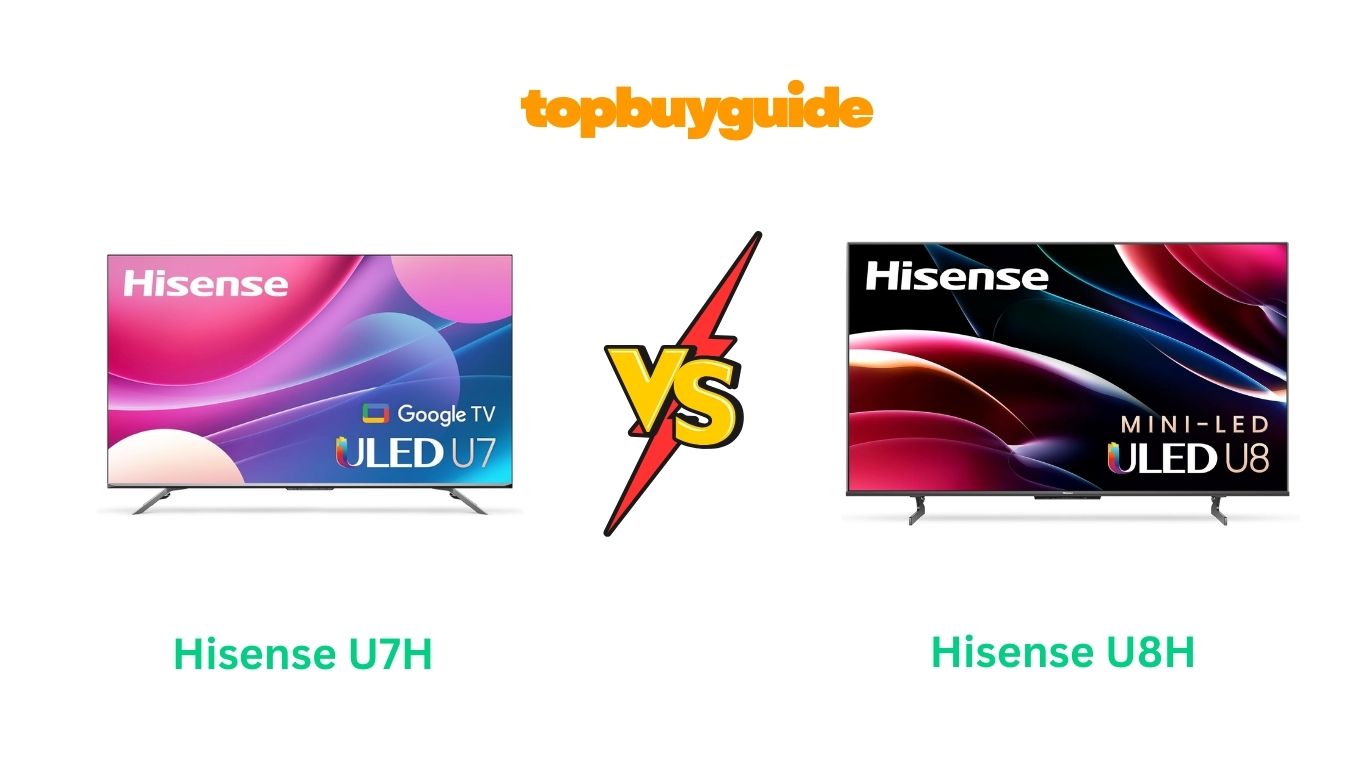
When choosing a new TV, the Hisense U-series is a strong contender, offering premium features without the premium price tag. Both the U7H and U8H models deliver impressive 4K visuals, but the U8H pulls ahead with its superior Mini-LED technology and higher peak brightness. This makes it the better choice for those seeking a top-tier viewing experience, especially in bright rooms. Let’s dive into the details to see which one is right for you.
Why Do I Recommend The Hisense U8H?
While both TVs are excellent, I recommend the Hisense U8H for its significant upgrades in display technology and performance, which provide a more immersive and visually stunning experience.
- The Hisense U8H features Mini-LED Pro backlighting, a more advanced technology that uses smaller LEDs for more precise control over lighting and contrast. In contrast, the Hisense U7H uses a standard Full Array Local Dimming system, which is effective but doesn’t offer the same level of granular control, resulting in less dynamic contrast.
- With a peak brightness of up to 1500 nits, the U8H delivers an exceptionally vibrant and bright picture that excels in well-lit rooms and makes HDR content pop. On the other hand, the U7H has a peak brightness of 1000 nits, which is still very good but doesn’t match the dazzling display of its more premium counterpart.
- The U8H is equipped with up to 528 local dimming zones (on the 55-inch model), allowing for deeper blacks and more pronounced highlights with minimal blooming or halo effects. The U7H has fewer dimming zones, which means it has less precise control over the contrast across different parts of the screen.
- For audio, the U8H includes a built-in subwoofer in its 2.1.2 channel audio system, providing a richer and more impactful sound experience right out of the box. Conversely, while the U7H also supports Dolby Atmos, its standard built-in speakers lack the dedicated bass of the U8H, making an external soundbar more of a necessity for immersive audio.
- The U8H boasts an anti-glare screen that significantly reduces reflections from ambient light sources. This feature is a major advantage for daytime viewing or in rooms with many windows. The U7H’s screen is more susceptible to reflections, which can be distracting in brighter environments.
- Although both models are fantastic for gaming, the U8H’s higher brightness and superior contrast from the Mini-LED panel provide a more visually striking HDR gaming experience, making game worlds feel more lifelike and immersive.
Side By Side Comparison Chart: Hisense U7H vs U8H
| Feature | Hisense U7H | Hisense U8H |
| Backlight Tech | Full Array Local Dimming | Mini-LED Pro with Full Array Local Dimming |
| Peak Brightness | Up to 1000 nits | Up to 1500 nits |
| Local Dimming Zones | Fewer zones (number varies by size) | Up to 528 zones (on 55-inch) |
| Sound System | Dolby Atmos | Dolby Atmos with built-in Subwoofer (2.1.2 Ch) |
| Display Panel | QLED | QLED with Anti-Glare screen |
| Special Features | 4K ULED, Quantum Dot, Alexa Compatibility | Mini-LED, Quantum Dot, Alexa Compatibility |
| Price Point | More budget-friendly | Higher price point |
What Common Features Can Hisense U7H and U8H Do?
Despite their differences, the Hisense U7H and U8H share a robust set of features that make them both compelling options for a modern smart TV. These shared capabilities ensure that no matter which model you choose, you’re getting a high-quality, feature-rich television designed for excellent entertainment.
4K ULED Technology
Both the Hisense U7H and U8H are built on Hisense’s proprietary ULED technology. This isn’t just a marketing term; it refers to a collection of hardware and software enhancements working together to elevate the picture quality. ULED technology focuses on improving color, contrast, brightness, and motion. By combining features like Quantum Dot, local dimming, and advanced image processing, both TVs can produce a picture that is sharper, more detailed, and more vibrant than standard 4K LED TVs. This ensures a premium viewing experience across all types of content, from movies and TV shows to sports and gaming.
Quantum Dot Wide Color Gamut
A key feature in both the U7H and U8H is the Quantum Dot Wide Color Gamut technology. This allows the TVs to display over a billion shades of color with remarkable accuracy and richness. Quantum Dots are microscopic crystals that emit specific colors when hit by light. The result is purer, more brilliant colors that bring images to life. Whether you’re watching a nature documentary with lush landscapes or a vibrant animated film, the colors will appear more lifelike and true to the director’s original vision, a significant step up from traditional LED TVs.
120Hz Native Refresh Rate & Smooth Motion
For viewers who can’t stand motion blur, especially during fast-paced scenes in sports or action movies, both the Hisense U7H and U8H come equipped with a 120Hz native refresh rate. This high refresh rate ensures that on-screen motion appears incredibly smooth and fluid. Hisense enhances this with its Smooth Motion technology, which further removes the “digital noise” or jitter that can affect fast-moving objects. Together, these features create a remarkably clear and crisp picture, even during the most chaotic action sequences.
Dolby Vision IQ & Dolby Atmos
Both models bring a cinematic experience into your living room with support for both Dolby Vision IQ and Dolby Atmos. Dolby Vision is an advanced HDR format that optimizes picture quality scene-by-scene, adjusting brightness, contrast, and color to deliver stunning realism. The “IQ” part of the equation means the TV uses a light sensor to adapt the Dolby Vision picture to the ambient lighting conditions of your room, ensuring a perfect picture day or night. This is complemented by Dolby Atmos sound, which creates an immersive, three-dimensional audio experience that makes you feel like you’re right in the middle of the action.
Game Mode Pro
Gamers will be thrilled with the Game Mode Pro feature available on both the U7H and U8H. These TVs are built for next-generation gaming consoles like the PlayStation 5 and Xbox Series X. They feature HDMI 2.1 ports that support key gaming technologies like 4K at 120Hz, Variable Refresh Rate (VRR), and Auto Low Latency Mode (ALLM). VRR syncs the TV’s refresh rate with the game’s frame rate to prevent screen tearing, while ALLM automatically switches the TV to its low-latency mode when gaming is detected. The U7H and U8H also support FreeSync Premium for a smooth, artifact-free gaming experience.
Google TV with Hands-Free Voice Control
Both the U7H and U8H run on the Google TV smart platform. This provides a user-friendly interface that aggregates content from all your favorite streaming apps into one convenient home screen, offering personalized recommendations based on your viewing habits. A standout feature is the hands-free voice control. With far-field microphones built directly into the TV’s bezel, you can simply say “Hey Google” to search for movies, change the channel, control smart home devices, and more, all without needing to pick up the remote.
Common Features of Hisense U7H vs U8H
| Feature | Hisense U7H | Hisense U8H |
| Resolution | 4K UHD (3840 x 2160) | 4K UHD (3840 x 2160) |
| Display Technology | QLED | QLED |
| ULED Technology | Yes | Yes |
| Quantum Dot Color | Yes | Yes |
| Native Refresh Rate | 120Hz | 120Hz |
| HDR Support | Dolby Vision IQ, HDR10+, HLG | Dolby Vision IQ, HDR10+, HLG |
| Gaming Features | Game Mode Pro (VRR, ALLM, FreeSync Premium) | Game Mode Pro (VRR, ALLM, FreeSync Premium Pro) |
| Smart TV Platform | Google TV | Google TV |
| Voice Control | Hands-Free with Google Assistant, Works with Alexa | Hands-Free with Google Assistant, Works with Alexa |
| Audio Format Support | Dolby Atmos | Dolby Atmos |
| Filmmaker Mode & IMAX Enhanced | Yes | Yes |
A Detailed Comparison Of the Hisense U7H vs U8H
Picture Quality and Brightness
The Hisense U8H takes a clear lead in picture quality, primarily due to its Mini-LED Pro backlight technology. This allows for far more precise control over brightness and contrast compared to the U7H’s standard full-array system. With up to 1500 nits of peak brightness, the U8H produces an incredibly bright image, making it ideal for viewing in well-lit rooms and bringing out the full potential of HDR content. Dark scenes appear deeper and more detailed, with less blooming around bright objects.
While the Hisense U7H is no slouch with its 1000-nit peak brightness and full-array local dimming, it simply cannot match the dynamic range and punch of the U8H. The U7H provides a fantastic picture for its price, with vibrant colors and good contrast. However, when placed side-by-side, the U8H’s superior brightness and more numerous dimming zones deliver a more premium and impactful visual experience, especially noticeable in content with a mix of bright highlights and deep shadows.
Gaming Performance
Both TVs are excellent for gaming, thanks to Game Mode Pro and native 120Hz panels. They support essential next-gen features like VRR and ALLM via their HDMI 2.1 ports, ensuring a smooth and responsive experience. For most gamers, either TV will be a significant upgrade, delivering fluid motion and low input lag that is crucial for competitive play.
The advantage for the Hisense U8H in gaming comes back to its superior display technology. The higher peak brightness and better contrast make HDR games look absolutely stunning. Explosions, lens flares, and brightly lit environments feel more intense and realistic. The anti-glare screen on the U8H is also a major plus for gamers who play during the day or in rooms with overhead lighting, as it minimizes distracting reflections. The U7H still provides a top-tier gaming experience, but the U8H’s visual enhancements make it the ultimate choice for gamers who want the best possible picture.
Sound Quality
When it comes to built-in audio, the Hisense U8H has a distinct advantage. It features a 2.1.2 channel sound system that includes a dedicated, rear-firing subwoofer. This setup provides a much fuller sound profile with respectable bass, making movies and games more immersive without necessarily needing an external soundbar. While it won’t replace a high-end home theater system, the U8H’s audio is impressive for integrated TV speakers and supports Dolby Atmos for a virtualized surround sound effect.
The Hisense U7H also supports Dolby Atmos, but it lacks the built-in subwoofer. As a result, its sound is thinner and lacks the low-end punch of the U8H. The audio is clear for dialogue and general viewing, which is typical for flat-panel TVs in its class. However, to get a truly cinematic audio experience that matches the quality of its picture, you will likely want to invest in a separate soundbar or speaker system for the U7H.
Smart TV and User Experience
Both the Hisense U7H and U8H run on the Google TV operating system, providing a modern and intuitive smart TV experience. The interface is clean, content-rich, and offers personalized recommendations from all your streaming services. Both models also feature hands-free voice control via built-in far-field microphones, allowing you to control the TV and your smart home with just your voice.
In terms of performance, both TVs are responsive and quick to navigate through menus and launch apps. The user experience is virtually identical across both models, as they share the same smart platform and powerful processing. The choice between them won’t come down to the smart features, as Hisense has delivered a consistent and high-quality experience on both the U7H and U8H. Your preference will depend on your need for the premium hardware features that the U8H offers.
Conclusion
Choosing between the Hisense U7H and U8H comes down to your budget and how much you value premium picture quality. The Hisense U8H is the clear winner in performance, thanks to its Mini-LED display, higher peak brightness, and superior built-in sound. If you want a TV that truly shines in a bright room or if you’re a movie enthusiast or gamer seeking the best possible HDR experience, the extra cost for the U8H is absolutely justified. It delivers a near-OLED level of contrast with incredible brightness.
However, the Hisense U7H remains an outstanding television and offers incredible value for its price. It shares many of the same premium features as the U8H, including a 120Hz panel and excellent gaming support. If you are on a tighter budget or will be watching primarily in a darker room where the U8H’s extreme brightness is less critical, the U7H is a fantastic choice that will not disappoint. Ultimately, both TVs offer a remarkable package for the money, solidifying Hisense’s reputation for high-quality, affordable televisions.
FAQs
- Is the Hisense U8H worth the extra money over the U7H?
Yes, for most users, the U8H is worth the extra cost. Its Mini-LED technology, higher peak brightness (1500 nits vs. 1000 nits), and better contrast provide a noticeable improvement in picture quality, especially for HDR content and in bright rooms. The built-in subwoofer also offers a superior audio experience. - Which TV is better for gaming, the Hisense U7H or U8H?
Both TVs are excellent for gaming with 120Hz panels and Game Mode Pro (VRR, ALLM). However, the Hisense U8H has a slight edge due to its higher brightness and superior contrast, which makes HDR games look more immersive and vibrant. - Do both the Hisense U7H and U8H support Dolby Vision and Dolby Atmos?
Yes, both models support Dolby Vision IQ for enhanced HDR picture quality and Dolby Atmos for immersive, three-dimensional sound. Dolby Vision IQ even adjusts the picture based on your room’s ambient lighting for an optimal viewing experience at any time of day. - How does the sound quality compare between the U7H and U8H?
The Hisense U8H has significantly better sound quality due to its 2.1.2 channel audio system, which includes a built-in subwoofer for enhanced bass. The U7H has a standard audio setup, so while it supports Dolby Atmos, you will likely want a soundbar for a more impactful audio experience. - What is the main difference between Mini-LED (U8H) and Full Array Local Dimming (U7H)?
Mini-LED uses thousands of smaller LEDs for more precise backlighting control, resulting in deeper blacks, higher contrast, and less blooming around bright objects. The U7H’s Full Array Local Dimming is also effective but uses larger and fewer zones, offering less granular control over the picture. - Do both TVs use the same smart platform?
Yes, both the Hisense U7H and U8H run on the Google TV smart platform. This gives you access to a wide range of streaming apps, personalized recommendations, and hands-free voice control with Google Assistant, providing a consistent user experience on both models. - Can I use these TVs as a computer monitor?
Yes, both TVs can be used as computer monitors and support a 4K @ 120Hz signal. However, be aware that some early models had issues with halving vertical resolution at this refresh rate. While firmware updates have aimed to address this, it’s something to consider if your primary use is PC work or gaming up close. - Which TV is better for watching movies in a dark room?
Both TVs perform well in a dark room, but the Hisense U8H’s superior local dimming and Mini-LED technology give it an edge in producing deep, inky blacks that are closer to what you’d see on an OLED TV. This makes it an exceptional choice for a cinematic, dark-room movie night.

Alex Turner is a dedicated product researcher and reviewer at TopBuyGuide.com, known for his clear, honest, and data-driven insights. He spends countless hours testing, comparing, and analyzing products to help readers make confident and informed buying decisions.