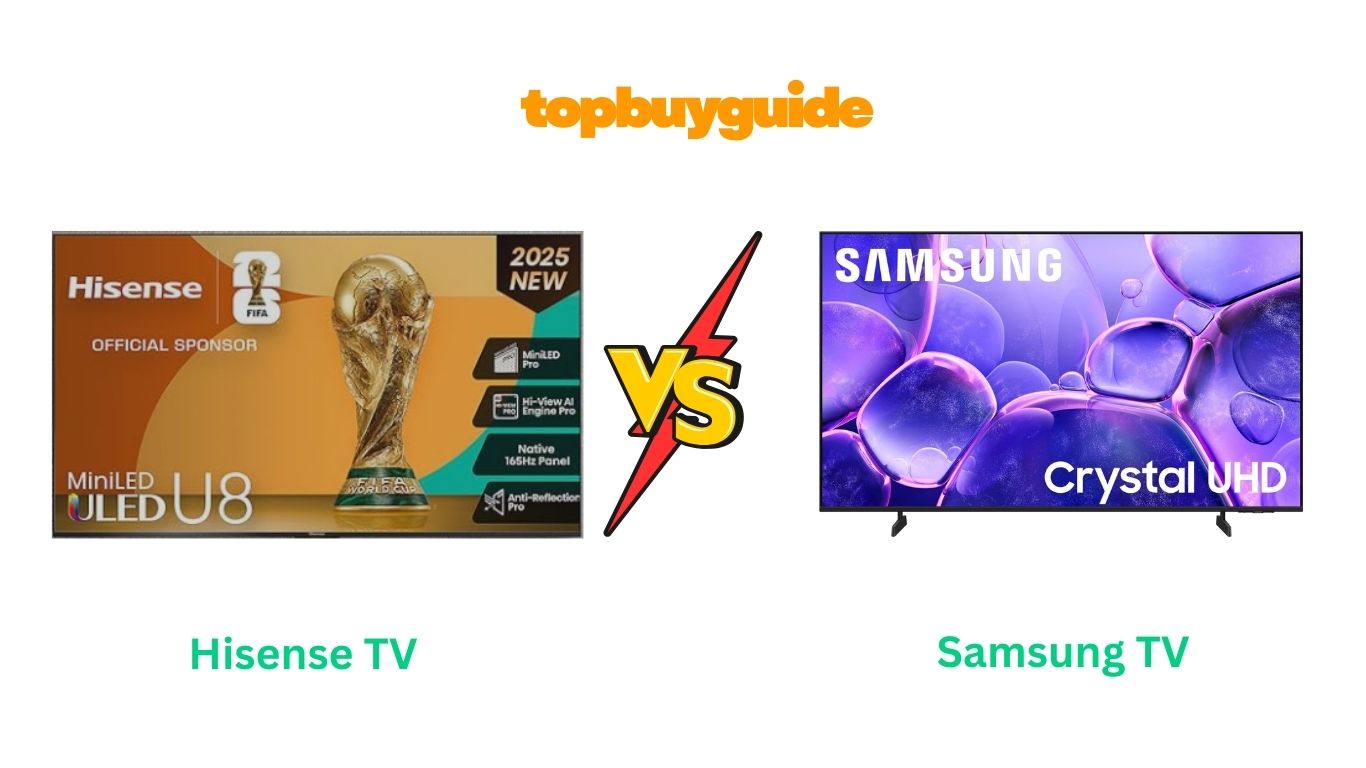
Choosing between a Hisense TV and a Samsung TV can be a real challenge. Both brands are giants in the television market, offering impressive technology and features. However, for most users looking for a blend of premium features, reliability, and sophisticated design, the Samsung TV often emerges as the stronger contender. Its powerful processor and secure smart platform provide a comprehensive viewing experience. Let’s explore if it’s the right choice for you.
Why Do I Recommend The Samsung TV?
While Hisense offers incredible value, Samsung TVs provide a more polished and feature-rich package that caters to a wider range of users. Here’s why the Samsung TV gets my recommendation:
- Powerful Crystal Processor 4K: The Samsung TV is equipped with a Crystal Processor 4K that excels at upscaling content. This means even lower-resolution shows and movies are enhanced to look crisp and clear in 4K. While Hisense TVs also have upscaling, Samsung’s processing is often more refined, delivering a consistently sharp and vibrant picture.
- Robust Data Security: Samsung places a strong emphasis on security with its multi-layered Knox Security platform. This feature protects your personal data, such as PINs and passwords, and secures your connected IoT devices from potential threats. In comparison, while Hisense TVs have security measures, Samsung’s Knox is a well-established and trusted security solution in the industry.
- Elegant and Slim Design: The Samsung TV features a sleek MetalStream design, crafted to look like it’s made from a single sheet of metal. With its slim bezel, it offers a minimalist and modern aesthetic that can enhance any room’s decor. Hisense TVs are well-designed, but Samsung’s models often have a more premium and sophisticated finish.
- Enhanced Gaming Features: Samsung TVs include Motion Xcelerator technology, which smooths out motion for clearer picture quality during fast-paced games and sports, operating at up to 60Hz. Combined with Game Mode, it provides a more responsive and immersive gaming experience than many budget-friendly competitors.
- Vast Free Content Library: With Samsung TV Plus, you get instant access to over 2,700 free channels, including more than 400 premium options, without needing a subscription. This extensive library of free content, spanning news, sports, and movies, is a significant advantage over the standard smart TV offerings from other brands.
- Established Brand Reliability: Samsung has a long-standing reputation for quality and reliability in the electronics market. Customer support and warranty services are well-established, giving you peace of mind with your purchase. Hisense has grown in popularity, but Samsung remains a benchmark for durability and long-term performance.
- Superior Color Mapping: The Samsung TV utilizes 3D Color Mapping technology to ensure that you see every shade of color as the creators intended. This results in a more lifelike and dazzling picture. In contrast, while Hisense provides great color, Samsung’s advanced processing often produces more nuanced and accurate tones.
Side By Side Comparison Chart (Hisense TV vs Samsung TV)
| Feature | Hisense TV | Samsung 50-Inch Crystal UHD TV (2025) |
| Processor | Specific processor varies by model | Crystal Processor 4K |
| Display Technology | ULED, Mini-LED, QLED (varies) | LED |
| Resolution | 4K | 4K |
| Refresh Rate | Often 60Hz, higher on premium models | 60 Hz (with Motion Xcelerator) |
| Smart TV Platform | Google TV or VIDAA OS | Tizen OS |
| Security | Standard Smart TV Security | Samsung Knox Security (Triple-Layer) |
| Design | Varies, often with thicker bezels | MetalStream Design (Slim, aircraft-inspired) |
| Free Content | Access via standard apps | Samsung TV Plus (2,700+ free channels) |
| Voice Assistant | Google Assistant / Alexa (varies) | Alexa Built-in |
| Special Features | Dolby Vision, Game Mode Plus (varies) | 4K Upscaling, Motion Xcelerator, Game Mode |
| Connectivity | Bluetooth, Ethernet, HDMI, USB, Wi-Fi | Bluetooth, Ethernet, HDMI, USB, Wi-Fi |
| Dimensions | Varies by model | 7.8″D x 43.7″W x 27.4″H |
What Common Features Can Hisense TV and Samsung TV Do?
Despite their differences, both Hisense and Samsung TVs share a strong foundation of modern television technology, making either a great choice for upgrading your home entertainment system. They are designed to deliver a high-quality viewing experience with features that cater to today’s streaming-centric world.
Both brands offer TVs with 4K Ultra HD resolution, which provides four times the pixels of a standard Full HD TV. This results in a sharper, more detailed, and incredibly clear picture, bringing your favorite movies and shows to life. Whether you’re watching a blockbuster film or the latest streaming series, you’ll appreciate the stunning clarity that both Hisense and Samsung provide.
Another key shared capability is their smart TV functionality. Both TVs come equipped with built-in Wi-Fi and an operating system that allows you to access a world of content. You can easily stream from popular services like Netflix, Disney+, Hulu, and YouTube. This integrated smart platform turns your television into an all-in-one entertainment hub, eliminating the need for external streaming devices.
Furthermore, both Hisense and Samsung TVs are designed with gamers in mind, offering a dedicated Game Mode. This feature reduces input lag and optimizes the picture settings to provide a smoother and more responsive gaming experience. Whether you’re playing on a console or streaming games from the cloud, you’ll benefit from the enhanced performance that both brands deliver.
Finally, connectivity is a strong point for both. They come with multiple HDMI and USB ports, allowing you to connect a wide range of devices, such as gaming consoles, soundbars, and Blu-ray players. They also support Bluetooth, enabling you to wirelessly connect headphones or speakers for a more personal audio experience.
Common Features of Hisense TV vs Samsung TV
| Feature | Hisense TV | Samsung TV |
| 4K Resolution | Yes | Yes |
| Smart TV Platform | Yes | Yes |
| HDR Support | Yes | Yes |
| Game Mode | Yes | Yes |
| Wi-Fi Connectivity | Yes | Yes |
| Bluetooth | Yes | Yes |
| Multiple HDMI Ports | Yes | Yes |
| Voice Control | Yes | Yes |
A Detailed Comparison Of the Hisense TV vs Samsung TV
Picture Quality and Processing
The Samsung 50-Inch Crystal UHD TV boasts a powerful Crystal Processor 4K, which is the brains behind its impressive picture quality. This processor is adept at 4K upscaling, taking content filmed in lower resolutions and intelligently enhancing it to near-4K clarity. It also powers 3D Color Mapping, which creates a vibrant and lifelike color palette. This makes scenes look realistic, with every shade and hue appearing as the director intended.
Hisense TVs, particularly in the ULED series, are strong competitors and often incorporate technologies like Quantum Dot and Full Array Local Dimming for excellent contrast and color. However, Samsung’s processing technology is often seen as more consistent and refined across all types of content. The result is a sharp, clean image with minimal digital noise, even when watching older shows or streaming content with lower bitrates.
Smart TV Platform and Content
The Samsung TV runs on Tizen OS, a proprietary smart platform known for its fast performance and user-friendly interface. A standout feature is Samsung TV Plus, which offers a massive library of over 2,700 free, ad-supported channels. This provides an enormous amount of content right out of the box, from news and sports to movies and entertainment, without requiring any subscriptions.
Hisense TVs typically use either Google TV or their in-house VIDAA OS. Google TV is a powerful platform that excels at content aggregation and personalized recommendations, integrating seamlessly with the Google ecosystem. While both Tizen and Google TV offer access to all major streaming apps, the sheer volume of free, integrated live channels on Samsung TV Plus gives it a distinct advantage for users who want to cut the cord without losing variety.
Design and Build Quality
Samsung has paid close attention to the aesthetics of its Crystal UHD TV. It features a “MetalStream Design,” giving it an elegant, slim profile with a very thin bezel. The design is modern and minimalist, allowing the TV to blend seamlessly into your living space and keeping your focus on the screen. The build quality feels solid and premium, reflecting Samsung’s reputation as a top-tier manufacturer.
Hisense TVs generally have a more functional design. While they are by no means unattractive, they often have slightly thicker bezels and use more plastic in their construction compared to Samsung’s more premium materials. If the look and feel of the TV in your room are as important as the picture on the screen, the Samsung TV’s sophisticated and modern design gives it a clear edge.
Gaming and Performance
For casual gamers, both TVs offer a great experience with a dedicated Game Mode. The Samsung TV includes Motion Xcelerator technology, which works to reduce motion blur and judder in fast-moving scenes. It predicts and compensates for frames, ensuring smoother visuals at its 60Hz refresh rate. This is particularly beneficial for sports and action-packed games, making the on-screen action feel more fluid.
Hisense also offers game-centric features, sometimes including higher refresh rates and support for AMD FreeSync on its more premium models. However, for an entry-level 4K TV like the Samsung Crystal UHD, the inclusion of Motion Xcelerator provides a noticeable performance boost for everyday gaming and viewing. This optimization ensures a consistently smooth and clear picture, which is a key advantage for this price range.
Conclusion
For budget-conscious buyers who want the best possible picture for the lowest price, a Hisense TV is an excellent and often unbeatable choice. It packs impressive technology like ULED and Mini-LED into affordable packages, making high-end features accessible.
However, for most users, the Samsung TV is the superior overall package. It delivers a consistently brilliant 4K picture powered by a sophisticated processor, a secure and user-friendly smart platform with a wealth of free content, and an elegant design that elevates any room. Its established brand reliability and robust features like Knox Security make it a smart, long-term investment.
FAQs
- Which TV brand is more reliable, Hisense or Samsung?
Samsung has a longer and more established reputation for reliability and longevity in the television market. While Hisense has significantly improved its quality over the years, Samsung is generally considered the more dependable brand for long-term ownership and customer support. - Is ULED from Hisense better than Samsung’s Crystal UHD?
ULED is Hisense’s premium technology that combines multiple features like Quantum Dot color and local dimming to enhance picture quality, often competing with Samsung’s QLED models. Samsung’s Crystal UHD is its standard 4K LED line, which focuses on color accuracy and strong processing. ULED may offer better contrast, but Crystal UHD provides excellent color and clarity for the price. - Do I need a soundbar for these TVs?
While both TVs have built-in speakers, most modern flat-panel TVs have average sound quality due to their slim design. For a more immersive audio experience, especially for movies and gaming, purchasing a separate soundbar is highly recommended for either a Hisense or Samsung TV. - Which TV is better for gaming?
Both brands offer Game Mode to reduce input lag. Samsung’s Motion Xcelerator provides smooth motion for 60Hz gaming. Higher-end Hisense models sometimes offer 120Hz refresh rates and FreeSync, which are better for competitive gaming. For casual gaming, the Samsung Crystal UHD is more than sufficient. - What is the difference between Google TV (on Hisense) and Tizen OS (on Samsung)?
Google TV is known for its excellent content recommendations and integration with the Google ecosystem. Tizen OS is praised for its speed and simplicity, and it includes the exclusive Samsung TV Plus service with thousands of free channels. The best choice depends on your personal preference and existing tech ecosystem. - Does Samsung Knox Security make a real difference?
Yes, for users concerned about privacy, Samsung Knox provides an extra layer of protection for your personal data and connected smart home devices. It’s a valuable feature in an age where smart TVs are increasingly connected to the internet and other devices in your home. - Which brand offers better value for money?
Hisense is widely recognized for offering outstanding value, often providing premium features like Mini-LED at a lower price point than competitors. Samsung, while sometimes more expensive, offers excellent value through its reliable performance, robust smart features, and brand reputation. - Will both TVs support major streaming apps like Netflix and Disney+?
Yes, both Hisense (with Google TV or VIDAA) and Samsung (with Tizen OS) support all major streaming applications. You will have no trouble accessing your favorite services on either television.

Alex Turner is a dedicated product researcher and reviewer at TopBuyGuide.com, known for his clear, honest, and data-driven insights. He spends countless hours testing, comparing, and analyzing products to help readers make confident and informed buying decisions.