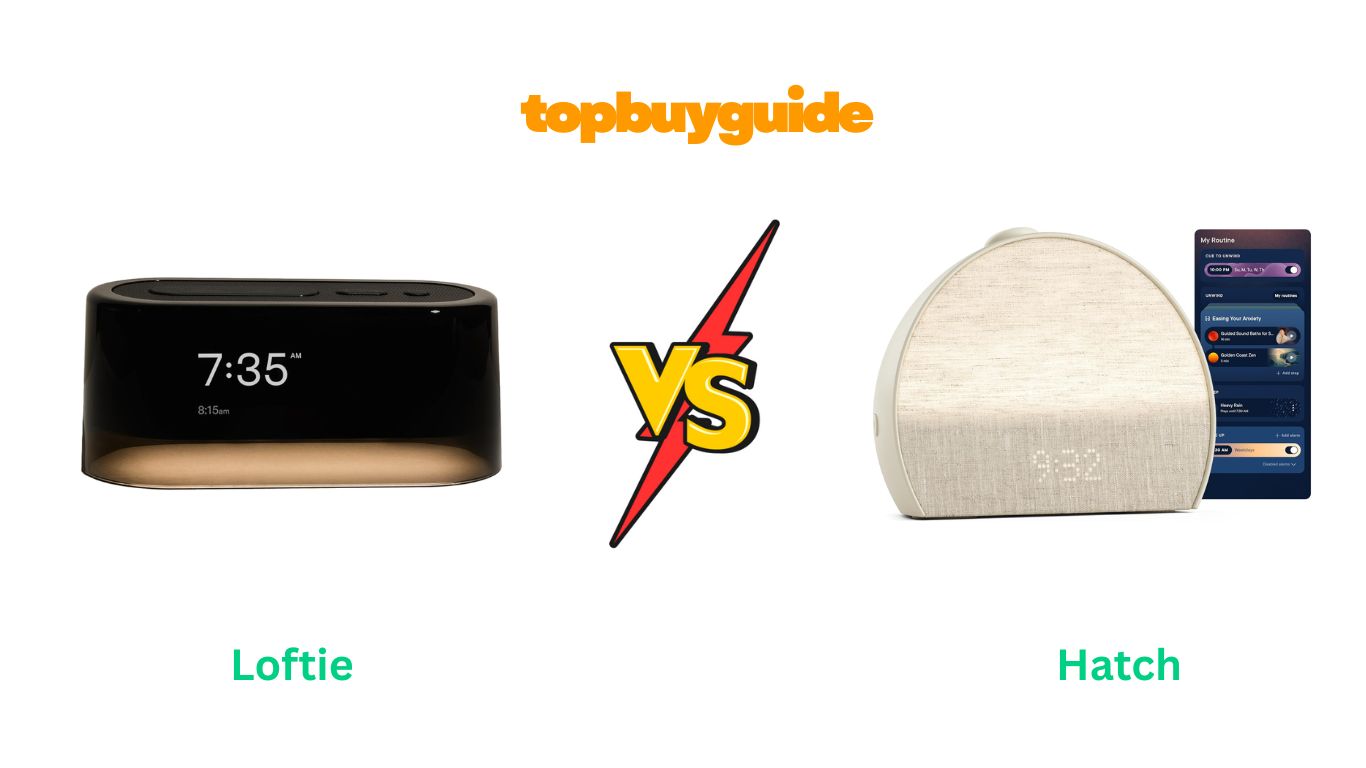
Choosing between Loftie and Hatch requires understanding your sleep priorities. I recommend the Hatch Restore for most sleepers. Its customizable sunrise alarm mimics natural dawn for gentler wake-ups. The robust bedside light serves practical purposes beyond alarms. Superior app integration creates personalized evening and morning routines that transform your sleep quality dramatically.
Why Do I Recommend The Hatch Restore?
The Hatch Restore delivers comprehensive sleep solutions that address both wind-down and wake-up needs effectively.
- True Sunrise Alarm Technology – The Hatch features a genuine sunrise simulation that gradually brightens over 5-60 minutes before your alarm. This mimics natural dawn to wake you gently. In contrast, Loftie offers only a small nightlight without any sunrise functionality. The difference profoundly impacts morning alertness.
- Customizable Light Colors – With 18 core colors and unlimited customization options, Hatch lets you personalize every aspect of lighting. You can select specific hues for wind-down routines and wake-up sequences. Meanwhile, Loftie provides only a basic warm glow nightlight with minimal adjustment capabilities.
- Full-Featured Bedside Light – The Hatch includes a practical reading lamp you can activate instantly with one button press. This eliminates nighttime phone flashlight usage. Loftie’s nightlight serves only ambient purposes and cannot function as a task light for reading or navigation.
- Sophisticated Sleep Routines – Hatch’s app creates multi-step evening routines combining light, sound, and duration customization. You can program automatic wind-down sequences that signal bedtime. Loftie offers basic playlists but lacks the integrated routine automation Hatch provides seamlessly.
- Visual Sleep Personas – Through detailed questionnaires, Hatch assigns you a sleep persona and recommends personalized content. This data-driven approach optimizes your experience from day one. Loftie takes a more generic approach without personalized sleep profiling.
- Superior Light Intensity – The Hatch Restore 3 produces significantly brighter light than the Restore 2, reaching levels effective for circadian rhythm regulation. Adequate light intensity proves crucial for sunrise alarm effectiveness. Loftie lacks any sunrise capability entirely.
- Elegant Physical Controls – Hatch features intuitive touch sensors integrated invisibly into its linen face. The Rest and Rise buttons start routines without phone interaction. While Loftie offers physical buttons, they require more navigation through menus for similar functions.
- Room Aesthetics – The Hatch’s curved design with fabric exterior and three neutral colorways (Latte, Slate, Putty) complements modern bedrooms beautifully. Its sculptural form makes it bedroom decor rather than just functional equipment. Loftie’s design is attractive but more traditionally clock-like.
Side By Side Comparison Chart Loftie vs Hatch
| Feature | Loftie | Hatch Restore |
| Sunrise Alarm | No | Yes (5-60 minute customizable) |
| Light Type | Small nightlight only | Full sunrise simulation + reading light |
| Light Colors | Warm glow only | 18 core colors + unlimited custom |
| Light Brightness | Low ambient only | Adjustable high brightness |
| Alarm System | Two-phase audio alarm | Sunrise + audio or sunrise only |
| Wake-Up Time | 9-minute two-phase | Customizable sunrise duration |
| Sound Library | 100+ sounds (free) | Extensive library with subscription |
| Subscription Model | Optional Loftie+ ($5.99/month) | Optional Hatch+ ($4.99/month) |
| Bedside Reading Light | No | Yes |
| Physical Controls | Multiple navigation buttons | Touch-sensitive + dedicated routine buttons |
| Clock Display | LED display with dimming | Dimmable tap-to-view display |
| Bluetooth Speaker | Yes | No |
| Wind-Down Routines | Basic playlists | Multi-step automated sequences |
| Morning Routines | Basic alarm sounds | Morning Moment with multiple components |
| Sleep Tracking | No | Yes (with subscription) |
| Smart Home Integration | No | Yes (with subscription) |
| Offline Mode | Yes | Requires WiFi for full functionality |
| Design Style | Modern minimalist | Sculptural with fabric exterior |
| Color Options | Black, White | Putty, Latte, Slate, Greige, Cocoa |
| Dimensions | 4.5″ x 2.5″ x 4.5″ | 7.23″ x 2.4″ x 1.5″ |
| Price | $149 | $169.99 (Restore 2/3) |
| Trial Period | Standard return policy | 30-night bedside trial |
What Common Loftie vs Hatch Can Do?
Both smart alarm clocks share fundamental features designed to improve sleep quality and reduce smartphone dependence at bedtime.
Sleep Sound Libraries – Both Loftie and Hatch provide extensive collections of sleep-promoting audio content. White noise, pink noise, brown noise, and nature sounds help mask disruptive ambient noise throughout the night. The sound libraries include ocean waves, rainfall, forest ambience, and gentle instrumental music. Both devices let you play sounds for preset durations or continuously all night. The quality of sound reproduction ensures effective noise masking without distortion.
Guided Meditation and Mindfulness – Both alarm clocks offer guided meditation sessions to facilitate relaxation before sleep. These mindfulness exercises range from breathing techniques to body scan meditations. The guided content helps anxious minds transition from active thinking to restful states. Both platforms feature experienced meditation instructors. The variety ensures you can find styles matching your preferences and experience levels.
Customizable Alarm Settings – Both devices allow multiple alarm configurations for different days and schedules. You can set recurring weekly alarms or one-time alarms as needed. Volume controls let you adjust alarm loudness to your preference. Both support alarm snoozing, though implementation differs slightly. The flexibility accommodates varying schedules for shift workers or weekend sleepers.
App-Based Setup and Control – Both Loftie and Hatch require smartphone apps for initial setup and full functionality access. The companion apps available on iOS and Android provide intuitive interfaces for customization. You can preview settings before committing to them. Both apps receive regular updates adding new features and content. The wireless connectivity enables seamless synchronization between device and phone.
Phone-Free Operation – Once configured, both alarm clocks function independently without constant phone connectivity. Physical buttons on each device control primary functions directly. This design philosophy reduces bedtime phone temptation and blue light exposure. Both manufacturers emphasize breaking smartphone dependence for better sleep hygiene. The standalone operation proves especially valuable for those committed to phone-free bedrooms.
Premium Subscription Services – Both companies offer optional subscription services unlocking expanded content libraries. Loftie+ costs $5.99 monthly while Hatch+ runs $4.99 monthly. The subscriptions provide access to exclusive sleep stories, extended sound collections, and specialized content. Both offer free trial periods so you can evaluate subscription value. However, core alarm functionality works without subscriptions for both devices.
Bedtime Stories and Sleep Content – Both platforms feature bedtime stories designed for adults seeking relaxation assistance. These narrations use calming voices and gentle pacing to facilitate sleep onset. The story collections span various genres from classic literature to nature narratives. Both regularly add new content to their libraries. The storytelling approach provides mental focus that prevents racing thoughts.
Dimmable Displays – Both alarm clocks feature adjustable display brightness to minimize bedroom light pollution. You can dim displays to barely visible levels or turn them off completely. This prevents the sleep-disrupting effects of bright LED displays. Both recognize that excessive bedroom light interferes with melatonin production. The blackout capabilities support optimal sleep environment creation.
Common Features of Loftie vs Hatch
| Feature | Loftie | Hatch Restore |
| White Noise | Yes | Yes |
| Nature Sounds | Yes | Yes |
| Guided Meditations | Yes | Yes |
| Sleep Stories | Yes (with subscription) | Yes (with subscription) |
| Multiple Alarms | Yes | Yes |
| Snooze Function | Yes | Yes |
| Volume Control | Yes | Yes |
| WiFi Connectivity | Yes | Yes |
| iOS App | Yes | Yes |
| Android App | Yes | Yes |
| Phone-Free Operation | Yes | Yes |
| Dimmable Display | Yes | Yes |
| Blackout Mode | Yes | Yes |
| Optional Subscription | Yes ($5.99/month) | Yes ($4.99/month) |
| Free Trial Included | Yes | Yes (30 days) |
| Regular Content Updates | Yes | Yes |
| Music Integration | Yes (Bluetooth) | Yes (via app) |
| Bedtime Stories | Yes | Yes |
| Sound Timers | Yes | Yes |
| Custom Alarm Tones | Yes | Yes |
| Weekend/Weekday Schedules | Yes | Yes |
| Compact Design | Yes | Yes |
| Modern Aesthetic | Yes | Yes |
| USB-C Power | Yes | No (proprietary adapter) |
A Detailed Comparison Of the Loftie vs Hatch
Sunrise Alarm Functionality
The Hatch Restore’s defining feature is its customizable sunrise simulation that gradually illuminates your bedroom before your alarm. You can program the sunrise to begin anywhere from 5 to 60 minutes before your wake time. The light intensity increases progressively, mimicking natural dawn and triggering cortisol release to wake you naturally.
Loftie does not include any sunrise alarm capability despite being marketed as a sleep improvement device. Its nightlight provides only ambient illumination suitable for navigation, not wake-up purposes. This fundamental difference makes Hatch the clear choice for anyone interested in circadian-aligned wake-up experiences.
Light Versatility and Brightness
The Hatch functions as a multi-purpose lighting solution with adjustable brightness suitable for reading, ambiance, or wayfinding. The dedicated bedside light button provides instant illumination without fumbling for your phone. You can customize light colors from 18 core options or create unlimited custom hues.
Loftie’s lighting capability extends only to its small warm-glow nightlight located at the device’s base. The light intensity remains low and serves purely ambient purposes. While adequate for nighttime bathroom trips, it cannot function as a reading light or significant illumination source.
Alarm Customization Options
The Hatch offers unprecedented alarm customization through its Rise routine feature. You can combine sunrise lighting with nature sounds, music, or guided wake-up exercises. The alarm crescendos gradually, allowing both light and sound to intensify as wake time approaches. You control exactly when the alarm reaches maximum intensity.
Loftie employs a distinctive two-phase alarm system where a gentle tone plays 9 minutes before your main alarm. This wake-up/get-up approach mimics natural awakening patterns. The alarm sounds themselves span various tones from singing bowls to percussion. However, you cannot adjust the 9-minute interval between phases.
App Integration and User Experience
The Hatch app provides comprehensive control over every aspect of your sleep experience. During setup, detailed questionnaires assess your sleep patterns and assign a personalized sleep persona. The app recommends specific content based on your answers. Navigation remains intuitive with clear visual representations of routine components.
Loftie’s app handles setup and customization but offers less sophisticated personalization. The interface allows content browsing and alarm scheduling but lacks the guided onboarding Hatch provides. Once configured, Loftie emphasizes on-device control through its physical buttons. The app serves more as setup tool than daily interface.
Wind-Down Routine Capabilities
The Hatch excels at creating automated evening routines called Rest sequences. You can program multi-step experiences combining specific light colors, sound selections, and duration parameters. The Cue to Unwind feature signals bedtime automatically with pulsating light and ambient music. These structured routines help establish consistent sleep schedules.
Loftie offers a basic bed signal that plays a short lullaby at your designated bedtime. You can access its sound library for white noise or meditations but must manually select and start content. The experience feels less automated and requires more active engagement than Hatch’s seamless routine triggering.
Morning Transition Features
The Hatch includes an optional Morning Moment that plays after you dismiss your alarm. This could include upbeat music, guided movement exercises, or motivational content to energize your morning. The feature extends the wake-up experience beyond just stopping an alarm. You can customize duration and content type.
Loftie focuses primarily on the alarm itself without extended morning content. Once you dismiss the alarm, the device returns to standby mode. While you can manually play music or meditations through Bluetooth, there’s no automatic morning routine sequencing. The experience ends with alarm dismissal.
Bluetooth Speaker Functionality
Loftie includes full Bluetooth speaker capability, allowing you to stream any audio content from your smartphone. This proves valuable for podcast listeners or those wanting specific music not in Loftie’s library. The speaker quality impresses for its compact size with clear audio reproduction. You can use Loftie as your primary bedside speaker.
Hatch does not support Bluetooth streaming, limiting audio content to what’s available through the Hatch app and subscription. While the content library proves extensive, you cannot play your own music or podcasts directly. This restriction may disappoint users wanting full audio control. The decision reinforces Hatch’s phone-free philosophy.
Subscription Content Value
Loftie+ subscription ($5.99/month) unlocks custom wind-down routines, extended sleep track collections, and exclusive bedtime stories. The base device includes 100+ sounds without subscription. Premium content includes celebrity-narrated stories and specialized soundscapes. Loftie releases regular content updates to keep the library fresh.
Hatch+ subscription ($4.99/month or $49.99/year) provides access to guided meditations, sleep tracking data, smart home integration, and Morning Moment content. The free trial lasts 30 days compared to Loftie’s shorter trial period. Many users find Hatch+ essential for unlocking the device’s full potential. Core alarm functions work without subscription.
Physical Design and Aesthetics
The Hatch features a sculptural curved design with a linen fabric face and invisible touch controls. Available in five neutral colorways, it resembles bedroom decor rather than technology. The smooth surfaces and warm materials create an inviting bedside presence. The crescent shape proves instantly recognizable and distinctive.
Loftie adopts a more traditional rectangular alarm clock form factor with a polycarbonate shell and steel top grille. The LED display dominates the front panel with physical buttons on top for navigation. While sleek and modern, the design reads clearly as an electronic device. Color options include black and white variants.
Sleep Tracking and Analytics
The Hatch+ subscription includes basic sleep tracking through the app, monitoring your adherence to routines. While not as comprehensive as dedicated sleep trackers, it provides insights into consistency. You can review how regularly you follow wind-down and wake-up routines. The data helps identify patterns affecting sleep quality.
Loftie does not offer any sleep tracking features even with its subscription service. The device focuses entirely on facilitating better sleep through content and alarms rather than monitoring sleep metrics. For users wanting data about their sleep patterns, Loftie provides no solution. This represents a significant capability gap.
Offline Functionality
Loftie emphasizes its offline mode capability once initial setup completes. You can disconnect from WiFi entirely and still access all downloaded content and alarm functions. This appeals to users concerned about EMF exposure or wanting complete phone independence. Updates require WiFi reconnection but aren’t mandatory for operation.
Hatch requires persistent WiFi connectivity for full functionality including content streaming and app control. While alarms work without WiFi once programmed, you lose access to routine automation and new content. The always-connected design enables features like remote control but sacrifices true offline independence. This may concern EMF-sensitive users.
Conclusion
The Hatch Restore delivers superior value for sleep-focused individuals. Its customizable sunrise alarm aligns with circadian biology for natural awakening. The multi-step wind-down routines automate healthy sleep habits effectively. At $169.99 with a 30-night trial, you can test risk-free. The $4.99 monthly subscription unlocks extensive content libraries worth the investment. Choose Hatch for comprehensive sleep transformation beyond basic alarm functionality. [Check availability on Amazon]
FAQs
Q: Can Loftie wake me up with light like the Hatch?
A: No, Loftie does not include sunrise alarm capability. Its nightlight provides only ambient illumination for navigation, not wake-up purposes. Hatch’s defining feature is its customizable sunrise simulation that gradually brightens before your alarm. If light-based awakening interests you, Hatch is the only option between these two devices.
Q: Which device works better without a subscription?
A: Loftie includes 100+ sounds free without subscription, while Hatch provides 18 colors and basic sounds. Core alarm functionality works on both without subscriptions. However, Hatch’s full potential requires Hatch+ for routines and content. Loftie offers more substantial free content but lacks Hatch’s sunrise alarm regardless of subscription status.
Q: Can I use my own music on either device?
A: Yes on Loftie, no on Hatch. Loftie functions as a Bluetooth speaker, streaming any audio from your phone. This includes Spotify, podcasts, or personal music libraries. Hatch does not support Bluetooth streaming, limiting you to content available through the Hatch app and subscription library only.
Q: Which alarm clock has better sound quality?
A: Loftie’s dedicated speaker design provides surprisingly robust audio for its size, especially as a Bluetooth speaker. Hatch focuses more on light features with adequate but not exceptional audio quality. For music lovers wanting a bedside speaker, Loftie wins. For sleep sounds and alarms, both perform satisfactorily.
Q: How do the subscription costs compare long-term?
A: Loftie+ costs $5.99/month ($71.88 annually) while Hatch+ costs $4.99/month or $49.99/year. Hatch’s annual subscription saves significantly compared to monthly billing. Over five years, Hatch+ costs $250 annually while Loftie+ costs $360. However, Loftie includes more free content without any subscription required.
Q: Can I control these devices without my phone?
A: Yes, both offer phone-free operation after setup. Loftie features physical navigation buttons controlling all functions directly on the device. Hatch includes touch-sensitive Rest and Rise buttons that trigger pre-programmed routines without phone interaction. Both designs intentionally reduce bedtime smartphone dependence for better sleep hygiene.
Q: Which device is better for small bedside tables?
A: Loftie’s compact 4.5 x 2.5 x 4.5-inch footprint suits smaller nightstands better. Hatch measures 7.23 x 2.4 x 1.5 inches with a wider but flatter profile. Loftie’s vertical orientation occupies less surface area. However, Hatch’s low profile may fit under certain shelves where Loftie’s height wouldn’t work.
Q: Do either devices eliminate phone alarm needs completely?
A: Both can replace phone alarms entirely once configured. Loftie’s offline mode allows complete WiFi disconnection after setup. Hatch requires WiFi for full functionality but alarms work without connectivity once programmed. Both designs encourage phone-free bedrooms, though Loftie’s offline capability provides more complete phone independence long-term.

Alex Turner is a dedicated product researcher and reviewer at TopBuyGuide.com, known for his clear, honest, and data-driven insights. He spends countless hours testing, comparing, and analyzing products to help readers make confident and informed buying decisions.