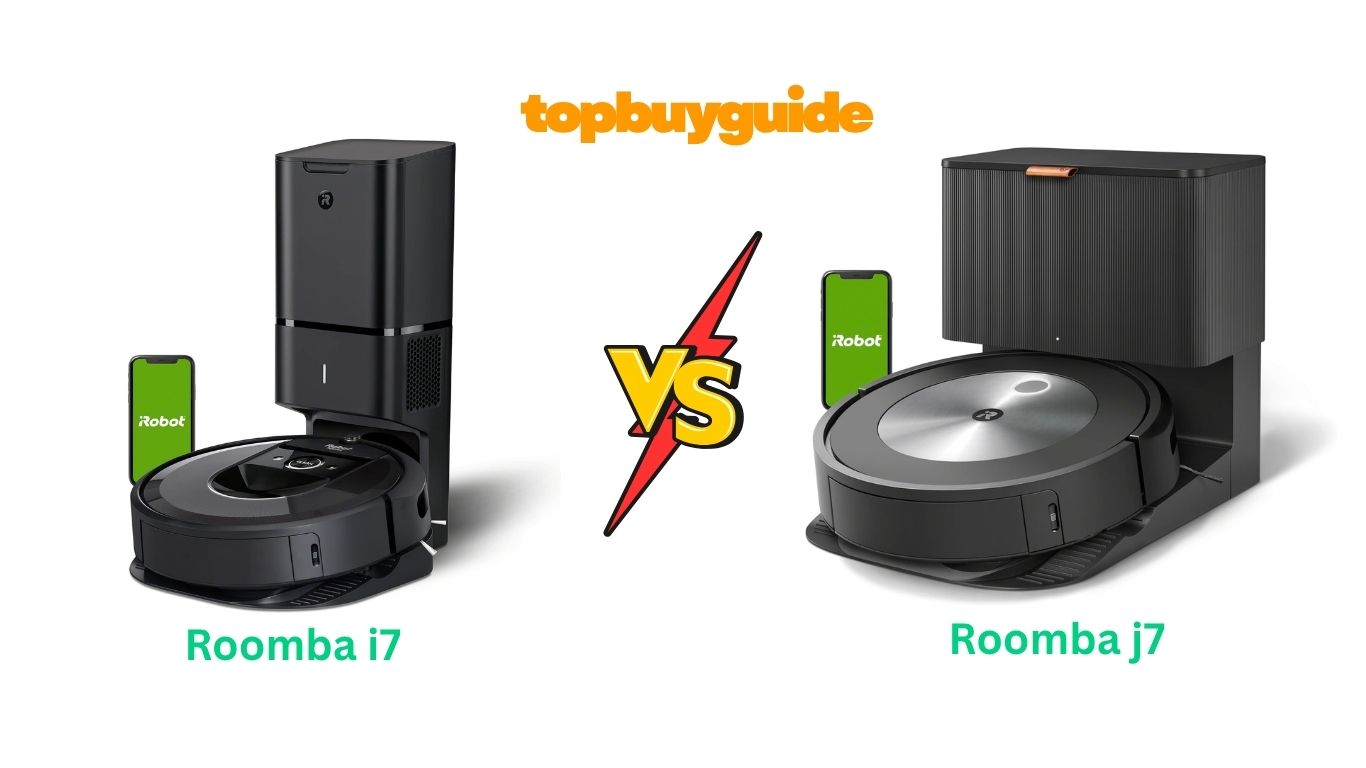
Deciding between the Roomba i7 and j7 requires understanding their key technological differences and cleaning capabilities. After thorough analysis, I recommend the Roomba j7 for most households seeking superior performance. The j7’s front-facing camera with PrecisionVision Navigation avoids obstacles like pet waste and charging cables proactively. Its larger 0.4L dustbin and 97-minute battery life outperform the i7’s specifications significantly. While both deliver excellent cleaning, the j7’s advanced object recognition justifies the investment.
Why Do I Recommend The Roomba j7?
The Roomba j7 stands out as the superior choice for several compelling reasons over the i7:
- Advanced Obstacle Avoidance: The j7 features a front-facing camera with PrecisionVision Navigation that recognizes and avoids obstacles proactively. In contrast, the i7 relies on touch sensors, bumping into objects before redirecting itself away.
- Superior Pet Waste Detection: The j7 includes iRobot’s P.O.O.P. guarantee, confidently avoiding pet accidents with camera-based identification technology. Conversely, the i7 lacks this capability and may run over unpleasant messes before detecting them.
- Larger Dustbin Capacity: The j7 holds 0.4 liters of debris, allowing longer cleaning sessions without interruption. Meanwhile, the i7’s smaller 0.3-liter bin requires more frequent emptying during large cleaning jobs.
- Extended Battery Life: The j7 delivers approximately 97 minutes of continuous cleaning on a single charge. On the other hand, the i7 provides only 75 minutes before requiring a recharge cycle.
- Real-Time Obstacle Learning: The j7 sends photos of new obstacles to your smartphone for identification and learning. However, the i7 cannot identify specific objects, limiting its ability to adapt over time.
- Compact Docking Station: The j7+ model features a shorter, more aesthetically pleasing Clean Base that fits better in homes. Conversely, the i7+’s taller, bulkier base station requires more dedicated storage space in corners.
- Lower Profile Design: At 3.4 inches tall, the j7 fits under more furniture pieces for comprehensive cleaning. In comparison, the i7 stands at 3.63 inches, limiting its access to tight spaces.
- Enhanced Carpet Performance: Testing reveals the j7 captures more debris on high-pile carpets with better suction distribution. Alternatively, the i7 sometimes struggles at carpet edges and can get caught on tassels.
Side By Side Comparison Chart: Roomba i7 vs j7
| Feature | Roomba i7 | Roomba j7 |
| Obstacle Avoidance | No (touch-based detection) | Yes (PrecisionVision Navigation) |
| Camera Position | Top-mounted | Front-facing |
| Pet Waste Detection | No | Yes (P.O.O.P. guarantee) |
| Dustbin Capacity | 0.3 liters | 0.4 liters |
| Battery Life | 75 minutes | 97 minutes |
| Height | 3.63 inches | 3.4 inches |
| Weight | 7.44 lbs | 7.49 lbs |
| Clean Base Size (Plus models) | Taller, bulkier design | Shorter, compact design |
| Release Year | 2018 | 2021 |
| Suction Power | 10x Roomba 600 series | 10x Roomba 600 series |
| Object Recognition | None | Recognizes 20+ objects |
| Obstacle Photo Sharing | No | Yes (via app) |
| Wall Follow Sensor | No | Yes |
| Light Touch Sensor | Yes | Improved version |
| Price Range (MSRP) | $699 (i7), $949 (i7+) | $599 (j7), $799 (j7+) |
What Common Features Can Roomba i7 vs j7 Do?
Smart Mapping Technology
Both robots use Imprint Smart Mapping to learn, map, and remember your home’s layout systematically. They create detailed floor plans during initial cleaning sessions, identifying individual rooms with remarkable accuracy. You can label rooms like “kitchen,” “living room,” or “bedroom” through the iRobot Home app. The robots store multiple floor plans for homes with different levels, accommodating multi-story residences. This intelligent mapping enables targeted room cleaning, allowing you to command specific areas on demand.
Recharge and Resume Functionality
Both the i7 and j7 feature automatic recharge and resume capability for uninterrupted cleaning. When battery levels drop below the threshold needed to complete cleaning, they return to base. After recharging sufficiently, they resume cleaning exactly where they left off without user intervention. This feature proves invaluable for larger homes requiring extended cleaning sessions beyond battery capacity. The seamless automation ensures complete floor coverage even when multiple charging cycles are necessary.
Keep Out Zones
Digital Keep Out Zones allow you to designate specific areas as off-limits through the app. You can draw rectangular boundaries on your smart map to prevent the robots from entering. This feature protects pet feeding areas, play zones, or delicate items from vacuum disturbance. The robots recognize these virtual boundaries and navigate around them automatically during cleaning sessions. Keep Out Zones can be temporary or permanent, offering flexibility for changing household needs.
Room-Specific Cleaning Commands
Both models respond to room-specific cleaning requests through the app or voice assistants effectively. You can say “clean the kitchen” and the robot navigates directly to that space. This targeted cleaning addresses immediate messes like spilled cereal or tracked-in dirt without full-house cleaning. The robots recognize room boundaries from their stored maps, ensuring they clean only requested areas. This feature saves time and battery when only specific spaces require attention currently.
Voice Assistant Integration
Amazon Alexa and Google Assistant integration enables hands-free voice control for both robots seamlessly. You can start, stop, pause, or send robots to specific rooms using simple voice commands. The integration works flawlessly once connected through the iRobot Home app during initial setup. Voice commands include “start cleaning,” “clean the bedroom,” or “return to dock” for convenience. This feature eliminates the need to physically interact with robots or open apps.
Dirt Detect Technology
Both robots employ Dirt Detect sensors to identify particularly dirty areas requiring extra attention. When sensors detect concentrated debris, the robots automatically make additional cleaning passes over those spots. This intelligent feature ensures thorough cleaning in high-traffic areas like entryways and kitchen floors. The technology uses acoustic and optical sensors to recognize dirt concentration levels accurately. Dirt Detect optimizes cleaning efficiency by focusing efforts where they’re needed most urgently.
Dual Multi-Surface Rubber Brushes
Both models feature two counter-rotating rubber brushes designed to lift dirt from various surfaces. The rubber construction prevents hair from wrapping around brush rolls, reducing maintenance requirements significantly. These brushes adjust automatically to different floor heights, maintaining constant contact for optimal cleaning. The dual-brush system agitates debris more effectively than single-brush designs, improving pickup rates. The brushes work on hardwood, tile, laminate, and carpet without manual adjustments needed.
Auto-Adjust Cleaning Head
The cleaning head automatically adjusts height when transitioning between different floor types seamlessly. This adaptation maintains optimal suction and brush contact on carpets, rugs, and hard floors. The mechanism compensates for height differences without requiring manual intervention or mode changes. Effective floor contact ensures consistent debris pickup regardless of surface material or thickness. This feature enables the robots to navigate mixed-flooring homes without supervision or configuration.
iRobot Home App Control
The comprehensive iRobot Home app provides complete control over scheduling, settings, and cleaning preferences. You can view cleaning history, maps, and receive notifications about cleaning job status. The app allows customization of cleaning preferences by room, including number of passes. Schedule cleaning times for when you’re away, ensuring floors stay clean without disruption. The intuitive interface makes managing your robot vacuum straightforward and accessible from anywhere.
HEPA Filtration System
Both robots incorporate high-efficiency filters that capture 99% of allergens, pollen, and dust particles. The AeroForce filtration system traps microscopic particles, improving indoor air quality throughout your home. Regular filter maintenance ensures optimal performance and air cleaning capabilities remain consistent over time. The filters are easily removable and replaceable, making maintenance simple and quick. This feature benefits allergy sufferers by reducing airborne irritants during and after vacuuming sessions.
Common Features of Roomba i7 vs j7
| Feature | Roomba i7 | Roomba j7 |
| Smart Mapping | Imprint Smart Mapping | Imprint Smart Mapping |
| Recharge & Resume | Yes | Yes |
| Keep Out Zones | Yes | Yes |
| Room-Specific Cleaning | Yes | Yes |
| Voice Control | Alexa, Google Assistant | Alexa, Google Assistant |
| Dirt Detect Technology | Yes | Yes |
| Dual Rubber Brushes | Yes | Yes |
| Auto-Adjust Cleaning Head | Yes | Yes |
| iRobot Home App | Yes | Yes |
| Filtration | AeroForce High-Efficiency | AeroForce High-Efficiency |
| iAdapt Navigation | iAdapt 3.0 with vSLAM | iAdapt 3.0 with vSLAM |
| Multi-Floor Mapping | Up to 10 floor plans | Up to 10 floor plans |
| Spot Clean Mode | Yes | Yes |
| Scheduling | Yes | Yes |
| Suction Power | 10x Roomba 600 series | 10x Roomba 600 series |
| Edge-Sweeping Brush | Single 3-arm brush | Single 3-arm brush |
| Wi-Fi Connectivity | 2.4 GHz | 2.4 GHz |
| Clean Base Compatible | Yes (i7+ version) | Yes (j7+ version) |
A Detailed Comparison Of the Roomba i7 vs j7
Obstacle Detection and Avoidance
The Roomba i7 uses a top-mounted camera combined with floor sensors for navigation and localization. It relies primarily on Light Touch Sensors that detect obstacles through gentle physical contact. When the i7 encounters an object, it bumps into it softly before redirecting itself. This touch-based detection works adequately but cannot prevent contact with fragile or problematic items.
The Roomba j7 revolutionizes obstacle avoidance with its front-facing camera and PrecisionVision Navigation system. It identifies objects before contact, including charging cables, shoes, socks, and pet waste proactively. The camera processes visual information in real-time, making intelligent decisions about obstacle navigation strategies. This proactive approach prevents unfortunate incidents and reduces stuck situations significantly during cleaning sessions.
Pet Waste Management
The Roomba i7 lacks specific pet waste detection capabilities, making it vulnerable to accidents. If your pet has an accident on the floor, the i7 will likely run over it. This can create significant cleanup problems, spreading mess across larger areas rather than containing it. Pet owners with untrained puppies or sick animals face considerable risk with this model.
The Roomba j7 includes iRobot’s Pet Owner Official Promise (P.O.O.P.), guaranteeing pet waste avoidance. The front camera recognizes solid pet waste and navigates around it automatically without contact. If the j7 fails to avoid pet waste, iRobot will replace the robot free. This feature provides peace of mind for pet owners, eliminating anxiety about potential disasters.
Battery Performance and Runtime
The Roomba i7 delivers approximately 75 minutes of cleaning time on a full charge. For smaller homes under 1,500 square feet, this runtime suffices for complete single-session cleaning. However, larger homes require multiple recharge cycles, extending total cleaning time to several hours. The battery life proves adequate but not exceptional compared to newer models available.
The Roomba j7 offers approximately 97 minutes of continuous operation, a 22-minute improvement over i7. This extended runtime allows larger coverage areas per charging cycle, reducing total cleaning time. Testing confirms the j7 completes more square footage before requiring recharge and resume activation. The improved battery efficiency makes the j7 more suitable for spacious homes and apartments.
Dustbin Capacity and Maintenance
The Roomba i7 features a 0.3-liter dustbin, which is relatively small for a premium robot. During extended cleaning sessions, the bin fills quickly, potentially interrupting vacuuming if not monitored. Manual bin emptying is required unless you purchase the i7+ with Clean Base. The smaller capacity necessitates more frequent maintenance checks during large cleaning jobs or heavy shedding.
The Roomba j7 increases dustbin capacity to 0.4 liters, a 33% improvement over i7. This larger bin accommodates more debris before reaching capacity, reducing interruption frequency during cleaning. The additional volume particularly benefits homes with pets that shed heavily or high-traffic areas. While still requiring regular emptying, the j7’s bin allows longer unattended operation periods.
Physical Design and Dimensions
The Roomba i7 measures 13.34 inches in diameter and stands 3.63 inches tall. Its round design enables smooth navigation and 360-degree movement in open spaces effectively. The height limitation prevents cleaning under some low-clearance furniture like sofas and beds. At 7.44 pounds, it’s lightweight and easy to carry between floors manually when necessary.
The Roomba j7 maintains similar diameter at 13.3 inches but reduces height to 3.4 inches. This lower profile allows access under more furniture pieces for comprehensive floor coverage. The slightly increased weight of 7.49 pounds remains negligible during transport or handling. The compact vertical design makes the j7 more versatile in homes with low furniture.
Cleaning Performance on Different Surfaces
The Roomba i7 performs excellently on hard floors, collecting dust, debris, and pet hair efficiently. On low-pile carpets, it demonstrates strong suction and debris pickup with minimal passes required. However, testing reveals occasional struggles with high-pile carpets and shag rugs where performance diminishes. The i7 sometimes catches on carpet edges or rug tassels, requiring manual intervention.
The Roomba j7 matches the i7’s hard floor performance while excelling on all carpet types. Independent testing shows superior debris collection on high-pile carpets compared to the i7. The j7 handles carpet transitions more smoothly without getting stuck or caught frequently. Its improved sensors and navigation prevent common issues like tangling in tassels or fringe.
Smart Features and Learning Capabilities
The Roomba i7 offers smart mapping that learns your home layout and remembers room locations. You can customize maps by labeling rooms and creating virtual barriers through the app. However, the i7 cannot identify specific objects or learn from obstacle encounters systematically. If Wi-Fi resets occur, you may need to remap your entire home again.
The Roomba j7 includes advanced learning capabilities through iRobot OS and continuous software updates. When encountering new objects, it sends photos to your smartphone for identification and instruction. You teach the j7 how to handle specific items, creating personalized obstacle responses. This machine learning approach makes the j7 progressively smarter and more efficient over time.
Clean Base Design and Functionality
The Roomba i7+ uses the original Clean Base Automatic Dirt Disposal with a tall design. The base measures approximately 19 inches tall, requiring dedicated corner space in your home. It holds enough debris for approximately 30 dustbin empties before bag replacement becomes necessary. The taller profile can be obtrusive in smaller spaces or rooms with limited storage.
The Roomba j7+ features iRobot’s redesigned Clean Base with a more compact, shorter footprint. This updated base maintains 60-day capacity despite its reduced height, improving storage flexibility. The shorter design blends more seamlessly into home environments without dominating visual space. Both bases use compatible AllergenLock bags, ensuring consistent filtration and debris containment standards.
Conclusion
After comprehensive comparison, the Roomba j7 emerges as the better choice for most households. Its PrecisionVision obstacle avoidance, pet waste detection, and larger 0.4L dustbin justify the investment. The extended 97-minute battery life and compact docking station design enhance overall value significantly. While the i7 remains capable, the j7’s advanced features and $599 starting price make it the smarter purchase. Choose the j7 for modern, worry-free cleaning that adapts to your lifestyle.
FAQs
Can the Roomba i7 and j7 clean multiple floors in my home?
Yes, both models can store up to 10 different floor plans in their memory. You can carry them to different levels, and they’ll recognize which map to use. The robots will navigate using the appropriate floor plan for each level automatically. This multi-floor capability makes them ideal for homes with multiple stories or split-level layouts.
Do I need the Plus version with the self-emptying base?
The Plus versions (i7+ and j7+) include Clean Base Automatic Dirt Disposal for hands-free operation. Standard versions require manual bin emptying after each cleaning session or when full. If you have large homes, pets, or prefer minimal maintenance, the Plus version saves time. Budget-conscious buyers can purchase standard models and add the base later if desired.
How long does it take for these Roombas to learn my home?
Both robots typically require 3-5 cleaning runs to create complete, accurate smart maps. During initial mapping, they clean less efficiently while learning room layouts and boundaries. Once mapping completes, you can customize room labels and create Keep Out Zones. The process takes about one week of regular use to fully optimize performance.
Will these robots work on dark carpets or rugs?
Yes, both the i7 and j7 navigate dark carpets successfully without cliff sensor issues. iRobot updated sensors to handle dark flooring that confused earlier Roomba models significantly. They differentiate between dark surfaces and actual drop-offs like stairs effectively and reliably. Black rugs, dark hardwood, or charcoal carpeting won’t cause navigation problems anymore.
Can these Roombas clean under furniture and beds?
Both models clean under furniture if clearance height exceeds their respective heights adequately. The i7 requires 3.63 inches of clearance, while the j7 needs only 3.4 inches. Measure your furniture height before purchasing to ensure the robot can access those areas. If clearance is insufficient, they’ll clean around the perimeter instead of underneath furniture.
How often should I clean the brushes and filters?
iRobot recommends cleaning brushes weekly and replacing filters every 2-3 months for optimal performance. Hair and debris can accumulate on brushes despite the tangle-resistant rubber design used. Filters lose efficiency over time, reducing allergen capture and suction power gradually. Regular maintenance ensures your Roomba continues delivering peak cleaning results consistently over years.
Does the j7’s camera raise privacy concerns?
The j7’s camera only captures low-resolution images for obstacle identification, not detailed room pictures. Images are processed locally on the robot and not stored long-term or uploaded. iRobot uses bank-level encryption for any data transmitted to servers for functionality purposes. The company has strong privacy policies protecting customer data from unauthorized access completely.
Which Roomba is better for homes with multiple pets?
The Roomba j7 is significantly better for multi-pet households due to obstacle avoidance capabilities. It recognizes and avoids pet waste, food bowls, and toys more effectively than i7. The larger dustbin accommodates more pet hair between emptying, reducing maintenance frequency notably. While both handle pet hair well, the j7’s proactive avoidance prevents problematic situations.

Alex Turner is a dedicated product researcher and reviewer at TopBuyGuide.com, known for his clear, honest, and data-driven insights. He spends countless hours testing, comparing, and analyzing products to help readers make confident and informed buying decisions.