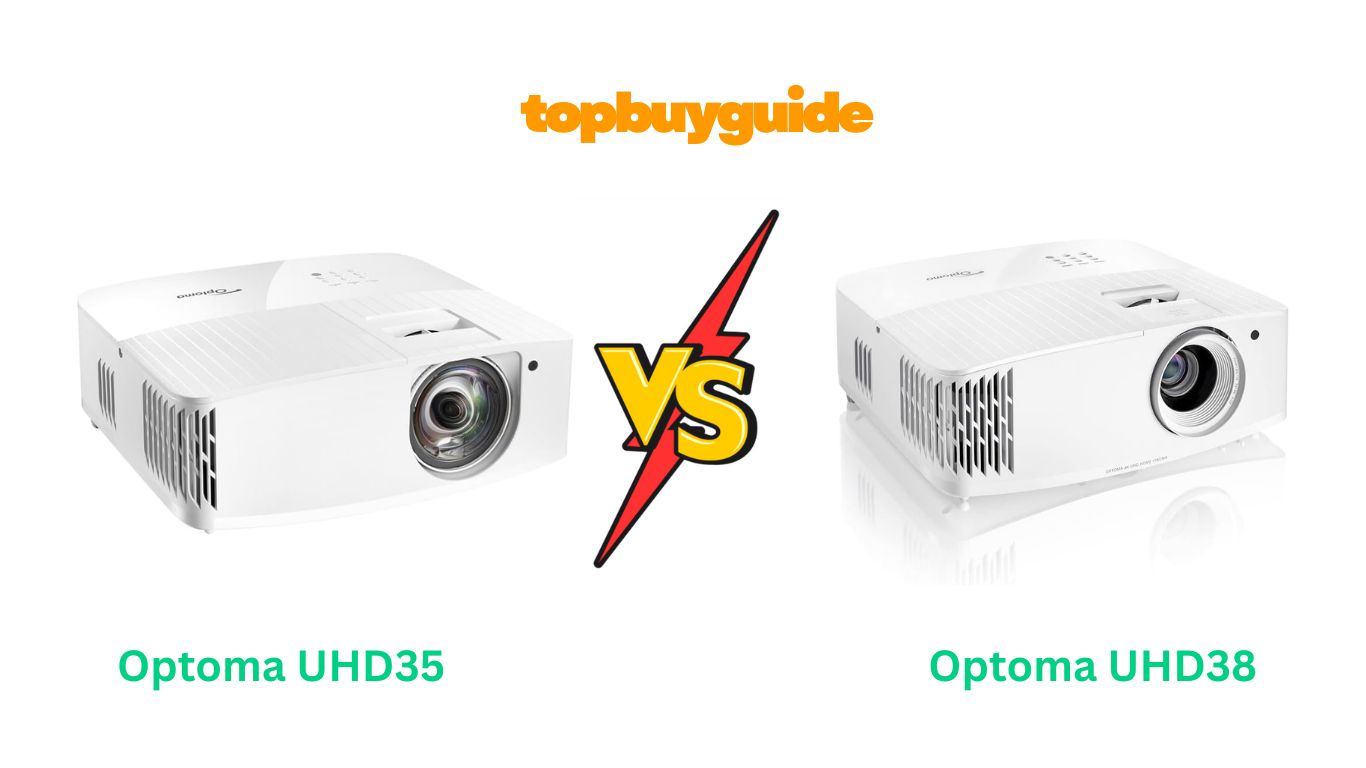
When choosing a high-performance 4K projector, the Optoma UHD35 vs UHD38 comparison becomes essential. Both offer stunning visuals and impressive brightness, but if you want a projector that balances superior motion handling with slightly enhanced brightness for gaming and movies, the Optoma UHD38 stands out. Its faster response time and slightly higher lumens make it ideal for immersive home entertainment.
Why Do I Recommend The Optoma UHD38?
The Optoma UHD38 is the recommended choice for most users seeking a versatile 4K projector that excels in both cinematic experiences and gaming performance. Here’s why:
- Higher Brightness: UHD38 offers up to 4,000 lumens compared to UHD35’s 3,600 lumens, ensuring more vivid and clear images even in moderately lit rooms. This higher brightness gives UHD38 an edge in daylight viewing scenarios.
- Faster Response Time: UHD38 boasts a lower input lag (~8.4ms in 1080p 240Hz mode), making it more suitable for gaming and fast-action content. UHD35 is good but slightly slower, which can affect competitive gaming.
- Enhanced Color Accuracy: While both projectors provide excellent 4K UHD visuals, UHD38 uses advanced color processing to deliver richer, more natural colors, especially in bright scenes. This creates a more immersive viewing experience compared to UHD35.
- HDR Performance: UHD38 supports HDR10 and HLG formats with improved brightness handling, allowing better shadow details and highlights than UHD35. This is critical for cinematic quality in darker and brighter scenes.
- Dynamic Black Technology: UHD38 includes dynamic black enhancement for deeper contrast. UHD35 also has contrast features, but UHD38 achieves more defined dark scenes without losing detail.
- Gaming Mode Optimized: UHD38’s dedicated gaming mode provides smoother motion handling and better frame transitions than UHD35. For gamers or action movie fans, this ensures minimal ghosting and blur.
- Projection Flexibility: Both projectors support vertical and horizontal lens shift adjustments, but UHD38 allows slightly better placement flexibility in different room layouts due to optimized zoom and focus adjustments.
- Quiet Operation: UHD38 runs quieter than UHD35 at similar brightness levels, ensuring distraction-free viewing during long movie sessions.
In comparison, while Optoma UHD35 is a reliable 4K projector with excellent image quality, UHD38’s combination of higher brightness, faster response, and gaming-friendly features makes it the superior choice for most home entertainment setups.
Side By Side Comparison Chart: Optoma UHD35 vs UHD38
| Features | Optoma UHD35 | Optoma UHD38 |
| Brightness (Lumens) | 3,600 | 4,000 |
| Resolution | 4K UHD | 4K UHD |
| Input Lag (1080p/240Hz) | ~15.7ms | ~8.4ms |
| HDR Support | HDR10, HLG | HDR10, HLG |
| Dynamic Black | Yes | Enhanced |
| Color Accuracy | Good | Superior |
| Gaming Mode | Standard | Optimized |
| Noise Level | Moderate | Quieter |
What Common Optoma UHD35 vs UHD38 Can Do?
Both Optoma UHD35 and UHD38 projectors offer features that make them excellent choices for home entertainment:
- 4K UHD Resolution: Both projectors provide true 4K UHD resolution, ensuring crisp and detailed images for movies, TV shows, and games. This allows viewers to enjoy clear visuals with accurate textures and fine details.
- HDR Support: Both projectors support HDR10 and HLG, enhancing contrast and color depth. Dark scenes retain more detail, and highlights appear brighter, offering a cinematic experience.
- Flexible Placement: Both projectors allow zoom and vertical lens shift, providing options for ceiling or table placement without compromising image quality.
- Lamp Life: Both offer long-lasting lamps (~15,000 hours in eco mode), reducing the frequency of replacements and overall maintenance costs.
- Connectivity Options: Both UHD35 and UHD38 provide HDMI, USB, and audio output ports, supporting multiple devices such as gaming consoles, Blu-ray players, and streaming devices.
Common Features Chart: Optoma UHD35 vs UHD38
| Features | Optoma UHD35 | Optoma UHD38 |
| Resolution | 4K UHD | 4K UHD |
| HDR Support | HDR10, HLG | HDR10, HLG |
| Zoom & Lens Shift | Yes | Yes |
| Lamp Life | 15,000 hours (Eco mode) | 15,000 hours (Eco mode) |
| Connectivity | HDMI, USB, Audio Out | HDMI, USB, Audio Out |
A Detailed Comparison of the Optoma UHD35 vs UHD38
Brightness and Picture Quality
The Optoma UHD38 offers 4,000 lumens, providing exceptional brightness for both dim and moderately lit rooms. This ensures that movies, sports, and games are vivid, detailed, and enjoyable even during daytime viewing. In contrast, the UHD35 delivers 3,600 lumens, which is sufficient for darker rooms but can appear slightly washed out in rooms with ambient light. This extra brightness in UHD38 also contributes to sharper details and richer colors, making it more suitable for versatile home cinema setups.
Input Lag and Gaming Performance
For gamers, input lag can be the difference between winning and losing. The UHD38 has a remarkably low input lag of approximately 8.4ms at 1080p/240Hz, which makes fast-paced games feel ultra-responsive and smooth. This is a major advantage over the UHD35, which has an input lag of about 15.7ms—good for casual gaming but not ideal for competitive titles where precision matters. UHD38 also supports enhanced gaming modes, ensuring fluid motion without ghosting or blur.
Color Accuracy and HDR Performance
Both projectors support HDR10 and HLG formats, enhancing contrast and color depth. The UHD38, however, has more advanced color processing, delivering more natural, lifelike colors and better brightness handling in HDR content. UHD35’s HDR performance is still good, but colors may appear slightly less vivid, especially in high-contrast scenes. UHD38’s improved color accuracy makes it ideal for movie enthusiasts seeking a true cinematic experience at home.
Contrast and Dynamic Black
The UHD38 comes equipped with Dynamic Black technology, which automatically adjusts the lamp power to enhance dark scenes, deepening blacks without sacrificing details in shadows. UHD35 offers strong contrast, but it cannot achieve the same level of depth in extremely dark scenes. For movie nights with dim lighting, UHD38 ensures more immersive visuals with enhanced shadow definition and cinematic flair.
Noise Levels and Cooling
Quiet operation is essential for home theaters. UHD38’s fan operates at a slightly lower decibel level than UHD35, reducing background noise during movies or games. UHD35 is adequate for general use, but UHD38 ensures that the projector does not distract from audio, making it perfect for extended viewing sessions.
Lens and Installation Flexibility
Both projectors feature vertical lens shift and zoom adjustments for flexible placement. UHD38 provides finer focus and alignment options, which means fewer compromises when installing on a table, ceiling, or tight spaces. UHD35 is also flexible but may require slightly more adjustments to achieve the perfect image, making UHD38 more user-friendly for a variety of room setups.
Lamp Life and Maintenance
Both UHD35 and UHD38 provide up to 15,000 hours of lamp life in eco mode, translating to several years of viewing without frequent replacements. This makes them cost-effective and reliable for long-term home theater use. Regular maintenance is minimal, with simple filter cleaning and occasional lamp check-ups.
Connectivity and Smart Features
UHD38 and UHD35 come with multiple HDMI ports, USB connections, and support for gaming consoles, Blu-ray players, and streaming devices. UHD38 also offers enhanced compatibility with 4K devices and next-gen consoles, giving users future-proof connectivity. UHD35 is slightly more limited in throughput for ultra-high frame rates and advanced gaming features.
Conclusion
After evaluating all key aspects, the Optoma UHD38 clearly stands out as the better option. Its combination of higher brightness, lower input lag, superior color accuracy, enhanced dynamic black, quieter operation, and installation flexibility makes it perfect for both home cinema enthusiasts and serious gamers. While the UHD35 is still a competent projector and slightly more budget-friendly, UHD38 delivers a more immersive and versatile viewing experience overall.
For anyone looking to maximize cinematic quality and gaming responsiveness, Optoma UHD38 is the projector to choose. Click the Amazon link to check the current price and purchase the UHD38 for your home entertainment setup.
FAQs: Optoma UHD35 vs UHD38
- Are both projectors true 4K UHD?
Yes, both UHD35 and UHD38 support true 4K UHD resolution, delivering crisp and highly detailed visuals for movies, gaming, and streaming content. - Which projector is better for competitive gaming?
UHD38 is the superior choice due to its extremely low input lag (~8.4ms), compared to UHD35 (~15.7ms). This ensures faster response times and minimal motion blur during fast-paced gaming. - Do these projectors support HDR content?
Both projectors support HDR10 and HLG, enhancing color contrast and overall image depth. UHD38 offers slightly better color processing for more natural and vivid HDR visuals. - How loud are the projectors?
UHD38 operates quieter than UHD35, minimizing fan noise during movies or gameplay, creating a more immersive audio-visual experience. - Can these projectors be used in bright rooms?
UHD38’s 4,000 lumens make it more suitable for rooms with ambient light, while UHD35 (3,600 lumens) performs best in darker environments. - What is the lamp life for both projectors?
Both projectors have an impressive lamp life of up to 15,000 hours in eco mode, ensuring long-term reliability and minimal maintenance. - Are these projectors easy to set up?
Yes, both offer vertical lens shift and zoom for flexible placement. UHD38 provides more refined focus adjustments, simplifying installation in various room layouts. - Which projector provides better color performance?
UHD38 excels in color accuracy, producing richer and more lifelike colors. UHD35 is adequate for general viewing but slightly less vibrant in high-contrast scenes.

Alex Turner is a dedicated product researcher and reviewer at TopBuyGuide.com, known for his clear, honest, and data-driven insights. He spends countless hours testing, comparing, and analyzing products to help readers make confident and informed buying decisions.