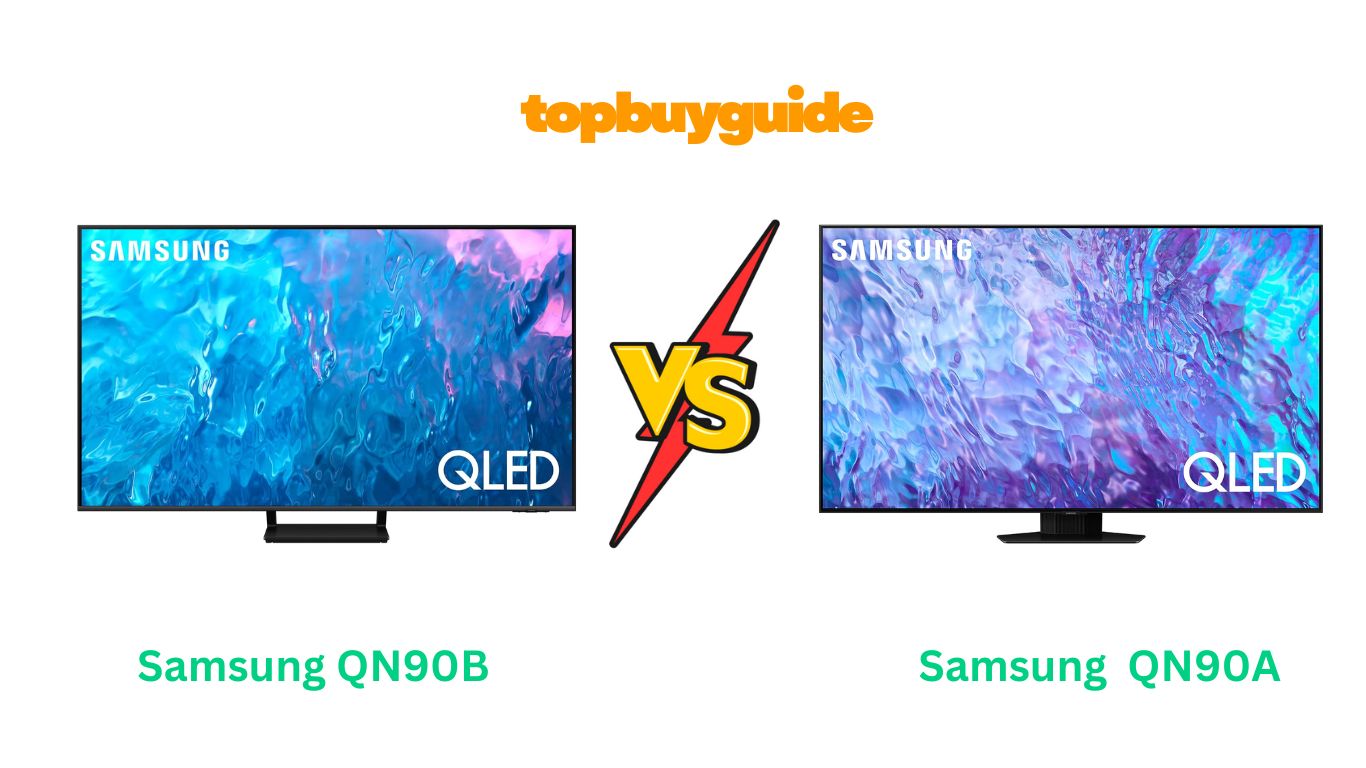
When you’re investing in a high-end TV, the difference between generations matters. From the premium Neo QLED lineup of Samsung, the QN90B and QN90A both shine — but only one truly delivers next-level performance. If you’re all about top-tier brightness, gaming responsiveness, and anti-reflection clarity, then the Samsung QN90B is the model to choose. Let’s dig in and see why.
Why Do I Recommend The Samsung QN90B?
Here are the key reasons the QN90B stands out compared to the QN90A:
- Brighter HDR and better contrast: The QN90B steps up peak brightness and contrast handling, making HDR scenes more impactful. In contrast, the QN90A is strong, but its highlights and dark details don’t pop quite as much.
- Improved anti-glare & viewing angles: QN90B features an enhanced anti-reflective coating and wider viewing angle technology, so the picture remains clear even in bright rooms or off-centre seating. By comparison, QN90A has good performance but more visible reflection and reduced off-axis clarity.
- Upgraded processor and image refinement: The QN90B uses Samsung’s newer Neo Quantum Processor variant which offers improved upscaling, better motion handling and refined color/texture detail. The QN90A uses previous generation tech which still performs well—but with slightly less edge.
- Gaming-ready features: QN90B supports HDMI 2.1, 4K at 120 Hz, VRR/ALLM and very low input lag, making it excellent for next-gen console gaming. While QN90A supports similar features, the QN90B’s differences give it smoother motion and faster responsiveness.
- Enhanced audio and design: The QN90B integrates Object Tracking Sound+ (or equivalent premium audio tech) and a sleeker build, giving a more immersive experience. The QN90A still offers strong audio and design, but the QN90B’s premium touches make a difference.
- Future-proofing: With the improved brightness, viewing angle, audio and gaming features, the QN90B is better set for the coming years of content and games. The QN90A is still great, but may age slightly faster in high-expectation setups.
- Premium room adaptability: If your room has ambient light, windows, or you sit off-centre often, the enhancements in the QN90B make it more versatile than the QN90A in those “real-world” scenarios.
- Value in long-term performance: While the QN90B may cost more, you’re getting more head-room for performance and satisfaction. The QN90A gives a lot of value, but if you can invest in the better model, the QN90B justifies the upgrade.
Summary: If you want the best picture, best gaming performance, and best adaptability to a variety of viewing environments, choose the Samsung QN90B. The QN90A remains a strong contender for good value—but for total performance, the QN90B leads.
Side by Side Comparison Chart: Samsung QN90B vs QN90A
| Feature | Samsung QN90B | Samsung QN90A |
| Peak Brightness & HDR Impact | Higher brightness, stronger HDR highlights | Very good brightness, slightly less punch |
| Anti-Glare / Viewing Angle | Advanced anti-reflective + ultra-wide view | Standard anti-glare, less wide viewing |
| Processor / Upscaling | Neo Quantum Processor (latest gen) | Previous generation processor |
| Gaming Features / Input Lag | HDMI 2.1, VRR, low lag, 4K@120Hz | Similar gaming features, slightly less refined |
| Audio Experience | Premium audio, Object Tracking Sound+ | Strong audio, but not as premium |
| Design & Build | Sleeker bezels, premium finish | Very good design, slightly less refined |
| Future-proofing | Better adaptability to bright rooms & off-axis | Excellent now, slightly less readiness |
What Common Samsung QN90B vs QN90A Can Do?
Despite the differences, both models share many high-end features that make them excellent in their class:
- Neo QLED Technology: Both use Samsung’s Neo QLED panels (mini-LED backlighting plus Quantum Dot) to deliver high color volume, rich contrast, and vibrant visuals.
- 4K Resolution and 120Hz Refresh Rate: Each supports native 4K and a 120Hz refresh rate (depending on model size), ensuring smooth motion and sharp images for modern content and gaming.
- Smart Platform & Connectivity: Both run Samsung’s Tizen OS with Smart Hub, support voice assistants (Bixby, Alexa, Google), built-in WiFi/Bluetooth, and multiple HDMI/USB inputs including HDMI 2.1 support.
- Gaming Support: VRR, ALLM, 4K@120Hz support make both TVs gaming-ready, with low input lag and modern console compatibility.
- High Color Volume & Quantum Dot: Wide color gamut and deep color saturation for both models ensures vibrant, realistic images across movies, sports, and games.
- Premium Build & Features: Both feature premium finishes, sleek designs, full array backlighting (in high sizes), and strong brand support.
Common Features Chart:
| Feature | Samsung QN90B | Samsung QN90A |
| Neo QLED Technology | Yes | Yes |
| 4K Resolution | Yes | Yes |
| 120Hz Refresh Rate | Yes | Yes |
| Smart OS (Tizen) & Connectivity | Yes | Yes |
| Gaming Features (4K@120Hz, VRR) | Yes | Yes |
| Quantum Dot / High Color Volume | Yes | Yes |
A Detailed Comparison of the Samsung Q70 vs Q80
Below, we’ll dive deep into each feature of these two TVs to see how they perform in real-life conditions — picture quality, brightness, gaming, sound, smart features, and more.
Display Technology and Picture Quality
Both the Samsung Q70 and Q80 use Quantum Dot (QLED) technology to produce rich, vibrant colors and crisp contrast. However, the Samsung Q80 takes the upper hand with its Direct Full Array backlight system. This technology gives it more control over dimming zones, leading to deeper blacks and better contrast uniformity.
The Q70, while still impressive, uses Edge-lit LED lighting. It performs well in moderately lit rooms but struggles to match the Q80’s precision in darker scenes. The result? The Q80’s picture feels more cinematic, with greater depth and realism — especially noticeable in HDR content and dark movie scenes.
If you prioritize deeper contrast and accurate lighting, the Samsung Q80 is your best bet.
Brightness and HDR Performance
Both models deliver excellent brightness, but there’s a measurable difference in HDR performance. The Q80 achieves higher peak brightness, which helps highlights pop in HDR10+ content, while the Q70 is slightly dimmer.
In a bright living room, both TVs hold up well, thanks to Samsung’s Quantum HDR technology. However, the Q80’s Direct Full Array and improved local dimming algorithm allow it to reproduce detail in bright and dark areas simultaneously. This means when watching nature documentaries or fast-action movies, you’ll notice a more balanced, lifelike picture on the Q80.
If your viewing area has plenty of natural light, either TV works — but if you crave superior HDR impact and realism, the Q80 easily wins.
Gaming Performance
Samsung’s QLED TVs are known for outstanding gaming performance, and both the Q70 and Q80 are optimized for next-gen consoles. They both include HDMI 2.1, 4K at 120Hz, Variable Refresh Rate (VRR), and Auto Low Latency Mode (ALLM).
However, gamers will notice smoother performance on the Q80, which offers slightly lower input lag (around 5.8ms) compared to the Q70’s 7ms. The Q80 also features FreeSync Premium Pro, offering better frame stability for high-intensity games like Call of Duty or Fortnite.
Additionally, both TVs include Samsung’s Game Bar 2.0, giving real-time performance info and quick settings adjustment during play.
If gaming fluidity, low lag, and fast response matter most, the Samsung Q80 is the winner.
Sound Quality
The sound system on the Q80 is another area where Samsung went the extra mile. It uses Object Tracking Sound (OTS) technology, which projects sound based on what’s happening on-screen — giving a 3D, immersive experience. This feature makes action scenes feel more dynamic and realistic.
The Q70, in contrast, uses standard stereo speakers without OTS. While still clear and crisp, it lacks the same directional depth as the Q80.
If you often watch movies or play games without an external soundbar, the Q80’s built-in sound is significantly superior and more cinematic.
Processor and Image Optimization
Both models use Samsung’s Quantum Processor 4K, but the Q80’s version is slightly more advanced, delivering improved AI upscaling and motion processing.
This is especially noticeable when watching non-4K content. Older shows, cable TV, or YouTube videos appear sharper and more refined on the Q80. The Q70, while still powerful, occasionally introduces slight blurring in fast scenes or lower-resolution content.
If your content mix includes both streaming and regular broadcasts, the Q80 provides a noticeably smoother picture.
Viewing Angles and Anti-Reflection
One of the biggest differences between these models is viewing angle quality. The Q80 includes Samsung’s Ultra Viewing Angle layer, which preserves color accuracy and brightness even when viewing from the side. This makes it ideal for wider living rooms or group viewing.
The Q70, lacking this feature, loses color vibrancy when viewed off-center. Also, while both have anti-glare coatings, the Q80’s is more advanced, reducing reflections from lamps or windows.
For families or shared living spaces, the Q80 delivers a much better viewing experience from every seat.
Smart Features and Connectivity
Both TVs run on Samsung’s Tizen OS, offering a fast, intuitive smart TV experience. You get access to Netflix, Prime Video, Disney+, YouTube, Apple TV+, and more — with voice control options through Bixby, Alexa, and Google Assistant.
Connectivity is nearly identical on both models, featuring WiFi, Bluetooth, four HDMI ports (including HDMI 2.1), and USB ports. However, the Q80 includes an additional HDMI eARC port for high-quality soundbar connections and better surround-sound sync.
If smart performance and app access are top priorities, both are great — but the Q80 provides better sound integration and faster interface transitions.
Design and Build Quality
In terms of aesthetics, both models embody Samsung’s sleek QLED design language — slim bezels, minimalist stands, and premium materials. However, the Q80 has a slightly thicker chassis due to its full-array backlight, while the Q70 is slimmer with an edge-lit build.
If wall-mounting is a priority, the Q70’s thinner profile might appeal more. But for those prioritizing performance over size, the Q80’s build is sturdier and has better ventilation for long viewing sessions.
Price and Value
Price-wise, the Samsung Q70 is usually more affordable than the Q80, often by a few hundred dollars depending on screen size.
However, the Q80’s improvements in contrast, sound, and processing justify the higher price tag for users who value premium viewing. If you’re upgrading from a mid-range TV or care about cinematic depth, the Q80 is worth the extra investment.
If you’re on a tighter budget and mostly watch sports, shows, or casual gaming, the Q70 still offers excellent performance at a lower cost.
Conclusion
After comparing both models, the Samsung Q80 clearly emerges as the superior choice for most users.
Its Direct Full Array backlighting, higher peak brightness, Object Tracking Sound, and better viewing angles make it a more versatile TV for both dark home theaters and bright living rooms. The Q80’s gaming enhancements and sound experience further elevate its value.
However, the Q70 remains an excellent option if you’re seeking a thinner design, solid HDR performance, and great gaming features — all while saving a bit of money.
FAQs – Samsung Q70 vs Q80
- Which TV has better picture quality, Samsung Q70 or Q80?
The Samsung Q80 offers better picture quality with its full-array local dimming, producing deeper blacks, brighter highlights, and superior HDR performance. - Is the Samsung Q70 good for gaming?
Yes, it’s great for gaming with HDMI 2.1, VRR, and 120Hz support. However, the Q80 offers slightly lower input lag and smoother frame handling. - What’s the main difference between Q70 and Q80?
The biggest differences are in backlight type (edge-lit vs. full array), sound technology, and viewing angle performance. - Does the Samsung Q80 have better sound quality?
Yes, it includes Object Tracking Sound (OTS), which delivers more immersive and spatially accurate audio compared to the Q70’s basic stereo setup. - Are both TVs suitable for bright rooms?
Both perform well in bright rooms, but the Q80’s higher brightness and improved anti-reflective layer make it more suitable for sunny environments. - Can both TVs run streaming apps like Netflix or Disney+?
Yes, both run Samsung’s Tizen OS and include major apps like Netflix, Hulu, Disney+, Prime Video, and more. - Which TV is better for wide viewing angles?
The Q80 offers Ultra Viewing Angle technology, maintaining picture quality from the sides — ideal for group viewing. - Is the Samsung Q80 worth the extra money?
Absolutely. If you want a premium cinematic experience, powerful gaming performance, and better audio, the Q80 is well worth the higher price.

Alex Turner is a dedicated product researcher and reviewer at TopBuyGuide.com, known for his clear, honest, and data-driven insights. He spends countless hours testing, comparing, and analyzing products to help readers make confident and informed buying decisions.