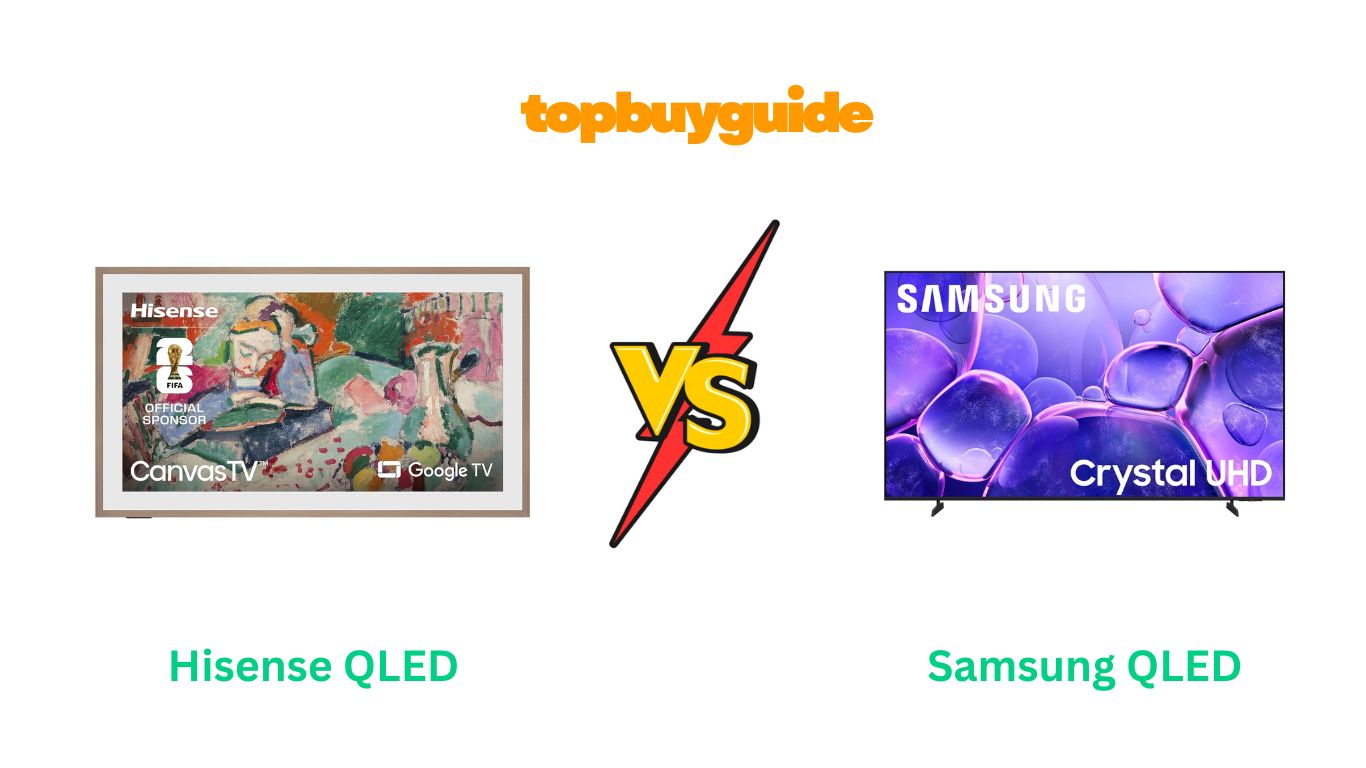
When it comes to modern home entertainment, Hisense and Samsung TVsare often compared for their picture quality, smart features, and overall performance. If you’re torn between these two brands, it’s important to understand the key differences. After testing and reviewing both, I recommend the Samsung TV for its superior display technology, faster processor, and enhanced smart features, making it a better long-term investment.
Why Do I Recommend the Samsung TV?
Samsung has consistently led the TV market with innovations that elevate the viewing experience. Here are the reasons why Samsung edges out Hisense:
- Display Technology
Samsung TV features Quantum Dot technology combined with advanced LED backlighting, delivering more vibrant colors, better contrast, and sharper images compared to Hisense’s standard LED panel. While Hisense provides decent color accuracy, Samsung excels in bright-room performance and HDR content. - Processor and AI Upscaling
Samsung’s Meta Quantum Processor intelligently upscales non-4K content, reduces noise, and enhances clarity. In contrast, Hisense uses a less advanced processor, which may result in slightly softer images and less effective upscaling. - Smart TV Features
Samsung’s Smart Hub and Tizen OS provide faster navigation, more streaming app compatibility, and integrated voice assistants. Hisense TVs, while smart, can feel slower with fewer integrated services, which might limit your smart home integration. - HDR and Contrast
Samsung supports HDR10+, Dolby Vision, and delivers higher peak brightness, giving you a superior experience for movies, games, and sports. Hisense supports HDR10 and Dolby Vision but often cannot achieve the same HDR punch, especially in bright or high-contrast scenes. - Gaming Performance
Samsung offers low input lag, VRR, and HDMI 2.1 support, making it perfect for console gaming. Hisense is adequate for casual gaming but lacks advanced gaming features found in Samsung TVs, which can impact competitive gameplay. - Audio Quality
Samsung’s Object Tracking Sound (OTS) creates an immersive audio experience by following on-screen action, whereas Hisense provides standard built-in speakers that may require an external sound system for true cinematic sound. - Design and Build
Samsung’s slim and modern AirSlim design blends seamlessly into your living space. Hisense has a good build, but it does not match Samsung’s premium aesthetics and sleekness. - Future-Proof Technology
Samsung TV is a future-proof choice with features that support emerging standards in HDR, gaming, and streaming. Hisense offers strong performance now, but Samsung’s technology ensures long-term satisfaction.
In summary, while Hisense is a solid budget-friendly option, Samsung’s advanced display, processing power, smart features, and future-proof tech make it the better overall choice.
Side By Side Comparison Chart: Hisense vs Samsung
| Features | Hisense | Samsung |
| Display Type | LED with standard HDR | Quantum Dot LED with HDR10+ and Dolby Vision |
| Processor | ULED Processor | Meta Quantum Processor with AI Upscaling |
| Peak Brightness | ~600 nits | ~1,500 nits |
| Contrast | Good | Superior with better local dimming |
| Smart Platform | Google TV / VIDAA OS | Samsung Tizen OS with Smart Hub |
| Voice Assistants | Google Assistant | Bixby, Google Assistant, Alexa |
| Gaming Features | Standard Game Mode | VRR, HDMI 2.1, Low Input Lag |
| Audio | Standard speakers | Object Tracking Sound (OTS) |
| Design | Slim, basic modern | Ultra-thin AirSlim design |
| Price | More affordable | Premium, higher cost |
What Common Hisense vs Samsung Can Do?
Despite differences, both Hisense and Samsung TVs share several core features that deliver an enjoyable viewing experience.
4K Ultra HD Resolution
Both TVs provide crisp 4K resolution, ensuring sharp images for movies, shows, and games. Even large screens maintain clarity, making content more lifelike and immersive.
Streaming App Access
Whether it’s Netflix, Hulu, Disney+, or Prime Video, both brands allow access to popular streaming platforms. Users can enjoy on-demand content without needing external devices.
Motion Handling
Both TVs offer high refresh rates and motion interpolation, ensuring smooth action during sports, movies, and gaming. Motion blur is minimized, providing a clearer viewing experience.
Voice Control
Hisense and Samsung support voice commands, letting you control volume, change channels, or search for content hands-free. Integration with Google Assistant, Alexa, or Bixby streamlines your smart home setup.
Connectivity
Both TVs offer multiple HDMI ports, USB inputs, and Wi-Fi, making them compatible with consoles, soundbars, and other devices. Streaming and device integration are simple and versatile.
Energy Efficiency
Hisense and Samsung incorporate energy-saving modes to reduce power consumption while maintaining excellent performance, making them environmentally conscious choices.
Common Features Chart: Hisense vs Samsung
| Features | Hisense | Samsung |
| 4K Resolution | Yes | Yes |
| Streaming Apps | Yes | Yes |
| Voice Assistants | Yes | Yes |
| HDMI Ports | Yes | Yes |
| Motion Handling | Yes | Yes |
| Energy Saving | Yes | Yes |
| Smart Home Integration | Yes | Yes |
| Built-in Wi-Fi | Yes | Yes |
A Detailed Comparison of Hisense vs Samsung
Display Performance
Hisense delivers good LED panel performance, providing vibrant colors and clear images for daily viewing. However, Samsung’s Quantum Dot technology offers deeper blacks, better contrast, and more vibrant colors, especially in bright-room conditions. This makes Samsung superior for cinematic experiences.
Smart TV Experience
Hisense uses Google TV or VIDAA OS, offering a decent smart interface and app selection. Samsung’s Tizen OS provides faster navigation, broader app compatibility, and smoother transitions between apps. For users who prioritize smart features and ease of use, Samsung offers a more polished experience.
Gaming and Connectivity
Hisense includes a standard Game Mode suitable for casual players. Samsung, however, integrates HDMI 2.1, VRR, and low input lag, catering to competitive gamers who demand responsiveness and smooth graphics.
Audio Quality
While Hisense has standard built-in speakers, Samsung enhances immersion with Object Tracking Sound (OTS), creating a cinematic experience by aligning sound direction with on-screen action. This feature can make movies, sports, and games more realistic.
Price vs Value
Hisense is more budget-friendly and delivers strong performance at a lower price. Samsung, though more expensive, offers better display quality, future-proof technology, gaming optimizations, and audio, providing a better long-term investment.
Side By Side Comparison Chart: Hisense vs Samsung
| Features | Hisense 55S7N | Samsung 65-Inch QLED |
| Display Type | LED Panel | Quantum Dot LED (QLED) |
| Peak Brightness | ~600 nits | ~1,500 nits |
| Contrast | Good | Superior with local dimming |
| HDR Support | HDR10, Dolby Vision | HDR10+, Dolby Vision |
| Processor | ULED Processor | Meta Quantum Processor with AI Upscaling |
| Smart Platform | Google TV | Samsung Tizen OS with Smart Hub |
| Voice Assistants | Google Assistant | Bixby, Google Assistant, Alexa |
| Gaming Features | Standard Game Mode | VRR, HDMI 2.1, Low Input Lag |
| Audio | Standard speakers | Object Tracking Sound (OTS) |
| Design | Slim, modern | Ultra-thin AirSlim design |
| Price | Budget-friendly | Premium |
What Common Hisense vs Samsung Can Do?
Despite the differences, both Hisense and Samsung share several key features that make them excellent choices for modern home entertainment.
4K Ultra HD Resolution
Both TVs support 4K resolution, providing clear and sharp images. Whether you’re watching movies, sports, or playing games, the visual clarity enhances the immersive experience. Samsung’s QLED offers slightly richer color depth, but Hisense still delivers good quality at a more affordable price.
Streaming Apps and Smart Features
Both TVs provide access to major streaming platforms like Netflix, Disney+, Hulu, and Prime Video. Users can enjoy seamless app navigation and on-demand content without external devices. Samsung’s Tizen OS tends to be faster, while Hisense’s Google TV interface is straightforward and easy to use.
Voice Control
Voice assistant integration is standard in both TVs. You can use Google Assistant, Alexa, or Bixby to control the TV hands-free, search for content, or adjust settings. This feature is convenient for multitasking and smart home integration.
Connectivity
Both Hisense and Samsung offer multiple HDMI ports, USB inputs, and built-in Wi-Fi. This allows connection with gaming consoles, soundbars, and streaming devices. Samsung provides a slight advantage with HDMI 2.1 for gaming and future-proof connectivity.
Motion Handling
Both TVs feature motion smoothing technology, reducing blur during fast-action scenes. Sports fans and gamers benefit from smoother transitions and clearer visuals. Samsung has an edge with faster refresh rates and VRR support for gaming.
Energy Efficiency
Both brands incorporate energy-saving modes, optimizing performance while reducing power consumption. Users can enjoy long viewing hours without worrying about electricity bills.
Common Features Chart: Hisense vs Samsung
| Features | Hisense 55S7N | Samsung 65-Inch QLED |
| 4K Resolution | Yes | Yes |
| Streaming Apps | Yes | Yes |
| Voice Assistants | Yes | Yes |
| HDMI Ports | Yes | Yes |
| Motion Handling | Yes | Yes |
| Energy Saving | Yes | Yes |
| Built-in Wi-Fi | Yes | Yes |
| Smart Home Integration | Yes | Yes |
A Detailed Comparison of Hisense vs Samsung
Display Performance
Hisense 55S7N: The LED panel offers decent brightness and color accuracy for general viewing. It performs well in dimly lit rooms but may struggle with deep blacks in very dark scenes.
Samsung 65-Inch QLED: The Quantum Dot technology produces vivid colors, higher brightness, and superior contrast, making HDR content look spectacular. Local dimming ensures better black levels, enhancing cinematic experiences.
Smart TV Experience
Hisense: Uses Google TV interface or VIDAA OS. Navigation is simple and responsive, but app loading can be slower.
Samsung: Tizen OS and Smart Hub offer faster navigation, more apps, and smoother transitions. Samsung also supports multiple voice assistants and offers seamless smart home integration, giving it a clear advantage.
Gaming and Connectivity
Hisense: Provides a standard Game Mode, suitable for casual gaming.
Samsung: Features HDMI 2.1, VRR (Variable Refresh Rate), and low input lag, making it ideal for console gamers and competitive play. Samsung ensures smooth performance even in fast-paced games.
Audio Quality
Hisense: Equipped with standard speakers that produce clear sound but may lack depth for cinematic experience.
Samsung: Object Tracking Sound (OTS) aligns audio with on-screen action, creating an immersive experience. Dolby Atmos support enhances surround sound, making movies and games more realistic.
Price vs Value
Hisense: Budget-friendly and delivers decent performance for the price. Great for casual viewers who want good value without premium features.
Samsung: While more expensive, it offers advanced display, superior processing, gaming optimization, immersive audio, and long-term reliability. It is a better investment for enthusiasts and future-proofing.
Conclusion
When deciding between Hisense and Samsung, your choice depends on priorities. If budget is the main concern and you need a solid TV for casual viewing, Hisense 55S7N is a good option. However, for premium display quality, advanced smart features, gaming optimization, and immersive audio, the Samsung 65-Inch QLED is the better choice. Investing in Samsung ensures long-term satisfaction with future-proof features and superior overall performance.
For viewers who value cinematic visuals, smoother smart interface, and future-ready gaming performance, Samsung QLED is the top recommendation.
FAQs
- Is Hisense better than Samsung for movies?
Hisense provides good performance for casual movie watching, but Samsung’s QLED delivers richer colors, better contrast, and HDR performance for a cinematic experience. - Which TV is better for gaming?
Samsung offers HDMI 2.1, VRR, and low input lag, making it superior for console and competitive gaming. Hisense is suitable for casual gamers but lacks advanced gaming features. - Do both TVs support streaming apps?
Yes, both support Netflix, Disney+, Hulu, Prime Video, and more. Samsung has a faster Smart Hub and smoother app navigation. - Which has better audio quality?
Samsung’s Object Tracking Sound (OTS) and Dolby Atmos support provide immersive audio, whereas Hisense relies on standard built-in speakers. - Are both energy efficient?
Yes, both TVs include energy-saving modes to reduce power consumption while maintaining performance. - Can I use voice assistants on both TVs?
Yes, Hisense supports Google Assistant, while Samsung supports Bixby, Alexa, and Google Assistant for full smart home integration. - Which TV is future-proof?
Samsung is more future-proof due to advanced display technology, HDR10+, VRR, HDMI 2.1, and better processor for long-term use. - Which TV offers better design?
Samsung features the AirSlim design, blending seamlessly into modern interiors. Hisense is slim but lacks the premium aesthetic of Samsung.

Alex Turner is a dedicated product researcher and reviewer at TopBuyGuide.com, known for his clear, honest, and data-driven insights. He spends countless hours testing, comparing, and analyzing products to help readers make confident and informed buying decisions.