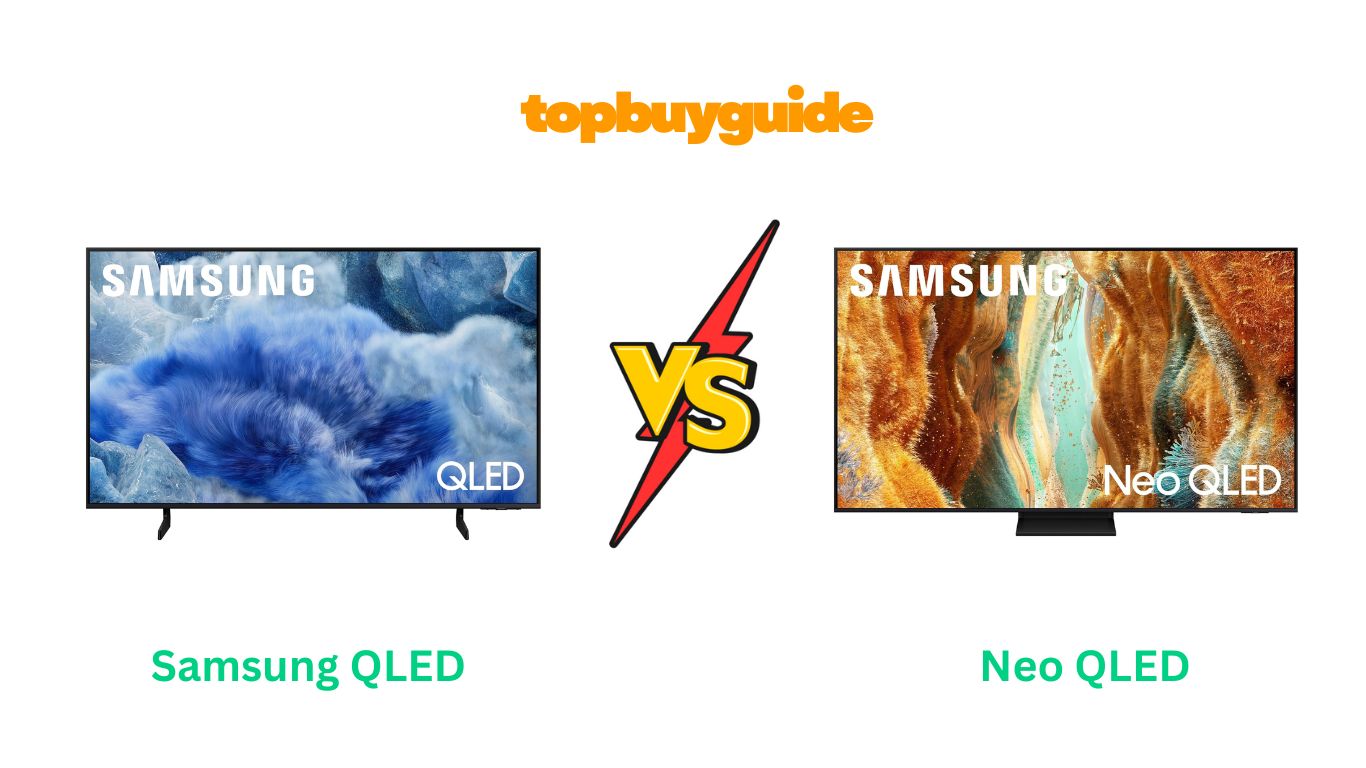
Choosing the perfect TV in 2025 can be overwhelming with the rapid evolution of display technology. Samsung QLED has long been a trusted choice for vibrant colors, bright screens, and reliable smart features. However, Samsung’s Neo QLEDintroduces a revolutionary upgrade with mini-LED backlighting, enhanced HDR performance, and advanced AI processing, pushing picture quality to a whole new level.
If you’re aiming for crisp contrasts, cinematic clarity, and gaming-ready performance, the Neo QLED emerges as the smarter choice. But how exactly does it outperform the standard QLED? In this review, we’ll break down every feature, from display technology to gaming capabilities, to help you make an informed decision and elevate your home entertainment.
Why Do I Recommend the Samsung Neo QLED?
The Samsung Neo QLED is designed to deliver a premium viewing experience that goes beyond what standard QLED TVs can offer. While Samsung QLED is a capable TV with vibrant colors and solid performance, the Neo QLED takes it several steps further, making it worth the investment for those seeking the ultimate TV setup.
Here are the key reasons why Neo QLED stands out:
- Mini-LED Backlighting for Superior Contrast
The Neo QLED features thousands of ultra-small LEDs that allow for precise local dimming, resulting in dramatically improved contrast. Dark scenes become deeper and more detailed, while bright highlights shine without creating a halo effect. By comparison, standard QLED uses fewer LEDs, so it can struggle with subtle shadow details and bright highlights in the same scene. - Enhanced HDR Performance
High Dynamic Range (HDR) content looks more lifelike on Neo QLED due to its higher peak brightness and finer local dimming control. Colors are more vivid, whites appear brighter, and blacks are richer, offering an immersive cinematic experience. Standard QLED delivers good HDR performance but can appear slightly less dynamic, especially in brightly lit rooms or on complex scenes with extreme contrast. - Higher Peak Brightness for Daylight Viewing
Neo QLED achieves superior peak brightness, making it ideal for viewing in well-lit environments. Whether it’s a sunlit living room or a bright kitchen, Neo QLED maintains clarity and vividness, whereas standard QLED can struggle to maintain vibrancy under direct sunlight. This makes Neo QLED a better fit for modern homes with large windows or multi-purpose rooms. - Advanced AI Picture Processing
Powered by the Neo Quantum Processor, Neo QLED uses AI to enhance every frame, optimizing sharpness, motion handling, and color accuracy. The processor can upscale lower-resolution content, making even non-4K material appear more detailed. In contrast, standard QLED features AI processing but lacks the Evo-level refinement, resulting in less precise upscaling and motion handling. - Gaming Performance with Ultra-Low Input Lag
Neo QLED offers higher refresh rates, smoother motion handling, and ultra-low input lag, which makes it perfect for next-gen gaming consoles like the PS5 or Xbox Series X. The combination of Game Mode, VRR, and FreeSync Premium Pro ensures a responsive, tear-free gaming experience. While standard QLED is adequate for casual gaming, competitive and cinematic gaming enthusiasts will notice the Neo QLED’s significant edge. - Slim, Sleek Design
Neo QLED’s AirSlim design is ultra-thin and stylish, giving a premium, modern look that blends seamlessly with home décor. Standard QLEDs, while slim, are slightly thicker and don’t offer the same aesthetic appeal. Neo QLEDs can be wall-mounted effortlessly, creating a clean, floating effect that enhances the living space. - Better Local Dimming Zones
Thanks to the increased number of dimming zones, Neo QLED controls light more precisely, producing darker blacks and more nuanced shadows in movies and shows. Standard QLED has fewer dimming zones, which can result in haloing or light bleed around bright objects on dark backgrounds. Neo QLED’s precision is especially noticeable in night scenes or space imagery. - Future-Ready Technology
Samsung Neo QLED integrates cutting-edge features like HDR10+, AI upscaling, and advanced motion processing, making it a future-proof choice for the next five to ten years. Standard QLED provides reliable performance today, but it may lack the same longevity in terms of adapting to evolving content and gaming technology. - Enhanced Audio Experience
Neo QLEDs often include Object Tracking Sound (OTS) or similar advanced audio technologies, delivering a more immersive soundstage that follows on-screen action. While QLEDs have decent built-in speakers, they do not provide the same cinematic audio experience, which could necessitate an additional soundbar for home theater enthusiasts. - Smart Features and Connectivity
Neo QLED TVs support Samsung’s Smart Hub, multiple voice assistants, and seamless integration with smart home devices. While QLEDs also support these features, Neo QLEDs provide faster app loading, smoother navigation, and better multitasking when switching between streaming apps, gaming, and live TV.
Verdict:
While Samsung QLED is still a strong contender for everyday TV watching, the Samsung Neo QLED provides superior contrast, HDR performance, AI optimization, gaming capabilities, and overall picture quality. For users who want the best possible viewing experience today and want to stay future-proof, Neo QLED is the smart investment.
Samsung QLED vs Neo QLED – Key Takeaways
- Neo QLED is ideal for cinematic HDR content, next-gen gaming, and bright room viewing.
- QLED is perfect for users who want reliable performance at a lower price without the need for ultra-premium brightness and contrast.
- Neo QLED’s slimmer design, advanced processing, and precise local dimming provide a noticeable upgrade over standard QLED.
- For long-term investment, immersive experience, and future-proofing, Neo QLED is the preferred choice.
Side By Side Comparison Chart: Samsung QLED vs Neo QLED
| Features | Samsung QLED | Samsung Neo QLED |
| Backlighting | Standard LED with Quantum Dots | Mini-LED backlighting with thousands of zones |
| Peak Brightness | Up to 1,500 nits | Up to 2,000 nits (HDR optimized) |
| Contrast | Good, but some halo effect | Superior with precise local dimming |
| AI Processor | Quantum Processor Lite | Neo Quantum Processor with AI upscaling |
| Gaming Features | Game Mode, VRR | Game Mode, VRR, FreeSync Premium Pro, low input lag |
| Design | Slim, modern | Ultra-thin AirSlim design |
| HDR Support | HDR10+, standard | HDR10+, Dolby Vision, improved peak HDR |
| Audio | Standard speakers | Object Tracking Sound (OTS) for immersive audio |
| Smart Features | Samsung Smart Hub | Smart Hub with faster navigation, voice assistants |
| Price | More affordable | Premium pricing |
What Common Samsung QLED vs Neo QLED Can Do?
Both Samsung QLED and Neo QLED share a number of powerful features that make them excellent TVs, even if one outperforms the other in certain aspects.
Quantum Dot Color
Both QLED and Neo QLED utilize Quantum Dot technology to deliver vibrant, accurate colors. This ensures that movies, sports, and gaming visuals appear lifelike with rich hues, precise saturation, and realistic tones. Whether you’re watching an animated film or live sports, both TVs provide impressive color reproduction.
Smart TV Functionality
Samsung Smart Hub powers both QLED and Neo QLED, providing access to popular streaming platforms, apps, and live TV. Users can switch seamlessly between Netflix, Disney+, Hulu, and more. Voice commands are supported on both models via Bixby, Alexa, or Google Assistant, allowing convenient hands-free control.
Connectivity Options
Both TVs support HDMI 2.1, multiple USB ports, and Wi-Fi connectivity, ensuring compatibility with gaming consoles, Blu-ray players, soundbars, and other devices. This makes setup straightforward and versatile for all types of entertainment systems.
Motion Handling
Samsung QLED and Neo QLED both handle fast-moving scenes well, thanks to high refresh rates and motion interpolation. Sports, action movies, and racing games appear smooth, minimizing blur and ghosting for an enjoyable viewing experience.
4K Resolution
Both TVs support crisp 4K resolution, providing sharp and detailed images. Even at larger screen sizes, content remains clear without noticeable pixelation.
Eco-Friendly Features
Samsung integrates energy-saving modes and environmentally conscious materials in both QLED and Neo QLED models, helping reduce power consumption while maintaining excellent performance.
Side-by-Side Common Features Chart
| Features | Samsung QLED | Samsung Neo QLED |
| Quantum Dot Color | Yes | Yes |
| Smart Hub Access | Yes | Yes |
| Voice Assistant Support | Yes | Yes |
| HDMI 2.1 | Yes | Yes |
| 4K Resolution | Yes | Yes |
| Motion Handling | Yes | Yes |
| Energy Saving | Yes | Yes |
| App Streaming | Yes | Yes |
A Detailed Comparison of the Samsung QLED vs Neo QLED
Display Technology
Samsung QLED relies on traditional LED backlighting with Quantum Dots, providing bright and colorful images. It delivers excellent viewing for most rooms but can struggle in scenes with high contrast, producing slight light bleed around bright objects.
Samsung Neo QLED, however, uses Mini-LED backlighting, which incorporates thousands of ultra-fine LEDs. This allows for more precise dimming zones and dramatically improves contrast. Dark scenes are deeper, highlights are more brilliant, and overall image realism is superior. For cinematic content and high-contrast visuals, Neo QLED is unmatched.
Peak Brightness and HDR
QLED TVs offer peak brightness around 1,500 nits, sufficient for HDR10+ content and bright-room viewing. Neo QLED goes further with up to 2,000 nits, delivering sharper HDR highlights and better clarity under sunlight or in bright environments. This difference makes Neo QLED more suitable for high-end HDR films, sports broadcasts, and gaming in well-lit rooms.
AI Processing and Upscaling
The Quantum Processor Lite in Samsung QLED optimizes picture quality, enhances colors, and reduces noise, providing good upscaling for non-4K content.
Neo QLED’s Neo Quantum Processor takes this a step further with AI-powered upscaling and real-time scene analysis. Every frame is processed to enhance clarity, color accuracy, and motion, giving an almost 4K-like quality even for HD content. The AI also adapts to content type, optimizing sports, movies, and gaming differently for the best viewing experience.
Gaming Capabilities
Samsung QLED supports Game Mode and VRR, offering a smooth gaming experience. Input lag is low but not optimized for competitive gaming.
Neo QLED excels with ultra-low input lag, FreeSync Premium Pro, and faster refresh rates, making it ideal for gamers who want flawless responsiveness. Competitive gamers will notice smoother motion, better handling of fast-paced action, and minimized screen tearing.
Audio Experience
QLED comes with decent built-in speakers suitable for daily TV watching. For an immersive sound experience, additional soundbars are often required.
Neo QLED integrates Object Tracking Sound (OTS), which allows audio to follow the action on-screen. This results in a more immersive cinematic experience, especially in movies, sports, or gaming. The enhanced audio eliminates the need for additional sound systems for many users.
Design and Aesthetics
Samsung QLED offers a slim, modern design that fits well in most living rooms. Neo QLED, with its AirSlim design, is even thinner and more stylish. Wall-mounting creates a seamless floating effect, giving a premium aesthetic that complements modern interiors.
Price and Value
QLED is more affordable, offering strong performance at a lower cost. Neo QLED, while premium-priced, justifies its cost with superior brightness, contrast, AI processing, gaming features, and future-proof technology. For users seeking a long-term investment, Neo QLED provides better value in terms of technology and durability.
Conclusion
After reviewing both Samsung QLED and Neo QLED in depth, it’s clear that while QLED is a reliable and capable choice for standard viewing, Samsung Neo QLED stands out as the superior option for those seeking:
- Outstanding contrast and mini-LED precision
- Enhanced HDR and peak brightness for bright rooms
- Advanced AI processing and upscaling for all content types
- Next-gen gaming readiness with low input lag and VRR support
- Immersive audio with Object Tracking Sound
- Sleek AirSlim design for modern aesthetics
If you want the best possible TV experience in 2025, Neo QLED is the choice that ensures premium picture quality, immersive audio, and gaming-ready performance. Click the link below to explore Neo QLED on Amazon and elevate your home entertainment today.
FAQs – Samsung QLED vs Neo QLED
- Is Neo QLED worth the extra cost over QLED?
Yes. Neo QLED offers mini-LED backlighting, superior contrast, HDR performance, AI upscaling, and gaming features, making it a worthwhile upgrade for home cinema and gaming enthusiasts. - Can QLED handle bright room viewing effectively?
Yes, but Neo QLED performs better in bright environments due to higher peak brightness and advanced local dimming, maintaining clarity without washed-out colors. - Do both TVs support 4K resolution?
Yes. Both QLED and Neo QLED support crisp 4K resolution, ensuring sharp visuals across all screen sizes. - Which TV is better for gaming?
Neo QLED is superior with ultra-low input lag, FreeSync Premium Pro, and higher refresh rates, delivering a smoother and more responsive gaming experience. - Do they support HDR content?
Yes. Both TVs support HDR10+ content, but Neo QLED has enhanced peak brightness and better local dimming for more dynamic HDR performance. - How are the sound systems?
QLED has decent built-in speakers. Neo QLED features Object Tracking Sound (OTS) for a more immersive cinematic audio experience. - Are both TVs compatible with smart assistants?
Yes. Both TVs support Bixby, Alexa, and Google Assistant, along with Samsung Smart Hub for streaming apps and smart home integration. - Which is more future-proof?
Neo QLED is more future-proof due to advanced mini-LED technology, AI processing, gaming optimizations, and better HDR capabilities, ensuring longevity in performance.

Alex Turner is a dedicated product researcher and reviewer at TopBuyGuide.com, known for his clear, honest, and data-driven insights. He spends countless hours testing, comparing, and analyzing products to help readers make confident and informed buying decisions.