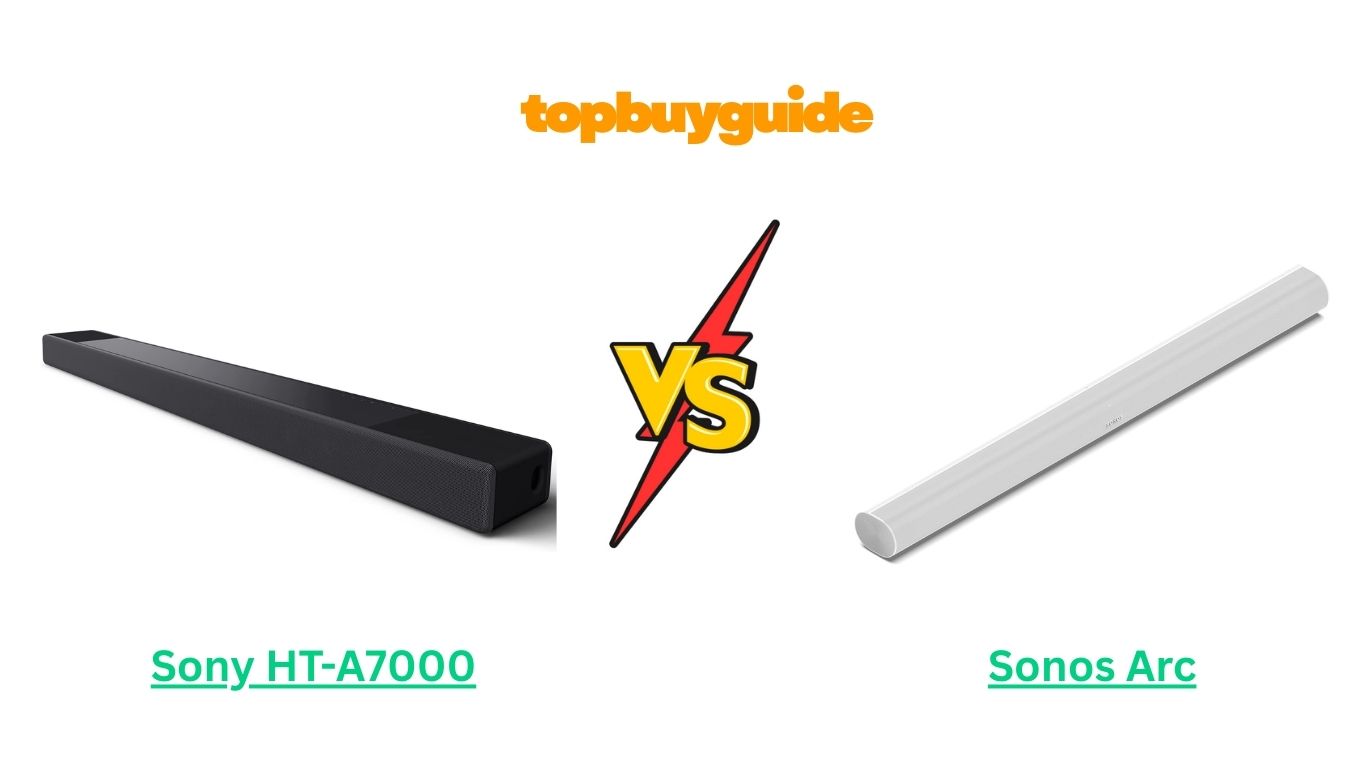
Choosing a premium soundbar is vital for a truly cinematic home experience. Both the Sony HT-A7000 and Sonos Arc offer impressive features.
HT-A7000 stands out for 3D surround sound and advanced speaker configuration, making it perfect for movie enthusiasts. Sonos Arc is sleek and integrates smart home features, ideal for users who want seamless streaming and smart control.
This detailed comparison will help you identify the soundbar best suited for your entertainment setup.
Why Do I Recommend the Sony HT-A7000?
The Sony HT-A7000 surpasses Sonos Arc in multiple areas, offering a more immersive cinematic experience and robust audio performance.
- 7.1.2 Channel Configuration: Provides true 3D surround sound with upward-firing speakers, unlike Sonos Arc which uses Dolby Atmos but fewer channels.
- High-Resolution Audio: Supports 360 Reality Audio, delivering precision in both music and movies. Sonos Arc focuses on streaming clarity but lacks high-res support.
- Dolby Atmos and DTS:X: Enhanced vertical soundstage allows movies and music to feel multidimensional, compared to Arc’s more straightforward Atmos.
- Multiple HDMI Inputs: HT-A7000 includes eARC and 4 HDMI ports, ideal for connecting multiple devices, whereas Arc supports fewer HDMI connections.
- Bass Extension Technology: Built-in subwoofers with Bass Extension feature provide deeper lows without an external sub, unlike Arc which may require Sonos Sub.
- Smart Room Calibration: Sony’s auto room tuning adjusts audio for any room size, delivering consistent performance; Arc requires manual app adjustments.
- Enhanced Dialog Clarity: HT-A7000 features Voice Zoom technology, enhancing dialogue intelligibility, superior for home theaters.
- Expandable Speaker Options: Compatible with Sony SA-SW5/SA-SW3 subs and rear speakers, offering fully customizable surround setups.
Overall, Sony HT-A7000 offers superior surround sound, connectivity, and cinematic immersion, making it the preferred choice for dedicated home theater enthusiasts.
Side By Side Comparison Chart (Sony HT-A7000 vs Sonos Arc)
| Feature | Sony HT-A7000 | Sonos Arc |
| Channels | 7.1.2 | 5.0.2 |
| Dolby Atmos | Yes | Yes |
| DTS:X | Yes | No |
| HDMI Inputs | 4 (eARC) | 1 (eARC) |
| Voice Enhancement | Yes, Voice Zoom | Yes, Speech Enhancement |
| Subwoofer | Built-in + expandable | Optional Sonos Sub |
| Wireless Rear Speakers | Yes, optional | Optional Sonos One/SL |
| Smart Room Calibration | Yes, auto | Yes, manual via app |
| High-Resolution Audio | Yes | No |
| Dimensions | 43.3” W x 4.5” H | 45” W x 3.4” H |
What Common Sony HT-A7000 vs Sonos Arc Can Do
Both soundbars share premium features that enhance home entertainment:
Dolby Atmos Support
Both provide immersive 3D audio, making movies and music sound multidimensional. Sound appears from all directions, enhancing cinematic experience.
Streaming Compatibility
Both integrate with Apple AirPlay 2, Spotify Connect, and Amazon Alexa for seamless wireless playback. Users can enjoy various platforms without extra devices.
Smart Home Integration
Both support voice control through smart assistants, allowing hands-free operation of volume, playback, and inputs.
Sleek, Modern Design
Each soundbar is designed to fit under TVs discreetly, complementing home interiors with minimalist aesthetic.
Expandable Options
Both allow wireless expansion for rear speakers or subs, providing flexibility for future upgrades without replacing the core unit.
Common Features of Sony HT-A7000 vs Sonos Arc (Chart)
| Feature | Sony HT-A7000 | Sonos Arc |
| Dolby Atmos | Yes | Yes |
| Streaming Apps | AirPlay 2, Spotify Connect, Alexa | AirPlay 2, Spotify Connect, Alexa |
| Voice Control | Compatible | Compatible |
| Wireless Expansion | Yes | Yes |
| Sleek Design | Yes | Yes |
| App Control | Sony Music Center | Sonos App |
| Subwoofer Compatibility | Yes, optional | Yes, Sonos Sub |
| Rear Speaker Compatibility | Yes, optional | Yes, Sonos One/SL |
A Detailed Comparison of Sony HT-A7000 vs Sonos Arc
Audio Performance and Clarity
The Sony HT-A7000 delivers crystal-clear, multidimensional sound with its 7.1.2 channel system, making dialogues, background scores, and sound effects exceptionally distinct. Its upward-firing speakers create a true 3D soundstage, enveloping listeners from all directions.
By contrast, the Sonos Arc, while impressive, relies on its 5.0.2 channels, producing immersive Dolby Atmos sound but with slightly less spatial depth. It shines in music playback clarity, especially for streaming, but lacks the cinematic vertical dimension of the HT-A7000.
Bass Performance and Low-End Impact
Sony HT-A7000 features built-in subwoofers with Bass Extension technology, offering deep, punchy lows without additional hardware. The bass is consistent, controllable, and adapts to the room’s acoustics for a full-bodied cinematic experience.
Sonos Arc, however, requires the optional Sonos Sub to achieve comparable low-end impact. While Arc produces clean bass, it may feel lighter or less enveloping in large rooms or open-space environments, making HT-A7000 more versatile for immersive home theater setups.
Connectivity and Inputs
HT-A7000 offers four HDMI inputs with eARC support, enabling connection to multiple devices, including gaming consoles, Blu-ray players, and streaming devices. Its HDMI eARC ensures high-fidelity audio passthrough.
Sonos Arc provides only one HDMI eARC port, which limits simultaneous connections. While it integrates seamlessly into the Sonos ecosystem, HT-A7000 is superior for users with multiple AV components, allowing hassle-free switching and setup.
Voice and Smart Control
Both soundbars support voice assistants, but their approach differs. HT-A7000 integrates Google Assistant and Alexa, with Sony Music Center app control, allowing precise adjustments to EQ, audio modes, and device settings.
Sonos Arc supports Amazon Alexa, Google Assistant, and Apple AirPlay 2, providing smooth integration with smart home systems. However, Arc’s voice tuning lacks advanced dialogue clarity compared to HT-A7000’s Voice Zoom technology, which enhances spoken words in movies.
Room Calibration and Sound Customization
Sony HT-A7000 automatically adjusts sound via Sony’s Immersive Audio Calibration, measuring speaker output, room acoustics, and reflection patterns. This ensures consistent sound quality in any room, maximizing Atmos effect.
Sonos Arc uses the Trueplay tuning feature, which is manually guided through an iOS device. While effective, it requires user intervention and may not be as precise as Sony’s automated calibration, giving HT-A7000 an edge in convenience and accuracy.
Design and Build Quality
Sony HT-A7000 has a sleek, slightly wider design that accommodates multiple drivers without appearing bulky. Its premium finish blends with high-end TVs, while the ergonomic layout ensures optimal audio projection.
Sonos Arc emphasizes minimalism with a slimmer, elegant profile, making it ideal for modern interiors. Though aesthetically pleasing, its smaller form factor limits speaker driver size, slightly impacting maximum volume and bass projection.
Real-Life Usage Scenarios
- Movie Nights: HT-A7000 delivers true cinematic experience with rich surround sound, making explosions and background scores feel immersive.
- Streaming Music: Sonos Arc excels with streaming apps, offering clean, detailed sound, perfect for casual listening or party settings.
- Gaming Setup: HT-A7000 supports multiple HDMI connections, ensuring lag-free, high-quality audio for consoles. Arc can work but requires additional adapters for multiple inputs.
- Smart Home Integration: Arc seamlessly integrates with Sonos multi-room systems, allowing synchronized music playback across multiple rooms.
- Voice Commands: HT-A7000’s Voice Zoom and smart assistants allow easy control of audio and TV functions without compromising clarity.
Tips for Optimal Audio Setup
- Place soundbars centered under the TV, slightly away from walls to avoid echo.
- Use auto or Trueplay calibration to optimize sound for your specific room size.
- For HT-A7000, connect external Sony subwoofers or rear speakers for full 7.1.2 surround.
- Sonos Arc users can add Sonos Sub or rear One/SL speakers to simulate cinema-quality sound.
- Keep firmware updated to improve sound modes and connectivity features.
- Avoid placing speakers inside enclosed cabinets to maintain open sound projection.
Maintenance Tips
- Dust regularly to prevent driver obstruction.
- Keep HDMI and power cables organized to avoid damage.
- Avoid moisture exposure; both are not fully waterproof.
- Use manufacturer apps for software updates and audio calibration.
- Power down when not in use to extend lifespan and preserve battery (if applicable for connected subs).
Conclusion
For cinematic, high-fidelity sound and versatile connectivity, the Sony HT-A7000 is the ultimate choice. Sonos Arc excels in sleek design and smart home streaming, but HT-A7000’s channel depth, bass performance, and auto calibration make it the superior soundbar for immersive home theaters.
FAQs
- Which has better surround sound? HT-A7000 delivers full 3D sound with 7.1.2 channels, Arc has 5.0.2 and less vertical depth.
- Do they support Dolby Atmos? Yes, both support Dolby Atmos, but HT-A7000 also supports DTS:X for additional depth.
- Which soundbar is louder? HT-A7000 produces higher peak volume without distortion, while Arc is optimal for medium-sized rooms.
- Can I expand them with rear speakers? Yes, both support optional rear speakers, but HT-A7000 pairs seamlessly with Sony’s SA-SW5/SA-SW3 series.
- Which is better for music streaming? Sonos Arc excels with streaming apps and wireless multi-room playback, though HT-A7000 also streams efficiently.
- Do they improve dialogue clarity? HT-A7000 uses Voice Zoom technology, making speech more intelligible compared to Arc.
- Are both compatible with smart assistants? Yes, HT-A7000 supports Alexa and Google Assistant, Arc supports both plus AirPlay 2.
- Which is better for movies? HT-A7000’s 3D surround sound, bass, and calibration make it ideal for immersive cinematic experience.

Alex Turner is a dedicated product researcher and reviewer at TopBuyGuide.com, known for his clear, honest, and data-driven insights. He spends countless hours testing, comparing, and analyzing products to help readers make confident and informed buying decisions.