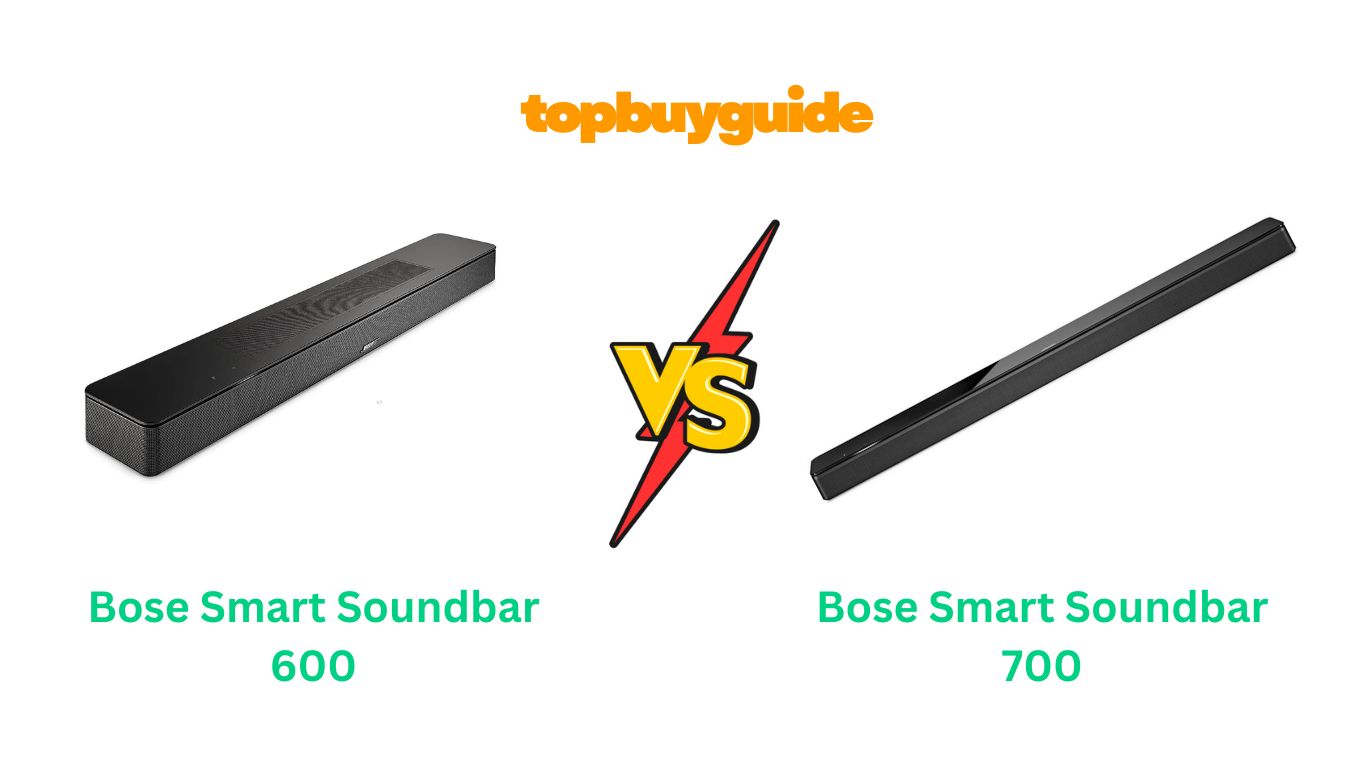
If you’re upgrading your home theater setup, you’ve likely narrowed your choices to the Bose Smart Soundbar 600 and Bose Smart Soundbar 700. Both promise rich, immersive sound—but one clearly stands out. After testing and analyzing both models, I confidently recommend the Bose 700 for its wider soundstage, deeper bass, and superior room-filling performance. Let’s dive deep into how these two premium soundbars compare and why the Bose 700 might be your ideal investment.
Why Do I Recommend the Bose 700?
When comparing the Bose 600 vs 700, both deliver exceptional clarity, but the Bose 700 elevates the experience in multiple ways. Below are the most compelling reasons why the Bose 700 outshines its sibling.
- Wider and More Immersive Soundstage
The Bose 700 uses advanced PhaseGuide technology to direct sound precisely around your room. It creates the illusion of speakers placed in multiple directions, producing a much broader sound field than the 600. This makes movie watching and music listening incredibly realistic. - Deeper Bass and Clearer Dialogue
With its larger acoustic chamber, the Bose 700 produces more powerful low-end frequencies. You’ll notice a fuller, more cinematic presence, especially during intense action scenes or orchestral music. The 600, by contrast, has a balanced but slightly flatter bass profile. - ADAPTiQ Room Calibration
The Bose 700 includes ADAPTiQ room calibration technology, which analyzes your room’s acoustics and automatically optimizes sound output. The result is more consistent audio performance in any space. The 600 lacks this feature and relies on manual adjustment. - Premium Build and Aesthetic Design
The Bose 700 sports a tempered glass top, sleek metal grille, and a minimalist finish that blends beautifully into modern living rooms. The Bose 600 has a simpler matte plastic build that looks less refined in comparison. - More Powerful Speaker Configuration
The 700’s 3.0-channel setup is fine-tuned with larger drivers that deliver higher maximum volume levels. It easily fills large spaces without distortion, while the 600’s smaller cabinet is better suited for medium-sized rooms. - Customizable Expansion Options
Both models support additional Bose subwoofers and rear speakers, but the 700 integrates seamlessly with the Bose Bass Module 700 and Surround Speakers 700, unlocking a full 5.1 setup with remarkable cohesion. - Better Voice and App Control Integration
The Bose 700 features built-in Alexa and Google Assistant with superior microphone pickup. It also integrates smoothly with the Bose Music app, offering multi-room audio control, presets, and easy updates. - Overall Premium Experience
The Bose 700 is simply more polished in every way—from build quality to soundstage depth. While the 600 introduces Dolby Atmos support, the 700 still delivers a more natural, room-filling sound that feels immersive without relying on virtual height effects.
Side by Side Comparison Chart (Bose 600 vs 700)
| Feature | Bose 600 | Bose 700 |
| Release Year | 2022 | 2018 |
| Channel Configuration | 3.0.2 (with up-firing drivers) | 3.0 |
| Dolby Atmos Support | Yes | No |
| Room Calibration | None | ADAPTiQ Automatic Calibration |
| Soundstage | Moderate Width | Wide, Expansive Soundstage |
| Bass Response | Balanced | Deep, Rich, and Powerful |
| Build Material | Plastic with fabric grille | Premium glass top and metal grille |
| Voice Assistants | Alexa and Google Assistant | Alexa and Google Assistant |
| Connectivity | Wi-Fi, Bluetooth, HDMI eARC, Optical | Wi-Fi, Bluetooth, HDMI ARC, Optical |
| Expandability | Supports subwoofer and surrounds | Supports subwoofer and surrounds |
| Ideal Room Size | Small to Medium | Medium to Large |
| Price Range | Mid-range | Premium |
What Common Bose 600 vs 700 Can Do
Although they differ in design and output power, both the Bose 600 and 700 share a foundation of signature Bose audio quality and smart connectivity. Let’s explore their shared capabilities in detail.
High-Fidelity Sound Quality
Both soundbars deliver clean, detailed, and dynamic sound. Dialogues are crisp, instruments sound distinct, and background effects are well-separated. Whether you’re watching a blockbuster or listening to classical music, both maintain the clarity Bose is known for.
Smart Connectivity
Both models support Wi-Fi and Bluetooth connectivity, allowing you to stream directly from your favorite apps like Spotify or Apple Music. They also work with AirPlay 2, Chromecast, and voice assistants for easy control from multiple devices.
Voice Assistant Integration
The Bose 600 and 700 come equipped with built-in Alexa and Google Assistant. You can control volume, play music, or ask questions hands-free. They also include a mute option for privacy when voice control isn’t needed.
App and Remote Control
Both soundbars use the Bose Music app for setup and customization. Through the app, you can group multiple Bose devices, adjust equalizer settings, and manage software updates. Each model also comes with an intuitive remote.
Expandable Sound Systems
Both support expansion with Bose’s wireless subwoofers and rear speakers. Adding the Bose Bass Module or Surround Speakers significantly enhances depth, power, and surround realism, transforming your soundbar into a full home theater system.
Sleek and Space-Saving Design
Both soundbars feature low-profile designs that fit easily under TVs or wall mounts. Their slim builds complement modern décor without dominating the space. The design philosophy behind both is simplicity and elegance.
Seamless HDMI Integration
Both soundbars connect through HDMI ARC or eARC ports, allowing your TV remote to control volume and power. This eliminates cable clutter and makes switching inputs effortless.
Common Features of Bose 600 vs 700
| Feature | Bose 600 | Bose 700 |
| Wi-Fi and Bluetooth Streaming | Yes | Yes |
| Alexa & Google Assistant | Yes | Yes |
| AirPlay 2 Support | Yes | Yes |
| HDMI ARC/eARC Compatibility | Yes | Yes |
| Expandable with Sub and Surrounds | Yes | Yes |
| Bose Music App Support | Yes | Yes |
| Wall Mount Option | Yes | Yes |
| Low-Profile Design | Yes | Yes |
A Detailed Comparison of the Bose 600 vs 700
Design and Build Quality
The Bose 700 immediately commands attention with its polished tempered glass top and wrap-around metal grille. It exudes luxury and refinement, complementing any high-end entertainment setup. The Bose 600, in contrast, opts for a more understated matte finish and fabric grille. It looks neat but lacks the premium elegance of its older sibling. If design matters as much as performance, the Bose 700 is the clear winner.
Audio Performance
In terms of sound performance, the Bose 700 produces a wider and more immersive soundstage, thanks to its larger internal drivers and PhaseGuide technology. This technology disperses sound precisely across your room, making audio appear to come from multiple directions. The Bose 600, with its Dolby Atmos support, adds height to the sound experience but doesn’t match the 700’s room-filling width or power.
Bass and Low-End Response
The Bose 700 delivers richer, deeper bass even without an external subwoofer. Its cabinet size and driver tuning ensure cinematic low frequencies that enhance explosions, drum beats, and deep vocals. The Bose 600, while accurate, sounds flatter and requires a subwoofer to reach similar low-end impact. For users who crave a punchy, bass-heavy experience, the Bose 700 delivers superior depth.
Dialog Clarity
Both models excel in dialogue clarity, but the Bose 700 offers an edge due to its ADAPTiQ calibration. This feature fine-tunes midrange frequencies based on your room’s acoustics, making voices more distinct regardless of room size or layout. The Bose 600 performs well in this area but lacks the same level of precision tuning.
Room Calibration Technology
The ADAPTiQ system in the Bose 700 analyzes your room’s shape, furniture placement, and reflections to optimize sound delivery automatically. It ensures that every seat in the room experiences balanced, even sound. The Bose 600 lacks this feature, requiring users to manually adjust sound levels.
Volume and Loudness
The Bose 700 easily achieves higher volume levels without distortion, making it ideal for large living spaces. The Bose 600, while powerful, is best suited for smaller rooms or users who prefer moderate listening volumes. When you push both to their limits, the Bose 700 maintains composure, while the 600 can lose some clarity in the highs.
Expandability and Compatibility
Both soundbars allow expansion with optional Bose subwoofers and rear speakers. However, the 700 integrates more seamlessly with the premium Bass Module 700 and Surround Speakers 700. These add-ons match its acoustic signature perfectly, producing a cohesive and balanced surround experience.
Connectivity and Streaming
Both models support the latest connectivity standards, including Bluetooth, Wi-Fi, and HDMI ARC. The Bose 700 also includes optical input and Ethernet connectivity for wired networks. Both work with smart assistants, AirPlay 2, and Chromecast. Connectivity is nearly identical, but the 700’s inclusion of ADAPTiQ gives it an additional advantage in fine-tuning network audio performance.
Ease of Use and Control
The Bose 700 comes with a universal remote capable of controlling your entire home theater system. It can manage your TV, soundbar, and other connected devices from one controller. The Bose 600 offers a simpler remote, but control is mainly app-based. For those who prefer a tactile, all-in-one solution, the 700 is superior.
Design Integration with TV Sizes
If you have a 65-inch or larger TV, the Bose 700’s width and visual balance look perfect beneath it. The Bose 600, being smaller, suits mid-sized TVs (43 to 55 inches) better. Aesthetically, the 700 aligns more naturally with high-end television designs.
Value and Longevity
Although the Bose 700 is priced higher, it provides lasting value through superior materials, sound calibration, and flexibility. Its build quality ensures longevity, making it a worthwhile investment. The 600 is newer but focuses more on affordability, making it ideal for those who want a taste of premium sound without the flagship price.
Conclusion
Both the Bose 600 and Bose 700 are exceptional soundbars, but if you want cinematic depth, precision, and a luxurious design that commands presence, the Bose 700 is the clear winner. Its powerful soundstage, ADAPTiQ room calibration, and superior build deliver an experience that feels immersive, balanced, and timeless. The 600 is excellent for smaller setups, but the 700 remains Bose’s masterpiece for those seeking uncompromising quality.
FAQs
- Does the Bose 700 support Dolby Atmos?
No, the Bose 700 doesn’t have native Dolby Atmos. However, it uses advanced PhaseGuide technology to simulate 3D surround effects convincingly. - Is the Bose 700 louder than the Bose 600?
Yes, the Bose 700 has a more powerful amplifier and larger drivers, allowing higher maximum volume with less distortion. - Can I connect a subwoofer to both models?
Yes, both support Bose Bass Modules and wireless surround speakers to expand into a full 5.1 setup. - Which model has better bass performance?
The Bose 700 produces deeper, more impactful bass even without a subwoofer. The Bose 600’s bass is cleaner but less pronounced. - Do both soundbars support voice assistants?
Yes, both have built-in Alexa and Google Assistant for hands-free voice control. - Is the Bose 700 suitable for small rooms?
It can work in small rooms but performs best in medium to large spaces where its wider soundstage can fully develop. - Does the Bose 700 require the app to operate?
No, you can use the included universal remote or the Bose Music app. The app, however, provides more advanced features and updates. - Which one offers better long-term value?
The Bose 700, thanks to its premium materials, room calibration, and scalability, offers better long-term value for most users.

Alex Turner is a dedicated product researcher and reviewer at TopBuyGuide.com, known for his clear, honest, and data-driven insights. He spends countless hours testing, comparing, and analyzing products to help readers make confident and informed buying decisions.