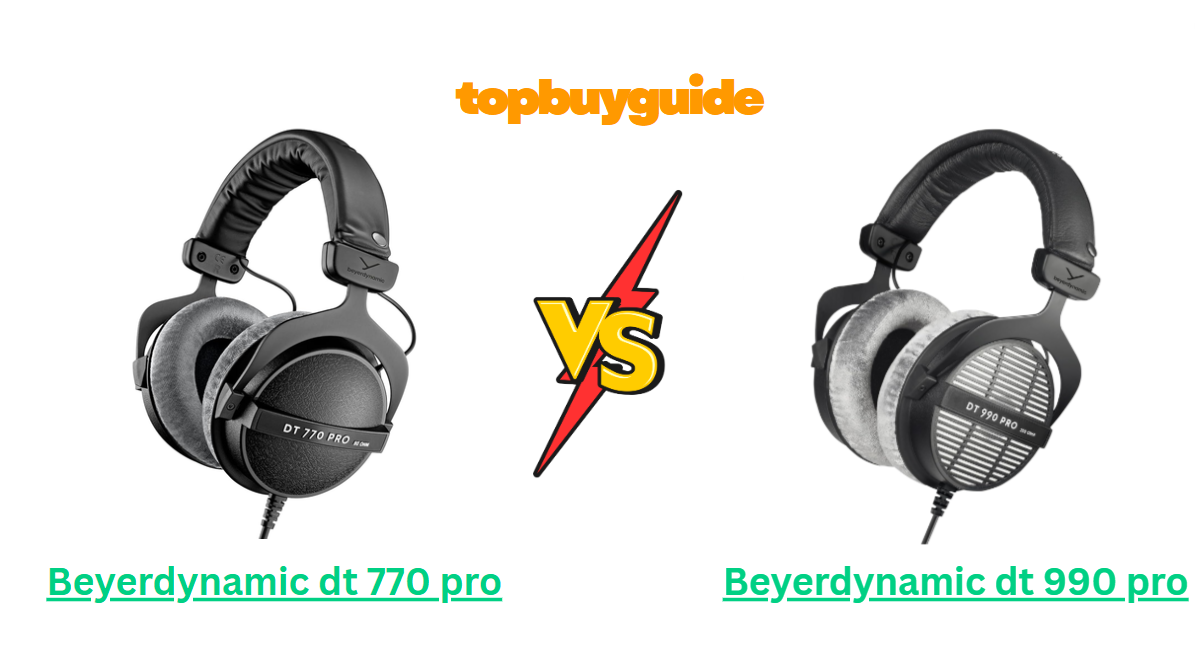
Choosing between the beyerdynamic DT 770 PRO and the DT 990 PRO can be tough, as they are both industry legends. However, if you need headphones primarily for tracking and recording, the DT 770 PRO is the clear winner due to its closed-back design, which provides superior sound isolation. It prevents microphone bleed while delivering the detailed audio beyerdynamic is famous for, making it an indispensable tool for any recording artist or producer.
Why Do I Recommend The beyerdynamic dt 770 pro?
While both the beyerdynamic DT 770 PRO and DT 990 PRO are exceptional headphones, the DT 770 PRO stands out for its versatility, especially in recording environments. Its closed-back design is a significant advantage over the open-back DT 990 PRO, making it the superior choice for tracking vocals and instruments.
- Superior Sound Isolation: The DT 770 PRO features a closed-back design, providing excellent isolation from ambient noise. This is crucial for recording, as it prevents sound from the headphones from bleeding into the microphone. In contrast, the DT 990 PRO has an open-back design, which allows sound to leak in and out, making it less suitable for tracking.
- Focused Bass Response: Thanks to its closed-back construction, the DT 770 PRO delivers a powerful and crisp bass response. This focused low-end is ideal for monitoring bass-heavy music genres without overwhelming the mix. The DT 990 PRO, while having a strong bass, offers a more spacious and less impactful low-end due to its open nature.
- Versatility for Various Environments: The sound isolation of the DT 770 PRO makes it practical for use in environments that are not perfectly quiet. Whether you’re in a home studio with background noise or on the move, it effectively blocks out distractions. Conversely, the DT 990 PRO is best used in a quiet, dedicated listening space to appreciate its open soundstage fully.
- Ideal for Vocal Tracking: When recording vocals, preventing the headphone track from being picked up by the sensitive vocal mic is paramount. The DT 770 PRO excels here, ensuring a clean vocal take every time. The DT 990 PRO’s open design would introduce significant bleed, complicating the mixing process.
- Minimized Distractions for the Listener: The robust isolation means you can focus entirely on the audio you are monitoring or recording. The DT 770 PRO creates an immersive listening environment free from external interruptions, which is something the open-back DT 990 PRO cannot offer.
- Robust Build for Studio Use: Both headphones are built like tanks, a hallmark of German engineering. However, the DT 770 PRO’s design is perfectly suited for the rigors of a busy studio where isolation during tracking is a non-negotiable requirement.
- Different Cable for Portability (80 Ohm version): The 80 Ohm version of the DT 770 PRO comes with a straight cable, which is often preferred for its ease of management compared to the coiled cable of the DT 990 PRO, especially when moving around the studio.
- Pure, High-Resolution Sound for Monitoring: While the DT 990 PRO is excellent for mixing and mastering with its wide soundstage, the DT 770 PRO provides a pure, high-resolution sound that is perfect for the critical task of monitoring individual tracks during the recording phase, ensuring every detail is captured accurately.
Side By Side Comparison Chart: beyerdynamic dt 770 pro vs beyerdynamic dt 990 pro
| Feature | Beyerdynamic dt 770 pro | beyerdynamic dt 990 pro |
| Acoustic Design | Closed-back | Open-back |
| Primary Use Case | Recording, Monitoring, Tracking | Mixing, Mastering, Critical Listening |
| Sound Isolation | High | Low (sound leaks in and out) |
| Soundstage | Good for a closed-back, focused | Wide and spacious |
| Bass Response | Powerful, crisp, defined | Strong, but less impactful, more airy |
| Sound Leakage | Minimal | Significant |
| Cable Type (250 Ohm) | 3m coiled cable | 3m coiled cable |
| Cable Type (80 Ohm) | 3m straight cable | 3m straight cable |
| Best Environment | Noisy or quiet environments | Quiet environments only |
What Common beyerdynamic dt 770 pro vs beyerdynamic dt 990 pro Can Do?
Despite their key differences, the beyerdynamic DT 770 PRO and DT 990 PRO share a lineage of professional studio-grade quality. This means they have several overlapping features and benefits that have cemented their status as industry standards for decades. Whether you choose the closed-back 770 or the open-back 990, you are investing in a piece of equipment designed for precision, comfort, and longevity. These are not just headphones; they are reliable tools for audio professionals and enthusiasts who demand the best from their gear.
Both models are renowned for their exceptional wearing comfort, which is a critical feature for professionals who spend long hours in the studio. They feature soft, replaceable velour ear pads that are circumaural, meaning they completely enclose the ear. This design, combined with a padded, adjustable, and robust spring steel headband, ensures a secure yet comfortable fit without excessive clamping force. You can wear either the DT 770 PRO or the DT 990 PRO for extended mixing, recording, or listening sessions without experiencing discomfort or ear fatigue, a testament to beyerdynamic’s thoughtful ergonomic design.
Durability and build quality are other areas where both headphones excel. Proudly “Made in Germany,” the DT 770 PRO and DT 990 PRO are constructed with hard-wearing, robust materials designed to withstand the rigors of daily studio use. From the sturdy plastic earcups to the metal forks and spring steel headband, every component is built to last. Furthermore, beyerdynamic is famous for its commitment to sustainability and right-to-repair; virtually every part of these headphones is replaceable. This means that if an earpad wears out or a headband pad gets damaged, you can easily order a replacement part and extend the life of your headphones for many more years, making them a sound long-term investment.
At the core of both headphones is beyerdynamic’s commitment to high-resolution audio. Both the DT 770 PRO and DT 990 PRO deliver a transparent and extremely detailed sound profile. They share the same wide frequency response of 5 Hz to 35,000 Hz, allowing them to reproduce the full spectrum of audible sound with incredible accuracy. This makes them ideal for critical listening tasks where identifying subtle nuances in a mix is essential. While their sound signatures are tailored for different applications—the 770 for isolated tracking and the 990 for spacious mixing—their fundamental goal is the same: to provide a reliable and analytical audio reference for professionals.
Common Features of beyerdynamic dt 770 pro vs beyerdynamic dt 990 pro
| Feature | beyerdynamic dt 770 pro | beyerdynamic dt 990 pro |
| Manufacturer | beyerdynamic | beyerdynamic |
| Made In | Germany | Germany |
| Ear Placement | Over-Ear, Circumaural | Over-Ear, Circumaural |
| Earpads | Soft, replaceable velour pads | Soft, replaceable velour pads |
| Headband | Rugged, adjustable, soft padded spring steel | Rugged, adjustable, soft padded spring steel |
| Replaceable Parts | All parts are replaceable | All parts are replaceable |
| Driver Type | Dynamic | Dynamic |
| Frequency Response | 5 – 35,000 Hz | 5 – 35,000 Hz |
| Impedance Options | 32, 80, 250 Ohm | 80, 250 Ohm |
| Nominal SPL | 96 dB | 96 dB |
| Included Adapter | 3.5mm to 6.35mm (1/4″) jack adapter | 3.5mm to 6.35mm (1/4″) jack adapter |
| Included Bag | Drawstring bag | Drawstring bag |
A Detailed Comparison Of the beyerdynamic dt 770 pro vs beyerdynamic dt 990 pro
Soundstage and Imaging
The beyerdynamic DT 990 PRO offers an incredibly wide and spacious soundstage, which is the primary benefit of its open-back design. This creates a three-dimensional listening experience, making you feel as if you are in the room with the musicians. Instruments are clearly separated, and their placement within the stereo field is precise, which is invaluable for mixing and mastering. This open-air feeling allows for a more natural and less fatiguing listening session, giving you the ability to perceive subtle changes in panning and reverb with ease.
In contrast, the beyerdynamic DT 770 PRO, with its closed-back design, provides a more intimate and focused soundstage. While it is widely considered one of the most spacious-sounding closed-back headphones on the market, it cannot fully replicate the airy, expansive feel of an open-back model. The sound is presented more “inside your head.” However, this focused imaging is excellent for monitoring and tracking individual instruments, as it allows you to zoom in on specific elements of a mix without the distractions of a wider soundscape.
Sound Signature and Frequency Response
The beyerdynamic DT 990 PRO is known for its distinct “V-shaped” sound signature, characterized by an emphasized bass and a prominent treble boost. This analytical sound makes details pop, which is why many producers favor it for critical listening and editing. The bass is strong and voluminous, while the highs are crisp and detailed, though some listeners with sensitivity to treble may find them slightly sharp or sibilant at times. This profile is designed to reveal flaws in a mix, making it a powerful analytical tool.
The beyerdynamic DT 770 PRO also delivers a detailed and high-resolution sound, but its closed-back nature alters the presentation. It is particularly praised for its powerful and crisp bass reproduction, thanks to its innovative bass reflex system. The low-end is punchy and well-defined, making it a reference for bass-heavy genres. While it also has a notable treble presence, it is generally considered less aggressive than the DT 990 PRO, offering a sound that is still analytical but perhaps slightly warmer and more forgiving for long listening sessions during tracking.
Design and Use Case
The fundamental design difference dictates the ideal use case for each model. The beyerdynamic DT 990 PRO, with its open-back build, is designed exclusively for use in quiet, isolated studio environments. Because it leaks sound, it is unsuitable for recording with microphones, as the headphone audio would bleed into the recording. It excels in the final stages of production—mixing and mastering—where a wide, transparent soundstage is needed to make accurate judgments about the overall balance and spatial properties of a track.
The beyerdynamic DT 770 PRO is the workhorse of the recording studio. Its closed-back design provides excellent sound isolation, making it the perfect choice for tracking vocals and instruments. This design prevents headphone bleed, ensuring clean recordings. Its ability to block out ambient noise also makes it a versatile option for monitoring in less-than-perfect acoustic environments, for DJs in loud clubs, or even for casual listeners who want an immersive experience without disturbing others. It is the go-to headphone for the recording phase of music production.
Comfort and Build
Both headphones are benchmarks for comfort in the studio world. They are almost identical in their physical construction, featuring plush, grey velour earpads that are soft on the skin and breathable enough to prevent excessive heat buildup during long sessions. The adjustable spring steel headband provides a secure fit for a wide range of head sizes without applying uncomfortable pressure. Both are lightweight for their size, with users often forgetting they are even wearing them.
In terms of build, both the beyerdynamic DT 770 PRO and DT 990 PRO are built to last, reflecting their German manufacturing heritage. The materials are robust and durable, and the ability to replace every single component—from the earpads to the headband and even the drivers—means they are a sustainable, long-term investment. The main physical difference often comes down to the cable; the 250 Ohm versions of both models typically feature a coiled cable, while the 80 Ohm versions come with a straight cable, offering a choice based on user preference for studio mobility.
Conclusion
For tracking and recording, the beyerdynamic DT 770 PRO is the undisputed champion due to its closed-back design and excellent sound isolation. If your primary need is a reliable headphone to prevent mic bleed and monitor audio in various environments, this is your best choice. For mixing, mastering, and critical listening in a quiet room, the beyerdynamic DT 990 PRO’s open-back design provides a superior, spacious soundstage that is hard to beat. Choose the one that best fits your main application, and you’ll have a studio legend on your hands.
FAQs
- Do I need an amplifier for the beyerdynamic DT 770 PRO or DT 990 PRO?
For the 250 Ohm versions of both models, a headphone amplifier is highly recommended to drive them properly and get the best sound quality. The 80 Ohm versions can often be powered by most audio interfaces and some computers, while the 32 Ohm DT 770 PRO is designed for mobile devices and doesn’t require an amp. - Which headphone is better for gaming?
Both are excellent for gaming. The DT 990 PRO’s wide soundstage is fantastic for immersive, open-world games and pinpointing directional audio. The DT 770 PRO’s sound isolation is great for competitive gaming in noisy environments, helping you focus on in-game sounds. - Are these headphones comfortable for people who wear glasses?
Many users find them comfortable with glasses due to the soft velour earpads and moderate clamping force. However, comfort is subjective, and some users with thicker frames may experience pressure during very long sessions. The DT 990 PRO might have a slight edge in comfort due to its lighter clamping force. - Can I replace the cable on the DT 770 PRO or DT 990 PRO?
The standard DT 770 PRO and DT 990 PRO models come with a non-detachable cable. While replacing the cable is possible, it requires some DIY soldering skills. If a detachable cable is a must-have, consider the newer PRO X series, like the DT 700 PRO X or DT 900 PRO X. - What is the main sound difference between the closed-back DT 770 PRO and the open-back DT 990 PRO?
The DT 770 PRO (closed-back) has a more focused sound with stronger, punchier bass and excellent noise isolation. The DT 990 PRO (open-back) has a wider, more “out-of-head” soundstage with a more natural, airy feel, but it leaks sound and doesn’t block external noise. - Which model is better for simply listening to music?
This depends on your preference. If you want an immersive, concert-like experience in a quiet room, the DT 990 PRO is fantastic. If you listen in noisier places or prefer a more impactful bass and an isolated experience, the DT 770 PRO is the better choice. - How durable are these headphones?
Both models are known for their exceptional durability. Built in Germany with high-quality materials, they are designed to last for years. Plus, since all parts are replaceable, you can easily maintain them over their long lifespan, making them a very reliable investment. - Is there a big difference between the 80 Ohm and 250 Ohm versions?
The 250 Ohm versions generally offer slightly more detailed and refined sound, especially in the treble, but require a dedicated headphone amp. The 80 Ohm versions are easier to drive and offer a bit more bass punch, making them more versatile for use with a wider range of equipment.

Alex Turner is a dedicated product researcher and reviewer at TopBuyGuide.com, known for his clear, honest, and data-driven insights. He spends countless hours testing, comparing, and analyzing products to help readers make confident and informed buying decisions.