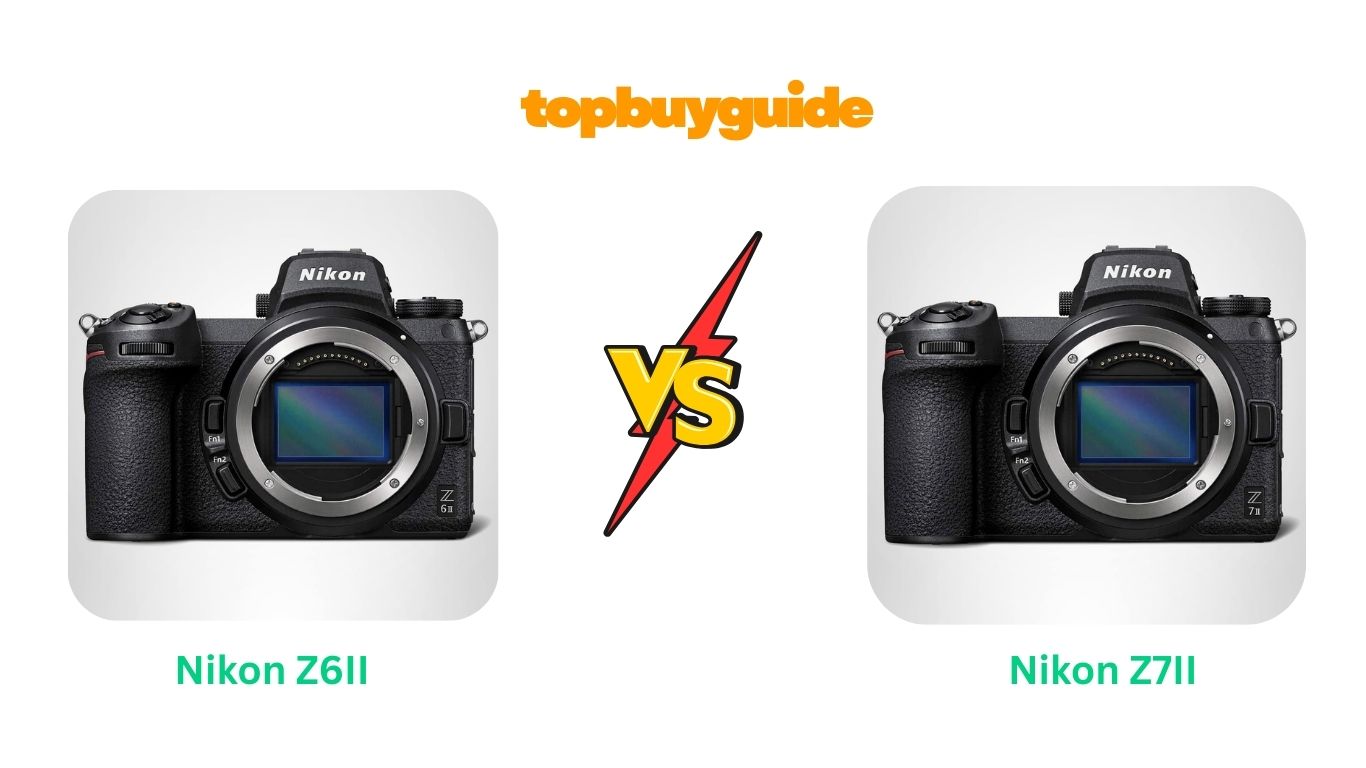
If you’re torn between the Nikon Z6II and Nikon Z7II, you’re not alone. Both are full-frame mirrorless powerhouses that deliver top-tier image quality, 4K video, and dual processors — but they cater to slightly different photographers.
If I had to pick one, I’d recommend the Nikon Z6II, thanks to its better low-light performance and faster burst shooting speed, making it perfect for action, events, and everyday versatility.
Let’s break down the key differences and see which one truly fits your creative needs.
Why Do I Recommend the Nikon Z6II?
The Nikon Z6II is designed for photographers who need flexibility — excellent in low light, fast in performance, and versatile for both stills and video. While the Z7II is built for ultra-high resolution and detail, the Z6II provides a better balance of speed, usability, and affordability, making it the smarter buy for most people.
Here’s why I recommend the Nikon Z6II over the Z7II:
- Superior Low-Light Performance:
With a 24.5MP sensor, the Z6II offers larger pixel sizes compared to the Z7II’s 45.7MP sensor. This means it captures more light per pixel, delivering cleaner images and less noise in dimly lit scenes. The Z7II, while sharper, can struggle slightly in high ISO shooting. - Faster Continuous Shooting:
The Z6II shoots at up to 14 frames per second, making it ideal for sports, wildlife, or fast-moving subjects. The Z7II, on the other hand, maxes out at 10 fps, which is good but slightly slower for action photography. - Better for Hybrid Shooters (Photo + Video):
The Z6II records 4K at 60p and offers higher-quality full-pixel readout in video mode, giving smoother motion and better color depth. The Z7II’s 4K quality is fantastic but involves a crop at higher frame rates. - Lower File Sizes, Easier Workflow:
With 24.5MP files, you’ll save tons of storage space and enjoy faster editing speeds. The Z7II’s massive 45.7MP images provide more detail but require powerful hardware and larger memory cards. - Improved Autofocus in Low Light:
The Z6II’s AF system performs better in dim conditions (-4.5 EV sensitivity vs. -3 EV on the Z7II), ensuring quicker, more accurate focusing when light is limited. - More Affordable:
The Z6II is usually $500–$700 cheaper than the Z7II, making it a better value for those who want professional-grade performance without breaking the bank. - Versatile for Every Shooting Style:
Whether you’re shooting portraits, landscapes, events, or travel content, the Z6II adapts easily. The Z7II shines for studio or landscape photographers who prioritize fine detail. - Balanced Image Quality and Speed:
The 24.5MP resolution is the “sweet spot” — offering detailed images while maintaining excellent dynamic range and performance. The Z7II’s higher megapixel count is great for large prints, but not essential for most users.
Side-by-Side Comparison Chart: Nikon Z6II vs Z7II
| Features | Nikon Z6II | Nikon Z7II |
| Sensor Resolution | 24.5 MP BSI CMOS | 45.7 MP BSI CMOS |
| Image Processor | Dual EXPEED 6 | Dual EXPEED 6 |
| ISO Range | 100–51,200 (Expandable to 204,800) | 64–25,600 (Expandable to 102,400) |
| Autofocus Points | 273 AF Points | 493 AF Points |
| Continuous Shooting | Up to 14 fps | Up to 10 fps |
| Video Recording | 4K UHD 60p (Full-Frame) | 4K UHD 60p (1.08x Crop) |
| Viewfinder Resolution | 3.69M-dot OLED | 3.69M-dot OLED |
| Memory Card Slots | Dual (CFexpress/XQD + SD UHS-II) | Dual (CFexpress/XQD + SD UHS-II) |
| Battery Life (CIPA) | Approx. 410 shots | Approx. 420 shots |
| Weight | 705 g (Body Only) | 705 g (Body Only) |
| Price Range | More Affordable | More Expensive |
What Common Nikon Z6II vs Z7II Features Can Do?
While they differ in resolution and performance priorities, both the Nikon Z6II and Z7II share many professional-grade features that make them two of the best mirrorless cameras in Nikon’s lineup.
Let’s go over what they have in common and how these shared features benefit your photography.
Dual EXPEED 6 Image Processors
Both cameras feature Nikon’s Dual EXPEED 6 processors, dramatically improving speed, image quality, and buffer performance. Whether you’re shooting burst photos or 4K videos, dual processors ensure faster data handling and smoother operation.
Dual Card Slots for Backup
Each camera offers dual memory card slots — one CFexpress/XQD and one UHS-II SD card slot. This setup allows photographers to back up files in real-time or separate RAW and JPEG files. It’s a must-have for professionals who can’t risk data loss during shoots.
Rugged, Weather-Sealed Body
Both models feature a magnesium alloy body that’s sealed against dust and moisture. This makes them perfect for outdoor shooting in tough weather conditions — from rain to sandstorms. The ergonomic grip and intuitive control layout make long sessions comfortable.
Excellent Electronic Viewfinder (EVF)
The 3.69-million-dot OLED EVF delivers a crystal-clear view of your scene, offering accurate previews of exposure, white balance, and color. This means what you see in the viewfinder is exactly what you’ll capture — no surprises in post-processing.
In-Body Image Stabilization (IBIS)
Both cameras include 5-axis in-body image stabilization, allowing up to 5 stops of compensation. This ensures sharper handheld shots, even at slower shutter speeds, and steadier footage during handheld video shooting.
Advanced Autofocus System
The hybrid autofocus system in both cameras combines phase-detection and contrast-detection AF for fast, accurate focusing. Eye-Detection AF works in both stills and video modes, perfect for portrait shooters.
4K Video Recording
Both the Z6II and Z7II record 4K UHD videos at up to 60 frames per second, producing cinematic-quality footage. They also support external recording via HDMI and can capture 10-bit N-Log for advanced color grading.
Same Battery and Lens Mount
They both use the EN-EL15c battery and Nikon’s Z-mount system, ensuring compatibility with a wide range of Z-mount lenses and F-mount lenses via adapter.
Common Features of Nikon Z6II vs Z7II
| Features | Nikon Z6II | Nikon Z7II |
| Image Processor | Dual EXPEED 6 | Dual EXPEED 6 |
| Lens Mount | Nikon Z Mount | Nikon Z Mount |
| Image Stabilization | 5-Axis IBIS | 5-Axis IBIS |
| Viewfinder | 3.69M-dot OLED | 3.69M-dot OLED |
| Dual Card Slots | CFexpress/XQD + SD UHS-II | CFexpress/XQD + SD UHS-II |
| Weather Sealing | Yes | Yes |
| Battery | EN-EL15c | EN-EL15c |
| 4K Video | Yes, up to 60p | Yes, up to 60p |
| Eye-Detection AF | Yes | Yes |
| Connectivity | Wi-Fi, Bluetooth | Wi-Fi, Bluetooth |
A Detailed Comparison of the Nikon Z6II vs Z7II
When comparing the Nikon Z6II vs Z7II, it’s clear these two cameras share the same DNA — but they target slightly different users. The Z6II is tuned for speed, low-light shooting, and flexibility, while the Z7II caters to maximum detail and studio precision. Let’s break down each key feature in depth.
Image Quality and Resolution
The Nikon Z7II boasts a massive 45.7MP BSI CMOS sensor, ideal for landscape, commercial, and studio photographers who need ultra-sharp, high-resolution images for large prints or cropping flexibility. The detail it captures is breathtaking, especially when paired with Nikon’s sharp Z-mount lenses.
In contrast, the Nikon Z6II features a 24.5MP BSI CMOS sensor, which might seem like a downgrade in resolution but actually excels in real-world usability. With larger pixel sizes, it produces cleaner images at higher ISOs and performs significantly better in low light. For most photographers and videographers, the Z6II’s image quality strikes a perfect balance between detail and performance.
Performance and Speed
For sports, events, or wildlife photography, speed matters — and this is where the Z6II shines. With up to 14 frames per second, it outpaces the Z7II’s 10 fps burst rate, giving you a higher chance of capturing that perfect action shot.
The Z7II, while slightly slower, maintains remarkable sharpness even at high speeds. However, due to its large image files, the buffer fills faster, limiting continuous shooting duration. So if you’re photographing moving subjects, the Z6II is the more reliable performer.
Low-Light Capability
The Z6II leads in low-light conditions thanks to its wider ISO range (100–51,200, expandable to 204,800) and superior signal-to-noise performance. It delivers cleaner results when shooting handheld in dim settings like concerts, night scenes, or indoor events.
The Z7II, with an ISO range of 64–25,600 (expandable to 102,400), offers excellent results too — but its smaller pixels introduce slightly more noise at higher sensitivities. For photographers who often shoot in available light, the Z6II is the better pick.
Video Performance
Both cameras deliver 4K UHD 60p recording, but the Z6II records full-frame video, while the Z7II applies a 1.08x crop at 60p. This gives the Z6II a distinct advantage for videographers who need maximum field of view.
Both support 10-bit N-Log and HDR (HLG) output for professional color grading and feature Eye-Detection AF in video mode. However, the Z6II’s better low-light sensitivity and smaller file sizes make it easier to shoot, edit, and share cinematic content.
Autofocus System
The Z6II uses 273 hybrid AF points, while the Z7II boasts 493 AF points. On paper, the Z7II has broader coverage — but real-world performance is quite close. Both provide fast, accurate focusing, including Eye- and Animal-Detection AF for both humans and pets.
The Z6II, however, focuses better in very dim lighting (down to –4.5 EV vs. –3 EV on the Z7II), giving it a slight advantage for night and indoor photographers.
Build, Design, and Handling
Both cameras are virtually identical in size, weight (705g), and ergonomics. They share the same rugged magnesium alloy frame, weather sealing, and intuitive control layout. The deep grip makes them comfortable to hold during long sessions, and the button placement is nearly identical.
Essentially, whether you choose the Z6II or Z7II, you’ll get the same professional feel and durability that Nikon is known for.
Battery Life and Connectivity
Battery performance between the two is almost identical — both use the EN-EL15c rechargeable battery, lasting around 410–420 shots per charge (CIPA-rated). They also support USB-C power delivery, allowing you to shoot while charging — ideal for long video sessions or time-lapse photography.
Both cameras include Wi-Fi and Bluetooth connectivity for remote control and image transfer through Nikon’s SnapBridge app.
Price and Value
Price can be the deciding factor for many buyers. The Nikon Z6II is consistently $500–$700 cheaper than the Z7II, depending on sales and bundles. For that lower price, you get nearly the same body, processor, autofocus, and video capability — but with better speed and low-light performance.
The Z7II justifies its premium cost for photographers who need extreme detail for large-format printing or commercial use. But for everyone else, the Z6II delivers more than enough power for a lower investment.
Conclusion
After carefully comparing both models, here’s the final verdict:
If you want maximum image resolution for studio, landscape, or fine-art work, the Nikon Z7II is incredible — its 45.7MP sensor delivers unmatched sharpness and tonal range.
However, for most photographers and hybrid creators, the Nikon Z6II offers a better balance of speed, low-light performance, and affordability. It’s lighter on storage, faster in burst mode, and more forgiving in tricky lighting — making it the smarter all-around choice.
So, if you’re looking for a versatile, budget-friendly full-frame mirrorless camera that excels in both photo and video work — the Nikon Z6II is the one to buy.
FAQs: Nikon Z6II vs Z7II
- Which is better for beginners, Nikon Z6II or Z7II?
The Nikon Z6II is better for beginners due to its easier handling, faster autofocus, and better low-light performance. It’s also more affordable and versatile for learning photography and videography. - Does the Nikon Z7II produce sharper images than the Z6II?
Yes. The Z7II’s 45.7MP sensor captures finer detail, making it ideal for commercial or large-print photography. However, most users won’t notice a big difference for everyday shooting. - Can both cameras shoot 4K video at 60fps?
Yes, both shoot 4K UHD at 60fps, but the Z6II does it with a full-frame readout, while the Z7II adds a 1.08x crop at that frame rate. - Do Nikon Z6II and Z7II use the same lenses?
Yes. Both use the Nikon Z-mount system, compatible with all Z-mount lenses and F-mount lenses using the FTZ adapter. - Is the autofocus better on Z7II because of more points?
While the Z7II has 493 AF points, the Z6II’s 273 points perform equally well in most conditions and better in low light. - How do the two cameras differ in battery life?
Battery life is almost the same — around 410–420 shots per charge — though the Z6II tends to last slightly longer in real-world use. - Which camera is better for videography?
The Z6II is better suited for video due to its full-frame 4K 60p recording, better low-light performance, and manageable file sizes. - Which one offers better value for money?
The Nikon Z6II provides better value overall, offering nearly identical features to the Z7II at a significantly lower price.

Alex Turner is a dedicated product researcher and reviewer at TopBuyGuide.com, known for his clear, honest, and data-driven insights. He spends countless hours testing, comparing, and analyzing products to help readers make confident and informed buying decisions.