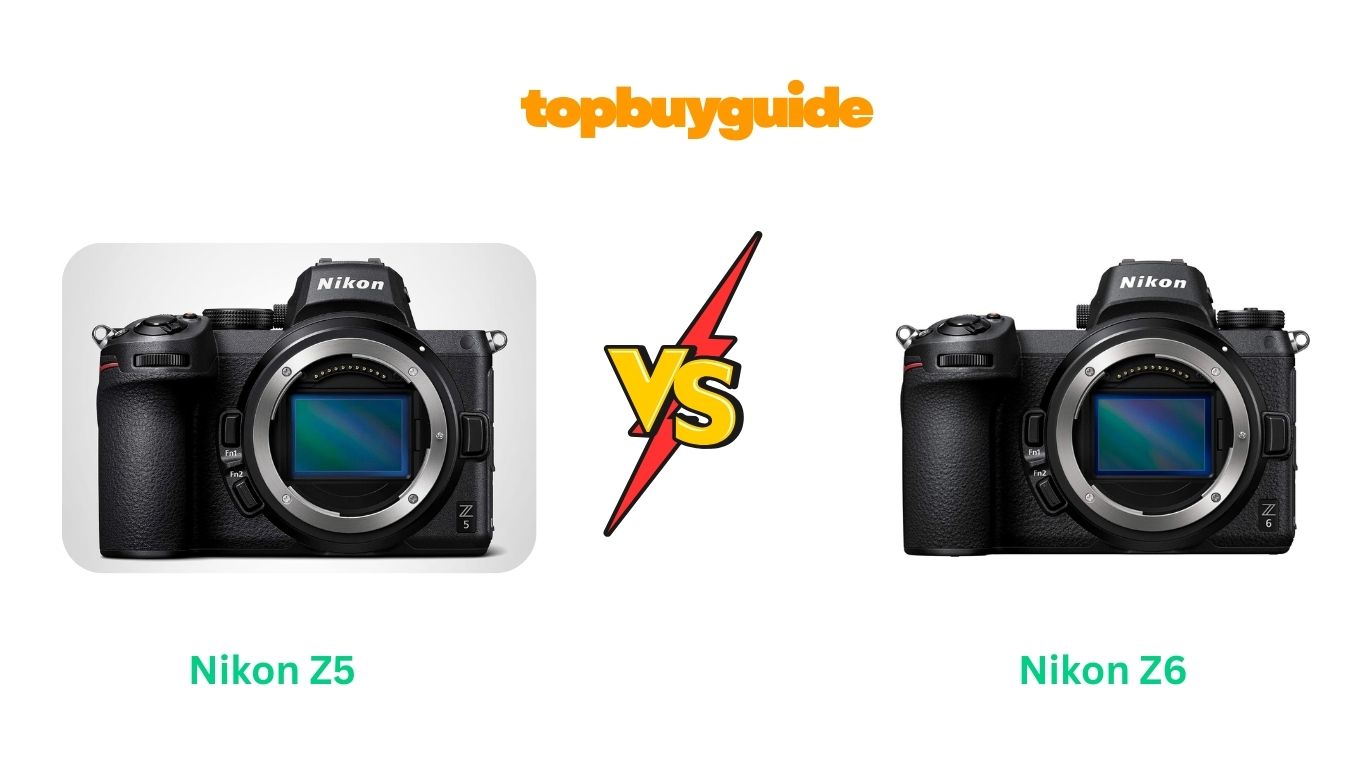
If you shoot both stills and video, the Nikon Z6IIis the practical upgrade over the original Z6 — faster, more robust for long shoots, and more flexible for modern workflows. The Z6 remains an excellent camera if you find a deal, but the Z6II’s dual processors, dual card slots, and higher sustained frame rates make it the smarter long-term choice for serious shooters.
Why I Recommend the Nikon Z6II
I recommend the Nikon Z6II. It keeps everything that made the Z6 great (24.5MP BSI sensor, IBIS, excellent IQ) and fixes the biggest practical pain points for working photographers and hybrid creators: processing speed, buffer/card flexibility, and sustained AF performance. Below are the key reasons (each is a practical benefit you’ll notice every shoot day):
- Dual EXPEED 6 processors for much faster handling and a larger buffer. This means smoother playback, quicker image rendering, and far less lag when shooting long bursts — a real help for sports, weddings, and pro assignments.
- Dual card slots (CFexpress/XQD + UHS-II SD). You get fast media for heavy video/RAW plus an SD slot for backup or overflow — critical for reliability on client jobs.
- Higher sustained continuous shooting: up to 14 fps. The Z6II can shoot at high frame rates with AF/AE tracking and a much larger buffer compared with the original Z6, so you won’t lose sequences.
- Improved AF and low-light sensitivity. The Z6II benefits from updated AF algorithms and improved detection in dim light, making it more dependable for unpredictable scenes and event work.
- Expanded video flexibility (4K workflows). The Z6 already did solid 4K/30p; Z6II adds more robust video workflow options and better sustained recording performance for hybrid shooters.
- Larger buffer and faster write performance (real-world reliability). The dual processors not only speed processing but expand buffer depth — important when you’re shooting long bursts in RAW.
- Better overall future-proofing for pro use. Dual slots + faster cards + improved AF and processing make the Z6II more resilient in professional workflows — fewer interruptions, fewer missed frames, easier client delivery.
Bottom line: if you rely on your camera for paid work, need consistent AF in mixed lighting, or want smooth high-frame-rate bursts with big buffers, the Z6II is worth the premium. If you primarily shoot stills and want to save money, a good condition Z6 still delivers fantastic image quality.
Side-By-Side Comparison Chart — nikon z6 vs z6ii
| Feature | Nikon Z6 | Nikon Z6II |
| Sensor | 24.5MP BSI CMOS | 24.5MP BSI CMOS (same sensor family) |
| Image Processor | Single EXPEED 6 | Dual EXPEED 6 (faster processing, bigger buffer). |
| Continuous Shooting | Up to 12 fps (Hi+ mode; 9 fps in 14-bit RAW) | Up to 14 fps (with AF/AE tracking; larger buffer). |
| Autofocus | 273-point hybrid AF, strong performance | 273-point hybrid AF with improved low-light & video AF algorithms. |
| Card Slots | Single: XQD / CFexpress | Dual: CFexpress/XQD + UHS-II SD (flexibility & backup). |
| Video | 4K UHD up to 30p; 10-bit HDMI out, N-Log | 4K UHD up to 60p (in some modes), improved video features & ergonomics. |
| Buffer Capacity | Moderate | Much larger (≈3.5×) — better for long bursts. |
| Battery Life | ~310 shots (CIPA, depends on usage) | Similar physical battery support; improved power management options & USB power delivery. |
| IBIS | 5-axis in-body VR | 5-axis in-body VR (same) |
| Price Positioning | Usually lower (older model/discounts) | Higher (newer, more pro features) |
Expanded Features Snapshot — what each camera brings to the table
Nikon Z6 — strengths you’ll notice
- Excellent image quality from a 24.5MP full-frame BSI sensor with rich color and dynamic range.
- Very capable IBIS (5-stop class) for handheld shooting and stabilized video.
- Full-frame 4K video at 30p with N-Log and 10-bit HDMI output — impressive for its generation.
- Lower street price if you’re buying refurbished or from discount stock — great value for stills-first shooters.
Nikon Z6II — what it improves and why it matters
- Dual EXPEED 6 processing: speedier shot-to-shot and playback, much larger buffer for long bursts — makes a real difference during intense sessions.
- Dual card slots: one CFexpress/XQD + one UHS-II SD — practical for pro workflows (backup, overflow, split recording).
- Higher sustained fps with AF/AE: up to 14 fps with AF/AE makes it more reliable for sports and wildlife.
- Improved AF algorithms & low-light sensitivity: better eye/subject detection in stills and video.
- Video and connectivity refinements: more options for real-world video workflows and tethering.
Quick practical scenarios — which one fits you?
- Wedding / Event pro who needs redundancy and longer bursts: Z6II (dual slots + big buffer).
- Hybrid creator who shoots fast action and demands better AF in mixed light: Z6II (14 fps, improved AF).
- Still-photographer who mainly shoots landscapes/portraits and wants value: Z6 (same sensor IQ, lower cost).
- Videographer wanting maximal internal flexibility: Z6II for its expanded video features and sustained performance.
What Common Nikon Z6 vs Z6II Can Do
Even though the Nikon Z6II upgrades the original Z6 in several areas, these two cameras still share a lot of DNA. Both models are designed around Nikon’s Z mount, delivering outstanding full-frame performance with intuitive handling, great ergonomics, and superb image quality. Let’s explore what both cameras have in common — and why these shared strengths make them two of the most respected mid-range full-frame mirrorless cameras on the market.
1. 24.5MP Full-Frame BSI CMOS Sensor
Both the Nikon Z6 and Z6II use a 24.5-megapixel backside-illuminated (BSI) CMOS sensor. This sensor delivers exceptional low-light performance and dynamic range. The BSI design improves light-gathering efficiency, making it ideal for night photography, events, and studio work. You get clean ISO up to around 51,200, and even higher with acceptable noise control for professional use.
2. Z Mount System
Both cameras use the same Nikon Z mount, which has a large 55mm diameter and a short flange distance (16mm). This design gives Nikon engineers more flexibility with lens designs, leading to sharper, faster, and more compact lenses. It also allows full compatibility with the FTZ adapter, so you can use Nikon F-mount DSLR lenses with full autofocus support.
3. In-Body Image Stabilization (IBIS)
Each model includes 5-axis in-body image stabilization, offering up to five stops of shake compensation. Whether you’re shooting handheld stills or recording video, this makes a massive difference in image sharpness and smooth motion. It’s one of Nikon’s most reliable IBIS systems — ideal for run-and-gun videography or long handheld exposures.
4. Build Quality and Ergonomics
The Z6 and Z6II share a robust magnesium alloy body with weather sealing that protects against dust and moisture. Both have comfortable, deep grips and intuitive button layouts — a big deal for long shooting days. The handling feels very “DSLR-like,” which makes transitioning from Nikon DSLRs smooth and natural.
5. 3.69M-Dot EVF and Tilting Touchscreen
Both cameras include a 3.69-million-dot electronic viewfinder that’s sharp, color-accurate, and lag-free. The rear 3.2-inch tilting touchscreen is bright, responsive, and great for touch focus or navigating menus. Nikon’s UI design is simple, and both cameras feel familiar even to new mirrorless users.
6. 4K Video and N-Log Support
Each model shoots 4K UHD video (up to 30p internally) and outputs 10-bit N-Log or HDR (HLG) through HDMI. You get clean HDMI out, focus peaking, zebras, and timecode support — making both suitable for professional video work. The Z6II adds 4K60p via firmware update, but both deliver cinematic color and detail.
7. Connectivity Options
Wi-Fi and Bluetooth are standard on both models, allowing for SnapBridge connectivity to transfer images and control your camera remotely. You can also tether directly via USB-C, which supports file transfer and charging. Both models are perfect for hybrid creators who manage files on the go.
Common Features of Nikon Z6 vs Z6II
| Feature | Nikon Z6 | Nikon Z6II |
| 24.5MP Full-Frame BSI CMOS Sensor | ✅ | ✅ |
| 5-Axis In-Body Image Stabilization | ✅ | ✅ |
| Z Mount System | ✅ | ✅ |
| Weather-Sealed Magnesium Alloy Body | ✅ | ✅ |
| 3.69M-Dot EVF | ✅ | ✅ |
| 3.2″ Tilting Touchscreen LCD | ✅ | ✅ |
| 4K UHD Video + N-Log/10-bit HDMI Out | ✅ | ✅ |
| Wi-Fi + Bluetooth (SnapBridge) | ✅ | ✅ |
| USB-C Tethering and Charging | ✅ | ✅ |
A Detailed Comparison of the Nikon Z6 vs Z6II
Let’s now dig deeper into how these cameras perform across key categories.
Autofocus Performance
Both cameras use a 273-point hybrid autofocus system, but the Z6II benefits from improved AF algorithms and processing power thanks to its dual EXPEED 6 processors.
- The Z6II tracks subjects faster, especially in low light or when using Eye/Face Detection. It’s also better for continuous AF during video recording and bursts.
- The Z6, while accurate, occasionally hesitates in dim lighting or when switching between subjects. For portrait and landscape shooters, it’s still reliable, but fast-paced action is where the Z6II pulls ahead.
Continuous Shooting and Buffer
Speed is one of the biggest practical differences.
- The Z6II delivers up to 14 fps with AF/AE tracking, supported by a much larger buffer — letting you capture hundreds of RAW files before slowing down.
- The Z6 tops out at 12 fps, but its smaller buffer fills quickly during long bursts, forcing you to wait for clearing.
For sports, wildlife, and event photography, this improvement alone can justify the upgrade.
Card Slots and Workflow Flexibility
Professional reliability demands redundancy.
- The Z6 has just one card slot (XQD/CFexpress Type B), which, while fast, limits backup options.
- The Z6II adds a second UHS-II SD slot, allowing backup recording or RAW/JPEG split. This small but crucial change makes it more secure for weddings or paid gigs where lost files are not an option.
Image Processing and Responsiveness
The Z6II’s dual EXPEED 6 processors dramatically improve menu responsiveness, shot-to-shot time, and startup speed. Image previews load faster, burst shooting clears quicker, and AF calculations run more smoothly.
The original Z6, with a single processor, feels slightly slower when shooting continuously or reviewing large RAW batches — though it’s still quite usable for most enthusiasts.
Video Capabilities
Both cameras produce stunning 4K, but the Z6II has a few key upgrades.
- Z6: 4K UHD up to 30p with full pixel readout and 10-bit HDMI N-Log output.
- Z6II: Adds 4K60p (via firmware), longer recording times, and better heat management.
Both output 10-bit video via HDMI and support N-Log and HDR, but the Z6II’s dual processors handle sustained recording and live AF tracking far better for video creators.
Battery and Power Options
Both cameras use the EN-EL15c battery, but the Z6II adds better USB power delivery support for charging while shooting — ideal for timelapse or streaming setups.
Battery life is roughly equal, though the Z6II tends to last a little longer due to more efficient processing.
Build and Handling
Physically, these cameras are almost identical. Both feel robust, weather-sealed, and perfectly balanced.
However, the Z6II’s slightly refined button feel and menu responsiveness make it more polished in daily use. Both are compatible with Nikon’s MB-N11 battery grip, which adds vertical controls and extra battery capacity.
Price and Value
As of now, the Z6 is considerably cheaper, often available used or refurbished at 40–50% less than the Z6II.
If you’re a hobbyist, that’s unbeatable value — you’re getting the same sensor and image quality.
But if you’re earning from photography or video, the Z6II’s extra reliability and speed easily justify its price difference.
Conclusion
After comparing both cameras feature by feature, the winner is clear — the Nikon Z6II.
It’s everything the Z6 was, with meaningful upgrades that matter to working photographers and hybrid creators: dual processors, dual card slots, faster performance, and improved AF tracking.
The Z6 is still a great deal if you’re starting out or want a reliable backup body. But for long-term investment, client reliability, and smoother video and photo workflows, the Z6II is worth every extra dollar.
Final Recommendation: Choose the Nikon Z6II for professional reliability and hybrid shooting performance — it’s faster, safer, and future-ready. If budget is tight, grab a discounted Z6 for the same sensor and great image quality.
FAQs about Nikon Z6 vs Z6II
- Does the Nikon Z6II have better autofocus than the Z6?
Yes. The Z6II features upgraded AF algorithms and dual processors that significantly improve eye detection, low-light AF, and continuous subject tracking during both photo and video. - Can the Nikon Z6II shoot 4K at 60 fps?
Yes, after firmware updates, the Z6II supports 4K UHD at 60p (with some crop). This makes it much better suited for slow-motion and high-frame-rate video work. - Is the image quality identical between the Z6 and Z6II?
Essentially yes. Both use the same 24.5MP BSI sensor, producing nearly identical image quality in terms of color, dynamic range, and low-light performance. - Does the Nikon Z6 have dual card slots?
No. The Z6 only includes a single XQD/CFexpress slot. The Z6II adds a second UHS-II SD slot for backup or overflow. - Can both cameras use F-mount lenses with an adapter?
Absolutely. Both work perfectly with Nikon’s FTZ adapter, giving full autofocus and aperture control with most F-mount lenses. - Are both cameras weather-sealed?
Yes, both feature durable magnesium-alloy bodies with sealing against dust and moisture, suitable for tough outdoor conditions. - Do the Z6 and Z6II share the same battery?
Yes, they use the same EN-EL15 series battery (EN-EL15b/c), and both support USB charging. The Z6II also allows powering while in use. - Is it worth upgrading from the Z6 to Z6II?
If you shoot professionally, absolutely. The Z6II’s dual slots, faster AF, and improved performance make it far more reliable. If you’re a hobbyist mainly shooting stills, the Z6 remains an excellent camera for the money.

Alex Turner is a dedicated product researcher and reviewer at TopBuyGuide.com, known for his clear, honest, and data-driven insights. He spends countless hours testing, comparing, and analyzing products to help readers make confident and informed buying decisions.