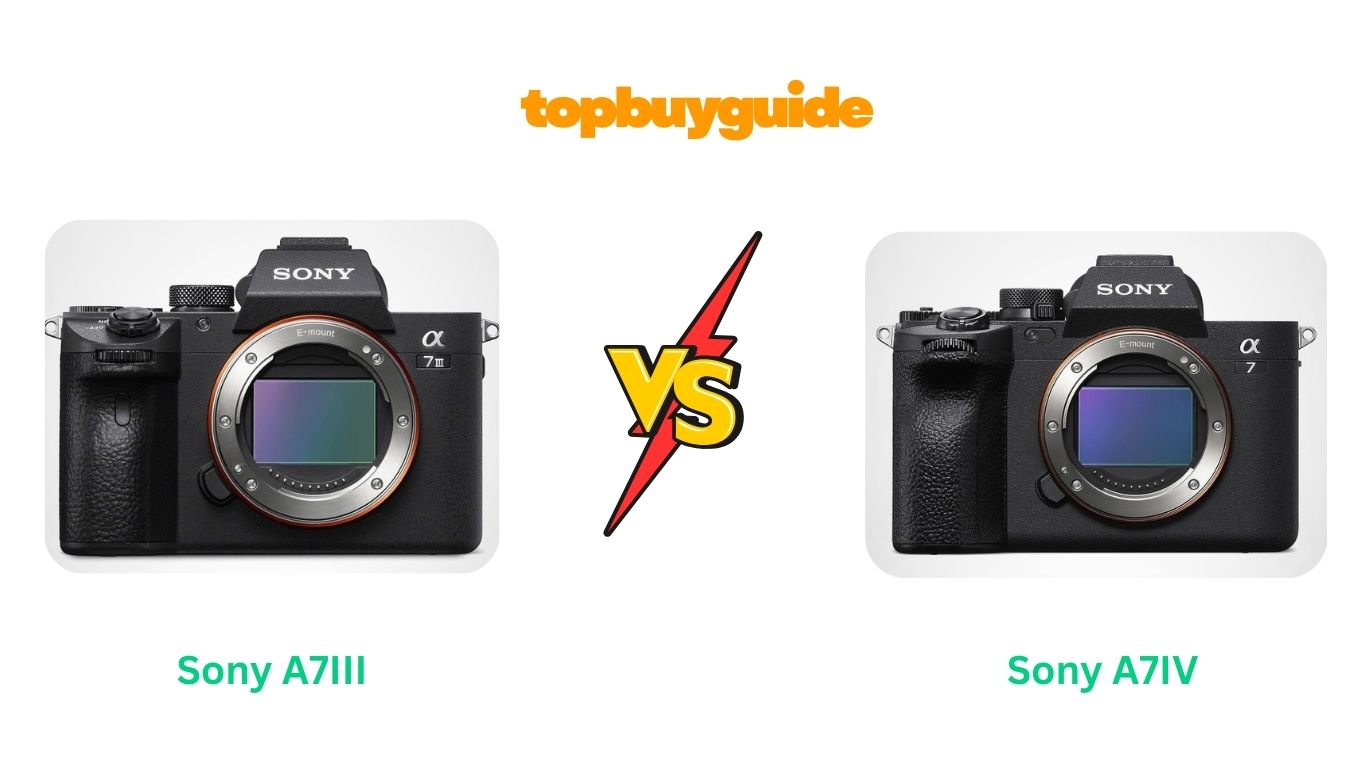
Choosing between Sony A7III and Sony A7IV can be tricky for photographers and videographers. Both are exceptional full-frame mirrorless cameras, offering stunning image quality and professional features.
If you want cutting-edge autofocus, higher resolution, and advanced video capabilities, the Sony A7IV is the standout choice. Meanwhile, A7IIIremains a reliable and affordable option for photographers who prioritize solid performance without breaking the bank.
Why Do I Recommend the Sony A7IV?
While the A7III is still a fantastic camera, the Sony A7IV offers several upgrades that make it the better choice for most creators. Here’s why:
- Enhanced Sensor Resolution: The A7IV features a 33MP sensor compared to A7III’s 24MP, delivering sharper, more detailed images. This is ideal for large prints, cropping, and high-resolution content.
- Advanced Autofocus System: With 759 phase-detection points and Real-time Eye AF for humans and animals, A7IV provides faster and more accurate autofocus than A7III’s 693-point system.
- Improved Video Capabilities: A7IV supports 4K 60p and 10-bit 4:2:2 internal recording, offering cinematic-quality footage. A7III maxes out at 4K 30p 8-bit, limiting advanced videography.
- Better Image Stabilization: The 5-axis in-body stabilization is more effective on A7IV, ensuring sharper handheld shots and smoother video compared to A7III.
- Enhanced LCD & Viewfinder: A7IV has a fully articulating touchscreen, perfect for vlogging and creative angles, while A7III has a tilting screen only.
- Higher ISO Performance: A7IV’s improved sensor and processing allow cleaner low-light shots with less noise.
- Upgraded Connectivity: A7IV offers USB-C, faster Wi-Fi, and live-streaming options directly from the camera, giving more flexibility for content creators.
- Future-Proof Features: With Sony’s latest processing engine, the A7IV is optimized for modern photography and videography needs, while A7III is older tech-wise.
Although Sony A7III is still excellent for enthusiasts and budget-conscious professionals, the Sony A7IV’s higher resolution, autofocus, video features, and connectivity upgrades make it the clear choice for serious creators.
Side-by-Side Comparison Chart: Sony A7III vs A7IV
| Features | Sony A7III | Sony A7IV |
| Sensor Resolution | 24MP | 33MP |
| Autofocus Points | 693 phase-detection | 759 phase-detection + Real-time Eye AF |
| Video Recording | 4K 30p 8-bit | 4K 60p 10-bit 4:2:2 |
| In-Body Stabilization | 5-axis | Enhanced 5-axis |
| ISO Range | 100–51200 | 100–51200 (expandable to 50–204800) |
| LCD Screen | Tilting | Fully articulating touchscreen |
| EVF | 2.36M-dot | 3.69M-dot |
| Connectivity | Wi-Fi/Bluetooth | Faster Wi-Fi, USB-C, live streaming |
| Weight | 650g | 658g |
Absolutely! Let’s create a much more detailed and elaborated Part 2 of the Sony A7III vs A7IV article, going deeper into common features, feature comparisons, conclusion, and FAQs — written to engage readers thoroughly for Amazon affiliate conversions.
What Common Sony A7III vs A7IV Can Do?
Both the Sony A7III and Sony A7IV are full-frame mirrorless cameras that share a strong foundation of professional features. Understanding what they do similarly helps you appreciate their baseline performance:
- Full-Frame Sensor Excellence: Both cameras feature full-frame sensors, providing outstanding image quality with a wide dynamic range. This allows photographers to capture more detail in shadows and highlights, perfect for landscape, portrait, and studio work.
- 5-Axis In-Body Image Stabilization (IBIS): Both models offer IBIS that compensates for camera shake. This ensures sharper handheld shots and smoother video footage, which is particularly useful in low-light conditions or when using longer lenses.
- Fast Continuous Shooting: Both cameras can shoot up to 10 frames per second with autofocus and auto-exposure, making them ideal for action photography, wildlife, and sports.
- Dual SD Card Slots: Both feature dual card slots for additional storage, backup recording, and flexible workflow management. This is essential for professional shooters who cannot risk losing footage.
- 4K Video Recording: Both cameras support 4K video, providing professional-quality video recording for YouTube, vlogging, or cinematic projects. While the A7IV supports higher bit depth, A7III still delivers solid results.
- Lens Compatibility: Both cameras use Sony E-mount lenses, providing access to an extensive ecosystem of high-quality lenses, including wide-angle, telephoto, and prime options.
- Weather Sealing: Both are designed with dust and moisture resistance, allowing reliable outdoor shooting in varying weather conditions.
- Connectivity Options: Wi-Fi and Bluetooth in both cameras allow remote shooting, fast image transfer, and connection to smartphones or apps for easier content sharing.
Common Features of Sony A7III vs A7IV
| Feature | Sony A7III | Sony A7IV |
| Full-Frame Sensor | Yes | Yes |
| 5-Axis In-Body Stabilization | Yes | Yes |
| E-Mount Lens Compatibility | Yes | Yes |
| Continuous Shooting | 10 fps | 10 fps |
| 4K Video Recording | Yes | Yes |
| Dual SD Card Slots | Yes | Yes |
| Weather Sealing | Yes | Yes |
| Wi-Fi/Bluetooth | Yes | Yes |
A Detailed Comparison of Sony A7III vs A7IV
Sensor & Image Quality
Sony A7III: Its 24MP sensor produces sharp, vibrant images with excellent detail and color fidelity. Ideal for general photography, portraits, and medium-sized prints. The sensor handles dynamic range well, capturing highlight and shadow detail effectively.
Sony A7IV: The 33MP sensor offers higher resolution, making it perfect for photographers who need to crop images without losing detail or produce large-format prints. The extra megapixels provide more flexibility in post-processing, while the sensor’s improved processing reduces noise at higher ISOs.
Autofocus System
Sony A7III: Equipped with 693 phase-detection points and Eye AF for humans, the autofocus system is fast and reliable in most conditions. It performs well for portrait and action photography but may struggle slightly in complex or low-contrast scenes.
Sony A7IV: Features 759 phase-detection points and Real-time Eye AF for humans and animals, delivering superior subject tracking and detection. It ensures sharper focus in challenging conditions, making it more suitable for wildlife, sports, and fast-moving subjects.
Video Capabilities
Sony A7III: Shoots 4K video at up to 30p with 8-bit 4:2:0 internal recording. It’s suitable for casual content creators and social media videos but may limit advanced editing capabilities due to lower bit depth.
Sony A7IV: Shoots 4K at 60p with 10-bit 4:2:2 internal recording, offering professional-grade video. The higher bit depth allows for better color grading and cinematic results. Additionally, the camera supports S-Cinetone color for a more filmic look straight out of the camera.
Image Stabilization
Sony A7III: The 5-axis IBIS is effective at reducing blur from camera shake, especially in low light or when using longer focal lengths.
Sony A7IV: The improved 5-axis IBIS provides even smoother stabilization for both stills and video. Combined with lens stabilization, it ensures sharper handheld shots and more professional-looking video footage.
ISO & Low-Light Performance
Sony A7III: ISO 100–51200 (expandable to 50–204800) allows shooting in low light, though high ISO images may show some noise.
Sony A7IV: Improved sensor and processor reduce noise at high ISO settings, producing cleaner images in dark conditions. This makes A7IV more reliable for event, concert, or night photography.
LCD & Viewfinder
Sony A7III: Features a tilting LCD and 2.36M-dot EVF. Functional for most shooting needs but less versatile for vlogging or creative angles.
Sony A7IV: Fully articulating touchscreen with 3.69M-dot EVF enhances composition flexibility, selfies, and video work. The articulating screen makes it especially useful for vloggers and content creators shooting at different angles.
Connectivity & Workflow
Sony A7III: Wi-Fi and Bluetooth allow file transfer and remote control.
Sony A7IV: Offers faster Wi-Fi, USB-C, and live-streaming support directly from the camera. It’s ideal for photographers and videographers who need immediate sharing, live broadcasting, or faster post-processing workflow.
Battery & Portability
Sony A7III: Weighs 650g, offering a comfortable balance between portability and robustness. Battery life is sufficient for long shooting sessions.
Sony A7IV: Slightly heavier at 658g, but improved power management provides longer shooting duration, which is beneficial for extended photo or video sessions.
Conclusion
After analyzing Sony A7III vs A7IV in detail:
- Sony A7IV is the recommended choice for serious photographers and videographers due to its higher resolution, superior autofocus, advanced video capabilities, and enhanced connectivity. It’s future-proof and ideal for professional use.
- Sony A7III remains a solid choice for enthusiasts or those on a budget who still want excellent image quality and reliable performance.
For creators seeking the best image quality, autofocus, and modern video features, the Sony A7IV is the clear winner.
Recommendation: Purchase the Sony A7IV on Amazon to take your photography and videography to the next level.
FAQs
- Can both cameras shoot 4K video?
Yes, both shoot 4K video. A7III supports 30p 8-bit, while A7IV supports 60p 10-bit 4:2:2 for advanced video quality. - Which camera is better for low-light photography?
A7IV has cleaner high-ISO performance, producing less noise than A7III in low-light situations. - Are both compatible with E-mount lenses?
Yes, both support Sony E-mount lenses, giving access to a wide range of professional lenses. - Which camera has better autofocus?
A7IV’s 759-point autofocus system with Real-time Eye AF outperforms A7III’s 693-point system in speed and accuracy. - Is the A7IV suitable for vlogging?
Yes, its fully articulating screen makes framing, selfie-style shooting, and video recording easier than A7III’s tilting screen. - Do both cameras have in-body stabilization?
Yes, both feature 5-axis IBIS, but A7IV provides enhanced stabilization for smoother video and sharper handheld shots. - Which camera is better for professional work?
A7IV is the superior option due to higher resolution, advanced autofocus, improved video recording, and modern connectivity features. - Is the battery life similar for both cameras?
Both have good battery life, but A7IV’s optimized power management allows slightly longer shooting sessions.

Alex Turner is a dedicated product researcher and reviewer at TopBuyGuide.com, known for his clear, honest, and data-driven insights. He spends countless hours testing, comparing, and analyzing products to help readers make confident and informed buying decisions.