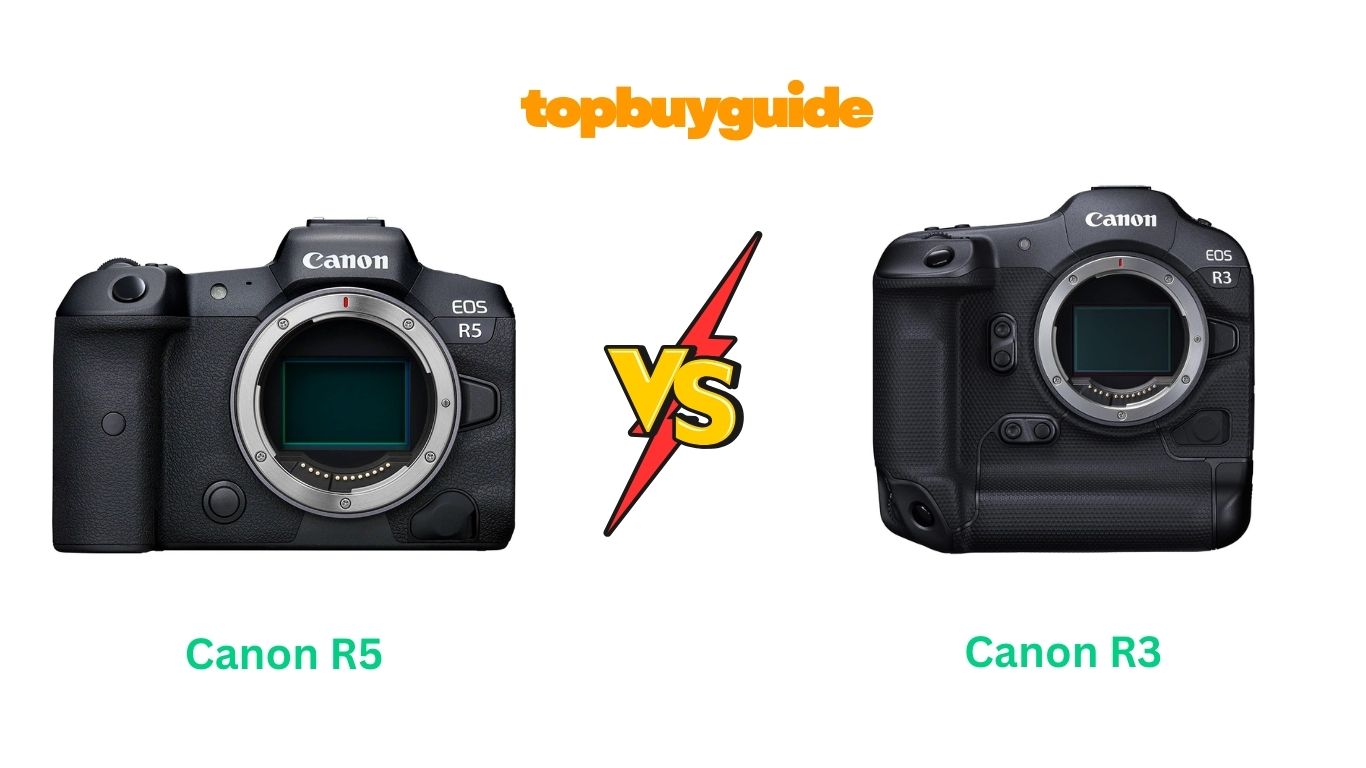
If you are torn between the Canon R5 and Canon R3, both deliver cutting-edge mirrorless technology and professional-level performance. However, I recommend the Canon EOS R5 for its higher resolution, versatility, and value. It offers exceptional image quality and advanced features, making it perfect for professionals who need high detail and flexibility.
Why Do I Recommend the Canon R5?
The Canon EOS R5 stands out as a powerhouse camera offering high-resolution stills, professional-grade video recording, and advanced autofocus. While the Canon R3 focuses on speed and sports photography, the R5 provides a more balanced performance for most photographers. Below are several reasons why I recommend the Canon R5 over the R3.
- Higher Resolution Sensor for Unmatched Detail
The Canon R5 features a 45-megapixel full-frame CMOS sensor, capturing incredible detail and color accuracy. In comparison, the R3 has a 24.1-megapixel sensor. While the R3 excels in speed, the R5’s higher resolution makes it better suited for landscapes, portraits, and commercial work. - 8K Video Recording Capability
The R5 can record 8K video at up to 30fps, delivering cinema-quality footage. The Canon R3, however, is limited to 6K at 60fps. For videographers seeking maximum clarity and post-production flexibility, the R5 is the clear winner. - Compact and Lightweight Design
The Canon R5’s smaller body makes it easier to handle during long shoots. The R3, being a professional flagship, has a built-in vertical grip and a larger body, which can be heavy for casual use. The R5’s portability provides better comfort for travel or handheld shooting. - More Affordable with Comparable Performance
The R5 offers nearly all the professional-level features of the R3 at a lower price. It delivers excellent value for creators who want top-tier image quality and performance without the extra cost of a flagship sports camera. - Advanced Autofocus and Subject Tracking
Both cameras feature Canon’s Dual Pixel CMOS AF II, but the R5 provides remarkable accuracy and coverage. It efficiently tracks eyes, faces, and animals. While the R3 has slightly faster autofocus for fast-moving subjects, the R5’s precision makes it superior for most photography styles. - Dual Memory Card Slots for Flexibility
The R5 includes both a CFexpress Type B and SD UHS-II card slot, offering flexibility for stills and video. The R3 has similar card slots, but the R5’s optimized file management makes workflow smoother for hybrid creators. - Exceptional Image Stabilization
With up to 8 stops of in-body image stabilization, the Canon R5 ensures ultra-sharp handheld shots even in low light. The R3 also offers 8 stops, but the R5’s stabilization pairs perfectly with its higher-resolution sensor for extra clarity. - Perfect Balance Between Speed and Quality
The R3 is faster, with up to 30fps continuous shooting, but the R5’s 20fps burst rate remains exceptional while offering much higher resolution. This balance makes the R5 ideal for professionals who need speed without sacrificing detail.
Overall, the Canon EOS R5 is an excellent all-rounder — a true hybrid camera combining professional-level photography and videography in a single, compact body.
Side-by-Side Comparison Chart (Canon R5 vs R3)
| Feature | Canon EOS R5 | Canon EOS R3 |
| Sensor | 45MP Full-Frame CMOS | 24.1MP Full-Frame Stacked CMOS |
| Image Processor | DIGIC X | DIGIC X |
| ISO Range | 100–51,200 (Expandable to 102,400) | 100–102,400 (Expandable to 204,800) |
| Continuous Shooting | 20fps (Electronic) | 30fps (Electronic) |
| Video Resolution | 8K at 30fps, 4K at 120fps | 6K at 60fps, 4K at 120fps |
| In-Body Stabilization | Up to 8 Stops | Up to 8 Stops |
| Autofocus System | Dual Pixel CMOS AF II | Dual Pixel CMOS AF II (Eye-Control AF) |
| Viewfinder | 5.76M-dot OLED EVF | 5.76M-dot OLED EVF |
| LCD Screen | 3.2-inch Vari-Angle Touchscreen | 3.2-inch Vari-Angle Touchscreen |
| Connectivity | Wi-Fi, Bluetooth, USB-C, HDMI | Wi-Fi, Bluetooth, USB-C, Ethernet, GPS |
| Battery Life | ~490 shots (CIPA) | ~620 shots (CIPA) |
| Weight | 738g (Body Only) | 1015g (Body Only) |
| Weather Sealing | Yes | Enhanced Weather Sealing |
| Memory Slots | CFexpress Type B + SD UHS-II | CFexpress Type B + SD UHS-II |
| Price Range | Lower | Higher |
What Common Canon R5 vs R3 Can Do?
Both the Canon EOS R5 and Canon EOS R3 belong to Canon’s premium mirrorless lineup. They share several key technologies designed to deliver professional performance, reliable autofocus, and superior image quality.
- Dual Pixel CMOS AF II System
Both cameras use Canon’s renowned Dual Pixel CMOS AF II autofocus system. This technology ensures fast and accurate focusing across nearly 100% of the frame. Both track human and animal eyes precisely, offering reliable performance even in challenging lighting conditions. - In-Body Image Stabilization (IBIS)
Both the R5 and R3 feature up to 8 stops of in-body image stabilization. This allows photographers to capture sharp images handheld, even with slower shutter speeds. When paired with stabilized RF lenses, the effect is even more powerful. - DIGIC X Image Processor
The advanced DIGIC X processor powers both cameras, delivering exceptional speed, noise reduction, and color accuracy. This processor ensures consistent performance whether you’re shooting stills or recording high-resolution video. - 4K Video Recording Capabilities
Both cameras can shoot up to 4K 120fps video, offering smooth slow-motion footage. The R5 extends this capability further with 8K resolution, but both deliver professional video quality suitable for content creators, filmmakers, and hybrid shooters. - Weather-Sealed Magnesium Alloy Body
Canon built both models with durability in mind. Their magnesium alloy construction provides excellent protection against dust and moisture, ensuring reliable performance in extreme conditions. - Vari-Angle LCD Touchscreen
Both cameras feature a fully articulating 3.2-inch touchscreen, making it easy to shoot from creative angles. This design benefits vloggers, photographers, and filmmakers who often need flexible composition options. - Dual Memory Card Slots
Each model includes dual card slots — one CFexpress Type B and one SD UHS-II. This allows simultaneous recording or automatic backup of photos and videos, ensuring data safety during professional shoots. - Professional Connectivity Options
Both cameras support Wi-Fi and Bluetooth connectivity for quick file transfer and remote shooting. USB-C ports enable fast data transfer and in-camera charging. The R3 adds Ethernet and GPS support for additional versatility.
Common Features of Canon R5 vs R3
| Feature | Canon EOS R5 | Canon EOS R3 |
| Dual Pixel CMOS AF II | Yes | Yes |
| DIGIC X Processor | Yes | Yes |
| In-Body Image Stabilization | Yes (Up to 8 Stops) | Yes (Up to 8 Stops) |
| 4K Video Recording | Yes | Yes |
| Dual Memory Card Slots | Yes | Yes |
| Vari-Angle LCD Screen | Yes | Yes |
| Weather Sealing | Yes | Yes |
| Wi-Fi & Bluetooth | Yes | Yes |
A Detailed Comparison of the Canon R5 vs R3
Sensor and Image Resolution
The Canon R5’s 45MP full-frame CMOS sensor delivers ultra-high-resolution images, ideal for commercial, landscape, and studio work. The R3’s 24.1MP sensor prioritizes speed and low-light performance, producing slightly less detail but better high ISO results. For professionals focused on detail, the R5 is the superior choice.
Video Recording Performance
The Canon R5 excels with 8K video recording at 30fps, offering unparalleled clarity and editing flexibility. The Canon R3 records 6K video at 60fps, which provides smoother motion but lower resolution. Videographers seeking cinematic detail will prefer the R5, while sports or broadcast professionals may lean toward the R3’s smoother output.
Autofocus and Tracking
Both cameras use Dual Pixel CMOS AF II, but the R3 includes Canon’s Eye-Control AF feature, allowing users to select focus points using eye movement. This makes it faster for action photography. The R5 lacks this feature but still delivers exceptional autofocus accuracy across various shooting conditions.
Continuous Shooting and Speed
The R3 achieves up to 30fps with its electronic shutter, making it perfect for high-speed sports or wildlife photography. The R5 offers 20fps, which is still outstanding but slightly slower. However, the R5 compensates with higher resolution images, offering more flexibility for cropping.
Build Quality and Ergonomics
The R3’s integrated vertical grip and robust build make it suitable for heavy professional use. It’s larger and heavier but offers better handling with big lenses. The R5, in contrast, is compact and lightweight, offering better portability for travel and general photography.
Battery Life
The Canon R3 has superior battery performance with up to 620 shots per charge, thanks to its larger LP-E19 battery. The R5 delivers around 490 shots per charge using the smaller LP-E6NH battery. The difference is noticeable in extended sessions.
Connectivity and Storage Options
Both cameras feature dual card slots for reliability, but the R3 includes additional Ethernet and GPS connectivity, appealing to sports and news photographers who need real-time file transmission. The R5’s wireless options remain strong for general professional workflows.
Price and Target Audience
The R3 is a flagship camera aimed at professionals who require extreme speed and durability, often priced significantly higher. The R5 offers a balanced approach, combining professional power and affordability. For most photographers, the R5 delivers better value and versatility.
Conclusion
After a detailed comparison, the Canon EOS R5 stands out as the most versatile and value-packed option. It delivers superior resolution, stunning 8K video, and exceptional stabilization in a lighter body. For professionals who prioritize image quality and flexibility over sheer speed, the R5 is the smarter investment. Click below to explore the Canon R5 and elevate your photography experience.
FAQs
- Which camera has better image quality, the Canon R5 or R3?
The Canon R5 offers higher image quality due to its 45MP sensor, capturing more detail and color depth than the 24.1MP R3. - Can both cameras shoot 8K video?
Only the Canon R5 supports 8K video recording. The Canon R3 records up to 6K video at 60fps and 4K at 120fps. - Which camera is better for sports photography?
The Canon R3 is ideal for sports and action due to its 30fps burst rate and Eye-Control AF system. - Does the Canon R5 overheat when recording video?
The Canon R5 can experience heating during long 8K recordings, but firmware updates have improved thermal management. - Which camera has better battery life?
The Canon R3 offers longer battery life with up to 620 shots per charge, compared to the R5’s 490 shots. - Are both cameras weather-sealed?
Yes, both the Canon R5 and R3 have durable weather-sealed bodies designed for professional outdoor use. - Do both cameras support dual memory cards?
Yes, both feature one CFexpress Type B slot and one SD UHS-II slot for flexible storage options. - Which camera is more affordable?
The Canon R5 is more budget-friendly, offering professional performance at a lower price compared to the flagship R3.

Alex Turner is a dedicated product researcher and reviewer at TopBuyGuide.com, known for his clear, honest, and data-driven insights. He spends countless hours testing, comparing, and analyzing products to help readers make confident and informed buying decisions.