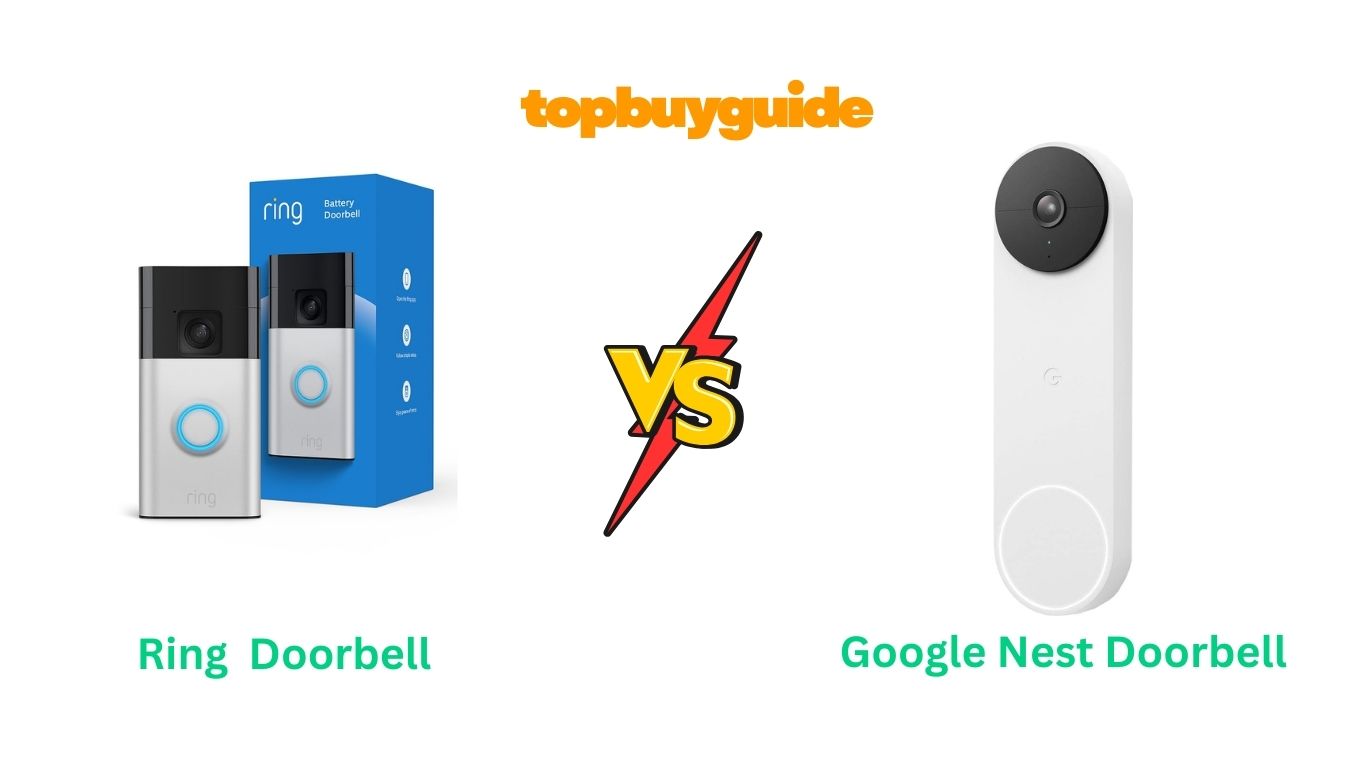
Choosing between the Ring Doorbell and Google Nest Doorbell can be tricky, as both offer premium smart home security features. However, I recommend the Ring Battery Doorbell Plus for its superior motion detection, wider field of view, and seamless Alexa integration. Let’s dive deeper into why the Ring stands out when compared with Google Nest Doorbell.
Why Do I Recommend the Ring Battery Doorbell Plus?
The Ring Battery Doorbell Plus brings several features that make it one of the best smart doorbells in its category. Compared to the Google Nest Doorbell, it provides wider coverage, faster alerts, and flexible installation. Below are the main reasons why Ring is my top choice.
-
Head-to-Toe HD+ Video
The Ring Battery Doorbell Plus offers 1536p HD+ video resolution, providing a taller, clearer view from head to toe. This is higher than the 960×1280 resolution of the Google Nest Doorbell. Therefore, Ring provides sharper, more detailed footage. -
Superior Motion Detection and Alerts
Ring uses advanced motion detection zones and delivers real-time alerts faster. While Google Nest also features motion detection, Ring’s customizable zones make it easier to avoid false notifications and focus only on relevant activity. -
Longer Battery Life
The Ring Battery Doorbell Plus boasts improved battery life thanks to power-efficient motion detection technology. In contrast, Google Nest’s battery tends to drain faster, especially in high-traffic areas. -
Seamless Alexa Integration
Ring is an Amazon product, so it integrates effortlessly with Alexa devices. You can view live feeds, receive doorbell notifications, and use two-way talk directly through Echo devices. On the other hand, Google Nest primarily works best with Google Assistant, limiting flexibility for Alexa users. -
Smart Response and Quick Replies
Ring’s Quick Replies allow you to respond automatically when you’re unavailable. While Google Nest offers pre-recorded responses too, Ring’s customization and faster delivery make it more convenient for busy homeowners. -
Advanced Privacy Controls
Ring offers strong privacy options, including customizable privacy zones and end-to-end video encryption. Google Nest also provides encryption but lacks the same granular control Ring offers over data sharing and motion zones. -
Wider Field of View
The Ring Battery Doorbell Plus features a 150° horizontal and 150° vertical field of view, covering the full area from ground to sky. Google Nest’s 145° view is slightly narrower, providing less coverage at the edges -
Easy Installation and Battery Swap
Ring’s removable battery pack makes installation simple and maintenance hassle-free. Google Nest’s design requires removing the entire doorbell for charging, which can be inconvenient.
In summary, Ring combines performance, flexibility, and convenience more effectively than Google Nest, making it the better option for most users.
Side-by-Side Comparison Chart (Ring vs Google Nest Doorbell)
| Feature | Ring Battery Doorbell Plus | Google Nest Doorbell (Battery) |
|---|---|---|
| Video Resolution | 1536p HD+ Head-to-Toe | 960×1280 HD Video |
| Field of View | 150° Horizontal & Vertical | 145° Diagonal |
| Motion Detection | Customizable Motion Zones | AI Motion Detection |
| Smart Home Integration | Alexa | Google Assistant |
| Power Source | Removable Rechargeable Battery | Built-in Rechargeable Battery |
| Night Vision | Color Night Vision | HDR Night Vision |
| Two-Way Audio | Yes, with Quick Replies | Yes, with Pre-recorded Messages |
| Cloud Storage | Ring Protect Subscription | Nest Aware Subscription |
| Installation | Easy, Removable Battery | Requires Doorbell Removal to Charge |
| Wi-Fi Connectivity | Dual-Band 2.4GHz/5GHz | 2.4GHz Only |
| Subscription Cost | From $3.99/month | From $8/month |
| Weather Resistance | Yes (IP rating) | Yes (Weatherproof) |
| Dimensions | 5.1 x 2.4 x 1.1 inches | 6.3 x 1.8 x 0.95 inches |
| Weight | 0.5 lbs | 0.45 lbs |
What Common Ring vs Google Nest Doorbell Can Do?
Both the Ring and Google Nest Doorbell share several powerful features designed to enhance home security and convenience. They allow homeowners to monitor visitors, interact remotely, and record high-quality footage. Below are the key shared capabilities explained in detail.
1. Real-Time Notifications
Both doorbells send instant notifications to your smartphone whenever someone presses the bell or motion is detected. Whether it’s a delivery person or a guest, you can see who’s at the door right away through the respective apps.
2. Two-Way Audio Communication
Both Ring and Google Nest provide crystal-clear two-way audio, allowing you to speak directly to visitors without opening the door. This feature is ideal for managing deliveries, greeting guests, or deterring unwanted visitors.
3. Night Vision Capabilities
Both devices include night vision, ensuring clear visibility even in complete darkness. You can monitor your porch or driveway 24/7 without worrying about lighting conditions.
4. Cloud Storage and Video History
With a subscription, both products store recorded videos in the cloud. Ring Protect and Nest Aware plans enable users to review, download, or share video clips anytime, offering peace of mind in case of suspicious activity.
5. Smart Home Integration
Ring integrates with Alexa, while Google Nest syncs seamlessly with Google Assistant. Both allow you to control your doorbell via voice commands and display live feeds on smart displays.
6. Wide Compatibility
Both products work with Android and iOS devices, ensuring accessibility across multiple platforms. The mobile apps are user-friendly and regularly updated for better functionality.
7. Weather Resistance
Ring and Google Nest Doorbells are built to endure outdoor conditions, including rain, wind, and heat. Their durable casings ensure reliable operation throughout the year.
Common Features of Ring vs Google Nest Doorbell
| Feature | Ring Battery Doorbell Plus | Google Nest Doorbell (Battery) |
|---|---|---|
| Real-Time Alerts | Yes | Yes |
| Two-Way Audio | Yes | Yes |
| Night Vision | Yes | Yes |
| Cloud Storage | Yes (with Subscription) | Yes (with Subscription) |
| Smart Home Integration | Alexa | Google Assistant |
| Mobile App Access | Yes | Yes |
| Weather Resistant | Yes | Yes |
| Video History | Yes | Yes |
| Motion Detection | Yes | Yes |
A Detailed Comparison of the Ring vs Google Nest Doorbell
Video Quality and Resolution
Ring Battery Doorbell Plus offers an outstanding 1536p HD+ resolution that captures sharper, more detailed images. Its head-to-toe coverage ensures you can see everything, from packages on the ground to the tallest visitors. Google Nest, while capable of HD video, has a slightly lower resolution, which means slightly less clarity, especially in low-light environments.
Motion Detection and Alerts
Ring uses customizable motion zones that let you define exactly where to detect movement. This helps minimize unnecessary alerts caused by passing cars or pedestrians. Google Nest uses AI-based detection to identify people, animals, and vehicles, which is smart but sometimes slower to trigger notifications.
Smart Integration and Compatibility
Ring seamlessly connects with Alexa-enabled devices, allowing users to control their doorbell using voice commands. You can view the live feed on Echo Show screens instantly. Google Nest integrates perfectly with Google Assistant and Google Home devices, but it doesn’t support Alexa, limiting smart home flexibility for mixed ecosystems.
Power and Battery Management
The Ring Doorbell includes a removable rechargeable battery pack that can be swapped without unmounting the device. In comparison, the Google Nest Doorbell’s battery is non-removable, requiring the entire device to be taken down for charging. This makes Ring far more convenient for maintenance.
Field of View
Ring’s 150° horizontal and vertical view provides complete visibility of your porch and surroundings. Google Nest’s 145° diagonal angle is still good but misses some peripheral details. For monitoring packages and wider entryways, Ring clearly offers broader coverage.
Subscription and Cloud Storage
Both doorbells require subscriptions for advanced storage and video history. However, Ring Protect plans start cheaper at $3.99/month compared to Nest Aware’s $8/month. This gives Ring a strong advantage for cost-conscious users.
Audio Quality and Quick Replies
Ring delivers clear two-way audio and offers customizable Quick Replies to greet visitors automatically. Google Nest also provides pre-recorded responses, but Ring’s system is faster and more flexible for users who prefer tailored messages.
App Experience
Ring’s app is straightforward and highly responsive, making it easy to manage multiple cameras or doorbells. Google Nest’s app is sleek but sometimes slower to load video previews. Overall, Ring’s app feels slightly more refined in performance.
Conclusion
After comparing both models in depth, the Ring Battery Doorbell Plus stands out for its better video quality, easier installation, wider field of view, and stronger Alexa integration. Its lower subscription cost and practical features make it the smarter choice for most households. Click below to explore the Ring Battery Doorbell Plus and upgrade your home security today.
FAQs
1. Can I use the Ring Doorbell without a subscription?
Yes, you can view live video and receive notifications without a subscription, but you’ll need Ring Protect to record and store footage.
2. Does the Google Nest Doorbell support Alexa?
No, Google Nest only works with Google Assistant. If your home setup relies on Alexa, Ring is a better fit.
3. How long does the Ring Doorbell battery last?
Depending on usage, the Ring Battery Doorbell Plus can last 6 to 12 months per charge, thanks to efficient power management.
4. Can the Google Nest Doorbell record 24/7?
No, it only records when motion or sound is detected unless you have a wired version with a Nest Aware Plus plan.
5. Is installation difficult for the Ring Doorbell?
Not at all. Ring’s quick-release battery design and included mounting tools make installation simple and fast.
6. Which doorbell offers better night vision?
Both perform well, but Ring’s color night vision provides more realistic images compared to Google Nest’s monochrome HDR mode.
7. Do these doorbells support multiple users?
Yes, both allow multiple users to access the live feed and receive alerts via their respective apps.
8. Are these doorbells waterproof?
Both Ring and Google Nest Doorbells are weather-resistant, capable of handling rain and humidity, though not submersion in water.

Alex Turner is a dedicated product researcher and reviewer at TopBuyGuide.com, known for his clear, honest, and data-driven insights. He spends countless hours testing, comparing, and analyzing products to help readers make confident and informed buying decisions.